
The Foundations of an Ancient Pantry Under the Segura Light
Dawn in Murcia does not announce itself with the roar of sprawling industrial metropolises, but rather with the steady, measured murmur of water flowing through centuries-old irrigation ditches designed by Andalusian scholars. In the heart of the city, the Central Food Market, popularly known as the Verónicas Plaza, stands as a secular temple where earth and river converge every single morning. This building, born from commercial evolution and the need to organize the bustle of old street vendors, embodies the identity of a land shaped by agricultural patience and the relentless sun of the southeastern Iberian Peninsula.
Crossing its doors is entering an ecosystem where time seems suspended between white marble countertops and the wrought-iron structures that hold up collective memory. Here, every vegetable, every piece of fruit, and every cut of meat tells a story of climatic resilience and know-how passed down from parents to children. The Murcia orchard is not merely a space for intensive production; it constitutes a living cultural landscape, a network of small landowners who continue to cultivate local varieties that large food corporations have discarded for their low commercial profitability.
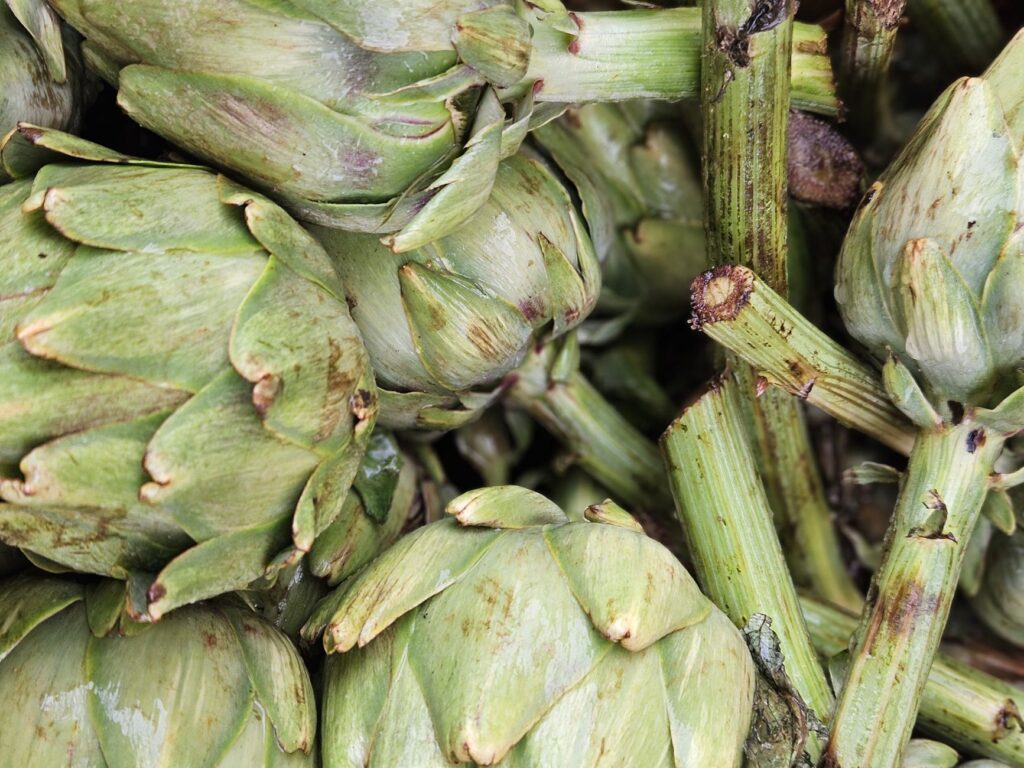
The market gardeners, true guardians of this plant heritage, arrive with the first light of dawn carrying crates filled with the yields of a fertile yet demanding soil. The artichokes of the Vega Media, with their characteristic purple hue and unparalleled tenderness, share space with seasonal tomatoes—authentic, fleshy giants that smell of earth and humidity—and aromatic herbs that impregnate the market air with notes of rosemary, thyme, and mint. It is a sensory symphony that operates detached from passing gastronomic fads, sustained by the conviction that the best dish is always born from the simplicity of an expertly cultivated product.
The Architecture of Supply and the Social Pulse of Verónicas
The structure of the Verónicas Market is much more than an exercise in nineteenth-century engineering adapted to modern commerce; it represents the contemporary agora where citizens engage in direct dialogue with those who work the land. Unlike impersonal supermarkets, where food is lined up behind plastic barriers and barcodes, this space fosters horizontal communication. The buyer asks about the ripening point of a winter melon, discusses the best way to cook a chard stew, or simply exchanges greetings with the greengrocer who has known his family’s tastes for three decades.
In the fishmonger aisles, the aroma of the Mediterranean Sea and the nearby Mar Menor permeates every corner. Fishermen and wholesalers display catches brought in just hours earlier from the ports of San Pedro del Pinatar and Mazarrón. Ruby-red rock red mullet, wild sea bass retaining the shine of open waters, and prized prawns compete for the attention of local restaurateurs and individual shoppers. The bond of trust between the fishmonger and clientele is unbreakable: if the sea fails to offer top-quality produce on a given day, purchasing is discouraged outright, an exercise in commercial honesty that is increasingly hard to find.
blockquote>The market is not merely the place where goods are exchanged; it is the emotional thermometer of a city that relies on its flavors to preserve its collective memory.
This social fabric is completed by stalls offering cured foods, pickles, and spices, where capers, sun-dried ñora peppers, and purple garlic are displayed in large bulk heaps. These ingredients are the invisible foundations upon which traditional Murcian cuisine rests. The ñora pepper, in particular, sun-dried in the region’s traditional drying sheds, is essential for giving the Mar Menor caldero or rice dishes that smoky, deep profile defining the entire region’s gastronomy.
The Treasures of the Orchard: Between Terraced Fields, Ditches, and Popular Recipes
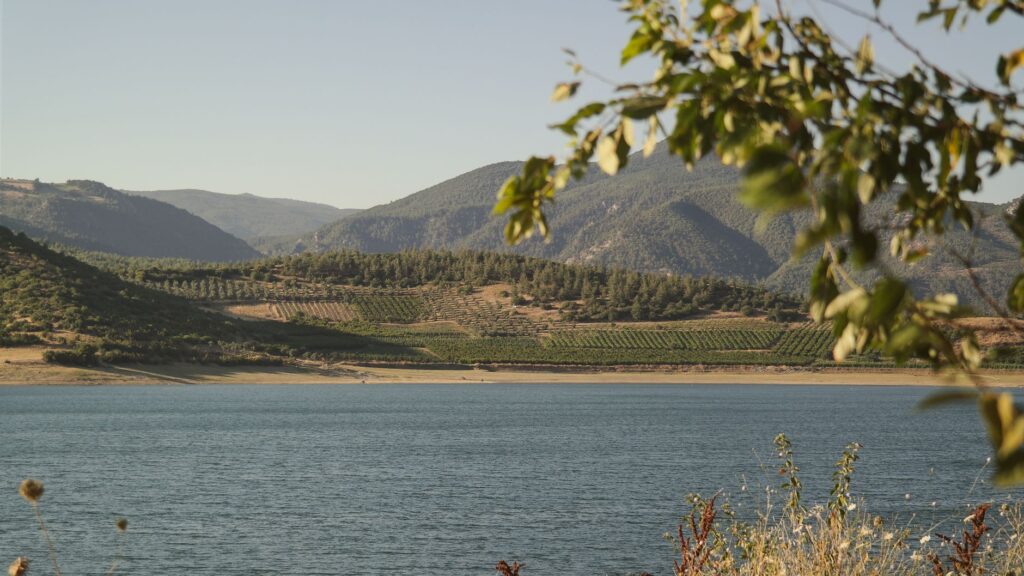
Beyond urban limits, the Murcia Orchard unfolds its intricate network of irrigation canals and branches, a hydraulic system of Roman origin and Islamic development that continues to operate with admirable precision. Walking along the dirt paths flanking the crop fields reveals the titanic effort required to extract generous harvests from an essentially clayey and thirsty soil. Here, water is a sacred asset managed through the historic Council of Good Men, an institution recognized by UNESCO as Intangible Cultural Heritage of Humanity.
In these terraced plots, Murcia paprika—protected under a Protected Designation of Origin—is cultivated with care, crafted exclusively from local bola pepper varieties that are sun-dried and ground artisanally. Its presence is ubiquitous in the regional pantry, from homemade slaughterhouse sausages to marinades for oily fish. Likewise, the Bomba rice cultivated in nearby Calasparra absorbs broths like no other variety thanks to its longitudinal expansion capacity during cooking, ensuring a texture that is simultaneously loose and creamy.
The cooking of the orchard finds its best allies in the frying pan and the clay casserole. Seemingly humble dishes like zarangollo—a masterful scramble of tender zucchini, slow-cooked onion, and barnyard egg—prove that haute cuisine does not depend on luxurious ingredients, but on absolute mastery of cooking times and utmost respect for the product. Similarly, the Murcian meat pie, with its crispy puff pastry crust and spiced filling of beef, chorizo, and hard-boiled egg, synthesizes centuries of crossed culinary influences among Christian, Jewish, and Muslim cultures.
The Art of Fork Lunches and the Bar Counter
The market’s pulse finds its natural extension in the surrounding bars and taverns, where mid-morning snacking becomes an inescapable social ritual. By mid-morning, bars brim with workers, merchants, and visitors looking to regain energy with hearty and comforting preparations. Marineras—a generous dollop of Russian potato salad piled atop a crispy ring-shaped cracker and crowned with a top-quality salted anchovy—stand as the undisputed banner of this prolonged aperitif.
Eating a marinera requires certain technical dexterity to prevent the potato and mayonnaise emulsion from spilling over, but the effort is rewarded by the perfect contrast between the fish’s salinity, the pickle’s acidity, and the crumbly texture of the base. Alongside it, broad beans with ham, michirones—a dense, spicy stew of dried broad beans cooked with chorizo, pork belly, and ham bones—and homemade salt cod croquettes form an inexhaustible repertoire of intense flavors.
blockquote>Sitting at the bar in Verónicas means accepting a pact of neighborhood complicity where the rhythm is set by freshly prepared tapas and the steady hum of shared conversation.

This gastronomic panorama is complemented by the rich winemaking tradition of nearby designations of origin such as Bullas, Jumilla, and Yecla, where the Monastrell grape reigns authoritatively. These full-bodied red wines, matured under the generous sun of the Murcian high plateau, offer notes of ripe black fruit, spices, and a noble tannin that masterfully balances the heft of spoon stews and Segureño lamb roasts.
Practical guide
How to get there: The Central Food Market (Verónicas) is located right in the historic center of Murcia, next to the Segura River. It is easily accessible on foot from any point in the old town. Murcia del Carmen railway station offers frequent high-speed train connections (AVE and Ouigo) with Madrid, Alicante, and Barcelona.
When to visit: The optimal time frame to tour the market and experience its peak bustle is Tuesday through Saturday, between 08:00 and 12:00 hours. On Mondays, fresh fish activity is lower due to Sunday fish market closures.
Recommended accommodation: The historic center features heritage-style boutique hotels housed in rehabilitated old mansions, as well as functional options very close to the cathedral and main commercial arteries.
Gastronomic recommendations: Do not leave the city without trying the traditional meat pie in the centuries-old bakeries surrounding the market, nor without tasting rabbit and snail rice at traditional restaurants scattered across the surrounding orchard.
Epilogue: The Living Memory of Flavor
Murcia’s Central Market and its agricultural surroundings are not relics of a museified past, but a living organism that breathes to the rhythm of the seasons and the weathered hands of its people. In a globalized world where flavors tend to homogenize on impersonal shelves, this corner of southeastern Iberia proudly defends a way of understanding food inextricably linked to territory, climate, and respect for natural cycles. When the sun begins to set over the city’s baroque domes and the metal stall shutters close until the next day, there remains in the air the comforting certainty that the culture of the Murcian orchard continues to beat strongly, firm in its roots and open to the future.