
Introduction to Glacial Dynamics in the Southern Patagonian Ice Field
The Southern Patagonian Ice Field represents one of the most vital freshwater reserves on the planet and serves as the geological engine driving the cyclical advance and retreat of the Perito Moreno Glacier. Unlike other continental ice masses undergoing rapid and uniform retreat, this formation in Santa Cruz Province stands out for its singular dynamic behavior, maintaining a quasi-steady state that captivates glaciologists and expeditioners alike. Understanding the physics of this ice giant requires a detailed analysis of hydrostatic pressure, snow accumulation in surrounding cordilleras, and the basal friction operating upon the bedrock of the Témpanos channel.
Planning a traverse across the ice demands far more than physical endurance; it requires a millimetric reading of Patagonian meteorology, notorious for its chronic instability. Pacific-borne winds crash head-on against the Andean cordillera, dumping their moisture as intense snowfall before spilling over into the arid steppe. This phenomenon creates shifting microclimates where a sunny morning can transform within minutes into a whiteout storm featuring hurricane-force gusts. Consequently, logistical approaches and advanced safety protocols are the foundational pillars for any expedition seeking a successful venture into this cold-sculpted territory.
Ice Anatomy: Crevasses, Seracs, and the Ice Bridge Rupture
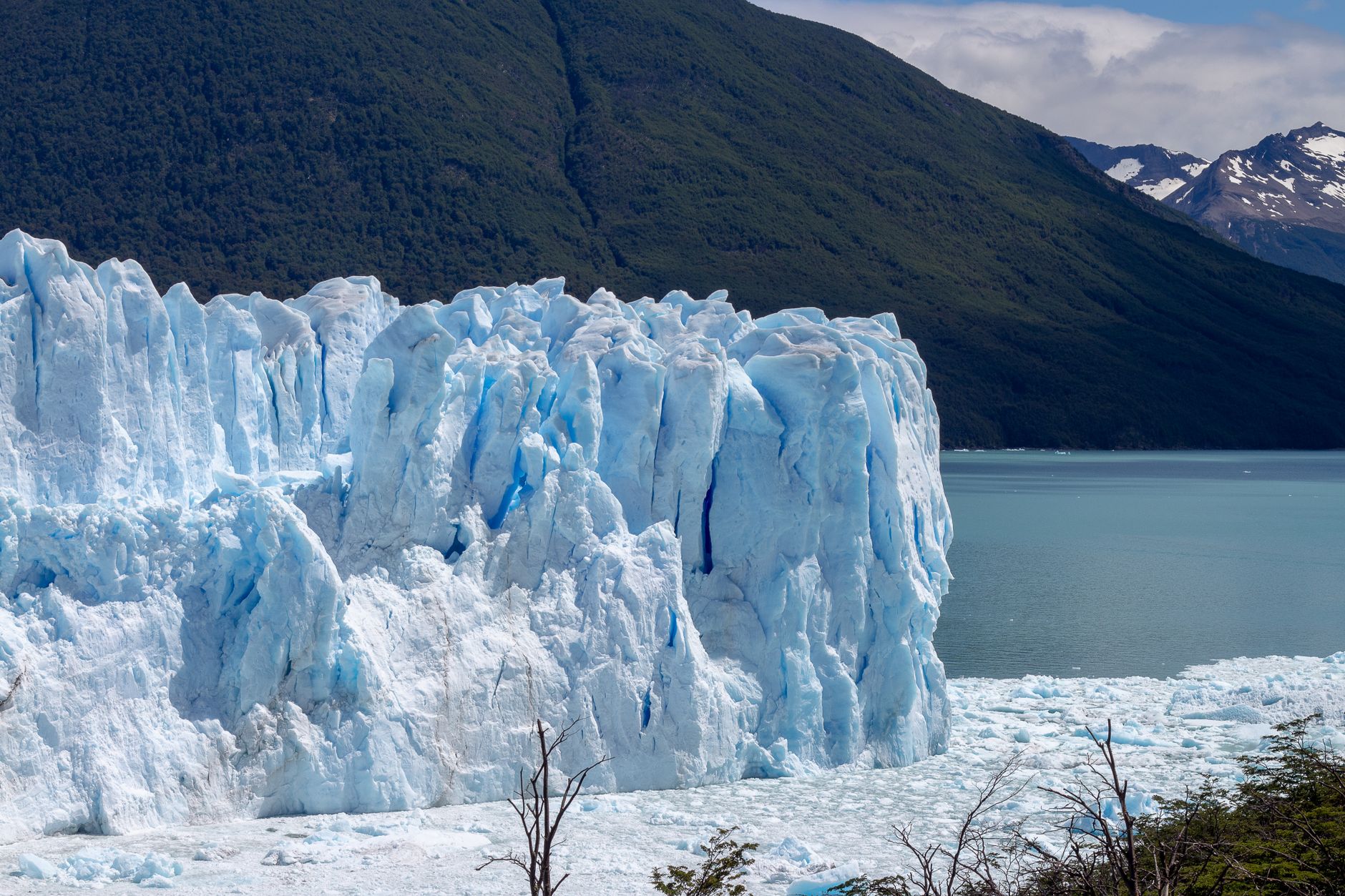
The surface of Perito Moreno is a shifting labyrinth of ice cathedrals, deep transverse crevasses, and unstable seracs marching forward at an average speed of two meters per day at its center. This relentless advance toward Lake Argentino’s Rico Arm generates colossal stresses that fracture the white mass, creating deep blue abysses whose floors remain invisible. Mountain guides and experienced expeditioners must constantly evaluate the stability of snow bridges masking these crevasses, utilizing roped progression techniques and probes to anticipate any structural collapse beneath their boots.
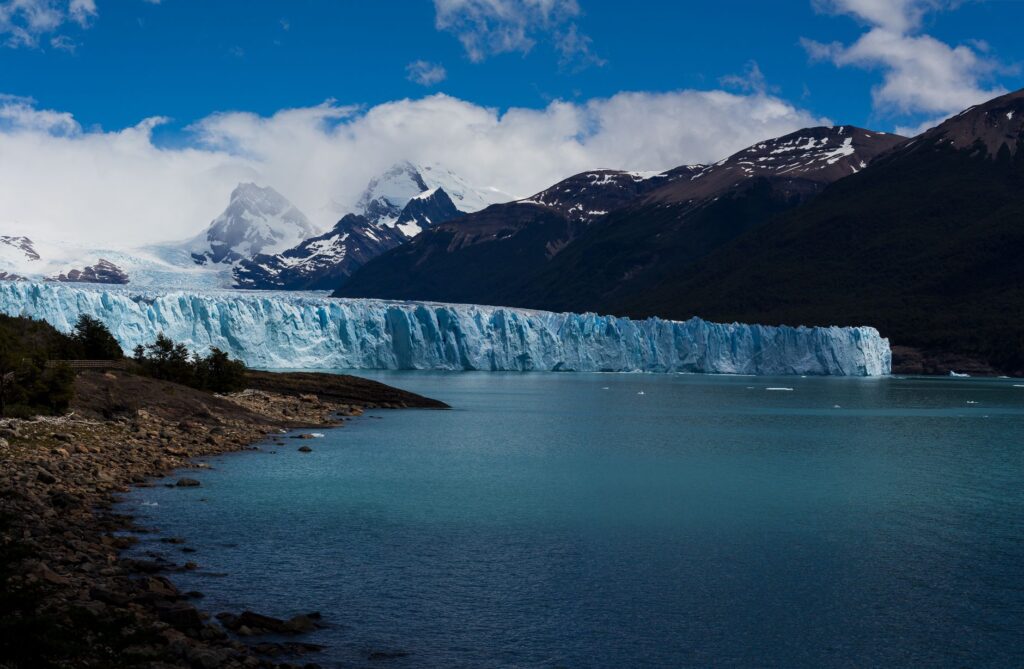
The most celebrated phenomenon of this dynamic is the iconic rupture of the ice dam, a natural cycle where the glacier’s advance seals the Témpanos channel and isolates the Rico Arm. Unable to drain freely, water levels rise meters above normal levels, exerting unsustainable hydrostatic pressure on the ice wall until ultimate collapse ensues. Although this event typically occurs during the austral summer, monitoring seepage and internal pressure is an ongoing subject of study to prevent accidents and ensure ice-trekking routes are modified before massive calving events occur.
Technical Equipment and Blue-Ice Progression Techniques
Safe progression across glacial ice demands absolute mastery of technical gear. Semi-rigid 12-point steel crampons and mountaineering ice axes are indispensable tools, but their effectiveness depends entirely on the marching technique employed by the expeditioner. Unlike rock or firm earth, blue ice requires stepping with the entire sole flat to maximize contact with vertical points, avoiding inward or outward ankle tilts that could trigger fatal slips on steep slopes.
Likewise, harnesses, locking carabiners, dynamic ropes, and ice screws form part of the mandatory carried kit for every team member. On multi-day traverses, backpack weight management becomes an exercise in survival engineering. Every gram matters: from selecting three-layer technical clothing based on merino wool and breathable waterproof membranes to packing high-calorie marching rations designed to counteract the extreme metabolic drain caused by low temperatures and solar radiation reflected by ice albedo.
Approaches and Logistics: El Chaltén, El Calafate, and the National Park
The logistical gateway for any expedition to the Perito Moreno Glacier is the town of El Calafate, situated some eighty kilometers from the Bajo de las Sombras port, the neuralgic boarding point toward the ice’s southern wall. Regional transport infrastructure requires precise coordination with permit holders authorized by the National Parks Administration. Boats crossing Rico Arm operate under strict time windows and remain subject to capricious catabatic winds descending from the main ice field.
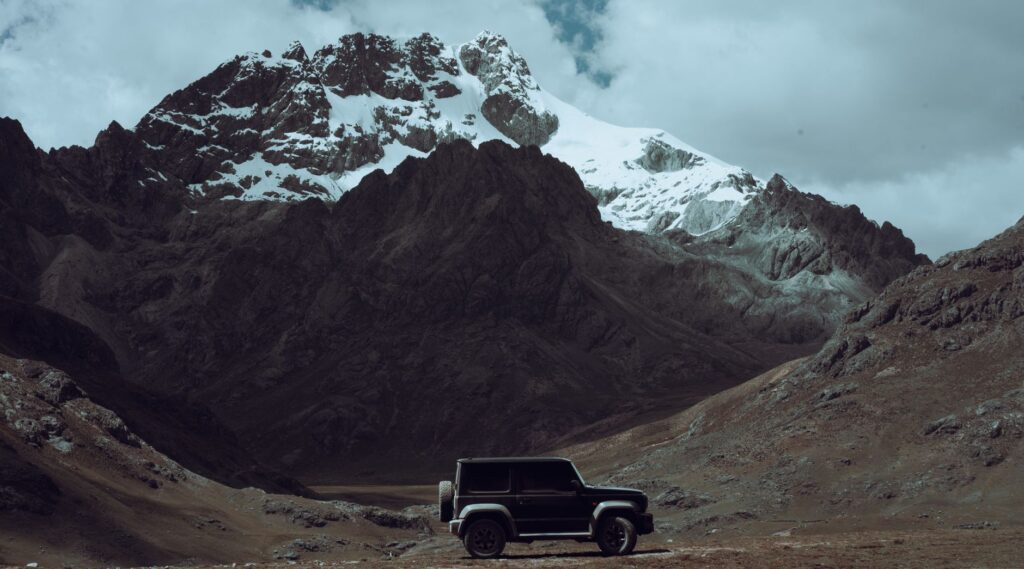
For teams combining this expedition with the mythical northern sector of the park near El Chaltén—the national trekking capital—logistical challenges multiply. Overland connectivity routes via Provincial Route 40 demand 4×4 vehicles and rigorous preventive maintenance due to loose gravel and wind battering. Managing trekking permits, compulsory expedition registration at National Park offices, and contracting satellite communication systems are non-negotiable prerequisites before taking the first step onto rugged Patagonian terrain.
The blue expanse of Patagonian ice admits no improvisation; every crevasse hidden beneath the snow is a reminder that mountains and glaciers enforce their own rules.
Extreme Weather and Remote Area Evacuation Protocols
Surviving and operating within the Perito Moreno environment means accepting the unpredictability of southern weather. Storm winds can exceed one hundred and ten kilometers per hour, toppling poorly anchored base camps and reducing visibility to zero within minutes. Expedition leaders must hold training in mountain meteorology, interpreting barograms, lenticular cloud formation over the cordillera, and sharp atmospheric pressure drops to anticipate foul-weather fronts.
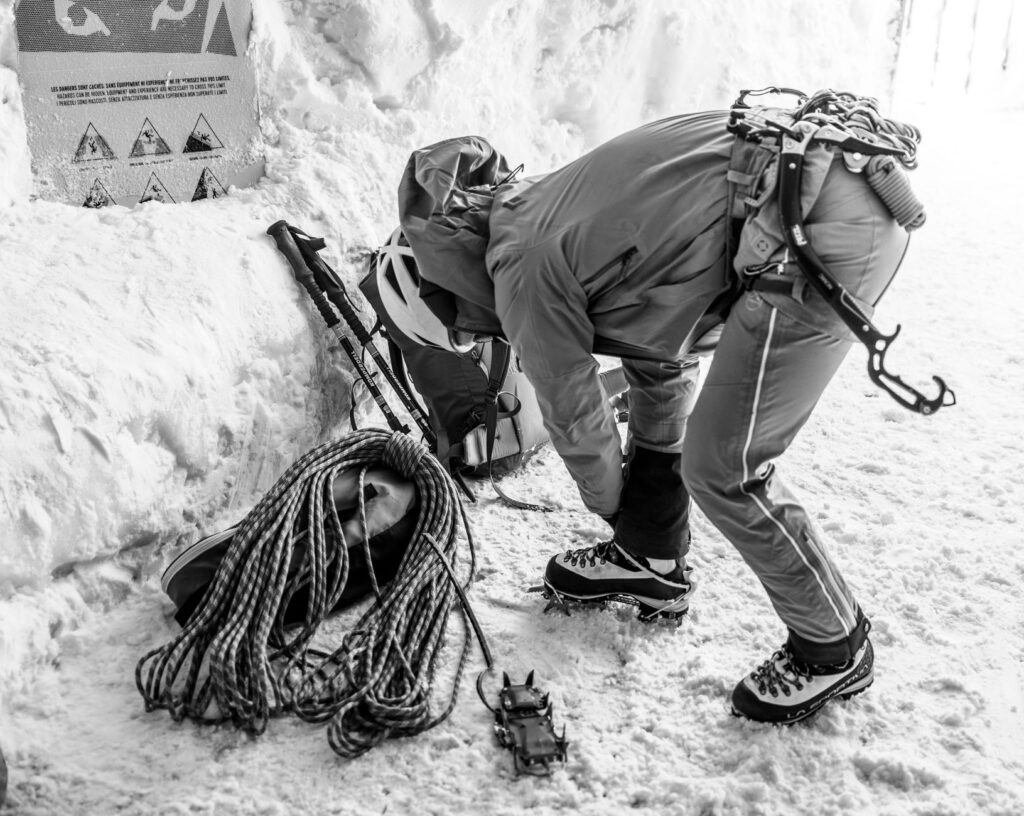
In medical emergencies, crevasse fall trauma, or severe hypothermia, evacuation protocols within Los Glaciares National Park are complex and demanding. Operating in wilderness areas without conventional cellular coverage, activating Personal Locator Beacons (PLBs) and Iridium or InReach satellite messengers forms the first link in a rescue chain involving park rangers, Gendarmería Nacional rescue patrols, and, weather permitting, medicalized helicopters capable of vertical and glacial hoist operations.
Climate Change Impact on Patagonian Glaciers
Scientific monitoring of the Perito Moreno Glacier offers a unique window into global climate shifts. While eighty-five percent of Patagonian glaciers experience accelerated retreat due to sustained increases in summer temperatures, Perito Moreno maintains a state of apparent anomaly thanks to its massive feeding basin and specific bedrock slope. However, researchers warn of early signs of thinning in its upper accumulation zone.
This reality turns every expedition into an opportunity for observation and environmental stewardship. Leave No Trace principles apply with absolute rigor: depositing organic and inorganic waste on the ice is strictly prohibited, and all high-camp sanitation logistics must be self-sufficient. The fragility of the Patagonian ecosystem demands that travelers assume an active role in conserving this glacial sanctuary, understanding that its pristine beauty is a delicate balance threatened by planetary-scale imbalances.
Practical guide
How to get there: Comandante Armando Tola International Airport (FTE) in El Calafate receives daily flights from Buenos Aires. From the air terminal, Los Glaciares National Park is accessed via 4×4 rental vehicles or regular shuttle services along Provincial Route 11.
Best time for expedition: The optimal window extends from November through March (austral spring and summer), when daylight hours peak and temperatures are less extreme, though wind remains a constant factor.
Permits and regulations: Paying the entrance fee to Los Glaciares National Park is mandatory, alongside registering at National Park checkpoint stations if undertaking technical traverses outside traditional tourist circuits.
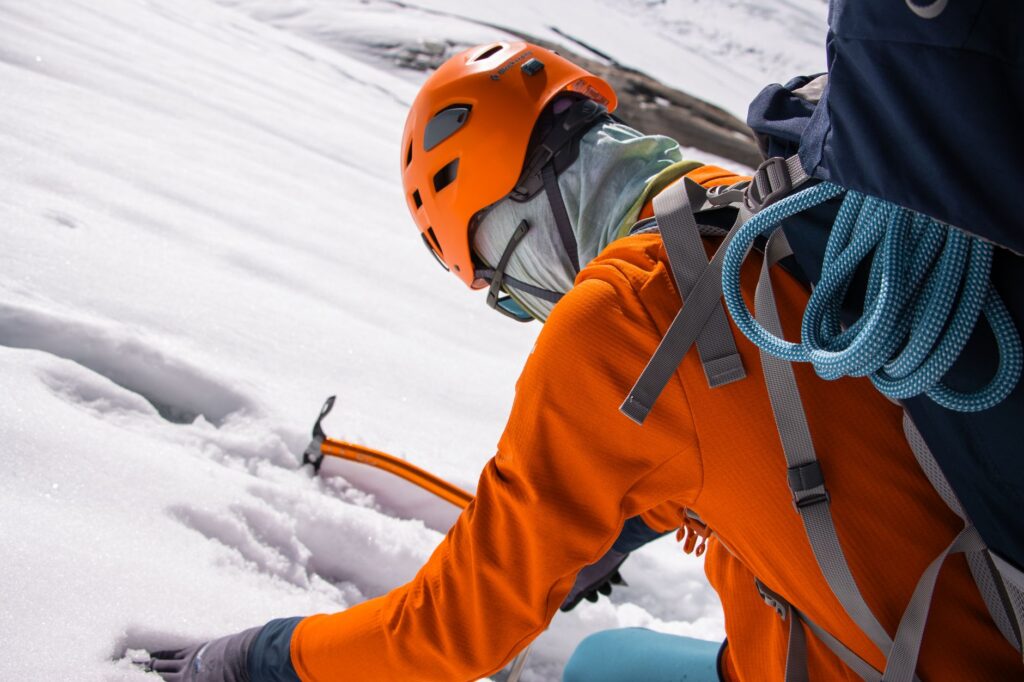
Recommended equipment: 12-point steel crampons, technical ice axe, UIAA-certified harness, mountain helmet, rigid or semi-rigid boots compatible with step-in crampons, three-layer waterproof membrane clothing, category 4 sunglasses, and broad-spectrum sunscreen.
The Millennial Pulse of Southern Ice
Contemplating ancient ice walls from the natural refuge of boardwalks or following a day of crampon marching across the glacier’s spine transforms the traveler’s perception of time. The deep, muffled groan emitted by Perito Moreno as it yields under its own weight is not a sound of destruction, but the steady heartbeat of a living system continuously sculpting southern geography with glacial patience.
At the end of the traverse, when the wind subsides at dusk and the final sunrays ignite the turquoise and indigo tones of the seracs, the expedition ceases to be a mere physical challenge and becomes an exercise in deep communion with the untamed nature of deep Patagonia.