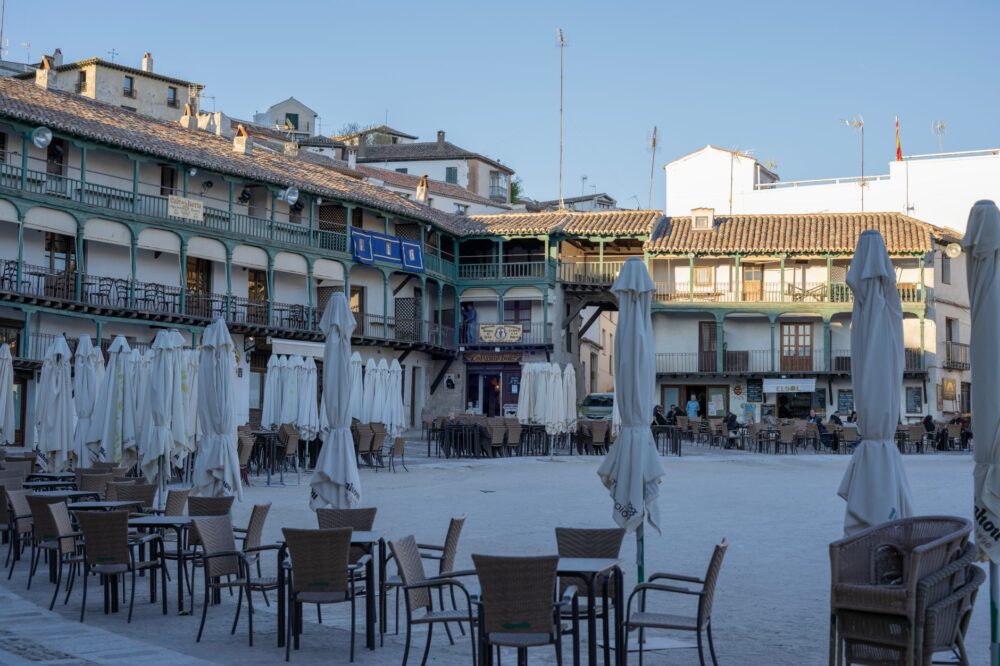
The Square That Breathes to the Rhythm of the Atlantic
There are few urban geographies in southern Europe where daily life is so intimately bound to saltwater as in Cadiz. Entrenched behind a labyrinth of defensive walls and constantly beaten by the currents of the Strait and the Atlantic Ocean, the city finds its true anthropological heart in the Plaza de Abastos. This precinct is not merely a food provisioning point, but the stage where the maritime memory of the city renews itself every dawn with the arrival of the earliest catches.
The current building, inaugurated in the early 19th century under the neoclassical design of architect Torcuato Benjumeda, unfolds as a grand porticoed peristyle that organizes the fertile chaos of local commerce. Crossing its doors in the early morning hours means immersing oneself in a symphony of sounds, colors, and aromas where the smell of fresh iodine competes with the murmur of traders and the precise butchering of knives over marble. Here, the larder of the Bay is displayed without artifice, reminding the traveler that Cadiz cuisine is, above all, an exercise in absolute respect for wild produce.
The spatial layout of the market encourages an almost ritualistic progression. In the center of the open square, the grand courtyard bustles under the clear Andalusian light, while the perimeter stalls and covered naves house marine produce in its utmost expression. This is not an over-modernized marketplace; it retains that authentic patina where fishing families have passed down their trade from generation to generation, ensuring that the knowledge of the sea is never lost amidst the new dynamics of global consumption.
The Cathedral of Rockfish and Tidal Ponds
If there is one reason why the Central Market of Cadiz merits an unavoidable gastronomic pilgrimage, it is the exceptional quality and variety of its fishery products. The fish stalls—popularly known as the market’s fishmonger rows—display a living catalog of Atlantic and Mediterranean marine biodiversity. From the depths of the tidal channels to the rocks battered by spring tides, each species tells a story of very specific currents and temperatures.
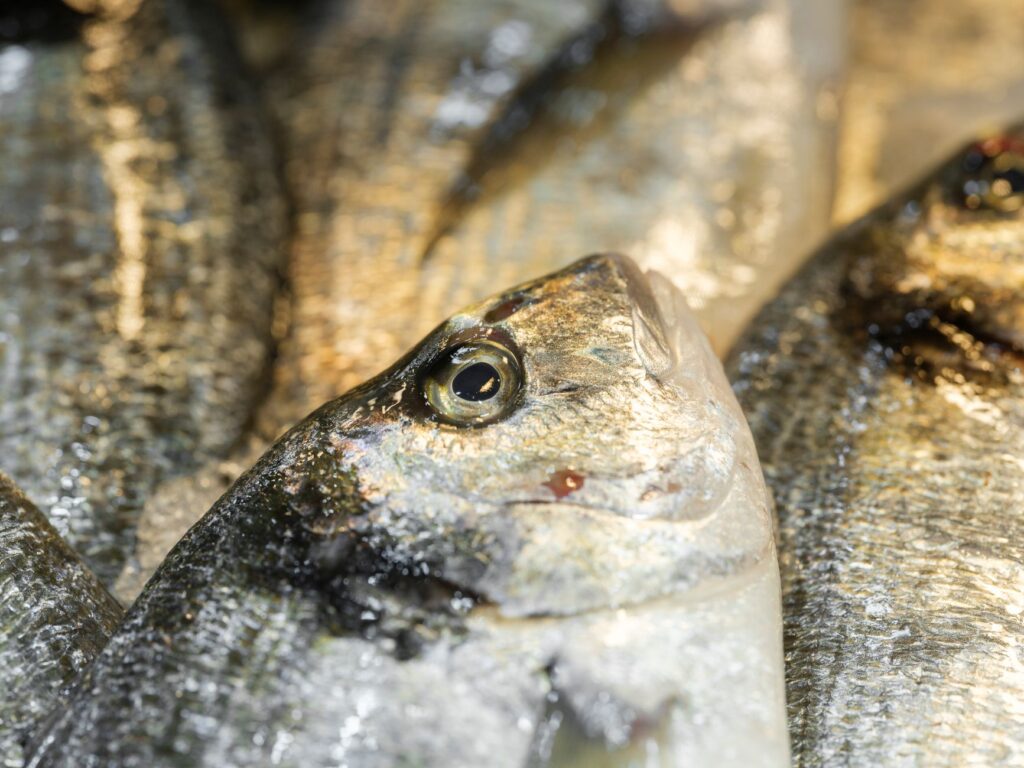
The stalls dedicated to rockfish showcase superb specimens of white seabream, rockfish, and gilthead variants, destined for slow cooking or to take center stage in traditional ovens. Alongside them, the shellfish of the Bay, such as local shrimp, prawns from Sanlúcar, and bay crabs, compete for the attention of local chefs and private buyers. The freshness is such that the eyes of the fish retain the vitreous gleam of an animal freshly pulled from the water, a quality standard that admits no debate or negotiation in Cadiz.

A separate chapter belongs to products from traditional tidal ponds—those ancient salt pans converted into natural nurseries where fish grow in semi-liberty, feeding on plankton and native crustaceans. Sea bream, sole, and sea bass acquire a texture and a clean fat infiltration that radically sets them apart from intensive aquaculture. As the artisanal sector frequently points out in culinary outreach meetings, the flavor of the tidal pond is the triumph of recovered marshland driven by human ingenuity.
The Art of Butchery and the Culture of Frying
Walking through the aisles of the Cadiz market is also attending a masterclass in tuna butchery, a millenary tradition directly linked to the coastal Almadraba trap nets of the region. During the spring and summer months, Atlantic bluefin tuna (*Thunnus thynnus*) floods the stalls with precise cuts handled by wholesalers with the dexterity of surgeons. Described by gastronomic chroniclers as the pig of the sea, every part of the tuna—from the collar and belly to the upper loin—finds its perfect culinary destiny here.
This mastery in cutting translates directly into surrounding bars and fry shops, where fried fish is elevated to the category of popular haute cuisine. The secret lies not solely in the quality of extra virgin olive oil or the exact temperature of the frying oil, but in the fineness of the chickpea flour batter, a historical resource that seals the interior juices of dogfish, baby squid, or wedge sole without masking their marine flavor.
The Cadiz market does not simply sell food; it dispenses the liquid identity of a people who have turned historical scarcity and maritime wealth into an art of survival and pleasure.
The relationship between the market stall and the cooked plate is immediate. Many visitors purchase their own selection of seafood and request the ‘market frying’ service or take it to nearby bars, where cooks execute the recipe with the same naturalness with which the western breeze is breathed. It is a short and transparent value chain that strengthens the city’s circular economy.
The Aromas of the Peripheral Market Garden and Curing Rooms
Although the sea exerts an undeniable magnetic pull, the Central Market’s offer is completed by the agricultural treasures of the Cadiz countryside and surrounding municipal districts. In the fruit and vegetable naves, land produce exhibits the solar power of the south: tomatoes from Conil de la Frontera with the perfect balance of acidity and sweetness, peppers from Rota, and winter squash arriving directly from clay-rich inland plots.
These proximity vegetables act as indispensable companions to marine produce. Onions, garlic, and aromatic herbs form the base of the fish stews and broths that perfume the historic quarters of La Viña and El Pópulo. Likewise, pickle and salted fish stalls offer tuna mojama, roe, and sun-cured olives, living testimony to the conservation techniques already practiced by the Phoenicians along these same shores.
The market thus functions as a meeting point between two complementary ecological worlds: the aquatic environment and traditional agrarian life. The popular wisdom governing transactions ensures that every vegetable is purchased at its optimal moment of seasonal ripeness, rejecting long distribution circuits in favor of zero-kilometer freshness.
Generational Renewal Among Centennial Stalls
Facing the risk of excessive touristification affecting historic markets in other European capitals, Cadiz maintains a complex yet hopeful balance thanks to the arrival of a new generation of stallholders and cooks. Young professionals trained in hospitality and food management are taking over from veterans, introducing improvements in product presentation and opening in-situ tasting spaces without losing respect for the popular essence of the location.
This evolution is clearly perceived in the gastronomic stalls integrated within the enclosure itself, where one can savor everything from freshly cut tuna tartare to oysters cultivated in the estuary, paired with local white wines, such as the finos and manzanillas from the neighboring designation of origin. The coexistence between the traditional market stall and the modern tapas corner demonstrates that the market is a living organism, capable of adapting to contemporary traveler demands without betraying its lifelong neighborhood clientele.
Preserving the tone of voice of the stallholders, the sound of the knife sharpening against stone, and the blind trust between buyer and seller is the true intangible heritage sustaining this Atlantic temple.
This harmonious transition ensures that the Plaza de Abastos remains the social thermometer of Cadiz. When neighbors greet each other across aisles and discuss the price of shellfish or the suitability of a recipe, they reaffirm a sense of community that survives any urban mutation.
The Saline Environment: Marshes, Ponds, and Salt Pans
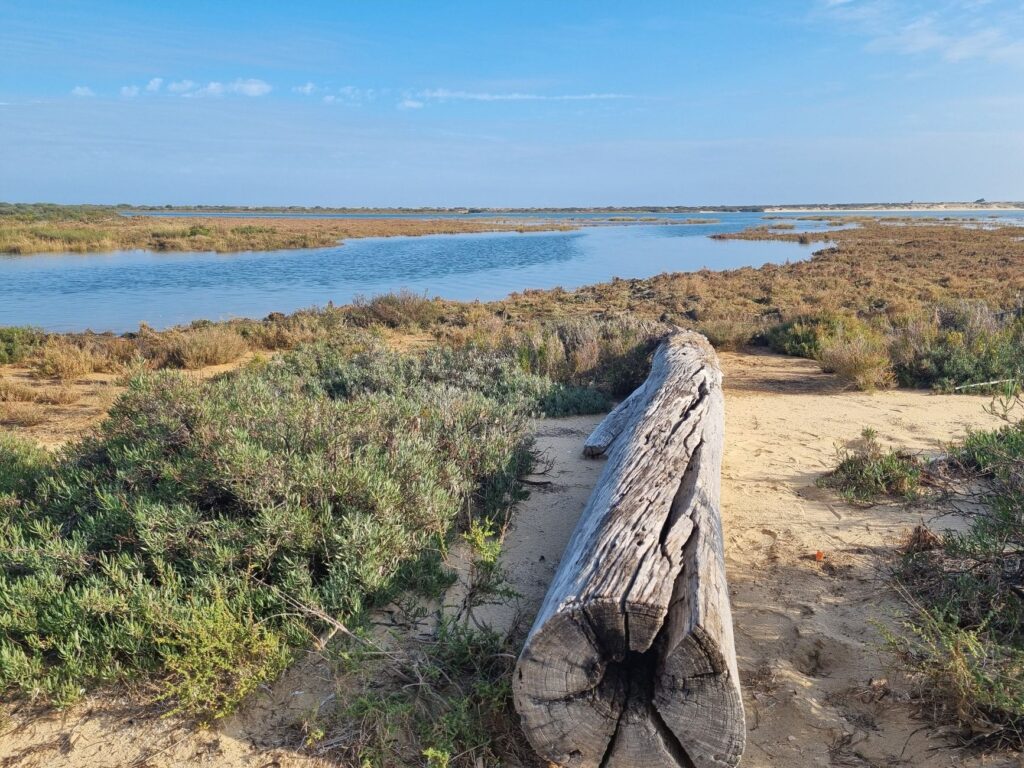
To fully comprehend what is displayed upon the market counters, one must venture outside the Cadiz walls and into the Bay of Cadiz Natural Park. This amphibious landscape, dominated by tidal marshes, channels, and ponds, constitutes the nursery ecosystem that feeds the city’s larder. The ancient rock salt pans, now converted into centers for sustainable aquaculture and birdwatching, form the habitat where pond fish is cultivated for its organoleptic purity.

Exploring the trails bordering the Sancti Petri channel reveals the complex hydraulic engineering inherited from the Romans and developed over centuries by local salt workers. Atlantic water enters with spring tides, dragging essential nutrients that accumulate in the sluice gates. In this environment of constant ebbs and flows, halophytic flora—such as glasswort—grows wildly, contributing saline and vegetable notes that many chefs now use as an innovative garnish.
The visit to these natural spaces completes the anthropological narrative of the market. It is not merely about consuming a resource, but about understanding the delicate ecological balance that makes its existence possible. The protection of the marshes and the viability of artisanal fishing in the Bay are absolute prerequisites for the liturgy of the Plaza de Abastos to endure in the future.
Practical guide
How to get there: The Central Market of Cadiz is located in Plaza de la Libertad, right in the historic center. It is accessible on foot from any point in the downtown area. For those arriving by train or intercity bus, the terminal station is about a fifteen-minute walk through the lively Calle Ancha.
Recommended schedules: The fish, meat, and vegetable naves are open Monday through Saturday from approximately 08:00 to 15:00 hours. It is advisable to plan the main visit between 09:30 and 11:30 hours, the time of highest commercial activity and maximum freshness at the marine stalls.
Gastronomic zone: The market’s Gastronomic Corner, located on one side, is open Tuesday through Saturday during lunchtime and select weekend nights, offering direct tastings of produce purchased at the stalls.
Shopping tips: If you wish to purchase fish to cook at your accommodation, stallholders generally offer cleaning and scaling services at no additional charge. Do not hesitate to consult them regarding the best preparation technique for each species according to the season.
Sustainability: Respect the minimum sizes and seasonal fishing bans noted by merchants on their informational signage. The survival of the Bay’s marine biodiversity depends on responsible consumption.
The Invisible Beating of Salt and Western Wind
As evening falls, when the market’s metal shutters roll down and the bustle of traders gives way to the silence of noble stone, Cadiz recovers an ancient calm. Hanging in the air is the subtle trace of iodine, the salinity accumulated on the pavement, and the distant echo of gulls soaring over watchtowers. The Plaza de Abastos rests, preparing in the gloom for the uninterrupted cycle that will begin anew with the first breath of dawn.
In that nocturnal parenthesis, the true dimension of this Atlantic corner becomes perceptible. It is not only a commercial space, but the living archive where the history of a people is written daily with the humblest and most exquisite ingredients bestowed by sea and shore. Those who pause to listen to that invisible heartbeat understand that the culture of Cadiz resides not solely in its astystone monuments, but in the manner its people honor, with simplicity and mastery, the inexhaustible treasure of marshland and ocean.