
Introduction to the Sea of Silent Giants
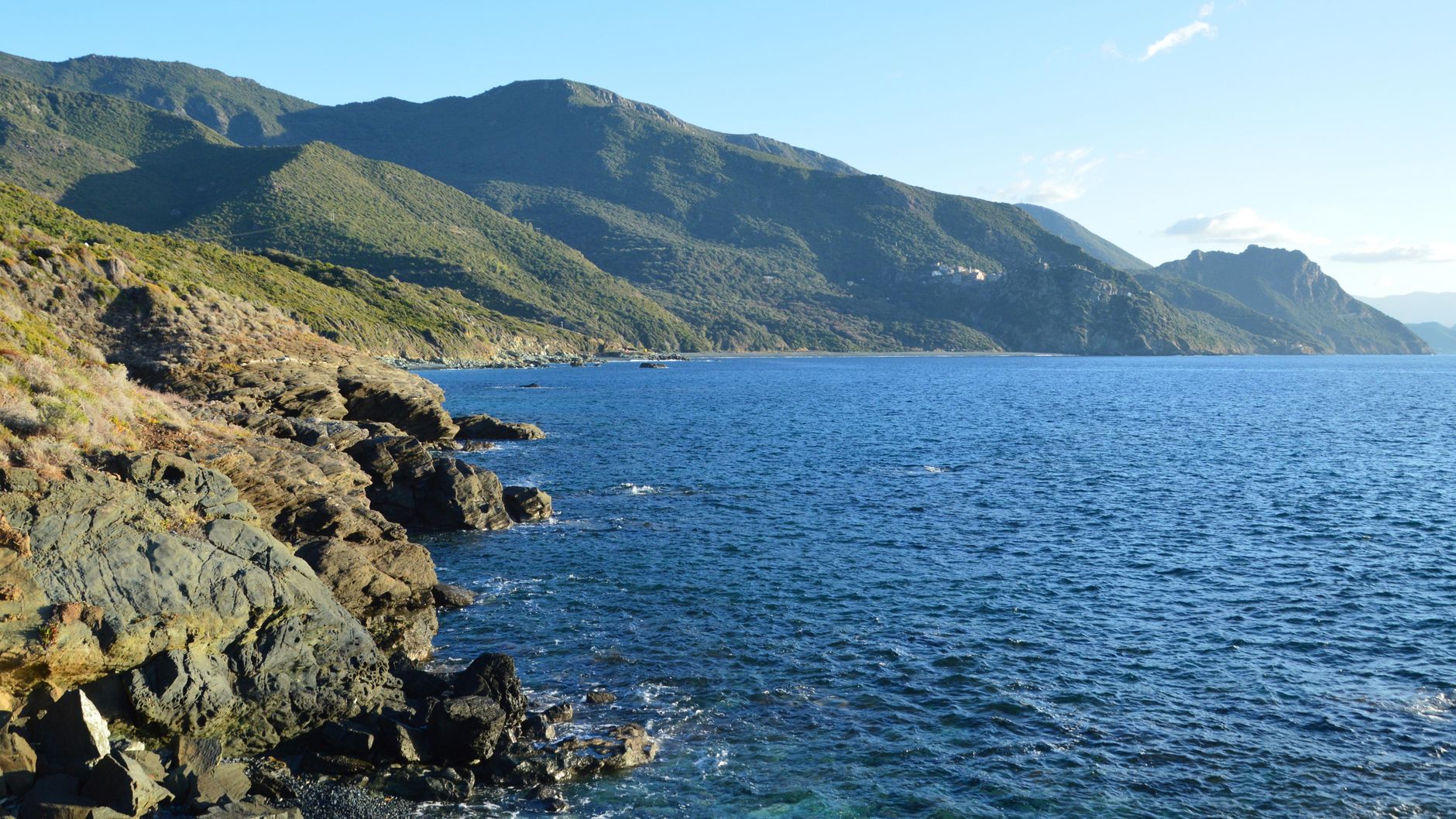
The northwestern Mediterranean hosts one of the most significant concentrations of marine mammals in the Northern Hemisphere, a fact that contrasts sharply with the intense industrial and tourist activity crossing its waters daily. Between the shores of French Provence, Italy’s Liguria region, and northern Corsica lies the Pelagos Sanctuary, an internationally protected marine area spanning over eighty-seven thousand square kilometers specifically designed for cetacean preservation. This corner of the Mare Nostrum is not a geographic anomaly, but the result of a complex oceanographic machinery where seasonal winds, massive river runoff, and extreme bathymetry converge to foster nutrient retention. Comprehending the ecology of this sanctuary requires diving into the physical mechanisms that transform a semi-enclosed basin into an oasis of pelagic life.
The history of protection for this space dates back to the late twentieth century, when scientists began to note the vulnerability of flagship species to commercial maritime traffic and destructive fishing practices. Today, the challenge lies in balancing the sovereignty of three riparian nations with the cross-border management of resources that completely ignore the geopolitical lines drawn on maps. Through this report, we will examine how marine science, acoustic monitoring, and underwater noise mitigation policies strive to ensure the long-term survival of whales and dolphins in a hyper-anthropized sea.
Extreme Bathymetry and Submarine Canyons: The Engine of Productivity
To understand why the Pelagos Sanctuary is the permanent or seasonal home of eight regular cetacean species—including the fin whale, the sperm whale, and the bottlenose dolphin—one must look toward the seabed. The continental shelf in this zone is exceptionally narrow, giving way almost abruptly to deep troughs and submarine canyons stretching thousands of meters down, such as the Var or Corsica canyons. These geographic features act as gigantic funnels that channel deep currents and trigger upwelling phenomena. When nutrient-rich mineral waters rise toward the surface, driven by topography and mistral wind action, seasonal phytoplankton blooms are unleashed, forming the base of the entire marine trophic web.
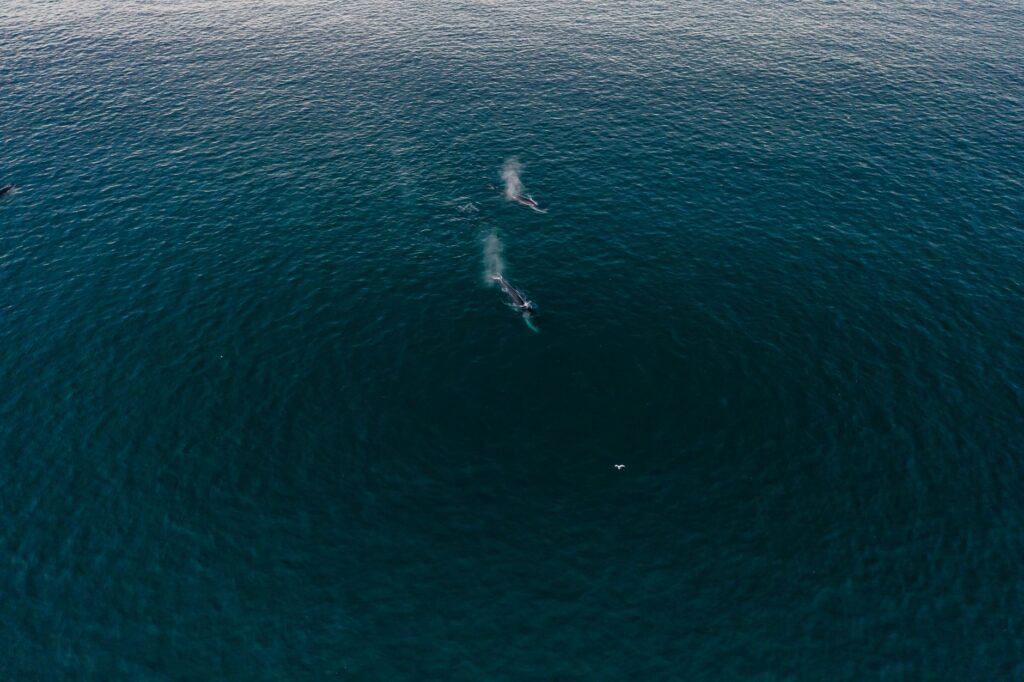
Adding to this geological framework is the direct influence of the Liguro-Provençal-Catalan Current, a massive flow of water coursing along the northern edge of the basin in a counter-clockwise direction. This current not only transports nutrients but also acts as a thermal barrier and migratory highway for numerous pelagic species. Scientists from the Pelagos Institute and partner organizations have demonstrated that cetaceans use these bathymetric formations as spatial reference points for foraging and resting. Sperm whales, for example, concentrate their vertical dives at the heads of submarine canyons to hunt deep-water squid, taking advantage of the darkness and pressure of the abyssal layers.
blockquote>The submarine topography of Pelagos transforms the seabed into a relief as rugged as the surrounding Alps, creating abyssal valleys where the Mediterranean’s largest population of fin whales feeds.
Dynamic Oceanography and the Impact of Dominant Winds
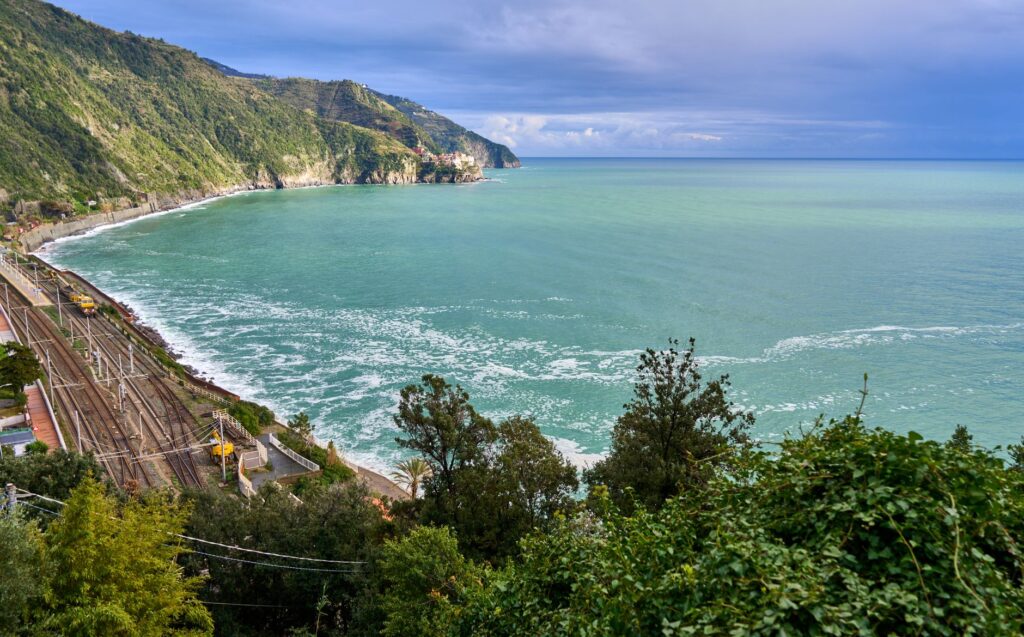
The meteorological regime of the northwestern Mediterranean exerts absolute control over the sanctuary’s oceanographic dynamics. Cold, dry winds blowing from the north and northwest, locally known as the mistral and tramontane, whip the sea surface during autumn and winter months with considerable force. These winds generate not only intense waves but also rapidly cool the surface water layers. As it cools, the water becomes denser and heavier, sinking and triggering a massive vertical mixing of the water column that renews oxygen and nutrients throughout the entire basin.
This deep convection process is vital for the following summer’s productivity, as it fertilizes surface waters before seasonal stratification driven by summer heat sets in. However, shifts in global climate patterns are altering this delicate thermohaline balance. Warmer, less windy winters reduce the intensity of vertical mixing, potentially causing a decline in food availability for filter-feeding organisms and indirectly altering the feeding routes of large cetaceans. Continuous oceanographic monitoring has thus become an indispensable tool for anticipating how climate change will impact the stability of this unique ecosystem.
Demography and Trophic Ecology of Mediterranean Giants
The fin whale (Balaenoptera physalus) is the undisputed king of the Pelagos Sanctuary in size and abundance. Unlike their oceanic counterparts that undertake polar migrations, a significant subpopulation of these fin whales remains in the Mediterranean year-round, capitalizing on seasonal blooms of small crustaceans, principally the euphausiid Meganyctiphanes norvegica. These animals can exceed twenty meters in length and frequently travel in small family groups or solitarily, using low-frequency vocalizations to communicate over vast distances across thermoclines.
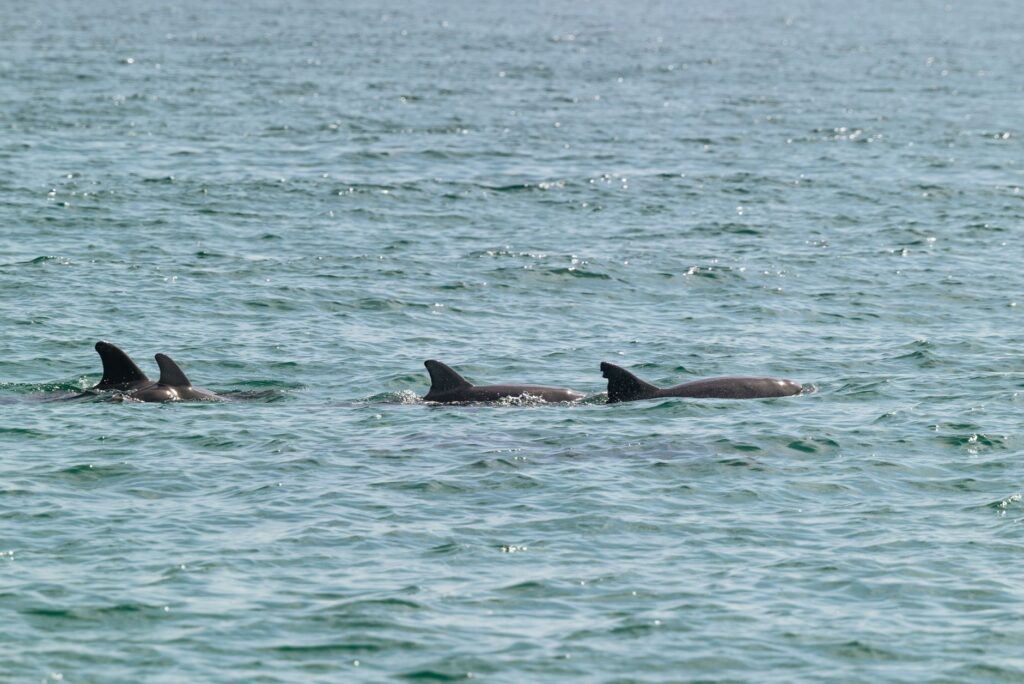
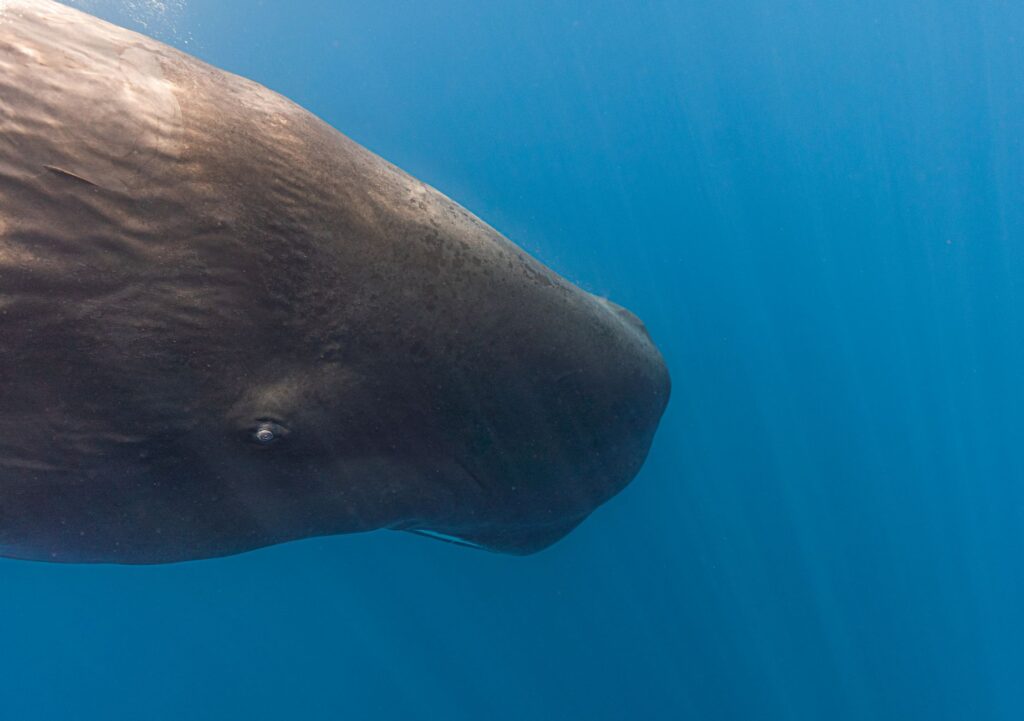
Alongside the fin whale, the sperm whale (Physeter macrocephalus) finds an exceptional hunting ground in the sanctuary’s canyons. The demography of this species in the basin presents notable peculiarities: groups of females with calves and solitary young males predominate, while large mature breeding males make seasonal incursions from the Atlantic. Their diet relies almost exclusively on deep-water cephalopods, detected via a sophisticated echolocation system based on high-powered ultrasonic clicks. In addition to these two flagship species, the area supports stable populations of Risso’s dolphins, striped dolphins—the most abundant species—and the elusive Cuvier’s beaked whale, a cetacean of deeply pelagic habits highly sensitive to human acoustic disturbances.
Anthropogenic Threats: Underwater Noise and Maritime Traffic
Despite being protected by an international agreement signed by France, Monaco, and Italy in 1999, the Pelagos Sanctuary endures anthropogenic pressure unmatched in other global marine reserves. The northwestern basin coincides with some of the Mediterranean’s busiest commercial shipping lanes, connecting pivotal ports such as Genoa, Marseille, Livorno, and Barcelona. The constant traffic of container ships, high-speed ferries, and tourist cruise liners creates a high risk of fatal collisions with fin whales, which often rest or feed near the surface, ignoring the presence of vessels.
Beyond the physical risk of vessel strikes, underwater noise pollution represents an invisible yet devastating threat to marine fauna. The constant hum of ship engines, seismic surveys, and the use of mid-frequency military sonars mask cetacean communication signals, alter their foraging behaviors, cause chronic stress, and, in extreme cases of exposure to intense sonic waves, can induce fatal gas embolisms in diving species like beaked whales. Mitigating this impact requires the strict adoption of measures such as reducing vessel speeds in critical high-density cetacean zones and developing quieter naval technologies.

Cross-Border Conservation and Citizen Science at Sea
The governance of the Pelagos Sanctuary rests on the shoulders of a tripartite scientific and political committee attempting to harmonize national environmental legislations. However, the lack of direct enforcement power and disparities in budget allocations among the three signatory countries have historically limited the effectiveness of their action plans. Faced with these bureaucratic limitations, independent scientific research and citizen science programs have gained fundamental prominence. Non-governmental organizations and oceanographic research centers deploy fleets of observation sailboats every summer to census populations, identify individuals through natural markings on their dorsal fins, and record animal behavior.
blockquote>Effective conservation in the Mediterranean relies not solely on paper declarations of vast reserves, but on the real capacity to regulate merchant ship speeds and fund continuous scientific patrols.
These field campaigns not only gather essential demographic data to evaluate species conservation status, but also educate thousands of recreational sailors and tourists on best practices for approaching cetaceans. Maintaining a prudent distance, avoiding harassment of mothers with calves, and reporting sightings in real-time through specialized mobile apps are everyday actions that transform ocean users into active sentinels of pelagic biodiversity.
Practical guide
Planning a responsible whale-watching trip or scientific expedition in the Pelagos Sanctuary demands rigor, environmental respect, and a deep understanding of marine seasonality. The essential guidelines for visiting and understanding this reserve from a sustainable perspective are detailed below.
- Best time for observation: The months between June and September offer the most stable weather conditions and the highest probability of spotting fin whales and pelagic cetaceans taking advantage of summer calm.
- Authorized departure ports: The main scientific expedition centers and eco-tour operators operate from Nice, Cannes, Antibes, and Toulon on the French coast, as well as from Sanremo, Imperia, and Genoa on the Ligurian coast.
- At-sea code of conduct: Maintaining a minimum distance of one hundred meters from any cetacean is mandatory, along with reducing speed to under five knots when entering confirmed presence zones and avoiding circling or cornering the animals.
- Operator selection: Exclusively choose certified vessels carrying marine biologists on board that comply with the Pelagos Charter of Good Practices for commercial whale watching.
- Recommended equipment: For extended stays at sea, bringing waterproof windbreaker clothing, non-slip white-soled footwear, stabilized binoculars, and broad-spectrum eco-friendly sunscreen is essential.
Epilogue: The Fragile Beating of Pelagos Against the Horizon
As the sun descends over the Gulf of Genoa, dyeing the horizon in copper and violet tones, the sea surface recovers a tense, almost ceremonial calm. Far from port noise and the incessant bustle of commercial routes, the waters of the Pelagos Sanctuary continue to harbor irreplaceable biological heritage that has survived millennia of geological and climatic changes. Nevertheless, the persistence of these marine giants no longer depends exclusively on the natural cycles of Mediterranean oceanography, but on the political will and collective responsibility of the human societies sharing its shores. Protecting the heartbeat of cetaceans in this inland sea is, ultimately, a definitive test of our capacity to coexist with the wild nature still surviving in the blue depths.