A Landscape Sculpted by Time and Human Hands
Traveling toward the province of Jaén, in the heart of Andalusia, is an entry into a territory where geography has been shaped millimeter by millimeter through agriculture. This is not merely a rural environment blessed by nature, but an authentic sea of olive trees stretching as far as the eye can see, encompassing more than sixty million specimens. This cultural landscape, a permanent candidate for UNESCO World Heritage status, is the result of centuries of coexistence between humanity and the olive tree—a botanical species that found in these clay soils and interior Mediterranean climate the perfect habitat to take deep root.
The horizon of Jaén impresses with its apparent monotony, which soon reveals a complex network of nuances. The hills and ridges are carpeted in a silvery-green mantle that shifts in tone according to the angle of sunlight. During twilight hours, when the sun dips behind the mountain ranges of Cazorla, Segura, and Las Villas, the landscape assumes a coppery and golden patina that explains why this liquid has been considered gold since time immemorial. Each tree, often planted on impossible slopes, stands as the living testimony of generations of farmers who labored against stone and tamed the incline.
The Botany of the Olive Tree and the Supremacy of the Picual Variety
To grasp the gastronomic magnitude of Jaén, it is imperative to analyze its primary botanical protagonist: the Picual variety. Although other native varieties such as Royal de Cazorla or Carrasco de Alcaudete coexist within the province, Picual accounts for nearly ninety percent of Jaén’s olive oil production. Its name derives from the characteristic pointed shape at the tip of the fruit, a morphological detail that conceals one of the highest concentrations of polyphenols and natural antioxidants in the plant kingdom.
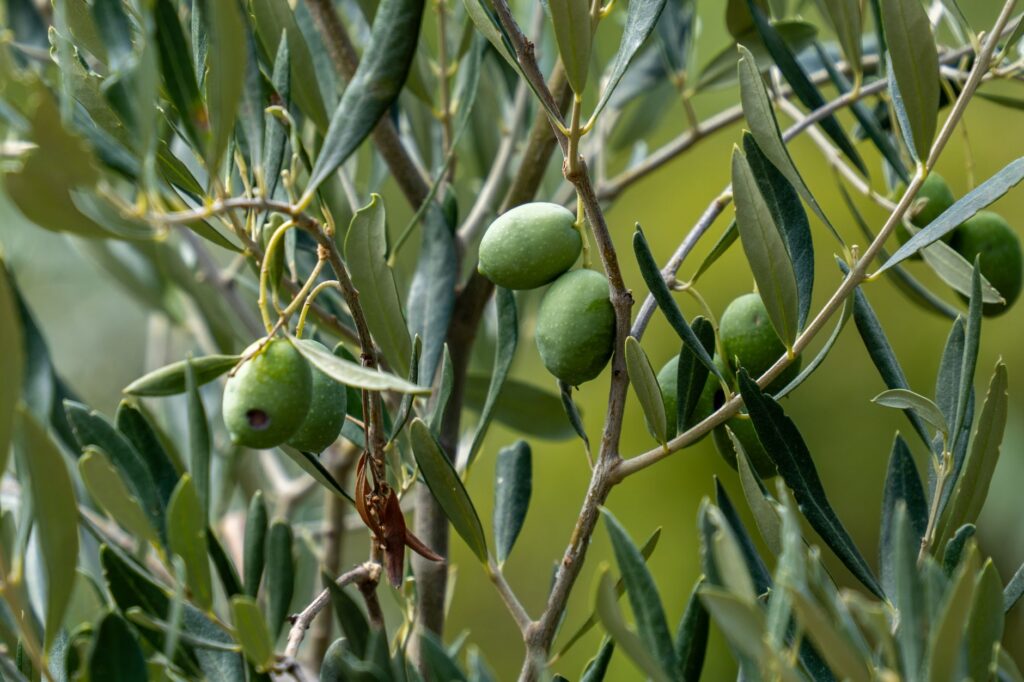
Polyphenols are the compounds responsible for the oil’s stability against oxidation, as well as its most recognizable organoleptic attributes: bitterness at the back of the tongue and pungency in the throat. Far from being flaws, these attributes are unequivocal indicators of health and superior quality. A well-crafted Picual oil stands out for its intense herbaceous notes, reminiscent of freshly cut grass, fig leaves, tomato plants, and green banana stems. This aromatic potency makes the variety an irreplaceable pillar for both haute cuisine and food preservation.
The Turning Point: The Revolution of Early Harvest
For decades, the Spanish olive oil industry focused on quantity, prioritizing a late harvest in which the fruit, fully ripe and dark, maximized the oil yield per kilogram of olives. However, the last two decades have witnessed a silent yet radical revolution driven by agronomists, master millers, and non-conformist producers. This transformation is anchored in a fundamental concept: bringing forward the harvest to the months of October and November.

Early-harvest extra virgin olive oil is not merely a condiment; it is the living, ephemeral expression of the olive tree’s vitality at its moment of peak aromatic tension.
During veraison, the precise moment when the olive turns from green to purple, the fruit contains a lower quantity of oil, yet that oil is of unmatched purity and sensory complexity. Harvesting at night or during the early morning hours, when temperatures are low, prevents the olives from undergoing unwanted fermentation processes before reaching the mill. This technical rigor has elevated Jaén’s extra virgin olive oil to the category of a high-end product, comparable to the finest vintage wines in the world.
The Alchemy of the Mill: Science and Technology Serving Tradition
The transit of the olive from branch to bottle is a race against time where modern technology plays a decisive role. In contemporary olive mills across Jaén, the extraction process is carried out through purely mechanical and cold procedures, ensuring that the temperature of the paste never exceeds twenty-seven degrees Celsius, thereby preserving volatile compounds and vitamins intact.
Once the olives arrive at the mill’s courtyard, they are cleaned using water jets and aspiration systems to remove leaves and impurities. The next step is crushing, where hammer mills pulverize the entire fruit—including the pit, which acts as a natural filtering element—to release the microscopic oil droplets. Subsequently, the resulting paste moves to malaxers, where it is slowly and controllably stirred to encourage the coalescence of the oily droplets. Finally, the process culminates in a horizontal centrifuge, known as a decanter, which separates the clean oil from solid waste (alperujo) and vegetation water. This entire cycle is completed in less than two hours.
Culture, Heritage, and Hospitality in the Olive Grove Villages
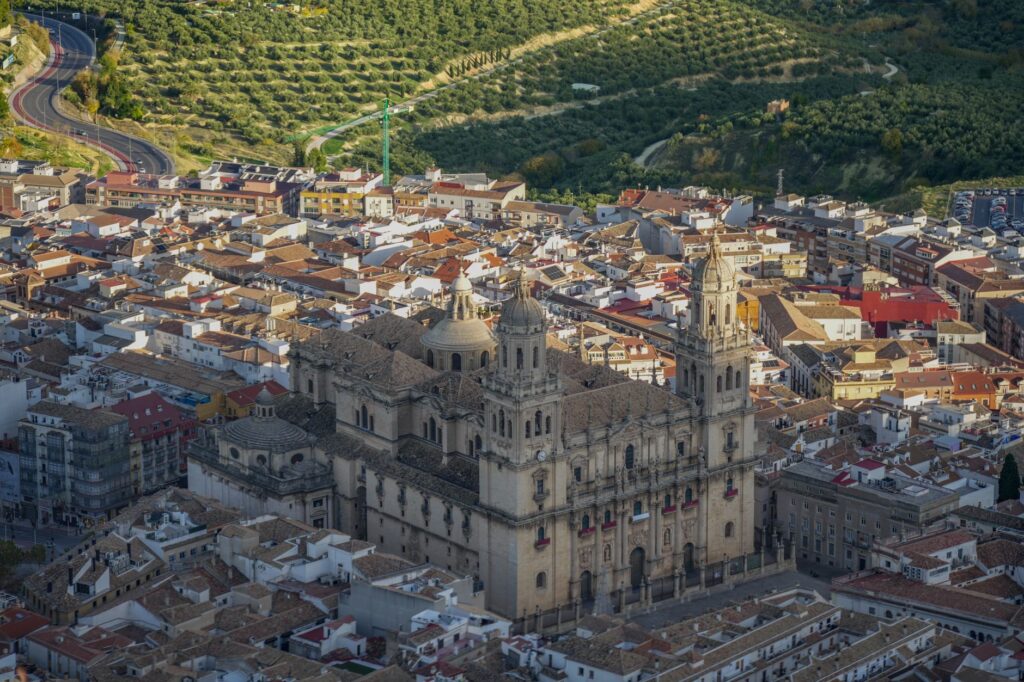
Jaén’s territory cannot be understood solely through its industries; the culture of oil permeates the architecture, festivities, and dining tables of every municipality. Towns like Baeza and Úbeda, designated World Heritage sites for their imposing Renaissance architecture, offer an exceptional backdrop for understanding the region’s economic history, largely financed over centuries by the olive oil trade.
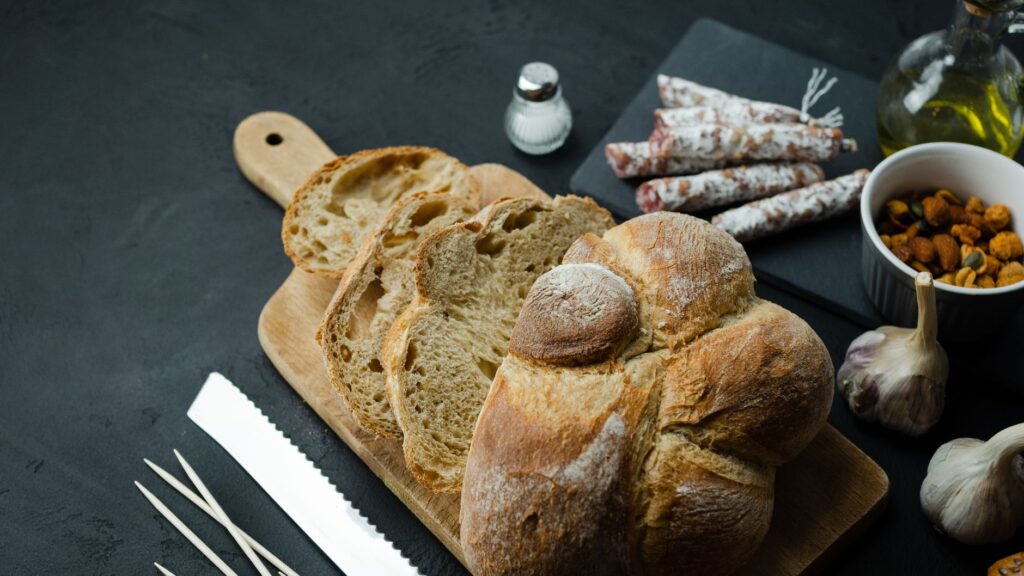
Strolling through their porticoed streets reveals ancient palaces converted into interpretation centers and historic storage cellars where large terracotta jars preserve the memory of shipments once dispatched to the Americas and Northern Europe. In local taverns, hospitality manifests itself around a simple slice of rustic village bread, generously drizzled with the fresh juice of the harvest and accompanied by a ripe garden tomato.
Gastronomy and Pairing: Beyond Traditional Frying
Traditional cuisine in Jaén is intrinsically linked to olive oil, employed both as a cooking medium and as a primary ingredient. Emblematic dishes such as pipirrana—a refreshing salad of tomato, green pepper, onion, garlic, and breadcrumbs emulsified with oil and vinegar—or andrajos—a hearty stew of flour flatbreads with hare or cod—demonstrate the product’s versatility in popular gastronomy.

However, contemporary haute cuisine has proven that extra virgin Picual olive oil possesses a palette of nuances capable of engaging with avant-garde creations. Modern chefs use the oil not just for cooking, but as a key element for seasoning and texturizing. In pastry making, it advantageously replaces animal fats in sponge cakes and cookies, imparting extraordinary moisture and longevity. Similarly, pairing monovarietal oils with raw-milk cheeses, high-end chocolates, and oily fish opens a fascinating field of sensory exploration.
Practical Information for the Traveler and Enotourist
Planning an enotourist journey to the province of Jaén requires keeping the seasonality of the olive grove in mind. The most vibrant time to visit the region coincides with the harvest campaign and the celebration of the first oil, typically held between November and December. During this period, numerous mills open their doors to the public to offer guided tours, masterclasses, and introductory workshops in sensory analysis.
To move fluidly through the sea of olive trees, renting a vehicle is strongly recommended, as the finest experiences are scattered across rural hubs that are difficult to access via public transport. The primary olive oil routes connect regions such as Sierra Mágina, El Condado, and La Campiña de Jaén. It is advisable to book visits to the mills in advance, especially during autumn weekends. Likewise, when purchasing top-tier oils, travelers should always look for opaque bottles or tins that protect the liquid from light and heat, verifying the harvest date and corresponding Protected Designation of Origin on the label.
The Future of the Olive Grove: Sustainability, Climate Change, and Generational Turnover
Jaén’s olive sector faces monumental challenges in the twenty-first century. Climate change, characterized by prolonged droughts and episodes of extreme temperatures during flowering, tests the resilience of rain-fed olive groves. To mitigate these effects, agronomists and farmers are implementing precision agriculture techniques, such as cover crops that retain soil moisture, highly efficient drip irrigation systems, and crop diversification.
The survival of Jaén’s ancient landscape depends on our ability to value the human effort behind every bottle and secure fair prices at origin.
Another major challenge is generational turnover. Securing the population in rural areas and attracting young professionals trained in biotechnology and agricultural marketing is essential for modernizing international commercialization without losing artisanal authenticity. The future of Jaén’s liquid gold lies not only in its capacity to produce volume, but in consolidating its prestige as an irreplaceable superfood rooted in history and committed to the planet’s sustainability.