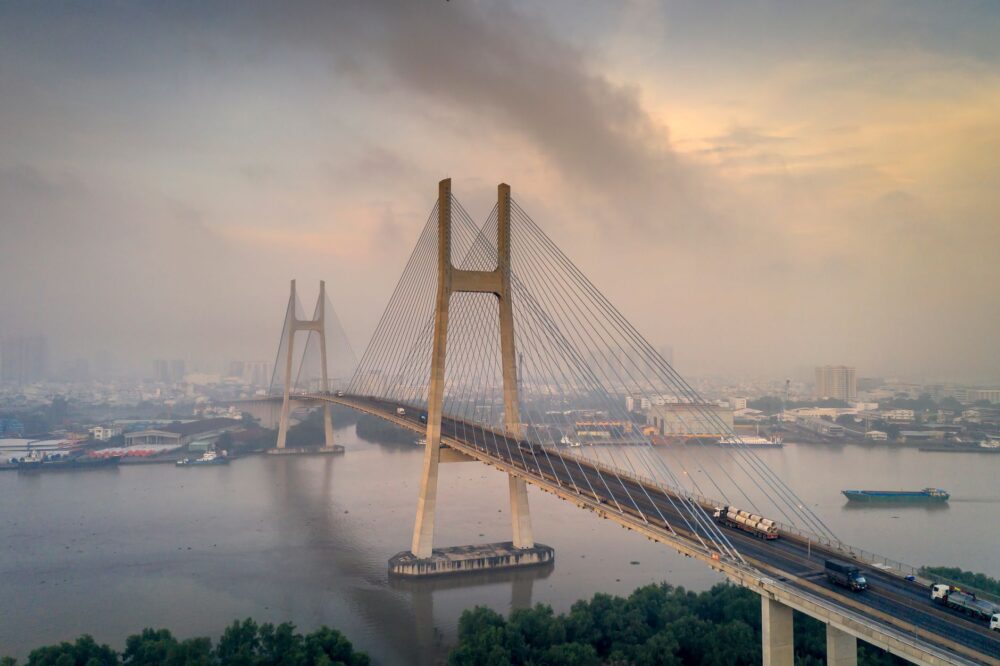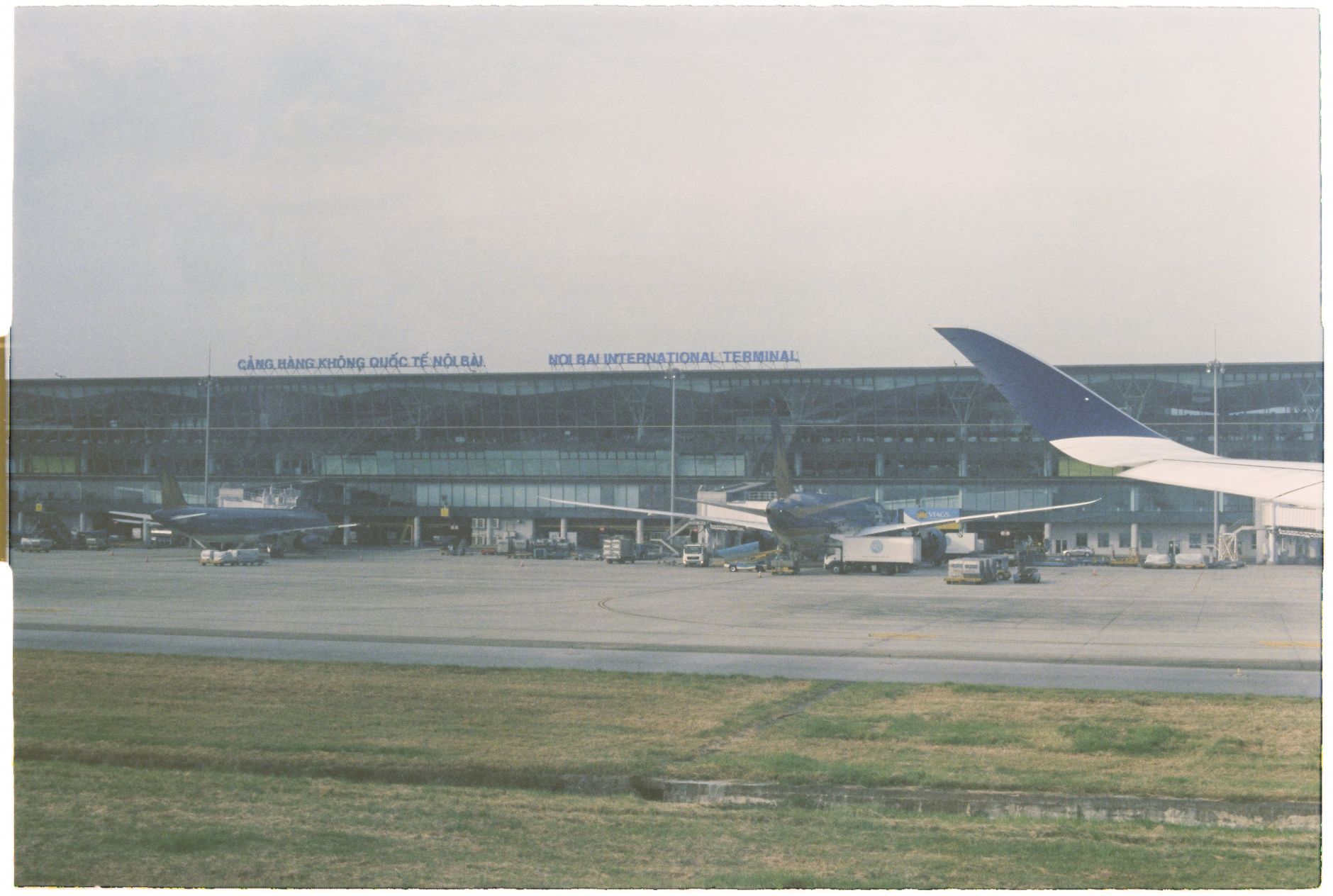

Hanoi does not reveal itself immediately. Travellers landing at Nội Bài International Airport, some 35 kilometres north of the centre, soon discover that Vietnam’s capital demands a measured transition: first the highway, then the crossing of the Red River and, finally, entry into districts such as Hai Bà Trưng, where urban density asserts its own logic.
That district, home to more than 300,000 people according to available administrative data, occupies a strip of southeastern Hanoi. Markets, offices, temples and a street network that rarely follows a regular grid coexist there. Understanding how to arrive and how to move through Hai Bà Trưng is, to a large extent, understanding how the entire city works.
An airport that sets the rhythm of arrival
Nội Bài Airport serves as the main air gateway to northern Vietnam. Its international terminal, expanded in various phases, combines functional architecture with nods to local culture: wide roofs, steel structures and lighting designed to reduce any sense of enclosure. It is not an airport built for display but for volume: thousands of passengers pass through daily on regional flights and intercontinental connections.

For those heading to Hai Bà Trưng, the first decision comes in the arrivals hall. Options are limited and worth knowing before stepping outside: public buses, pre-booked transport services and taxis. The price difference between them is considerable, as is the journey time, which depends on traffic on the highway and the time of day.
From the terminal to the city: the real options
The city bus is the most economical alternative. Several lines connect the airport with different points in Hanoi, and some allow transfers to the centre or to public transport hubs. The journey is slower than a taxi but offers an advantage hard to match: the chance to observe the shifting landscape, from industrial outskirts to the first dense neighbourhoods.
Pre-booked transport services, meanwhile, allow advance reservation and usually include flight tracking. For groups or travellers with bulky luggage, they are practical. Traditional taxis still operate, though it is wise to agree on a price or ensure the meter is running. No option is free from delays at peak hours, especially between seven and nine in the morning and again in the late afternoon.
Arrival in Hanoi does not end at the airport: it ends when the traveller understands that the journey is part of the destination.
Hai Bà Trưng: a district of overlapping layers
Hai Bà Trưng is not a monumental neighbourhood. Its interest lies in the mix: residential buildings from different eras, street-level shops, offices and a few small green spaces. The district takes its name from the Trưng sisters, first-century historical figures who led a revolt against Chinese rule and remain present in the Vietnamese imagination.

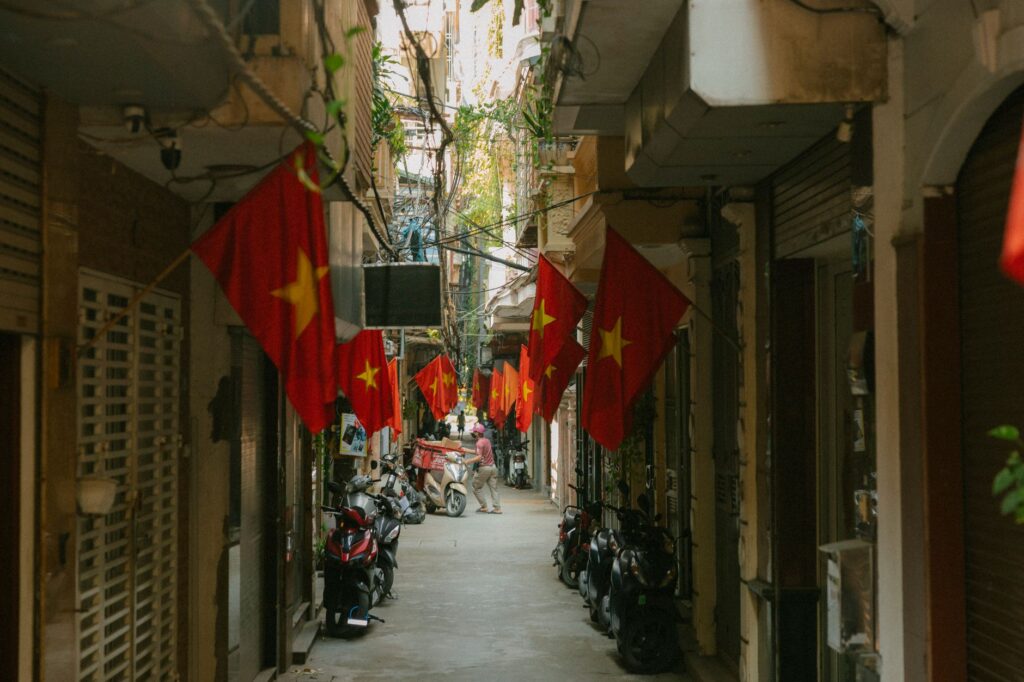
Walking its streets reveals how daily life is organised: food stalls that appear at dawn, motorbikes that dominate peak hours, cafés that multiply on ground floors. The district’s human scale contrasts with the magnitude of the airport that connects it to the rest of the world.
Domestic architecture and public space
Housing in Hai Bà Trưng follows patterns repeated across much of Hanoi: narrow multi-storey houses, colourful façades and balconies that become an extension of the home. Public space, scarce, is concentrated on wide pavements and in a few neighbourhood parks. It is common to see residents exercising at dawn or chatting under arcades.
The passenger experience: what to know
Nội Bài Airport is not designed for long, purposeless waits. Those with extended layovers will find limited options inside the terminal: a few cafés, souvenir shops and rest areas. Connecting to central Hanoi takes time, so allowing a generous margin between flights is a reasonable precaution.
First-time visitors should note that the airport lies in Vĩnh Phúc province, outside Hanoi’s administrative boundaries. That distance explains why the journey to Hai Bà Trưng can exceed an hour in heavy traffic.
Luggage and reduced mobility
The terminals offer assistance services, though availability may vary by airline. Travellers with reduced mobility would do well to coordinate assistance in advance. Public buses, meanwhile, are not always wheelchair-accessible, which makes pre-booked transport a safer option.
The link to the territory: beyond the journey
Hai Bà Trưng has a particular relationship with the Red River, which borders part of the district. The bridges crossing the river are key infrastructure for the city’s mobility, and their presence partly explains traffic density at peak hours. Walking near the river reveals the scale of Hanoi: a city growing north and east, yet preserving a recognisable scale in its central districts.
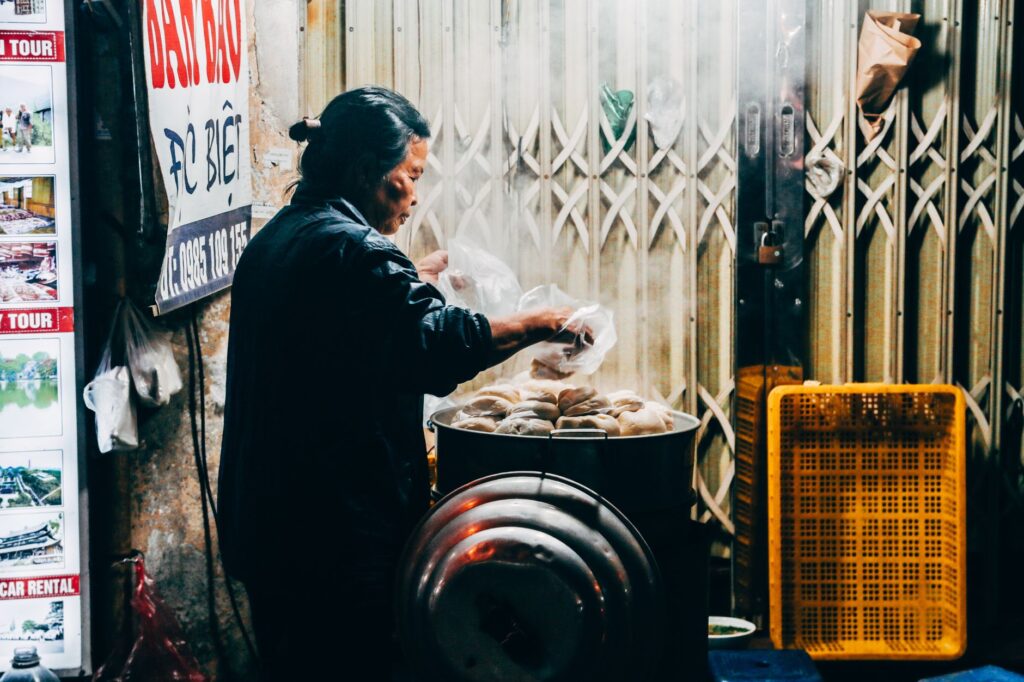
Local gastronomy, with dishes such as phở or bún chả, is present in street stalls and simple restaurants. No need to search far: the district’s culinary offer reflects daily life, not tourism.
Hai Bà Trưng does not compete with the historic centre: it complements it with a daily life that does not depend on the visitor.
Heritage and memory in the district
Although Hai Bà Trưng does not concentrate Hanoi’s great monuments, it preserves temples and memory spaces linked to the Trưng sisters. These places, modest in scale, offer a different perspective on Vietnamese history: less monumental, more tied to the neighbourhood and the community. Visits tend to be quiet and allow observation of everyday religious practices.
The district also hosts markets and streets specialising in particular crafts, a common feature in Hanoi. Exploring them unhurried is a way to understand how local commerce is organised and how it relates to residential life.
Planning the arrival: common mistakes
One of the most common mistakes is underestimating transfer time. The highway connecting the airport to the centre can become congested, and fast alternatives are not always available. Another frequent error is assuming the airport is within the city: it is not, and that distance conditions any plan.

It is also worth reviewing luggage conditions and airline restrictions before travelling. Up-to-date information on bus schedules and transport services should be checked with official sources, as it may change with the season or operational decisions.
Practical guide
- Documentation: Check Vietnam’s entry requirements for your nationality and visa type. Consult the relevant embassy or consulate.
- Transport: Public buses are the cheapest option; pre-booked transport is the most predictable. Book ahead if arriving at night.
- Time: Allow at least an hour from the airport to Hai Bà Trưng under normal conditions; more at peak hours.
- Money: Carry cash in Vietnamese dong for small expenses and transport. Not all bus stops accept card payment.
- Language: Vietnamese is the local language. English is used at airports and hotels, but not in every shop.
- Weather: Hanoi has hot, humid summers and cooler winters. Check the forecast before travelling.
- Assistance: If you need reduced-mobility support, coordinate it with your airline before the flight.
A closing note by the river
At the end of the day, Hai Bà Trưng recovers a slower rhythm. Motorbikes keep moving, but the noise fades and food stalls prepare for dinner. From certain points in the district, the river can be sensed, and with it the presence of a city that does not stop but knows how to pause. The traveller who has crossed the airport, the highway and the first neighbourhoods discovers that arrival was not the end of the journey, but the beginning of a way of being in Hanoi.