
Lahti occupies a stretch of undulating land in southern Finland, about a hundred kilometres northeast of Helsinki, in the Päijät-Häme region. The city spreads beside a system of lakes and ridges left by retreating ice, and that visible geology — elongated hills, inland water, coniferous forest — organises much of its daily life. Travellers looking for wellbeing will not find a conventional spa here, but a culture of rest built on silence, outdoor movement and proximity to nature.
Lahti is also a city of sporting tradition and understated design, with an industrial heritage that has been adapted without drama. Its identity is not displayed in grand gestures but in details: the way winter orders the hours, the way the forest enters the city and the way its inhabitants understand free time. This report proposes reading Lahti through that active calm, paying attention to what visitors can do without disturbing the local rhythm.
A geography shaped by ice
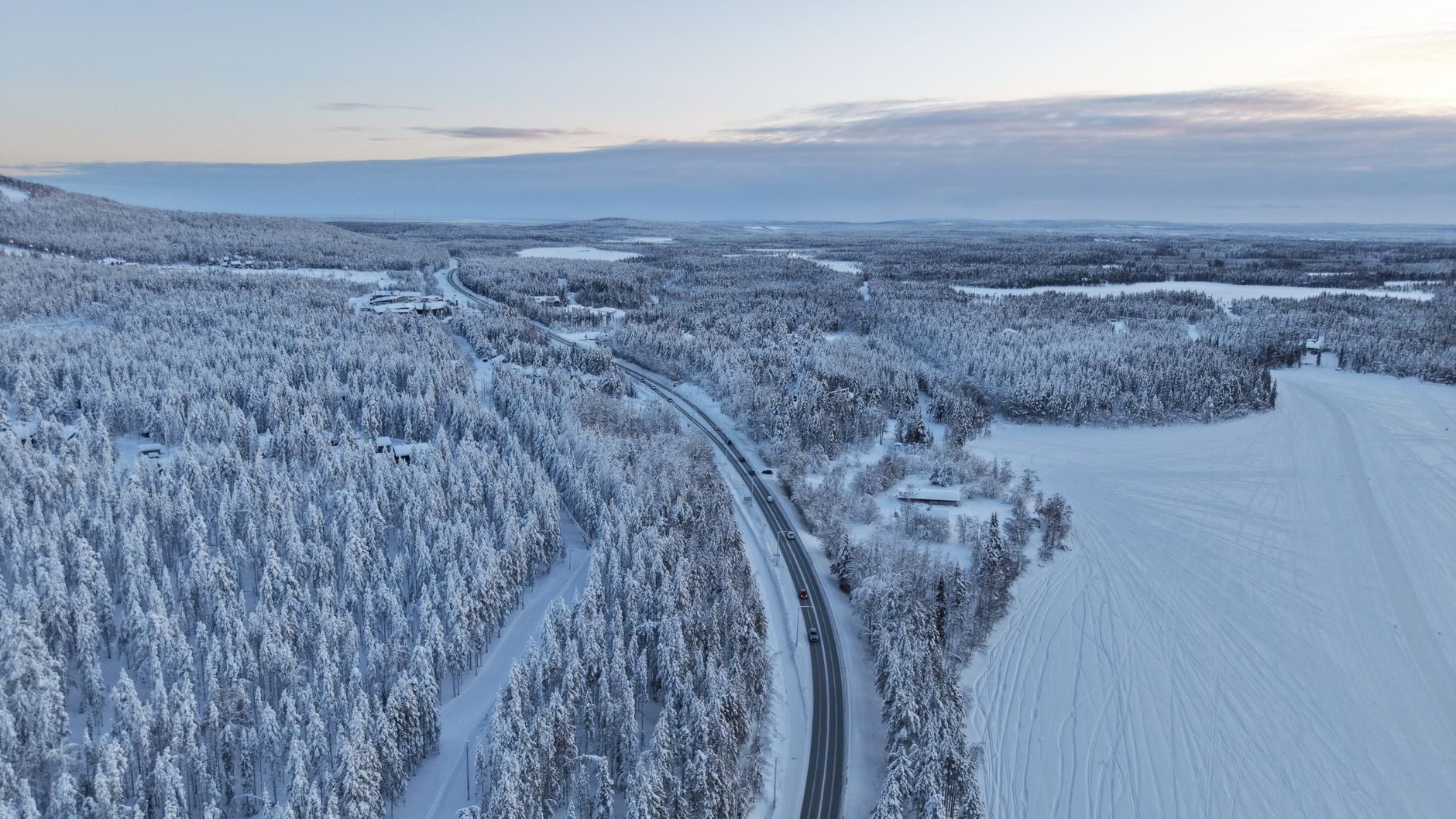
The landscape of Lahti belongs to the great family of northern European glacial forms. The ridges of sand and gravel that cross the region, known as eskers, were formed by sediment deposited inside subglacial rivers that have since disappeared. That elongated structure explains the presence of roads that follow the ridges and lakes that fill the depressions between them. The result is a territory of gentle but constant relief, where water appears at every turn.
Lake Vesijärvi, beside which the urban centre stands, serves as a daily reference point: paths, jetties, viewpoints and winter routes are arranged around its shore. It is not a decorative lake but an active part of the urban landscape. In summer, its banks fill with walkers and cyclists; in winter, the frozen surface and snowy trails completely change the relationship with the water.
The landscape of Lahti is not contemplated from outside: it is walked, inhabited and respected as everyday infrastructure.
Silence as intangible heritage
Finland has built part of its cultural identity around the idea of silence and retreat into nature. Lahti takes part in that tradition without turning it into a spectacle. The forests surrounding the city, the waterside routes and the simple shelters offer spaces where rest requires neither consumption nor entertainment. For visitors, this implies a change of habits: walking without haste, listening, accepting that the landscape is not designed for immediate amusement.
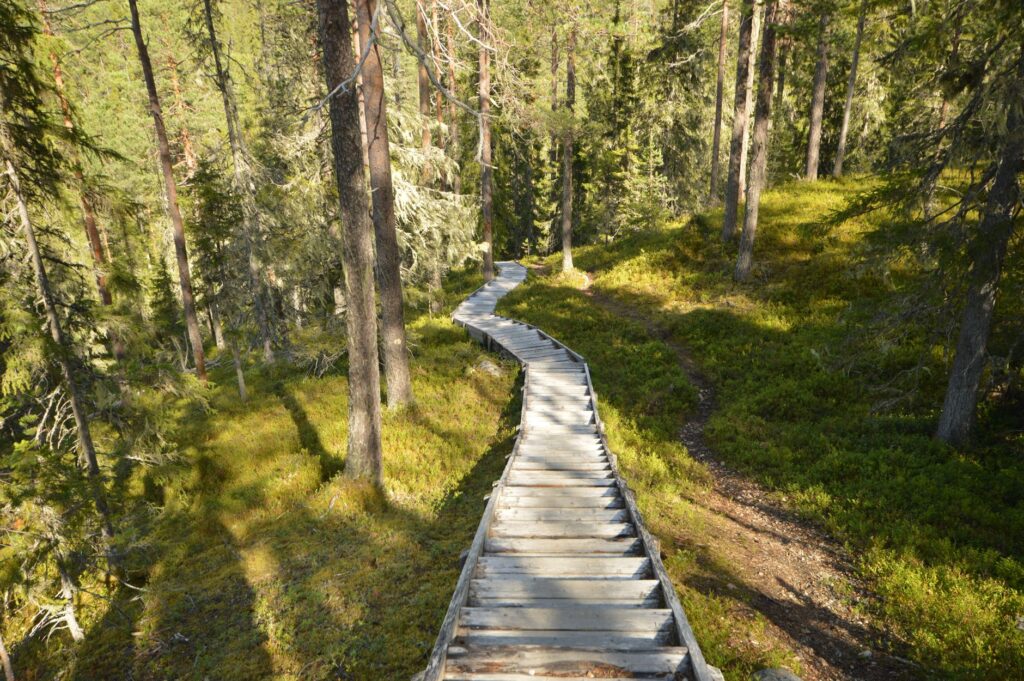
That silence also has a practical dimension. Distances are short, public transport and pedestrian routes allow movement without a car across much of the centre, and signage invites calm orientation. The city does not demand a fixed itinerary; it proposes an attitude instead. Respecting other people’s silence is, here, an elementary form of courtesy.
Sporting tradition and its settings
Lahti is known in Finland for its history linked to skiing and winter sports. Its facilities and hills have hosted competitions for decades, and that tradition has left a visible mark on the city: towers, tracks, trails and training spaces integrated into the landscape. For those travelling outside the snow season, those same places work as hiking routes and viewpoints.
The relationship with sport is not limited to competition. In Lahti, walking, skiing or running form part of many people’s daily lives, and the infrastructure is designed for continuous use. Visitors can join that routine with respect: sharing trails, giving way and avoiding behaviour that interrupts someone else’s training or walk.
Discreet architecture and industrial memory
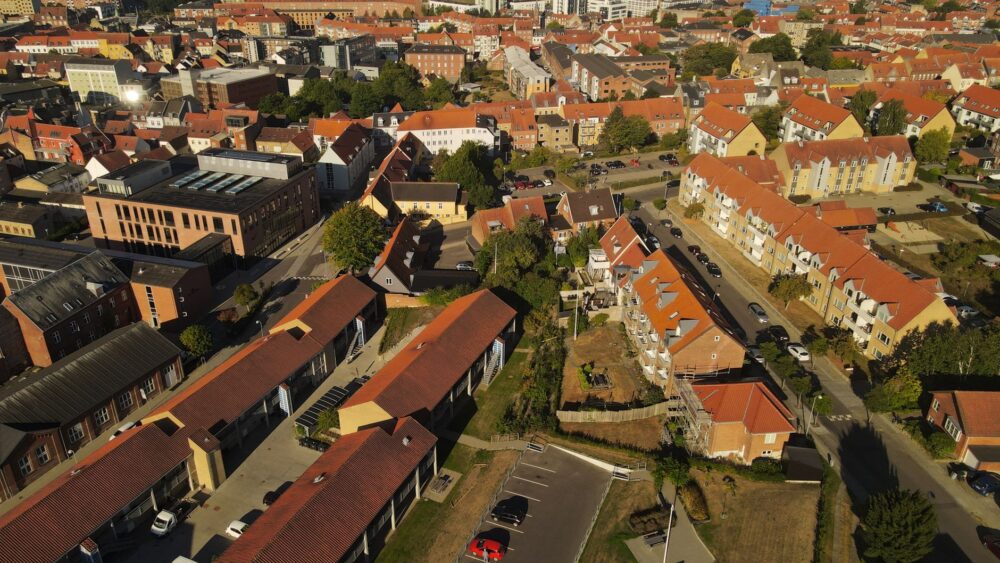
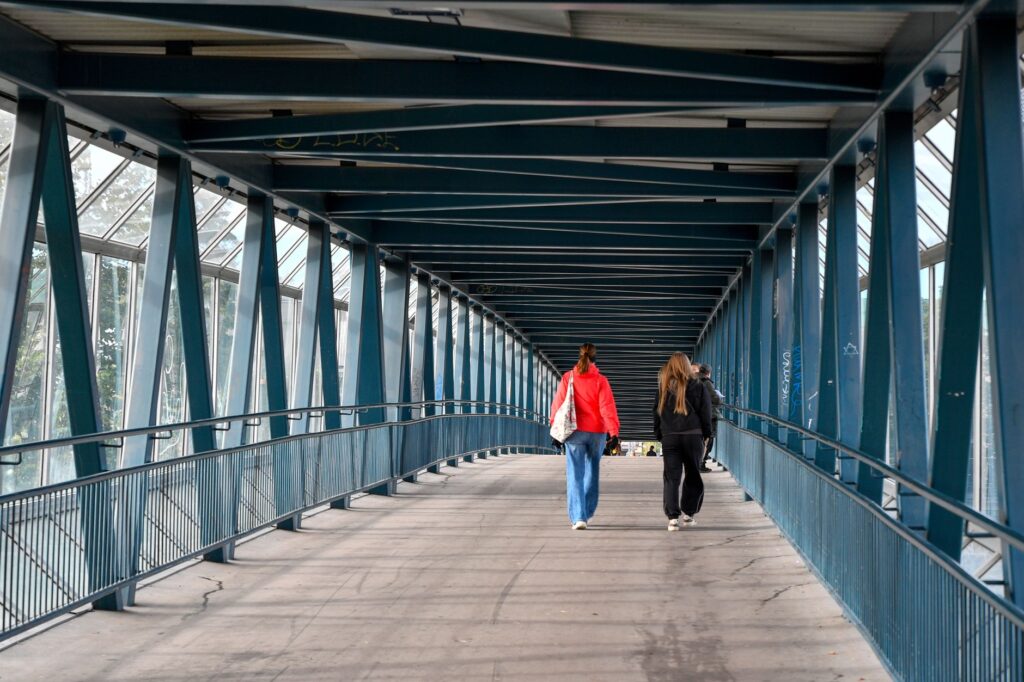
Central Lahti combines functional buildings, public spaces and former industrial areas that have been converted. It is not a monumental city, but it has a coherence best appreciated on foot: sober facades, broad squares and a scale that favours pedestrian life. The station and the urban surroundings reflect the history of a city that grew with the railway and industry, and that has adapted its spaces without entirely erasing that memory.
For travellers interested in architecture, the recommendation is to observe rather than hunt for isolated landmarks. Public buildings, libraries, markets and cultural facilities show a way of building typical of northern Europe: functional, weather-resistant and attentive to everyday comfort. That architecture does not seek to impress but to make life easier throughout the year.
The market and the Finnish table
Local gastronomy is best understood in markets and neighbourhood shops rather than in occasional restaurants. Seasonal products — berries, mushrooms, lake fish, rye bread, dairy — appear on the table according to the calendar, and that seasonality is a lesson in restraint. Eating in Lahti means accepting that the menu changes with the weather and that the everyday has as much value as the festive.
For responsible visitors, the guideline is simple: buy in local markets, choose nearby products and avoid waste. The Finnish culture of measured consumption fits well with that attitude. It is not about renouncing pleasure but about adjusting it to the rhythm of the place.
In Lahti, the table follows the calendar: what arrives in each season sets the tone of daily life.
Winter and summer: two ways of inhabiting the city
The difference between seasons is radical. In winter, snow and ice transform the landscape and routines: trails are prepared for skiing or walking, light becomes brief and bluish, and the general pace adapts to the cold. In summer, daylight stretches into the night and life moves outdoors, to terraces, lake shores and parks.
That alternation demands planning. Visitors should check trail conditions, appropriate equipment and service hours, without assuming everything works the same all year. The city does not hide the climate; it integrates it into its way of living and expects the same adaptation from travellers.
Responsible choices for visitors
Lahti has developed an environmental policy reflected in waste management, mobility and the use of natural spaces. For visitors, those decisions translate into concrete gestures: separating waste, using public transport or bicycles where possible, leaving no trace on trails and respecting protected areas. These are not exceptional rules but part of a widespread civic culture.

It is also worth remembering that local wellbeing does not depend on intensive tourism services. The best way to approach Lahti is with a discreet attitude: booking in advance when necessary, not demanding out-of-season hours and accepting that some places operate by the logic of the community rather than that of the visitor.
Practical guide
Getting there: Lahti has rail and road connections from Helsinki and an airport nearby. The railway station is integrated into the city centre, making it easy to move on foot.
When to go: Summer offers long daylight and outdoor routes; winter allows travellers to experience the skiing tradition and the snowy landscape. Spring and autumn are quieter but require suitable clothing and some flexibility.
Mobility: Much of the centre is pedestrian, and the network of trails and cycle paths allows visitors to explore the city and its surroundings without a car. Local maps and trail conditions are worth checking.
What to bring: Waterproof footwear, warm layers and rain protection in any season. In winter, thermal clothing and snow-appropriate shoes.

Local etiquette: Respect silence in natural spaces and on public transport, give way on trails and do not enter private property. Discreet courtesy is the norm.
Responsible consumption: Shop at local markets, avoid unnecessary plastic and follow recycling instructions. The city values consistency between words and actions.
A light that invites you to stay
At the end of the day, Lahti offers a simple image: still water, tree-covered ridges and a light that changes with the season. There is no great monument that sums up the city, but there is a persistent sense of balance between the built and the natural. That is perhaps the lesson in wellbeing Lahti proposes: learning to be without filling every moment, to walk without a fixed destination and to recognise that rest is also a form of knowledge.
Travellers who arrive with curiosity and leave with respect take away more than landscapes: a calmer way of inhabiting time. In a city of ridges and lakes, that lesson is learned slowly, almost in silence, as befits the place.