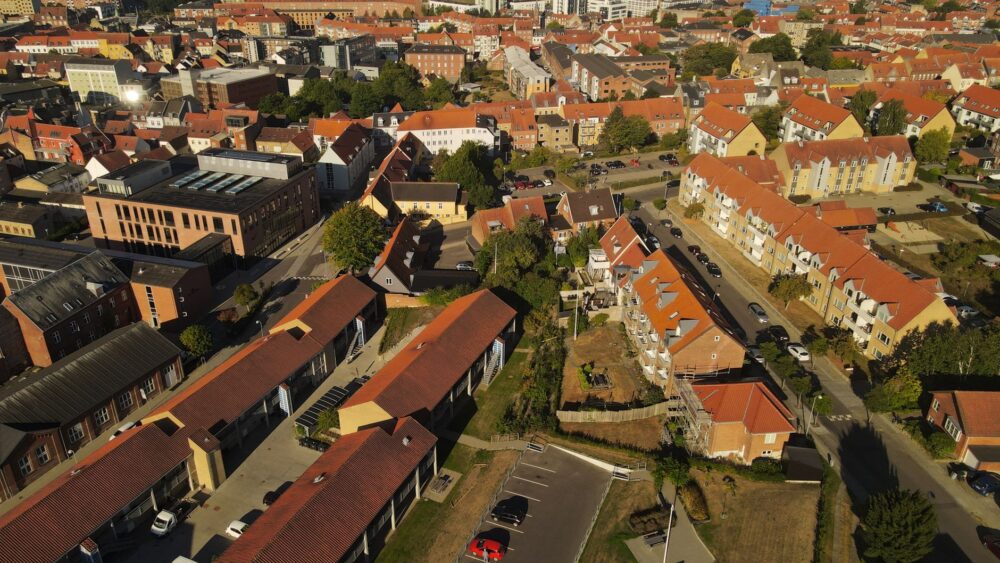

Osijek rarely appears in the headlines of European travel, and that is part of its character. In the far east of Croatia, on the banks of the Drava River and across a plain that stretches into Slavonia, this city of around 75,000 people preserves a heritage that is best explored without haste: a brick bastion fortress, streets of low houses, markets supplied by the surrounding countryside and a riverside promenade that orders daily life.
The question guiding this report is not which monument to see first, but how to visit Osijek without turning it into a backdrop. The answer lies in the city’s own layout, in the way its residents use public space and in a scale that invites walking.
A brick fortress that still organises the city
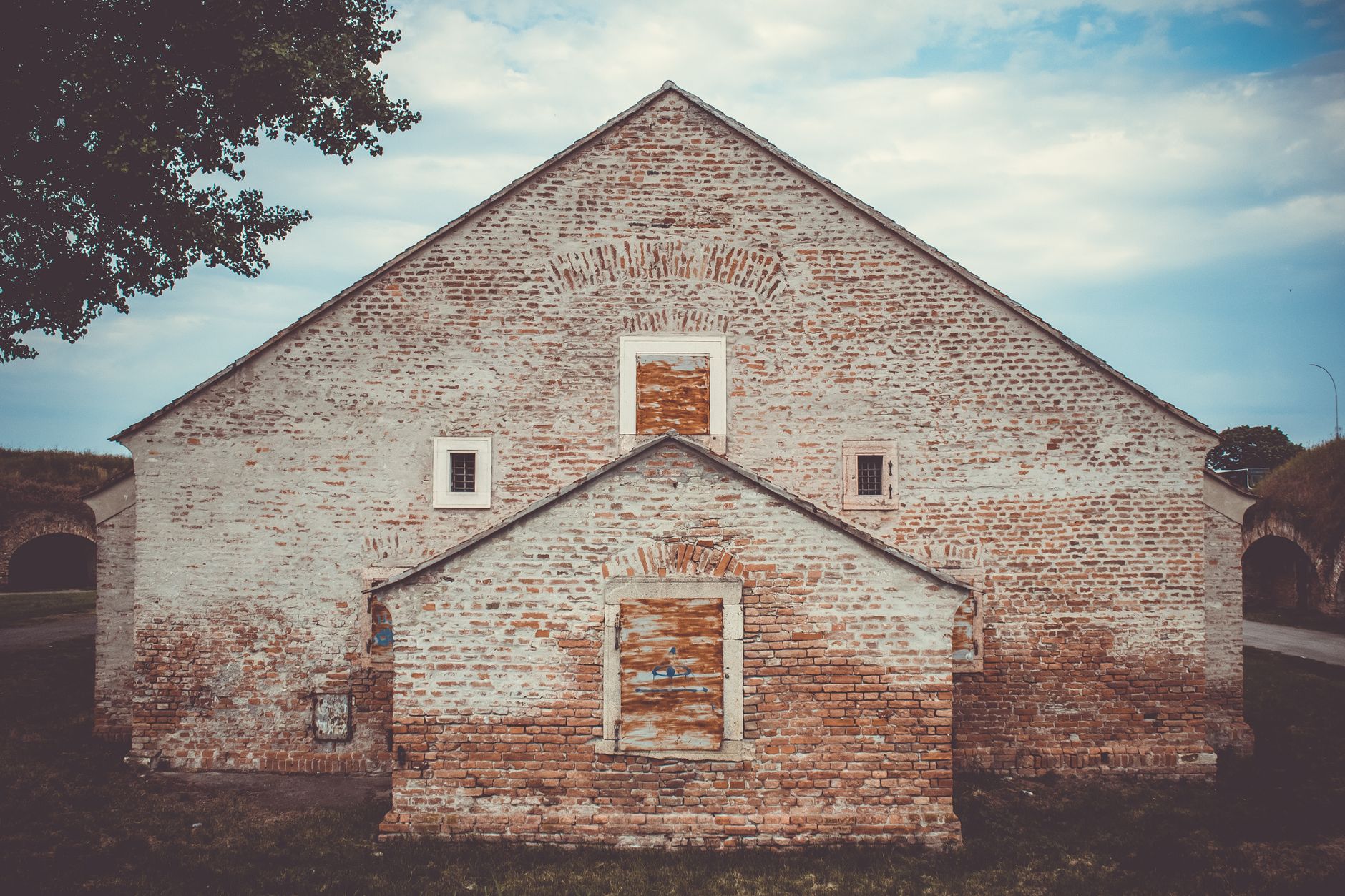
Tvrđa, the historic core of Osijek, is one of the best-preserved baroque fortresses in Croatia. Its construction dates to the eighteenth century, when the city formed part of the Habsburg monarchy’s defensive system against the Ottoman Empire. The result is a walled enclosure with bastions, gates and an interior ordered by blocks, where military buildings, churches, schools and homes coexist.
What is remarkable is not only the architecture but its use. Tvrđa is not a closed museum: it is a living neighbourhood where students cross the square, residents stroll at dusk and terraces occupy the arcades. Walking its cobbled streets reveals layers of history that run from Ottoman rule to Austrian administration and on to contemporary Croatia.
For the visitor, the fortress works best as a starting point rather than a checklist. The walls can be read as a perimeter that once separated the military world from the civilian one, and the gates still mark the points where the city enters and leaves the enclosure. Understanding that geometry helps to see why Osijek grew the way it did: the fortress protected the river crossing, and the town spread around it.
The fortress is not visited as a relic: it is inhabited as a place where the city keeps living its life.
The Drava as the axis of daily life
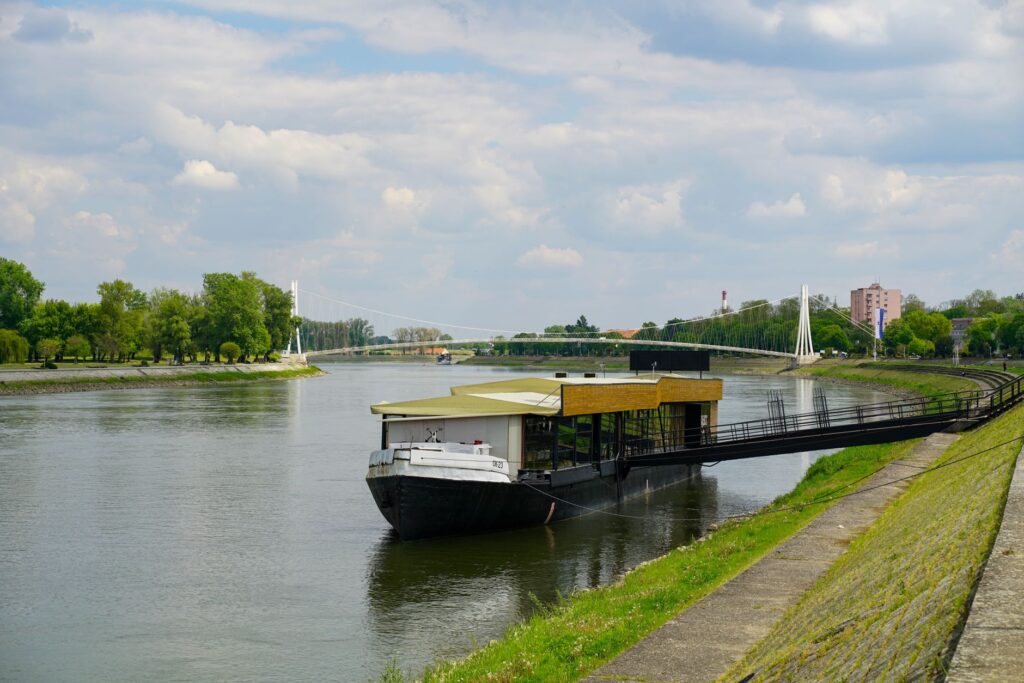
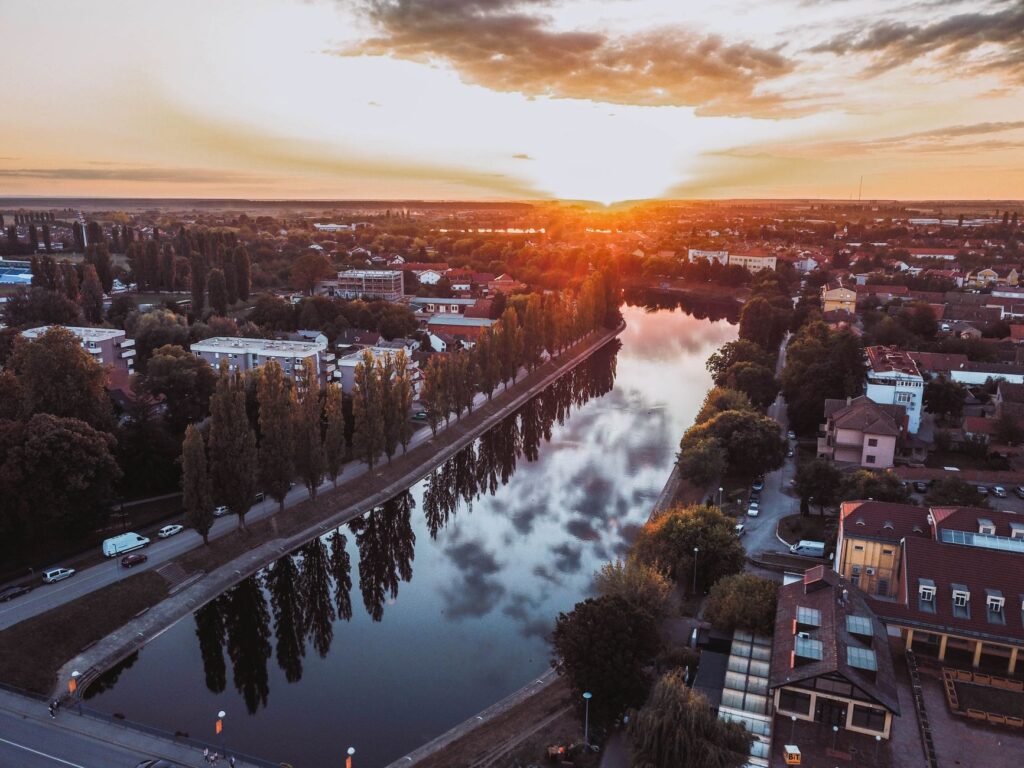
The Drava River crosses Osijek and sets its rhythm. On the urban bank, the riverside promenade works as an extension of the streets: cyclists, runners, families and anglers share a space that changes with the seasons. In summer, the terraces fill; in winter, the river regains a stillness that invites a walk in a warm coat.
The river also explains the city’s economic history. Osijek grew as a river port and a communications hub between the Pannonian plain and the Balkans. That crossroads condition is visible in the mix of architectural influences and in the presence of communities that have left their mark on food and customs.
Walking the promenade is also a lesson in how a mid-sized European city manages its waterfront. There is no wall of private terraces closing the view: the bank is public, and that is why it feels like a shared living room. The visitor who sits on a bench for half an hour learns more about Osijek than one who crosses it in a hurry.
The square and the market: daily life becomes visible
Central Osijek is organised around broad squares and shopping streets where human scale prevails. The municipal market is one of those places that reveal how the city lives: stalls of fruit, vegetables, cheeses and cured meats from the region, alongside flowers and seasonal produce. It is not a market for tourists but a space for daily provisioning.
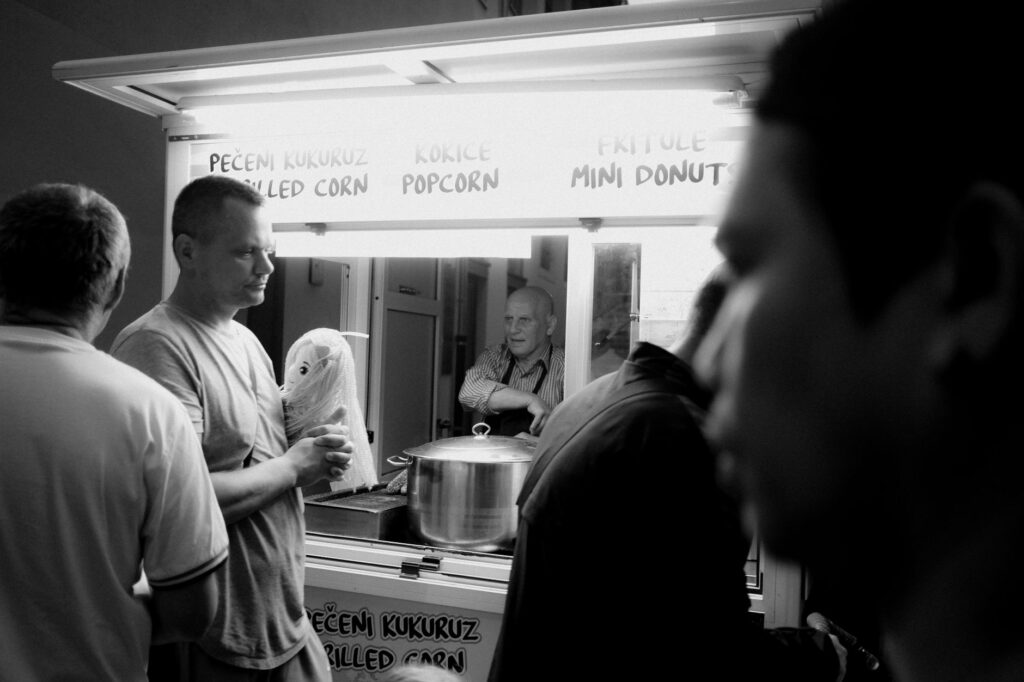
For the visitor, the advice is simple: buy little, observe much and respect local hours and customs. Slavonian hospitality is well known, but it should not be confused with an invitation to invade private space.
The market also shows the connection between the city and the plain. Much of what is sold comes from nearby villages, and the rhythm of the stalls follows the agricultural calendar rather than the tourist season. Asking politely about a product, its origin or the best way to prepare it is usually welcomed; photographing stalls and people without permission is not.
Architecture between the plain and memory
Beyond Tvrđa, Osijek shows residential architecture from the late nineteenth and early twentieth centuries, with ornamented facades and inner courtyards. The ensemble reflects the urban growth of a city that was an important administrative and cultural centre. Some buildings await restoration; others have been recovered with respect for the original scale.
The responsible visitor finds a lesson here: heritage is not always presented restored and luminous. Sometimes it shows cracks, scaffolding and questions about the future. Walking it with attention, without reducing the city to a photograph, is part of the experience.
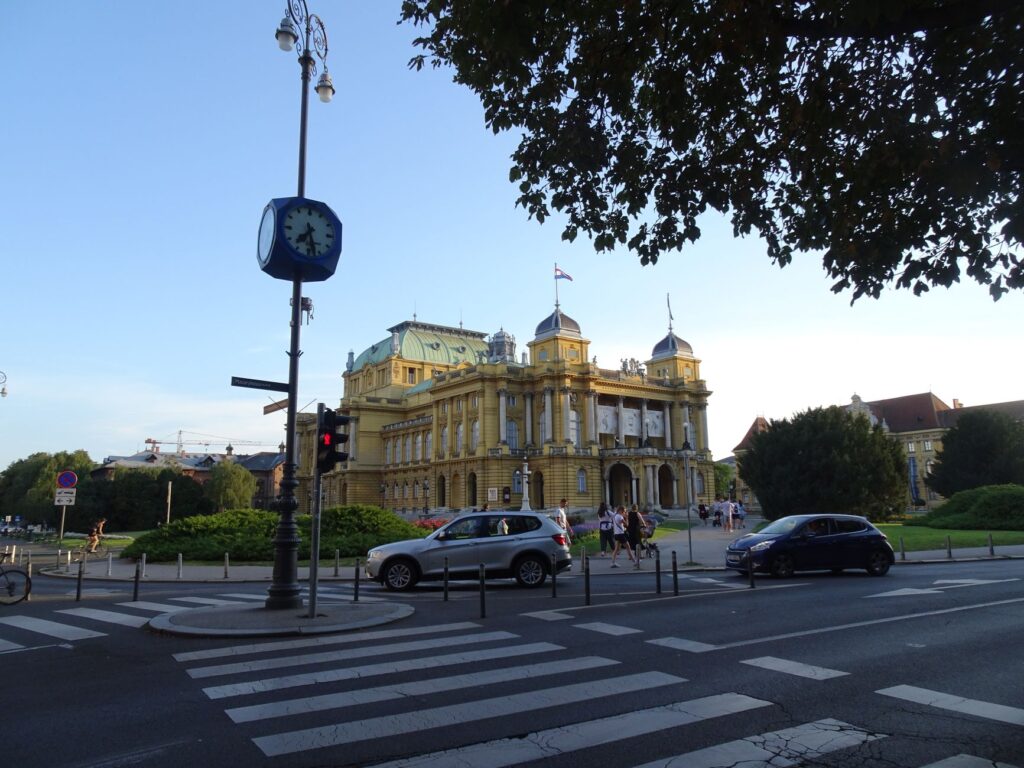
Seen from the street, the historic centre reads as a catalogue of Central European urban taste adapted to a flat landscape: decorative plasterwork, corner buildings with rounded facades and ground floors given over to small businesses. The pleasure lies in the detail, in looking up above the shop signs and noticing how the city built its self-image.
What to eat in Osijek: flavours of the plain
Slavonian cooking relies on produce from the land and the river. Freshwater fish dishes, cured sausages, peppers, fresh cheeses and seasonal sweets form a simple, hearty diet. In Osijek, markets and traditional taverns offer a way to approach those flavours without artifice.
It is worth asking about local products and seasonality. Croatian cuisine varies greatly by region, and in the east of the country Central European influence mixes with Balkan tradition. Eating here is also a way to understand the history of the trade routes that crossed the Drava.
For a visitor, the most honest approach is to eat where the city eats: at market stalls, in modest taverns and at tables where the menu changes with what the season offers. Portions tend to be generous, and the local custom favours a slow meal rather than a quick stop.
Beyond the centre: parks, neighbourhoods and the river
Osijek has green spaces that serve as lungs and meeting places. The city park and the Drava banks offer routes for walking or cycling. Away from the centre, residential neighbourhoods appear with a life of their own, where the visitor can observe the city without the pressure of tourist circuits.
The bicycle is a good ally for short distances and for joining the local rhythm. It is advisable, however, to check traffic rules and respect pedestrian zones.
These outlying areas are where the ordinary city becomes most visible: small shops, schoolyards, gardens and the low skyline of the plain. They are not sights, and that is precisely their value. Walking them quietly, without treating them as an attraction, is a way of respecting the people who live there.
Heritage and responsible visitor choices
Osijek is not an overcrowded city, and that is an advantage worth preserving. A few simple decisions help: stay in local establishments, shop at the market, avoid peak hours in public spaces and respect the quiet of residential areas.
It is also important to learn about the historical context before visiting the fortress or the museums. Croatia’s history is complex, and reducing it to a tourist leaflet impoverishes the experience. Reading, asking and listening are part of the journey.
Responsible travel here does not require grand gestures. It means understanding that a city of this size lives on routines that visitors can easily disturb: early mornings at the market, quiet afternoons in residential streets, the evening walk along the river. Adjusting to those routines is the simplest form of respect.
How to read the city before arriving
A little preparation changes the experience. Osijek has carried several names and influences over the centuries, and its position between Central Europe and the Balkans explains much of what a visitor sees. Knowing that the city grew around a fortress, a river crossing and a fertile plain helps to interpret its streets, its food and its pace.
It is also useful to arrive without a fixed list of must-see sights. The city rewards those who walk without a schedule, who stop at a square because it is shaded or because a market is closing. The heritage is there, but it is not packaged for quick consumption.
Practical guide
- When to go: spring and autumn offer mild temperatures and a less crowded city. Summer is warm and lively, with more activity on the riverside promenade.
- Getting around: the centre is walkable. A bicycle is useful for longer distances; respect local rules.
- What to see: Tvrđa, the Drava promenade, the municipal market and the green spaces. Check updated opening hours before each visit.
- Where to eat: traditional taverns and market stalls. Ask about seasonal produce and Slavonian specialities.
- Language: Croatian is the official language; English is used in tourism but not in every shop.
- Currency and payments: the euro has been Croatia’s currency since 2023. Carry some cash for markets and small establishments.
- Local respect: avoid noise in residential areas, respect private spaces and do not photograph people without consent.
A closing by the river
At the end of the day, the Drava resumes its role as a discreet stage. Lights reflect on the water, bicycles return and the city prepares for another day of ordinary life. Osijek does not promise strong emotions; it offers something harder to find: the chance to walk through a city that has not given up its human scale.
Those who arrive looking for a monument leave with a lesson about living heritage. Those who arrive willing to listen leave with the impression of having encountered a part of Croatia that rarely appears on tourist maps but holds much of its identity.