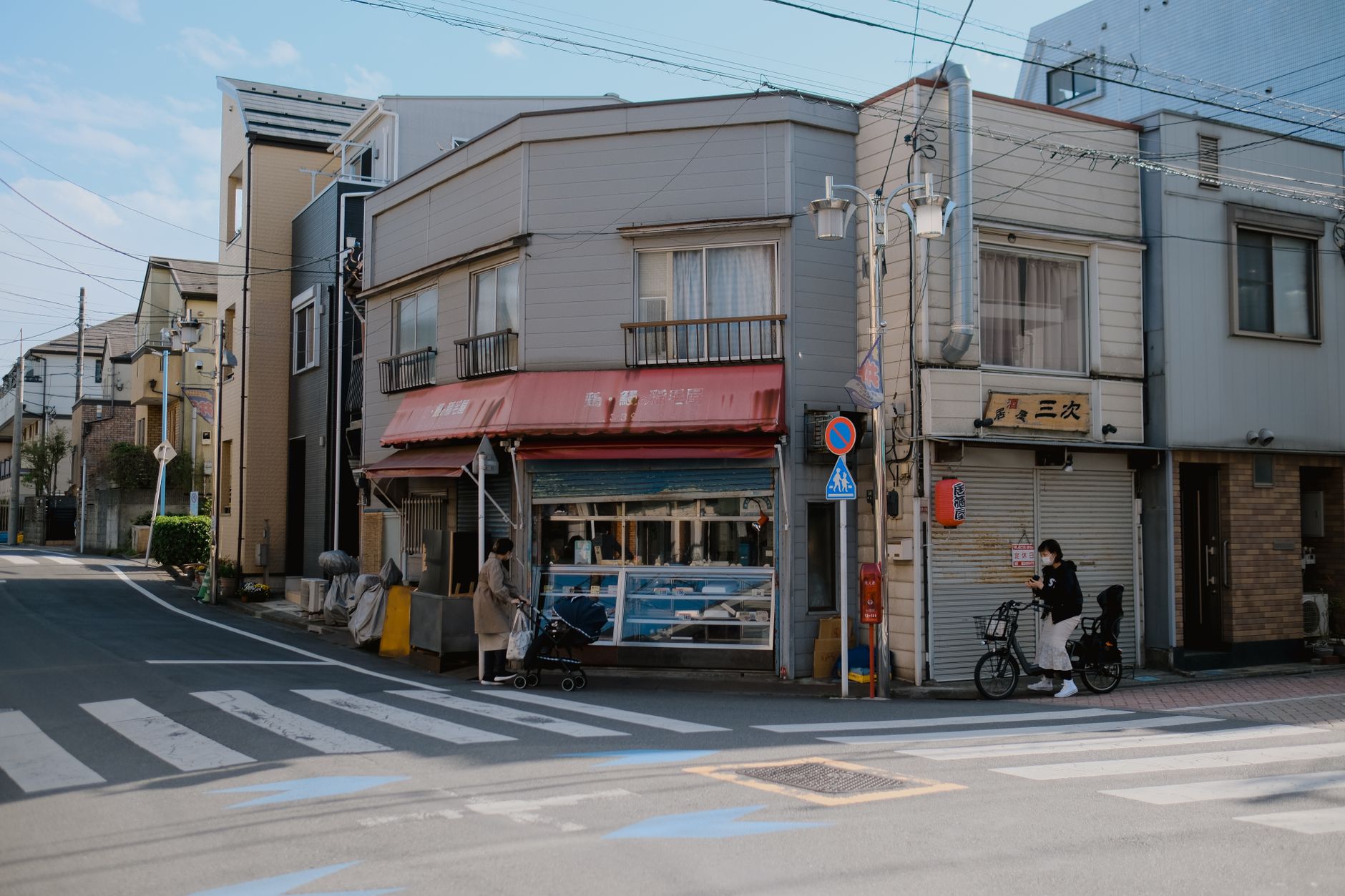

In Suginami, west of central Tokyo, cooking begins before the stove is lit. It begins at the small greengrocer on the corner, at a neighbourhood market counter and in the domestic fridge, where every ingredient has a planned place. Japan has turned everyday shopping into a quiet discipline, and this district of some 588,000 residents practises it without fuss, among residential streets, schools, family shops and trains that set the rhythm of the day.
The question behind this report is not what people eat in Tokyo, but how a neighbourhood decides what it eats. Suginami is not a showcase food destination: it is a territory of routines, where local identity shows in seasonal selection, portion size and the trust between buyer and seller.
A residential district with its own pantry
Suginami stretches west of central Tokyo and belongs to the capital’s wider urban ring. Its fabric is residential, with railway stations acting as small centres: around each one grow shopping streets, supermarkets, bakeries and food stalls serving families, students and workers.
That scale matters. In such a large district, shopping is not concentrated in one great market but spread across a network of nearby shops. Local food culture rests on that mesh: proximity as the first measure of quality, and repetition as a way of knowing.
Visitors looking for a monumental market may leave disappointed. Those willing to watch how a basket is filled on an ordinary Tuesday will find a more useful lesson about contemporary Japanese food. The district is administratively part of Tokyo Metropolis, and its name appears in Japanese as 杉並, a reminder that what looks like a single urban mass on a map is in practice a patchwork of named neighbourhoods, each with its own small commercial spine.
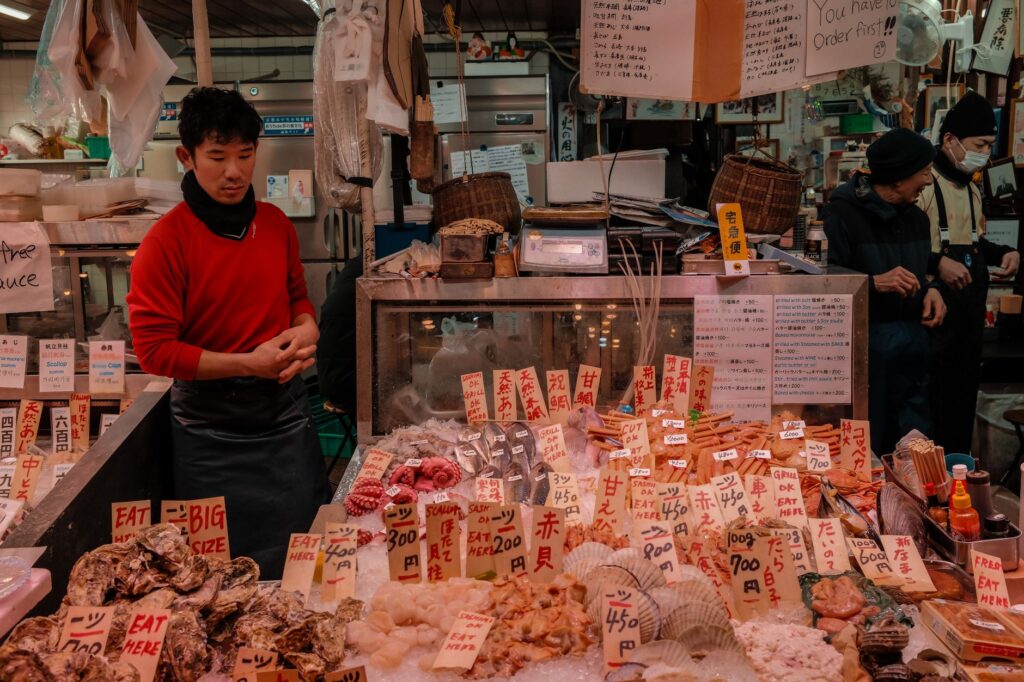
This is also why food here is best read at walking pace. A station exit leads within minutes to a covered arcade, a cluster of independent shops and a supermarket competing for the same dinner. The visitor who slows down begins to notice how the offer changes from street to street, and how each shop signals its speciality through display rather than advertising.
Seasonality as a shopping calendar
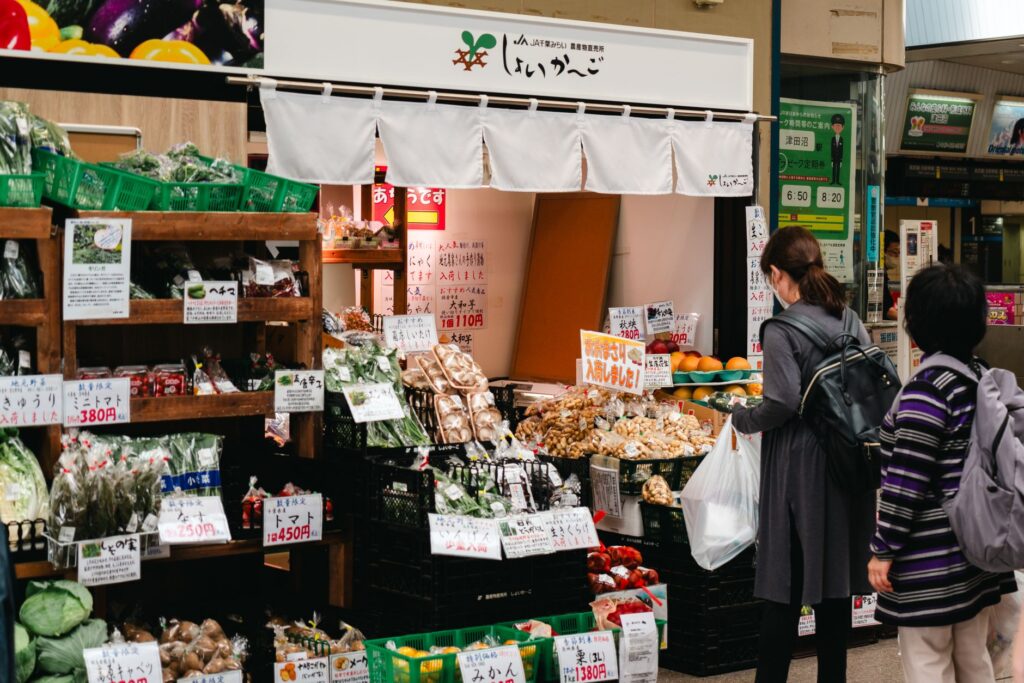
Japanese home cooking is organised around the season, and Suginami is no exception. Stalls adjust their offer week by week: leafy greens in winter, shoots and pulses in spring, aubergines and cucumbers in summer, mushrooms and roots in autumn.
That calendar is not folklore: it is a practical tool. Buying what is at its best lowers the cost of the basket, improves flavour and reduces waste. In neighbourhood shops, the question “what is good today?” replaces the fixed list.
A Japanese neighbourhood pantry is not measured in exotic products but in the confidence of knowing what is good this week.
For visitors, the consequence is simple: buy little and come back. Daily or near-daily shopping lets the menu follow the counter rather than the other way round. It also changes the conversation at the till. Regular customers often ask what has just arrived, and the answer shapes the evening meal more than any recipe app.
Seasonality has a social dimension too. The same produce appearing at the same time each year gives the neighbourhood a shared calendar: the first bamboo shoots, the arrival of certain mushrooms, the short window for particular fish. These markers are not announced with fanfare; they are read from the crates.
Rice, dashi and the basics that order the table
If one axis orders Japanese home cooking, it is rice, served with a soup and several small dishes. In Suginami, as across much of Japan, that structure holds even in quick weeknight dinners: a bowl of rice, a dashi broth, a pickle and a protein dish.
Dashi, the basic stock made with seaweed and dried fish flakes, is the other great organiser. Its presence explains why the Japanese pantry includes ingredients that seem secondary elsewhere: seaweed, dried mushrooms, soy sauce, mirin and rice vinegar.
In the district’s shops, these products occupy specific shelves and are sold in small formats, designed for compact kitchens and frequent use. Package size is also a cultural decision: less quantity, faster turnover, less waste.
For a visitor trying to cook a simple meal in rented accommodation, this shelf is the best introduction to the local logic. A small packet of dried seaweed, a bottle of soy sauce and a bag of rice can produce a credible home-style dinner without special equipment. The point is not to replicate restaurant cooking but to understand how a few staples combine.
Shopping on the street: greengrocers, fishmongers and bakeries
Suginami’s commercial landscape combines supermarket chains with family shops that survive thanks to loyal customers. Street greengrocers display produce in tilted crates; fishmongers work with orders and cut to request; bakeries have added bread to the urban breakfast without displacing rice.
That coexistence is one of the keys to understanding Japanese food today: tradition and convenience do not compete, they share the days of the week. The same resident who buys fish at a trusted shop may solve dinner with a prepared dish from the supermarket.

For visitors, the advice is to watch the hours. Many small shops open early and close in mid-afternoon; supermarkets extend the window and discount fresh goods late in the day.
There is also a rhythm to the week. Certain days bring deliveries that regulars anticipate, and the shopkeeper’s recommendation carries more weight than a label. Learning to ask, even with gestures, is part of the experience. The transaction is brief, but it is a small social contract: the seller offers what is good, the buyer trusts the judgement.
The small kitchen as a daily laboratory
Tokyo flats impose compact kitchens, and that constraint has shaped domestic techniques: steaming in a pan, using the small oven grill, preparing several dishes in little space and storing in stackable containers.
The bento culture, food packed to be carried, fits that logic. It is not only about appearance: it is planning. What is cooked on Sunday can reappear on Monday in a lunch box, and that continuity cuts both cost and time.
In Suginami, the practice is learned at home and reinforced at school, where food education is part of the curriculum. The result is a population used to reading provenance, valuing the season and treating food as shared work.
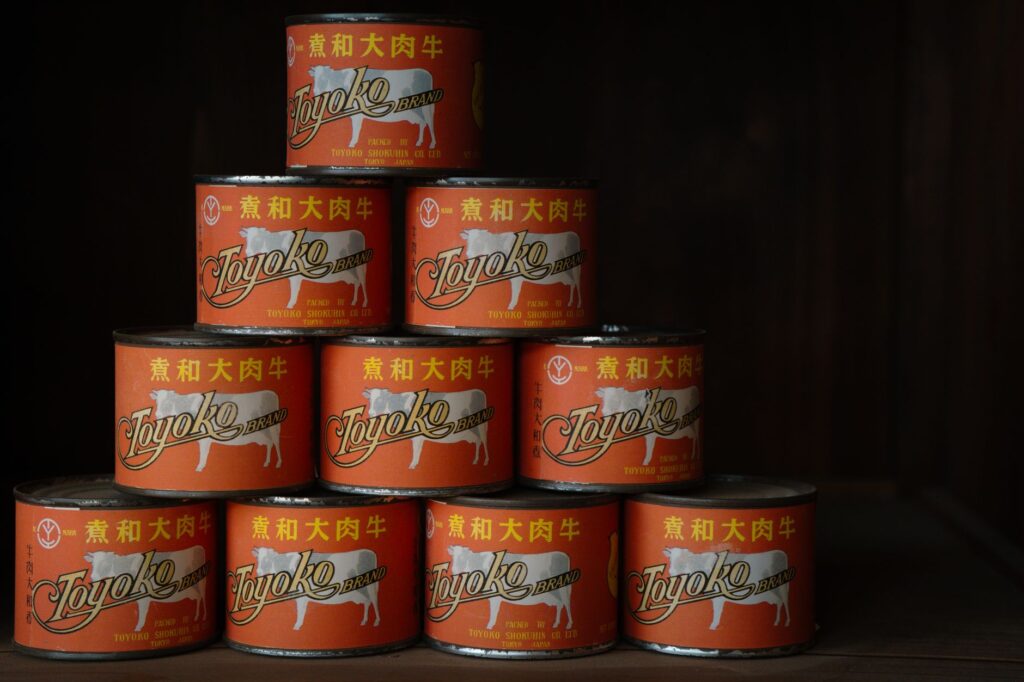
This domestic discipline also explains the popularity of certain shop formats: small portions of prepared food, single-portion packs of seasoning and vegetables sold in bunches sized for one or two people. The neighbourhood shop adapts to the kitchen, not the other way round.
Everyday heritage: what the leaflets leave out
The food heritage of a Japanese neighbourhood rarely appears in tourist leaflets. It lives in home-made pickles, in family curry recipes, in miso soups that change from house to house and in the small shops that have held the same corner for decades.
That heritage is fragile. It depends on generational handovers, affordable rents and customers who keep buying daily. The visitor’s decision, however small it seems, is part of that chain: buying at the neighbourhood shop helps keep it open.
In a residential district, responsible food tourism means not interrupting the routine: buy, pay, thank, and do not take the place of someone buying dinner.
It is worth remembering that heritage here is not staged. There are no costumed demonstrations or reconstructed streets. What survives does so because it remains useful, and usefulness is the best protection a food tradition can have.
A table for visitors without turning it into a show
Suginami offers no single food trail, but it does offer a coherent experience: neighbourhood markets, bakeries, family-run ramen or home-style Japanese restaurants, and shops selling basic goods where the logic of the local pantry becomes clear.
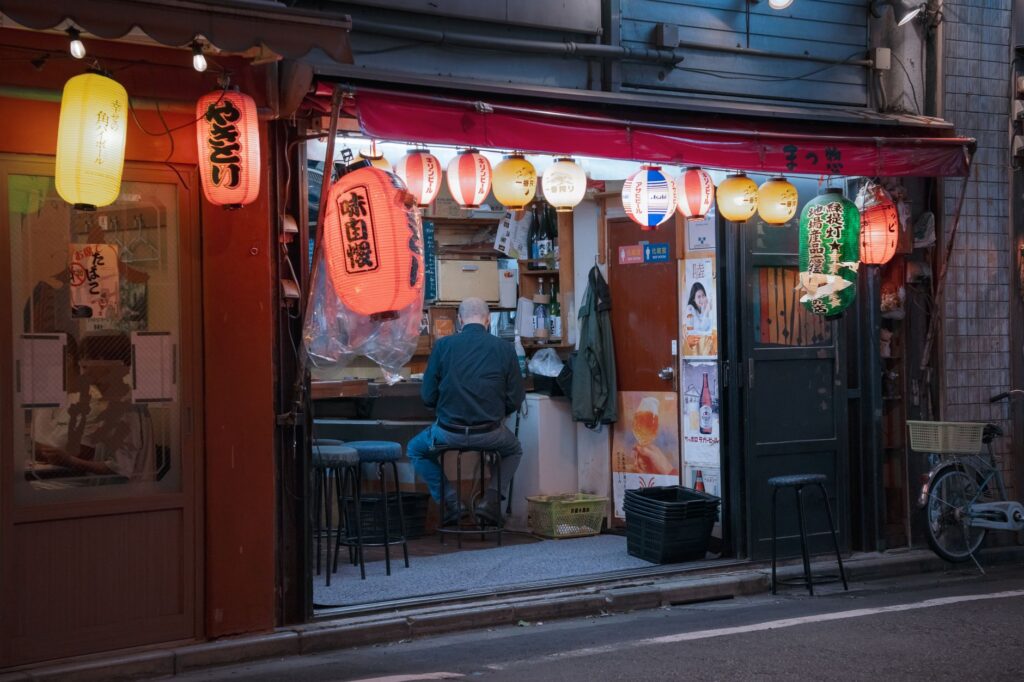
The right attitude is that of an apprentice. Watch how people order, pay and thank; respect queues and opening hours; do not photograph workers without permission; and avoid peak hours, when shops serve their regular customers.
Japanese food has gone global, but its everyday version remains local. In Suginami, that version is practised every morning with a small basket and a simple question: what is in season today?
Practical guide
- When to go: spring and autumn bring mild temperatures and a varied seasonal offer; Tokyo summers are hot and humid.
- Getting around: the district works well by train and on foot; pick one station and explore its shopping streets without rushing.
- What to buy: seasonal produce at greengrocers, pickles, seaweed, dried mushrooms and basic Japanese kitchen tools.
- Opening hours: many family shops open early and close in mid-afternoon; supermarkets keep longer hours.
- Budget: shopping in neighbourhood stores and prepared dishes keeps costs in check without sacrificing quality.
- Etiquette: do not eat while walking, do not block counters, thank staff on leaving and do not photograph without permission.
- Language: basic Japanese helps; many small shops have no English menus or signs.
- Responsibility: carry a reusable bag, avoid waste and buy small quantities.
Closing: a basket and a routine
At the end of the day, Suginami looks like what it is: a residential district where food is bought, cooked and shared without grand gestures. The food lesson is not on a spectacular plate but in the constancy of a well-chosen pantry.
If visitors take one idea away, let it be this: everyday Japanese cooking rests on small, repeated decisions. And those decisions, made each morning in a neighbourhood shop, are also a form of heritage.