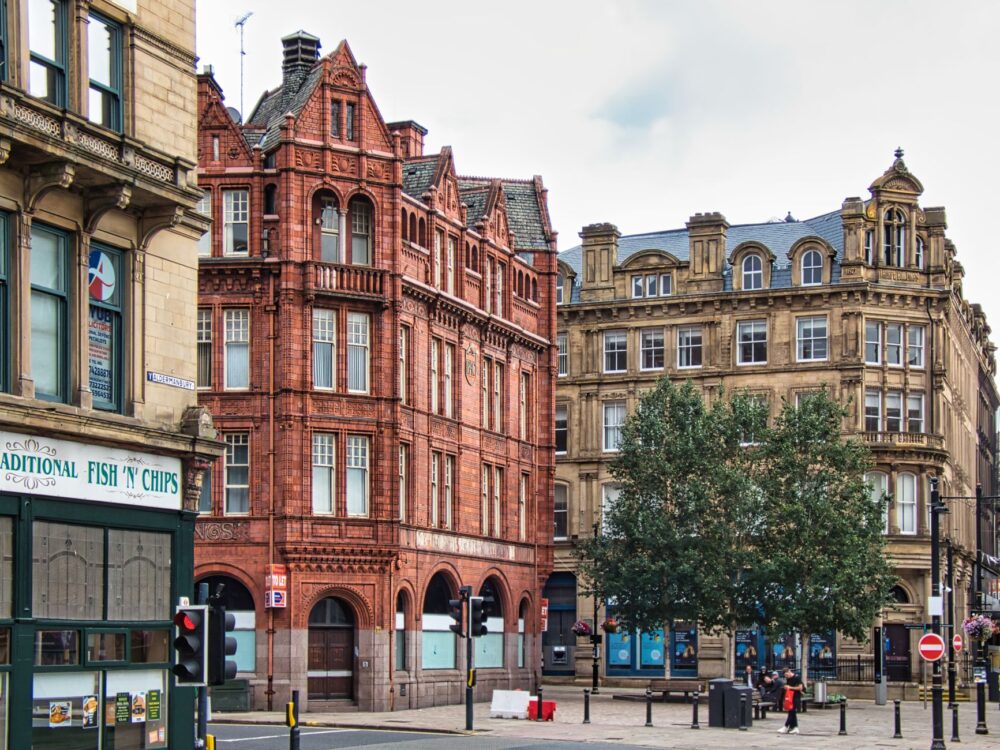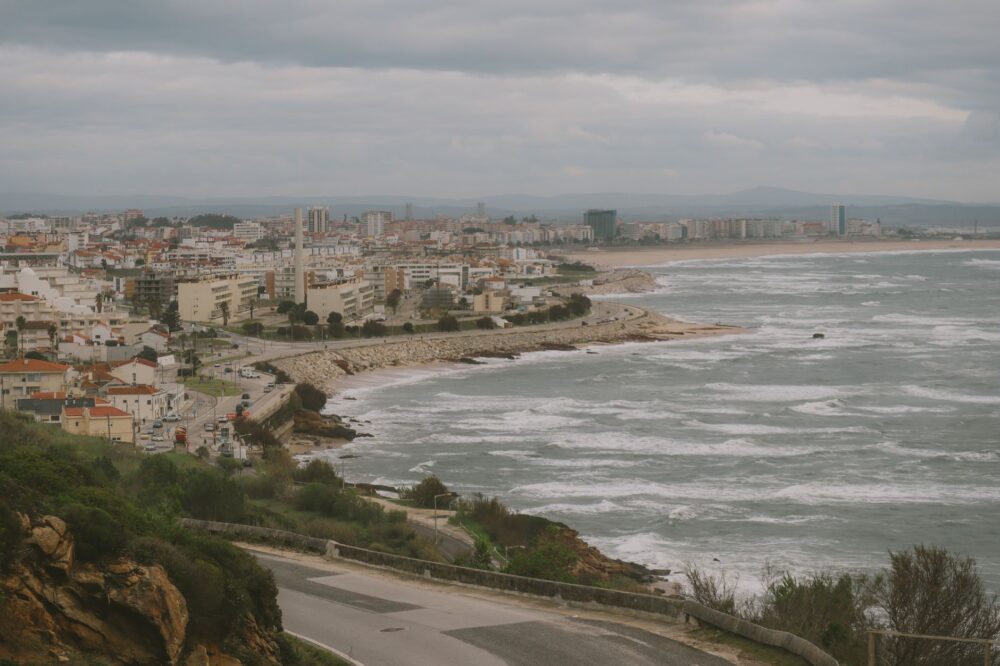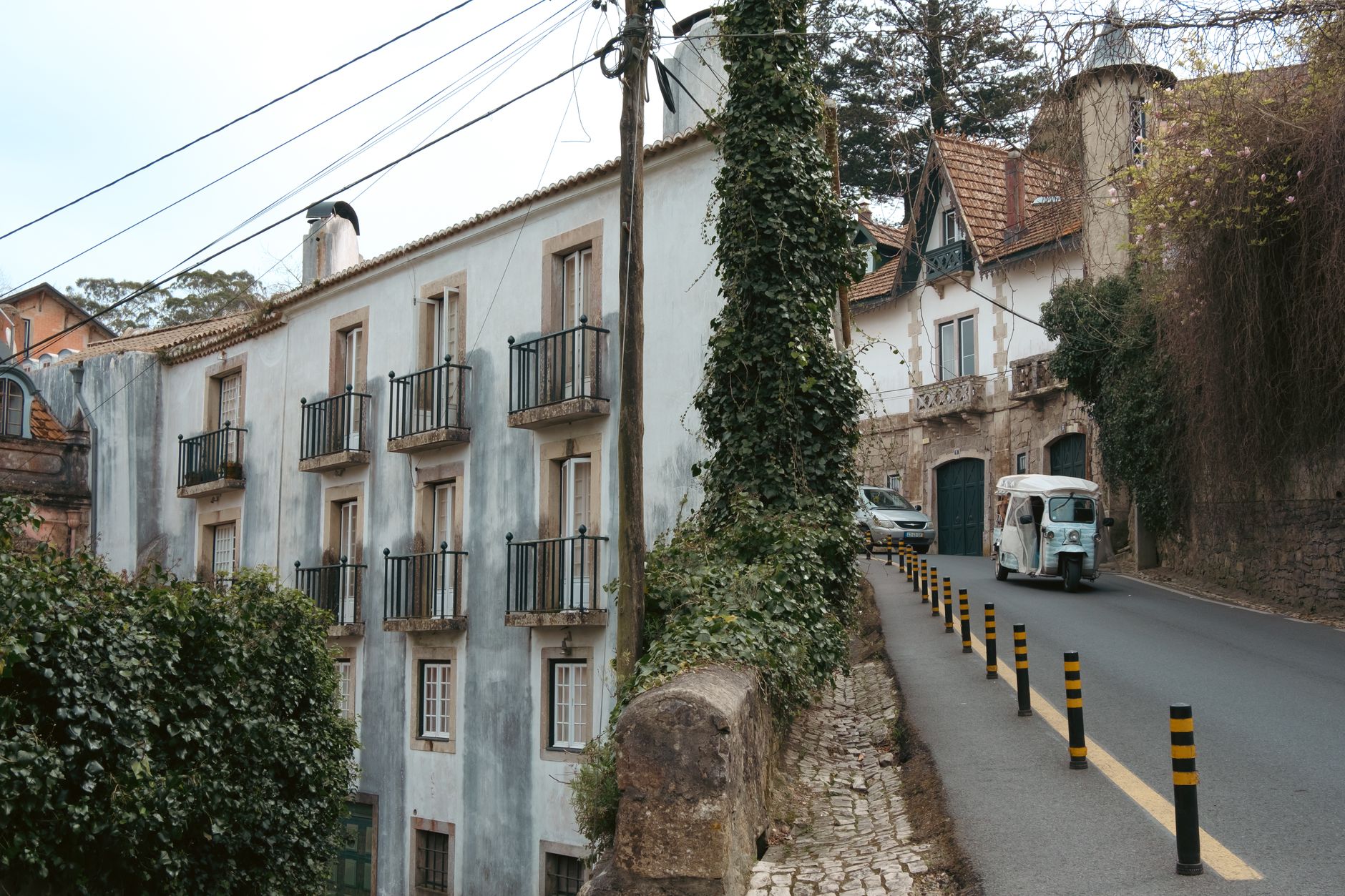

Olival is a name that promises trees, and yet what defines this locality in the municipality of Amadora, in the Lisbon district, is a grid of residential streets, small food shops and a neighbourhood life that runs well away from the capital’s tourist circuits. Portugal appears here neither as an Atlantic postcard nor as a showcase of azulejos, but as a metropolitan territory where the pantry is bought daily and where culinary identity is negotiated between what arrives from the market and what is still grown at the edges.
This report does not stem from a recent visit or from conversations with residents: it rests on verifiable geographical and administrative data and on the known context of the region. The question guiding it is simple and slightly uncomfortable: what remains of a local pantry when the land that produced it has been almost entirely built over? And, above all, what responsible decisions can someone arriving from outside make without turning a neighbourhood’s daily life into a spectacle?
A place that is neither village nor city
Geographical records list Olival as a populated place within the Mina de Água parish, in the municipality of Amadora, at the first administrative level of Lisbon. The associated population figure is around 42,900, a scale that rules out any rural image: this is a dense nucleus of the metropolitan area, at an approximate elevation of 159 metres and a few kilometres from central Lisbon.
That in-between condition is key to understanding its food culture. Olival has no monumental central market and no producer fair with tourist opening hours. What it has is a network of proximity retail: grocers, minimarkets, bakeries, butcher shops and the occasional kiosk that function as everyday infrastructure for thousands of families.
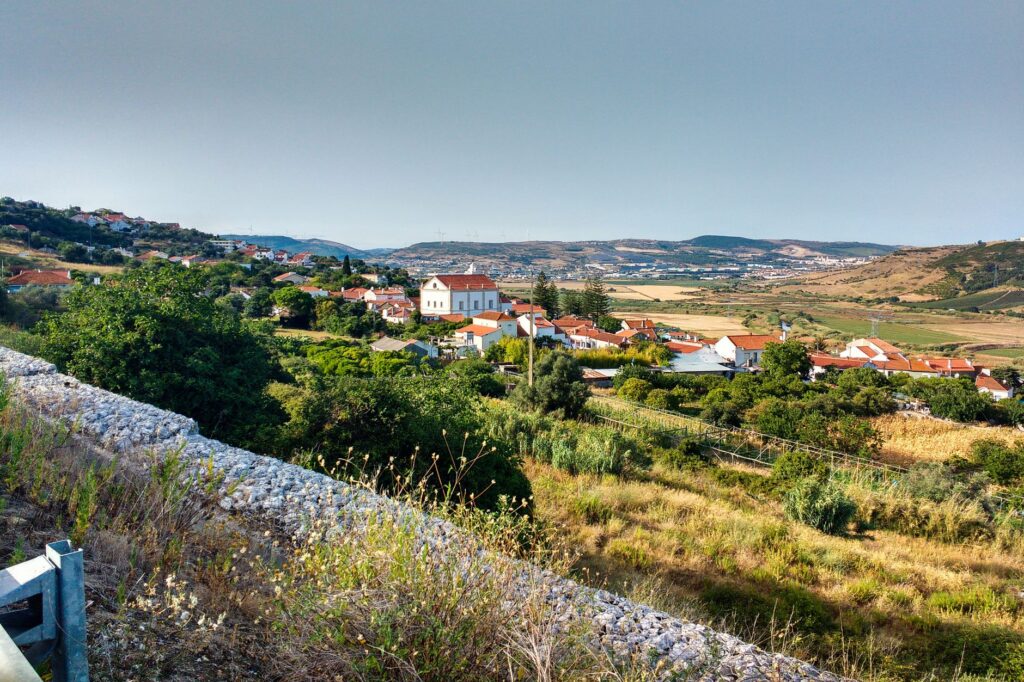
A metropolitan neighbourhood’s pantry is not visited: it is used. And that use is precisely what keeps it alive.
Geography as the first ingredient
Amadora borders Lisbon and other municipalities of the metropolitan ring, and its relief combines dense urban areas with slopes and spaces that remain open. That position explains much of what is eaten: proximity to the capital eases daily supply, but it also raises land prices and puts pressure on small producers.
In a territory like this, the market garden does not disappear: it retreats. Family plots, residual estates and urban allotments survive, supplying seasonal vegetables, citrus and aromatic herbs. They are not the economic base of the place, but they are both a symbolic and a practical component of local cooking.
What is bought and what is cooked
The cooking of this part of Portugal rests on a recognisable pantry: wheat and rye bread, rice, dried pulses, salt cod in its many presentations, sardines and fresh fish when it arrives, olive oil, cheese and cured meats. Seasonal vegetables are added, along with a constant presence of coffee in its many formats.
- Neighbourhood bakeries: bread is bought daily, not stored.
- Grocers: pulses, tinned goods, rice and staples that carry the week.
- Butchers and fishmongers: simple cuts, fish according to the day’s arrival.
- Gardens and smallholdings: vegetables, citrus and herbs on a small scale.
The neighbourhood as a food unit
In Olival, as across much of Lisbon’s periphery, the unit that organises food is not the restaurant but the neighbourhood. People shop near home, cook at home and turn to small establishments to fill the gaps. That logic explains the persistence of shops that would have vanished elsewhere.
It also explains the presence of kitchens of diverse origin. Amadora is a municipality with a population strongly linked to immigration from Portuguese-speaking African countries and to communities of other origins, and that mix shows in what is sold and cooked: spices, imported goods, different breads, distinct ways of cooking rice and pulses.
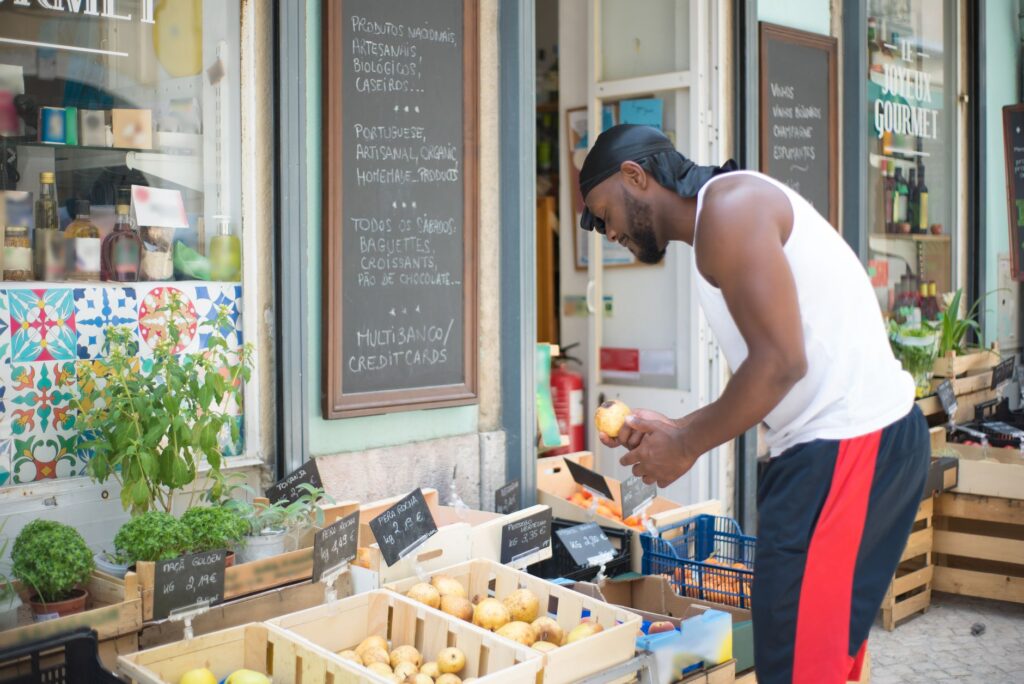
Local identity here is not a single recipe: it is a sum of pantries sharing the same street.
Heritage without a display case
Olival does not feature in Portugal’s great heritage itineraries, and it is worth saying so plainly. Its interest lies not in monuments or protected historic ensembles, but in the persistence of an urban way of life that is rarely documented.
That intangible heritage shows in opening hours, in shopping routines, in the trust between customer and shopkeeper and in the oral transmission of family recipes. It is fragile heritage, because it depends on economic conditions allowing those shops to stay open.
Land pressure and the future of the pantry
Proximity to Lisbon has a cost. Housing and commercial land prices across the metropolitan ring have transformed entire neighbourhoods, and small food retailers are especially sensitive to that pressure. When a grocer closes, it is not just a business that disappears: a supply point and a place of human contact go with it.
At the same time, urban gardening initiatives and the recovery of residual agricultural land have emerged, attempting to keep some local production alive. Their reach is limited, but their symbolic value is high: they signal that the local pantry is not merely a memory.
What a visitor can do without getting in the way
Olival is not a tourist destination and does not need to become one. Anyone arriving from Lisbon will most likely come by train or light rail and will find a residential neighbourhood where life proceeds normally. The first responsible decision is to understand that: this is not a film set.
The second is to shop where residents shop, within real opening hours and without expecting a guided experience. The third is to accept that the practical information available is that of a metropolitan municipality, not of a village with a tourist office.
- Getting around: the public transport network links Amadora with Lisbon; check updated timetables before setting out.
- Shopping: favour grocers, bakeries and neighbourhood markets over large supermarkets.
- Respect: do not photograph workers or customers without permission.
- Language: Portuguese eases contact; English works in many establishments, but not all.
- Expectations: there is no monumental market to visit; there is a daily life to observe discreetly.
A cuisine explained by what is missing
If anything characterises the pantry of a place like Olival, it is economy of means. People cook with what they have, use up what is left over and turn to tinned goods when it makes sense. That austerity is not poverty: it is a form of practical knowledge that has allowed generations of urban families to eat well on limited resources.
Soup, rice with pulses, grilled fish when it appears, bread as the base of almost everything: these are elements that need no presentation. Their value lies in repetition and consistency, not in novelty.
The role of bakeries
In Portugal, the bakery is far more than a point of sale. It is an obligatory stop, a temporal marker of the day and, in neighbourhoods like this one, a space of brief but real sociability. The range of breads — wheat, rye, maize — reflects a tradition that runs across entire regions of the country.
Practical guide
Anyone wishing to approach Olival with judgement should plan with verifiable information and without inflated expectations.
- Getting there: the locality is part of Lisbon’s metropolitan transport network; check routes and updated timetables with the official operators.
- When to go: any weekday offers the most faithful picture of neighbourhood life; weekends change the rhythms.
- Where to shop: grocers, bakeries, butchers and local minimarkets.
- What to take away: bread, tinned goods, olive oil, pulses and pantry products that travel well.
- Budget: prices are those of neighbourhood retail, not of a tourist shop.
- Ethics of visiting: buy, don’t just look; ask before photographing; do not block entrances.
What remains when the shutter comes down
The underlying question stays open. Olival is not an exceptional case: it is a representative example of what happens on the metropolitan edges of Portugal and much of Europe, where the local pantry rests on a fragile network of small shops and residual production.
Anyone who visits this place attentively will find less than its name promises and more than its scale suggests: an everyday cuisine that does not put itself on display, an identity that is practised rather than performed, and a heritage that depends, quite literally, on someone continuing to buy bread every morning.