Some towns are best understood on foot rather than on a map. Figueira da Foz, on Portugal’s Atlantic coast, is one of them. Here the long Mondego River ends its course and opens to the ocean in a wide, luminous estuary that has shaped the lives of those who live along its banks for centuries.
The town, located in the district of Coimbra, combines an extensive sandy seafront with an urban core of commercial streets, shaded squares and a heritage that speaks of salt, fishing and seaside holidays. Walking through it reveals how fresh and salt water have coexisted here without apparent conflict.
It is worth saying from the outset that Figueira da Foz is not a destination of grand monuments or closed itineraries. Its interest lies in the urban scale, in the everyday relationship with water and in the possibility of tracing one’s own routes without depending on a mandatory list. That freedom is at once its greatest attraction and its main demand: whoever walks must observe, pause and accept that the landscape changes with the hour and the tide.
A seafront that gives the town its order
The Figueira da Foz promenade acts as the backbone of the route. Along its kilometres, the beach, twentieth-century buildings, cafés and rest areas follow one another. Walking north or south completely changes the reading of the place: to the north, the town opens to the estuary; to the south, the coastline becomes wilder.
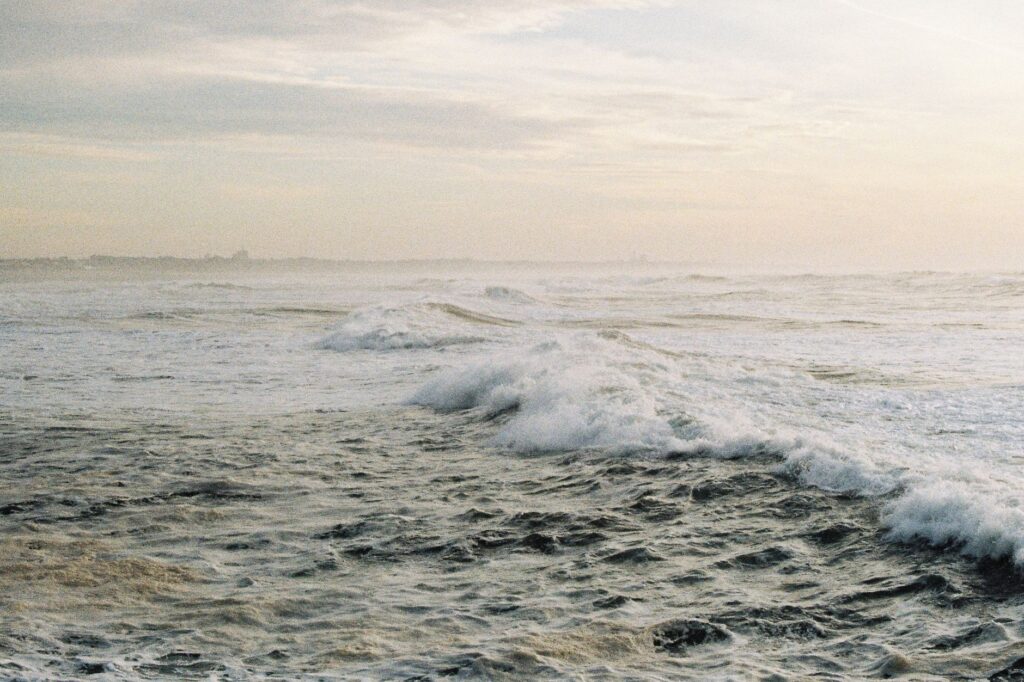
The urban beach is wide and accessible, with services concentrated in the high season. Outside that period, the promenade recovers a slower rhythm that invites you to watch the waves and the changing Atlantic light.
A detail that often goes unnoticed is the orientation of the promenade relative to the sun. In the morning, the light arrives from the side and softens the façades; at sunset, the horizon becomes an orange plane that rearranges the silhouette of the buildings. Choosing the time of day changes the experience as much as choosing the direction.
The Mondego as border and as bridge
The Mondego is not a mere geographical accident: it is the element that explains the history of Figueira da Foz. Its estuary has been a point of exchange for centuries, and today the port and river facilities remain part of the everyday landscape.

For the visitor, the best way to understand that relationship is to approach the bank and observe the movement of boats, the rhythm of the tides and the constant presence of birds that make use of the wetland. The estuary works as a hybrid space where the urban and the natural meet without friction.
That coexistence has a practical consequence for anyone exploring the area: distances are not measured only in metres, but also according to the tide and the wind. A stretch that seems short at midday can become longer when the breeze blows head-on. Walking with that logic in mind helps you enjoy the journey without tiring or rushing.
Salt-making memory in the surroundings
The Figueira da Foz area preserves the memory of an activity that was important for generations: salt production. Although few active sites remain today, the landscape still shows traces of former salt pans and of a relationship with the marshland worth knowing before exploring the area.
The nearby wetlands are also a point of interest for those who watch birds or simply seek a quiet walk away from the bustle of the centre. It is a discreet landscape, without grand monuments, but with a logic of its own that reveals itself to those who pause.
To interpret that landscape it helps to look at the edges: the channels, the dykes and the places where water stagnates and recedes. They are signs of an ancient and patient human intervention that adapted the terrain without fully dominating it. Walking along these margins requires care, since they are fragile spaces where the visitor’s presence should be minimal and silent.
In Figueira da Foz, the river and the ocean do not compete: they share the space with a calm that rubs off on the visitor.
The urban core: squares, shops and shade
The town centre is organised around squares and commercial streets where daily life unfolds without haste. The municipal market, traditional cafés and neighbourhood shops offer an honest image of the town, far from the most predictable tourist circuits.
Wide pavements and trees make walking this area pleasant even on hot days. It is a good place to stop, have a coffee and observe how the town blends its seafaring past with a present of services and summer holidays.

The layout of the centre invites a walk without a fixed destination, with streets that cross and open onto small squares where traffic noise fades. That human scale allows you to alternate livelier stretches with quiet corners, something especially useful when travelling with children or older people.
Architecture between two waters
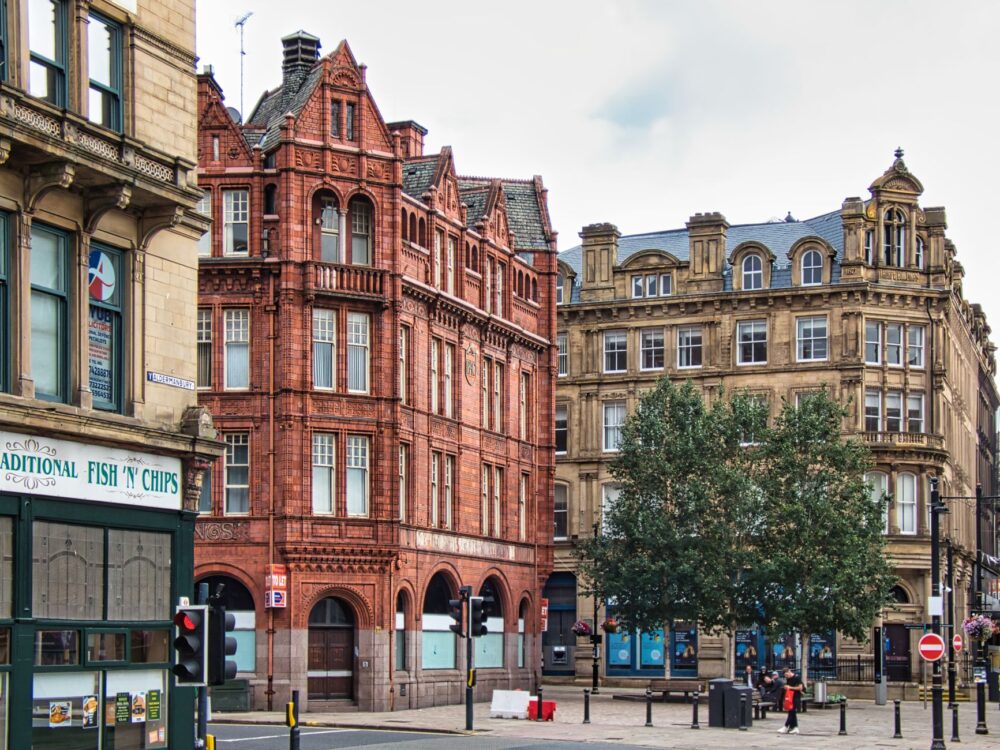
Figueira da Foz’s architecture reflects its history as a holiday destination and as a fishing centre. The buildings along the seafront, with their balconies and galleries, coexist with more modest constructions in the inner neighbourhoods.
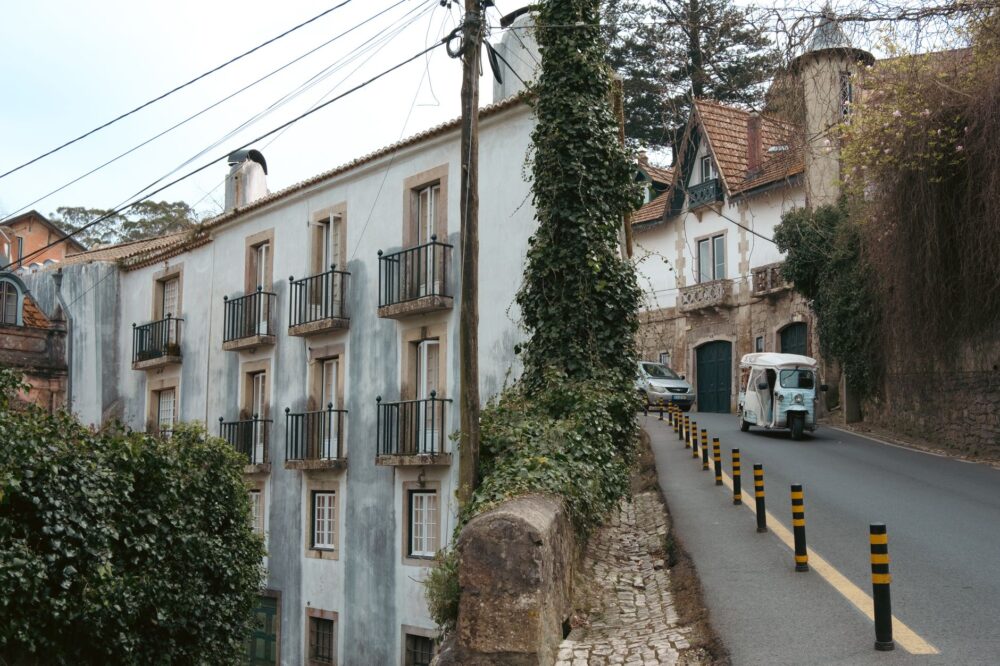
One of the keys to the route is to notice the materials: stone, tile and wood appear on façades that have withstood salt and wind. There are no grand monuments, but there is a constructive coherence that speaks of adaptation to the environment.
That architecture is not contemplated only with the eyes. The touch of a rough wall, the shine of tile under the rain or the creak of old wood are part of the experience of walking through the town. Observing those details turns the walk into a reading of the climate and local history, without the need for guides or explanatory panels.
Fishing neighbourhoods and daily life
Beyond the promenade, the neighbourhoods with a fishing tradition retain a character of their own. Here the rhythm is set by the tides and the routines of those who work at sea or in related activities.
Walking these streets with respect is essential: this is not a stage set but an inhabited place. Local communities keep customs and schedules that should be observed without interruption. Shopping in neighbourhood businesses or choosing family-run establishments is a simple way to contribute to the local economy.
That respect translates into concrete gestures: not invading private spaces with the camera, not blocking access during working hours and not assuming that any open door is an invitation to enter. Local hospitality is appreciated, but it should not be confused with permanent availability. Anyone visiting an inhabited neighbourhood has the responsibility to pass unnoticed and to leave the place as they found it.

The hills and the interior: another dimension of the journey
Although Figueira da Foz faces the Atlantic, its municipal area extends inland, where the landscape changes completely. The hills and rural areas offer trails, viewpoints and a cuisine based on local produce.
It is an interesting alternative for those with more time who want to understand the relationship between the coast and the countryside. Access is reasonable and distances are short, although it is advisable to check routes and available services beforehand.
That contrast between coast and interior makes it possible to build a multi-day route without leaving the municipality. The transition is gradual: first the sand and the asphalt, then the agricultural tracks and the woods. Anyone planning that combination would do well to allow time for travel and to wear suitable footwear for uneven terrain.
Food by the water
Figueira da Foz’s cuisine rests on two pillars: fish and produce from the nearby market gardens. The restaurants in the centre and along the seafront offer simple preparations, based on the quality of the product rather than on complex elaboration.
It is worth trying the local specialities of fresh fish and the traditional sweets of the region. Meal times follow the usual Portuguese pattern, with a broad midday window and later dinners.
For anyone on foot, food is not a parenthesis but part of the route. Sitting on a terrace, watching the comings and goings of regular customers and listening to low conversations is part of the experience. Choosing small places with a short menu is usually a good sign of freshness and local roots.

The best way to get to know Figueira da Foz is to let the walk set the pace: no closed lists, no hurry to arrive.
Layout and stages of a possible route
Although each visitor can design their own itinerary, a coherent route is usually organised in three stages. The first corresponds to the seafront and the urban core, where the walk is flat and services are plentiful. The second approaches the estuary and the wetlands, with more irregular stretches and a lower density of facilities. The third goes inland or heads towards the wilder coast, depending on the time available.
That structure allows the walk to be adapted to each person’s fitness and interests. Those with only a few hours can limit themselves to the first stage and still obtain a complete image of the town. Those with a full day can combine the first two and reserve the third for an additional day.
It is advisable not to chain stages without rest and to plan return points. The town is not extensive, but wind and humidity can increase the sense of effort. Walking with water, sun protection and comfortable footwear is a basic precaution that improves any route.
Accessibility and local transport
The promenade and the main areas of the centre present reasonable conditions for people with reduced mobility, although specific points should be checked according to needs. The more natural stretches, by contrast, may present irregular surfaces and gentle slopes that require attention.
To get around the town, the local bus network covers the main urban axes. The car is useful for reaching the surroundings and rural areas, although in the centre it is better to look for parking away from the narrowest streets. The bicycle is an alternative on flat stretches, provided traffic rules are respected and the wind is taken into account.
Those arriving by train or bus from Coimbra will find a compact town, walkable from the arrival points. That proximity is an advantage for short stays and for those who prefer to do without a private vehicle.
Practical guide
Getting there. Figueira da Foz has road and public transport connections from Coimbra and other towns in central Portugal. The bus station and the road network make access easy, although it is advisable to check updated schedules before travelling.
When to go. Spring and autumn offer mild temperatures and fewer crowds. Summer concentrates tourist activity and beach services. Winter is quiet, with an Atlantic climate that can include rain and wind.
Getting around. The centre and the seafront can be covered on foot. To reach the surroundings, the car or local buses are the most practical options. The bicycle is also an alternative on flat stretches.
Accessibility. The promenade and the main areas of the centre present reasonable conditions for people with reduced mobility, although specific points should be checked according to needs.
Responsible visiting tips. Respecting the schedules and spaces of fishing communities, avoiding unnecessary noise in residential neighbourhoods and choosing local shops are gestures that improve the experience and benefit the place.
A closing facing the Atlantic
At the end of the day, the Figueira da Foz promenade becomes a place for contemplation. The light changes over the water, the sound of the waves takes over and the town seems to remember that its identity is born from that border between the river and the ocean.
Walking here does not require a specific goal. It is enough to let the route carry you, to stop at improvised viewpoints and to accept that the landscape, like the tide, has a time of its own.