
In the northwestern corner of the Iberian Peninsula, where Atlantic mist kisses centuries-old chestnut trees and ancient stone holds the echoes of Celtic tribes, the air is not merely breathed; it is tuned. Within the hidden workshops of Lugo, time moves to the rhythm of the gaita—the Galician bagpipe—an ancient instrument that transcends folklore to become the true heartbeat of Galician identity. Far from industrial production hubs, in modest workshops where the scent of freshly cut wood blends with linseed oil, a dedicated handful of artisans keeps alive a tradition requiring the precision of a surgeon and the absolute pitch of a composer.
The Galician bagpipe is far from a static object; it is a living organism built from fine hardwoods like African blackwood, boxwood, or ebony, meticulously tanned hides, and a complex network of air channels. Every single component, from the blowpipe to the drone, relies on precise acoustic physics where a fraction of a millimeter of error consigns the instrument to hopeless dissonance. This report explores the intimate manufacturing process, generational handover in the valleys of Lugo, and how contemporary technology engages with time-honored artisanal heritage.
The Geography of Sound: The Hidden Workshops of Lugo
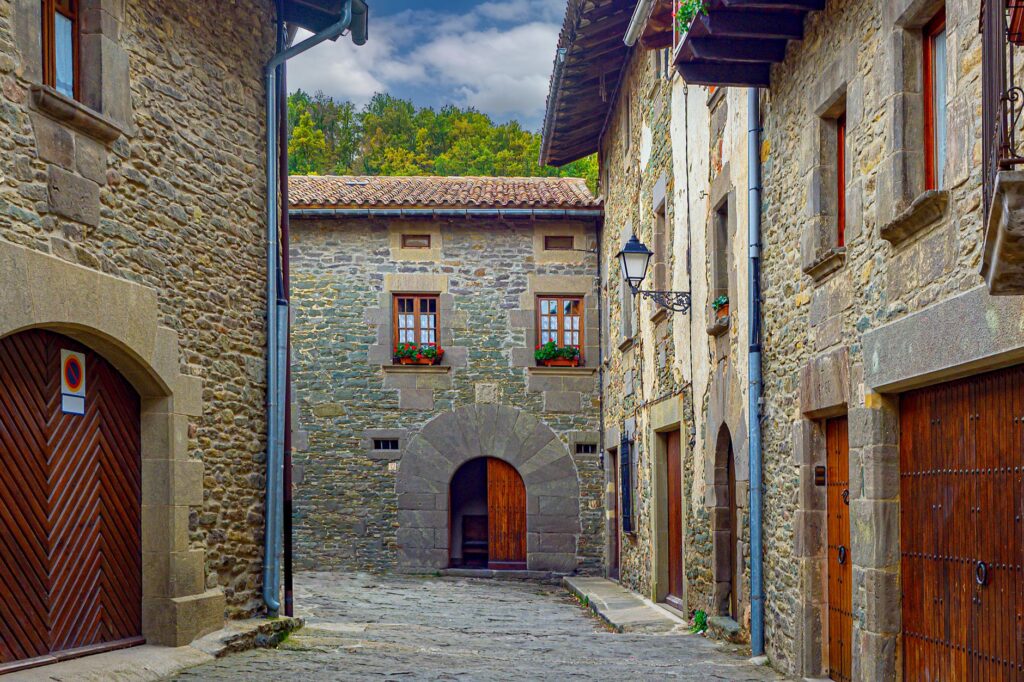
The province of Lugo harbors one of the most significant concentrations of wood turners and folk instrument artisans in northern Spain. In regions such as A Chaira or Os Ancares, workshops are traditionally housed in stone farmhouses where stable interior climates foster the natural seasoning of timber. Here, the creation process begins long before a bagpipe plays its first note; it starts in the forests, selecting boxwood (*Buxus sempervirens*) specimens that have grown slowly under natural water-stress conditions, thereby guaranteeing optimal density.
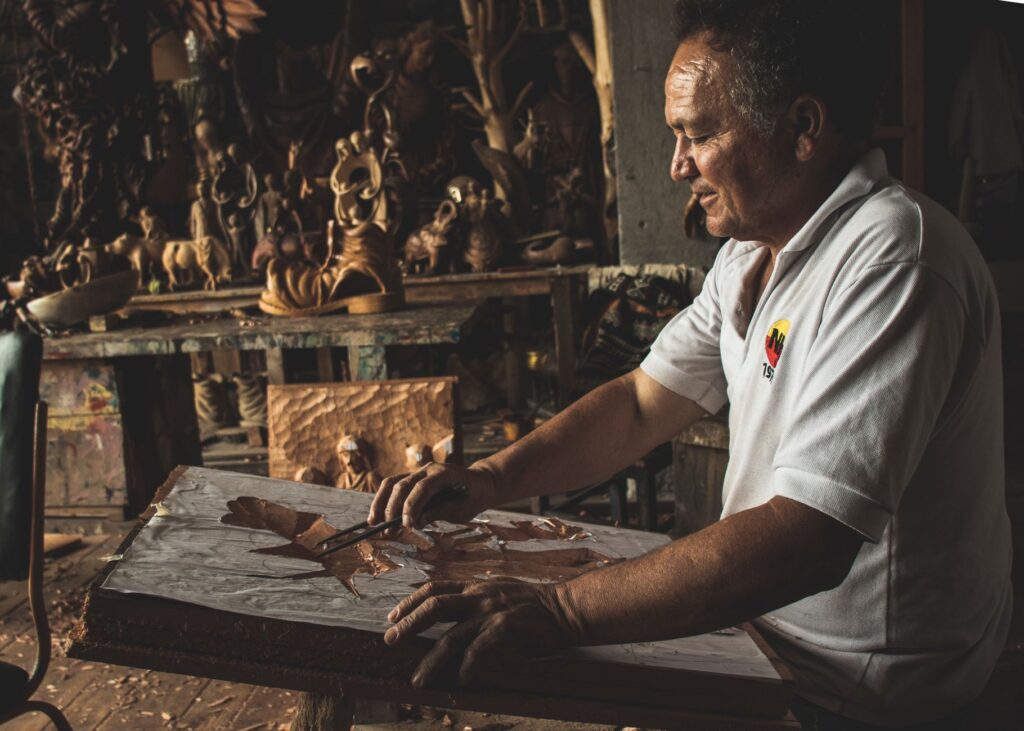
Master artisans in the area, heirs to family legacies stretching across the nineteenth and twentieth centuries, work with handed-down hand tools and restored vintage lathes. The choice of wood dictates the timbre, projection, and harmonic color of the instrument. While boxwood delivers unmistakable warmth and rapid response in the chanter, exotic woods like African blackwood provide unwavering stability against the humidity shifts characteristic of the Atlantic climate.
Anatomy of Precision: The Art of Chanter and Bag
The melodic heart of the bagpipe resides in the chanter—the finger-holed melody pipe featuring fourteen apertures, including double holes and acoustic vents—where the fingering is executed. Crafting a chanter demands millimetric exactness. A deviation of tenths of a millimeter in the internal conical bore ruins the intonation of the diatonic scale. Artisans use handmade hardened-steel reamers to polish the interior until achieving a mirror-like finish that promotes smooth, laminar airflow.
Meanwhile, the storage and delivery of air rely upon the bag (*fol*), traditionally fashioned from goat or lamb hide. The tanning process, lasting several weeks, aims to strip away natural fats while preserving flexibility and the ideal degree of porosity. A properly prepared bag acts as an elastic lung that stabilizes blowing pressure, enabling the piper to sustain notes without excessive fatigue. Today, while breathable synthetic membranes are sometimes used to mitigate condensation moisture, purists steadfastly prefer animal hide for its tactile feedback and organic resonance.
The Alchemy of the Reed: The Vibrant Soul
If wood is the body of the bagpipe, the reed is undeniably its soul. Tiny blades of giant reed (*Arundo donax*) bound with silk thread onto a brass staple dictate sound emission upon receiving air pressure. The cutting, scraping, and balancing of these reeds represent the best-kept secret of each workshop. No two reeds sound identical, and their behavior fluctuates according to ambient temperature and relative humidity.
Discerning pipers make regular pilgrimages to Lugo’s workshops so masters can hand-adjust their reeds using microscopic files and precision blades. This ongoing dialogue between musician and artisan ensures the instrument adapts perfectly to the performer’s stylistic demands, whether for the festive drive of an *alborada* or the melancholic grace of a *muiñeira* played at dusk by the sea.

The bagpipe is not merely fingered; it is breathed with the soul and governed by the precise equilibrium between lung strength and wooden resistance.
This uncompromising standard of excellence has placed Lugo’s luthiers at the center of the international traditional music map. Performers from Central Europe, Latin America, and the United States commission instruments from these Galician workshops, seeking acoustic authenticity that mass manufacturing can never replicate. Globalization, far from eroding this craft, has elevated the hallmark of handmade items as a symbol of cultural exclusivity.
Innovation and Tradition: The Future of Galician Folklore
Despite deep-rooted traditions, Lugo’s workshops have not remained isolated from technical innovation. In recent years, computer-aided design (CAD) software and collaboration with acoustic engineers from the University of Santiago de Compostela have allowed artisans to analyze the harmonic behavior of resonance chambers with scientific precision. These studies do not seek to replace the empirical wisdom of the masters, but rather to explain physical phenomena they already mastered through intuition.
Furthermore, vocational training centers across the province have introduced specialized modules in woodturning and traditional lutherie, securing generational handover that until recently hung by a thread. Young apprentices, both men and women, master gouges, chisels, and natural resins, ensuring centuries of accumulated knowledge will not fade into oblivion.
The Soundscape of Village Fairs and Pilgrimages
Understanding the Galician bagpipe requires experiencing it within its natural habitat: the rural pilgrimage, the courtyard of a stone church, or the warmth of a tavern after a long day of labor. It is in these communal spaces that the instrument achieves its full social dimension. The deep, steady hum of the drone serves as a continuous bass uniting generations, while chanters weave melodies narrating tales of emigration, love, hard work, and Atlantic mythology.
Piper brotherhoods and traditional bands function as invisible guardians of this repertoire. Throughout the summer months, patron saint festivals mobilize thousands to the rhythm of pasodobles and alboradas, proving that traditional Galician culture enjoys robust health, underpinned precisely by the technical excellence of instruments forged in silence deep within Lugo.

Preserving the tuning of the bagpipe is safeguarding the acoustic memory of a people who found in wood and wind their highest form of poetry.
Practical guide
Planning a journey through the bagpipe workshops and turning studios of Lugo requires respecting the schedules and privacy of artisans, whose workplaces are frequently family-run affairs. The following essential guidelines ensure a respectful and rewarding visit.
- Getting There: The city of Lugo is connected by highway to A Coruña and Santiago de Compostela. Reaching rural workshops in the A Chaira and Os Ancares regions requires a private vehicle due to geographical dispersion.
- Best Time to Visit: Spring and autumn offer optimal weather conditions and coincide with lower tourist numbers, allowing for unhurried conversations with master artisans.
- Mandatory Advance Booking: Workshops are active production spaces rather than commercial museums. Contacting several weeks ahead through local cultural associations or directly with the workshops is strictly required.
- Recommended Accommodation: Opt for rural lodging in restored traditional stone houses within the surroundings of the Ancares Lucenses Biosphere Reserve.
- Workshop Etiquette: Touching precision tools without express permission is strictly prohibited, and camera flash must be avoided to protect delicate woods currently undergoing seasoning.
- Instrument Acquisition: Commissioning a hand-crafted bagpipe involves waiting lists that can stretch from several months to a year. Always request a certificate of authenticity and a detailed invoice listing the materials used.
The journey concludes at twilight, as golden light slides across slate rooftops and the distant sound of bagpipe practice drifts through the mist. In that fleeting moment, suspended between the millimetric precision of the workshop and the vastness of the landscape of Lugo, one realizes that every note produced by the instrument is nothing less than the triumph of memory over time—a perennial reminder that certain cultures resolutely refuse to fall silent.