
The Wounded Mountain of White Light and Ancient Silence
A few short kilometers from the Tyrrhenian Sea, the Apuan Alps rise like an imposing white wall that defies the logic of the Mediterranean landscape. This is not perpetual snow, but rather the most coveted marble in the history of Western civilization. In this rugged territory, where geology transforms into art, working stone is not merely an extractive industry, but an uninterrupted dialogue between the brute force of nature and the millimetric precision of humankind. The workshops and studios scattered across the valleys of Carrara safeguard a know-how passed down through generations, resisting industrial homogenization and the trivialization of material heritage.
The traveler venturing into these steep gorges discovers an ecosystem where rock dust impregnates the air, and the silence is broken only by the metallic echo of cutting machines and the dull thud of the chisel. Here, the raw material is not viewed as inert resource, but as a geological archive preserving millions of years of tectonic pressure. Contemporary master masons and sculptors operate on the delicate frontier between preserving secular techniques and adopting three-dimensional scanning technologies, proving that tradition and vanguard can merge without losing the authenticity of manual gesture.
Geography of Fracture: The Route of Historic Quarries
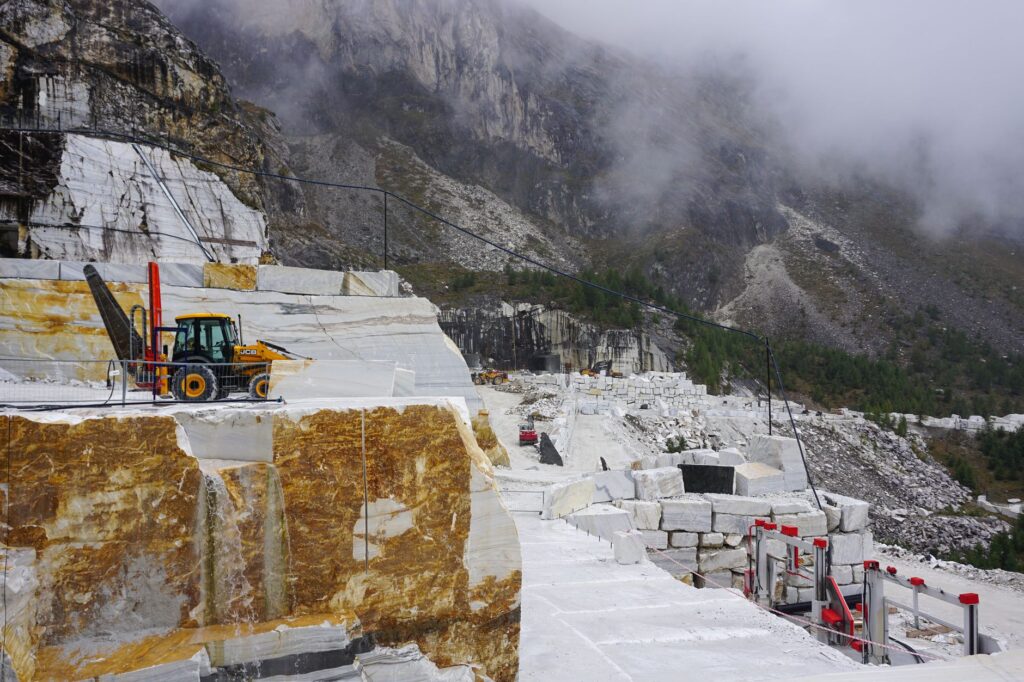
The ascent into the basins of Torano, Miseglia, and Colonnata traces a vertiginous map of roads carved directly into the rock, down which colossal blocks of marble once descended via the perilous lizzatura system. This ancestral method—where chestnut logs and hemp cables restrained masses weighing tens of tons using only balance and experience—constitutes one of the most fascinating chapters of vernacular European engineering. Today, although heavy machinery and diamond cables dominate the slopes, the traces of that titanic effort remain visible in every corner of the mountain.
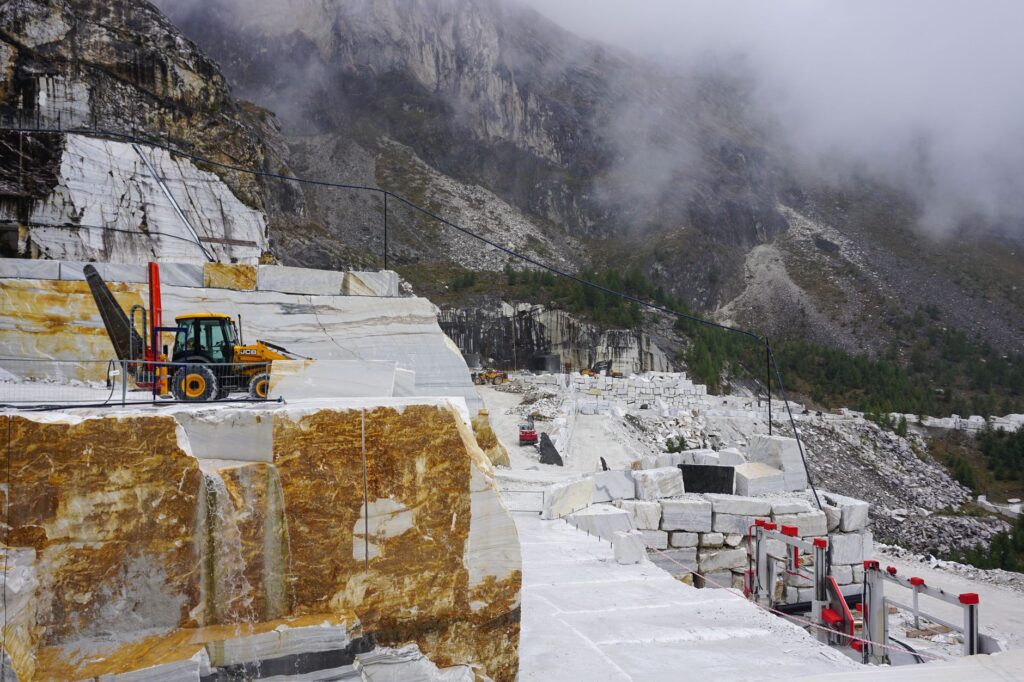
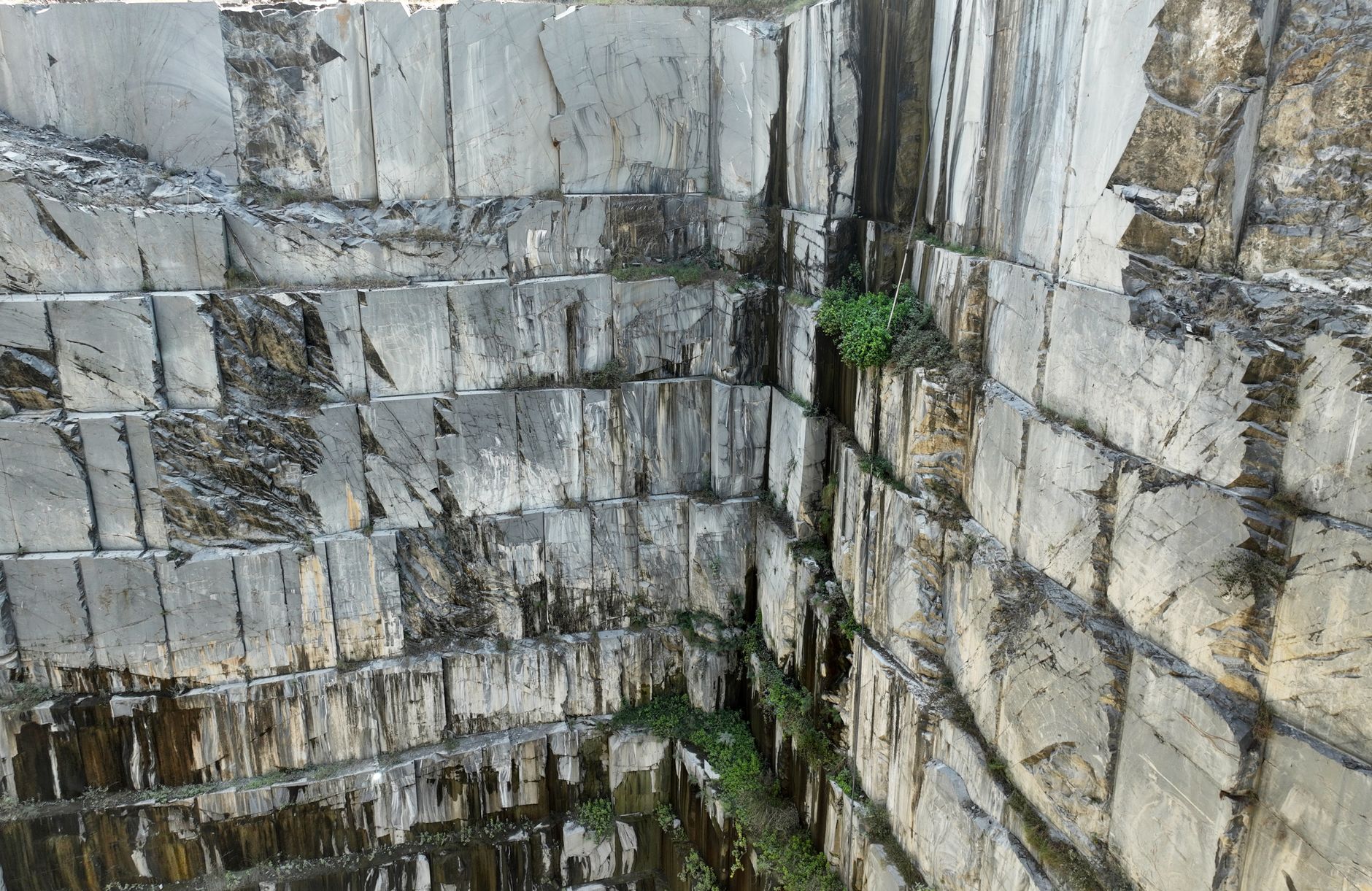
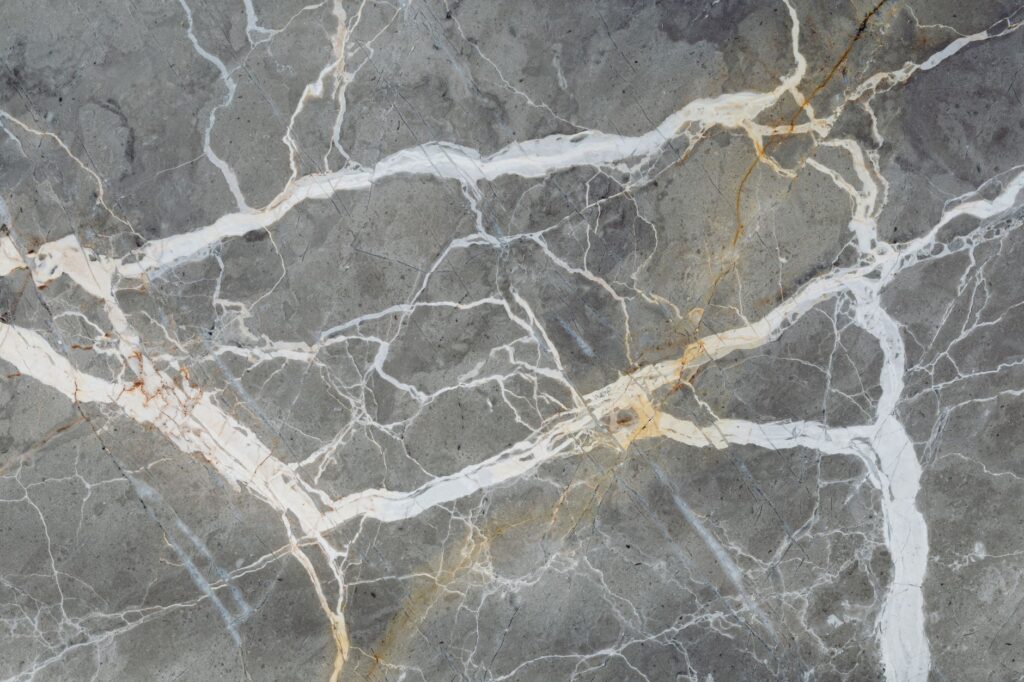
Open-cast quarries and underground galleries reveal an interior architecture of white cathedrals, where the geometric cuts of the walls reflect sunlight with blinding intensity. Studying the stratigraphy of these walls is understanding why Michelangelo Buonarroti spent months camped in these peaks personally selecting blocks destined for the Moses or the Pieta. The purity of the stone, classified by grain and subtle grey veining, determines the final destination of each block, whether for a monumental facade or the most delicate piece of architectural restoration.
The Pulse of the Workshop: Between Millennial Square and Numerical Control
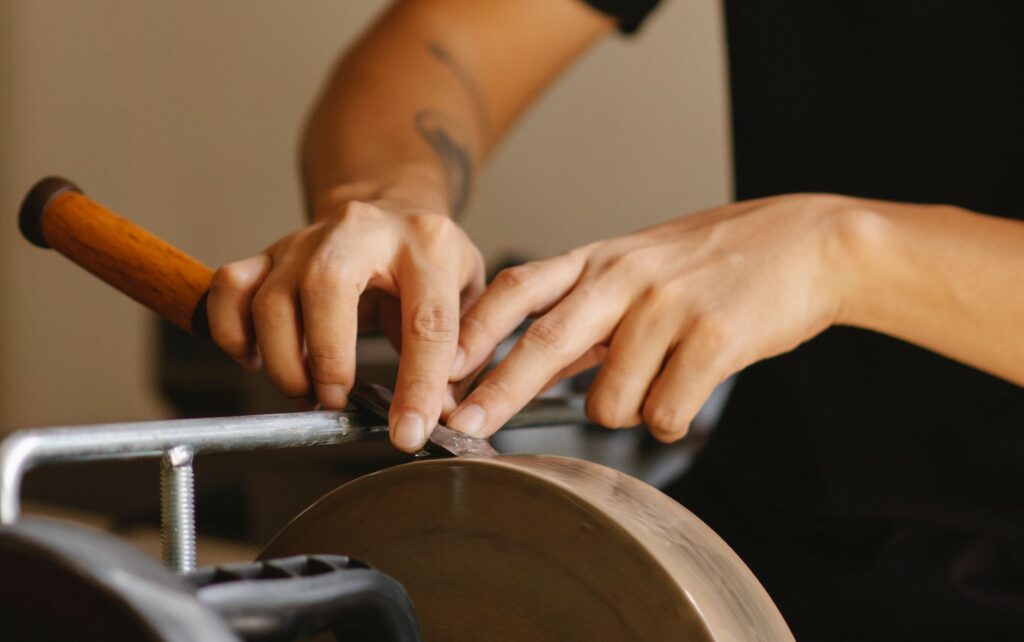
In the urban fabric of Carrara, artisan workshops function as physical alchemy laboratories. Behind heavy wooden doors, stonemasons combine traditional tools—the gradina, martellina, and trócola—with computer-aided design software. This apparent paradox is, in reality, the key to the sector’s survival. Young apprentices training at the Accademia di Belle Arti learn both to operate state-of-the-art pantographs and to hand-sharpen their own chisels, understanding that the machine executes while the human hand interprets the intimate vibration of the material.
Marble is never defeated by force; it is persuaded by the patience of water and the steady rhythm of well-tempered steel.
Every workstation in these studios smells of sprayed water and fresh stone. The surface finishing process, known as levigatura, requires hours of manual friction with progressively finer-grained grinding wheels until achieving that silky texture that seems to retain light rather than merely reflect it. Masters of the square and straightedge supervise every square centimeter, aware that a millimetric error in roughing can ruin weeks of collaborative work among engineers, stonemasons, and artists.
The Network of Knowledge: Restoring European Heritage from the Apuan Alps
The impact of Carrara’s workshops extends far beyond its geographic borders; from these valleys come the supplies for major monumental restoration works across the European continent. When a Gothic cathedral in France or a neoclassical palace in Vienna requires the replacement of an ornamented capital or a fluted column, commissions incorporate exact specifications that only Apuan workshops can replicate with historical rigor. This heritage replacement labor demands profound knowledge of architectural styles and a chameleonic capacity to artificially age freshly cut stone.
The workshops’ archives preserve plaster casts and handwritten notes dating back to the nineteenth century, constituting a material library of incalculable value for art historians and conservative architects. In these spaces, debates on the ethics of intervention are ongoing: to what extent should machines intervene, and where lies the sacred limit of manual intervention? This intellectual rigor makes Carrara an international hub for researchers and creators seeking to understand the materiality of great historical architecture.
Circular Economy of Rock: From Monumental Waste to High-Purity Powder
Facing the nineteenth-century image of uncontrolled extractive exploitation, the contemporary stonemasonry sector in the Apuan Alps has implemented a rigorous transformation toward sustainability and integral utilization. Today, the concept of waste has been practically eradicated by valorizing minor fragments and marble dust. Far from being abandoned in dumping sites, these subproducts find highly specialized outlets in sectors as diverse as high-end cosmetics, premium paint production, the pharmaceutical industry, and the manufacture of advanced composite materials for ecological construction.
Likewise, diamond wire cutting systems use closed-loop water circuits that are continuously purified and recycled, minimizing impact on local aquifers and preventing sedimentation in rivers descending toward the Versilia plain. This technical evolution responds to both strict environmental regulations and an ethical conviction deeply rooted among workers themselves, who inhabit the territory and defend the aesthetic and ecological preservation of their mountainous environment against speculative pressures.
Recorded Memory: The Living Archive of Museums and Foundations
The narrative of Carrara does not end with industrial production or on-site studio work; it projects into cultural dissemination through private foundations and civic museums documenting the hidden history of stonemasons. The Museo Civico del Marmo and local interpretation centers house obsolete tools, stereoscopic photographs from the early twentieth century, and oral testimonies of veterans remembering the harsh conditions of winter lizzaturas. These spaces function as levees against oblivion, reminding visitors that behind every classical monument lies a human chain of sweat, risk, and technical genius.

Temporary exhibitions and international sculpture symposiums attract creators from five continents each year, turning the city into a forum for debate on the future of three-dimensional plastic arts. During these weeks of exchange, public squares fill with raw blocks gradually taking shape under the astonished gaze of visitors and locals alike, in a public ritual that democratizes access to a creative process usually confined within private studios.
Practical guide
How to get there: Pisa International Airport (PSA) is roughly 60 kilometers away and offers direct rail connections to the Carrara-Avenza station in approximately 50 minutes. From the station, local buses connect with the historic center and the foothills of the quarries.
When to visit: The spring months (April to June) and autumn (September to October) offer optimal temperatures for exploring mountain routes on foot or by authorized vehicle, avoiding extreme summer heat and dense winter fogs.
Quarry visits: Most active operations and underground galleries (such as the famous excursions to Fantiscritti or Ravaccione) require advance booking through authorized tour operators that provide mandatory safety equipment.
Accommodation: It is recommended to stay in the historic center of Carrara to enjoy its atmosphere of ateliers and marble palazzos, or alternatively opt for nearby coastal towns like Marina di Carrara if combining cultural tourism with the Tyrrhenian sea breeze.
The Final Echo of Stone on the Horizon
When the sun sets over the Tyrrhenian Sea, the peaks of the Apuan Alps abandon their blinding morning white to take on a rosy and violet hue that seems to suspend the mountain in time. In that crepuscular moment, the workshops silence their motors, and the dust from the courtyards settles softly over the cobblestones. This is the moment when inert matter acquires its true poetic dimension, reminding us that the great creations of human culture are not born from nothingness, but from the tenacious endeavor of those who know how to listen to the voice hidden deep within the stone. The traveler leaving this territory understands that marble is not merely a building material, but the tangible memory of a civilization that decided to entrust its legacy to the eternity of rock.