
Introduction to the Eastern Mists
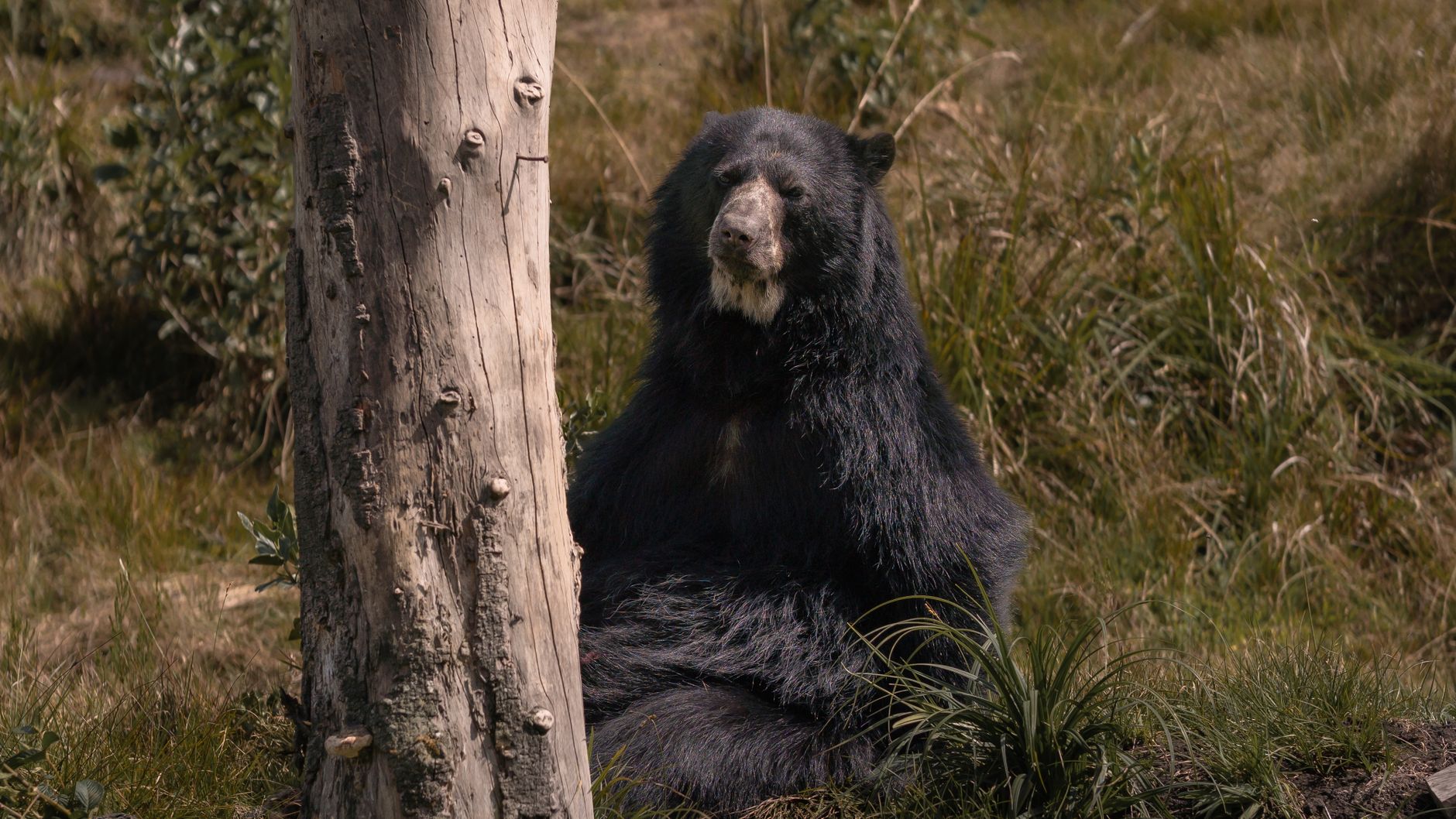
The eastern foothills of the Andes mountain range harbor one of the most complex and enigmatic ecosystems on the South American continent. In this borderland where the Amazon basin begins to climb the high peaks, perpetual condensation and humid winds shape a landscape of dense cloud forests and rugged paramos. Here, amid inaccessible ravines and moss-draped canopies, survives South America’s only native bear: the spectacled bear, scientifically known as Tremarctos ornatus. Far from simplistic wildlife portrayals, this territory represents a natural laboratory where evolutionary biology intersects with the urgent demands of contemporary conservation.
Sangay National Park, a designated UNESCO World Heritage site, encompasses an enormous altitudinal gradient ranging from volcanic glaciers to lowland tropical rainforest. This extreme topography acts as a natural shield, but also as a monumental challenge for scientific research. Studying the Andean bear at these latitudes requires understanding how the species utilizes natural biological corridors to move between different thermal floors, seeking food and mates in an environment where human intervention increasingly fragments original habitats.
The Architecture of the Cloud Forest and Feeding Corridors
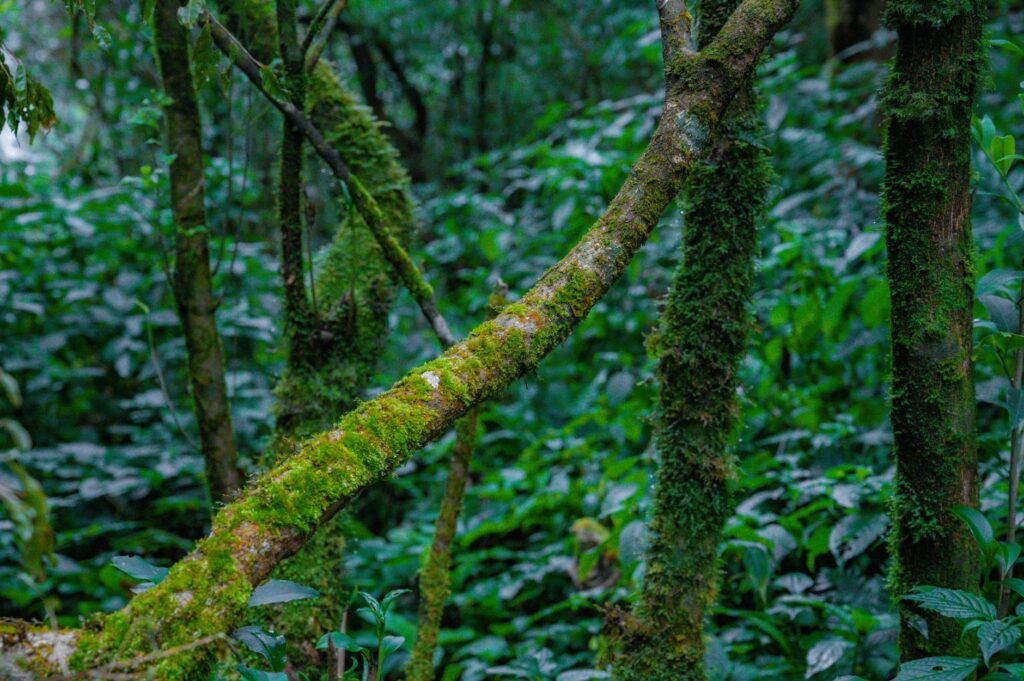
To understand the ecology of Tremarctos ornatus, it is essential to analyze the botanical structure of its home. The cloud forest is not a homogeneous space, but a vertical mosaic of microclimates. Tree canopies dominated by families such as Lauraceae and Melastomataceae host a dense network of epiphytes that constitute seasonal larders for the plantigrade. Unlike their northern relatives, this bear is predominantly herbivorous and frugivorous, spending a significant portion of its daily routine in the selective search for wild fruits and tender bromeliad shoots.
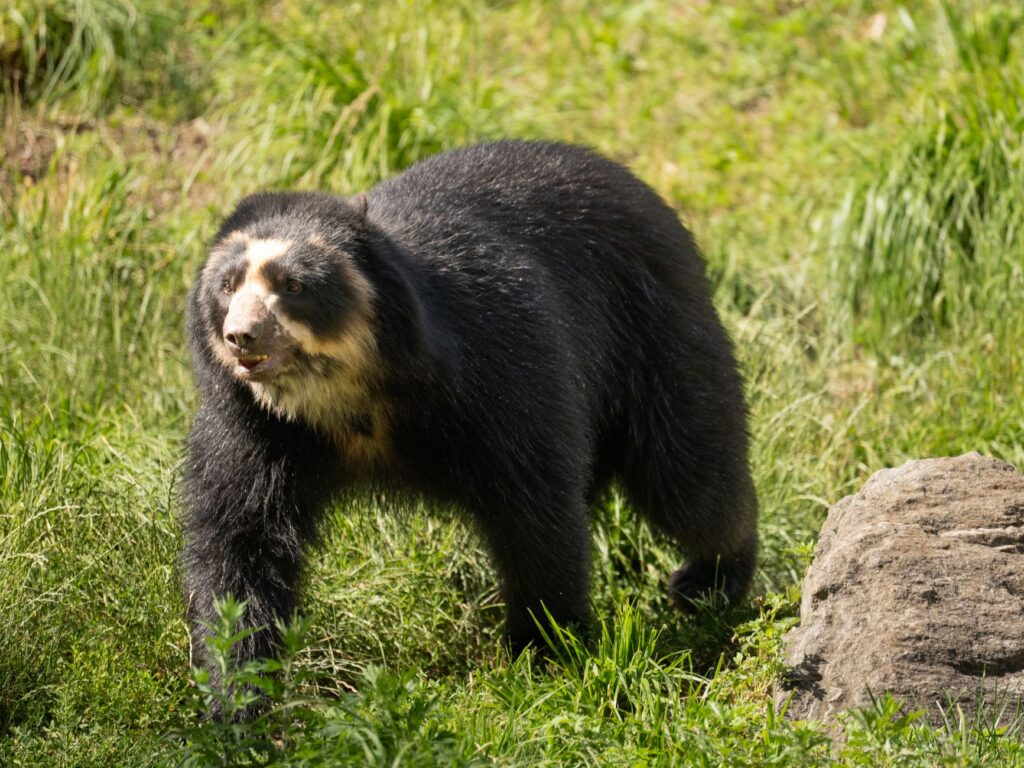
The Andean bear’s diet varies drastically according to altitude and climatic season. During the rainy season, forays into the lower zones of the humid forest multiply, driven by the ripening of various fleshy fruit species. Conversely, when cold fronts whip across the paramo, the bear uses its robust morphology and adapted claws to climb wax palms and strip away bark in search of nutritious pith. This capacity to modify its diet makes it a fundamental ecological engineer: by ingesting whole fruits and defecating seeds miles away, it acts as one of the most effective flora dispersers in the eastern Andes.
Mastication Biomechanics and the Role of Arboreal Platforms
A fascinating aspect of Tremarctos ornatus biology lies in its cranio-mandibular adaptations. It possesses widened zygomatic arches and hyperdeveloped masseter-temporal musculature that confer an exceptional bite force, specifically designed to fracture tough plant materials, such as the woody stems of terrestrial and epiphytic bromeliads.
Likewise, the use it makes of tree canopies extends beyond feeding. Structures known as platforms or nests, constructed through the systematic bending of thick branches, are commonly found. These platforms serve both for daytime resting during hours of lower activity and for reaching fruits inaccessible from the forest floor. The presence of these arboreal nests constitutes a key indirect indicator for biologists dedicated to surveying population density in topographically challenging areas.
Demographic Dynamics and the Challenges of Geographic Isolation
Accurately estimating the number of spectacled bears in Sangay National Park represents a methodological task of high complexity. Because they are solitary animals, elusive in habit, and possess home ranges that can exceed fifty square kilometers per individual, direct sightings are exceptional. For this reason, the scientific community has shifted toward non-invasive techniques, highlighting the strategic deployment of camera traps in mandatory ridge and canyon passes, as well as genetic analysis of hair and scat samples collected in the field.
Preliminary data from recent monitoring suggest that local populations are fragmented due to anthropogenic pressure in buffer zones. The opening of unpaved roads, the expansion of the agricultural frontier for livestock pastures, and the selective logging of balsa and other native species have severed traditional ecological corridors. This genetic isolation increases the risk of inbreeding, reducing the species’ resilience against epizootics or drastic climate alterations driven by global warming in the Andes.
The Conflict Between Wildlife and Local Communities
The conservation of Tremarctos ornatus cannot be understood apart from the human populations inhabiting valleys adjacent to the park. Occasionally, faced with scarce wild fruits caused by habitat alteration, certain individuals venture into cattle ranches to prey on small livestock—such as calves or sheep—and consume corn crops. This overlap between the bear’s needs and peasant subsistence economy generates friction that threatens the survival of the species.
Conservation organizations and public institutions have promoted compensation programs and the installation of deterrent electric fencing, in addition to encouraging stable livestock practices. However, the primary challenge remains environmental education and revaluing the Andean bear as an emblem of the environmental health of river basins supplying water to millions of inhabitants in the lowlands.
High-Altitude Hydrology and the Ecosystem Value of the Territory
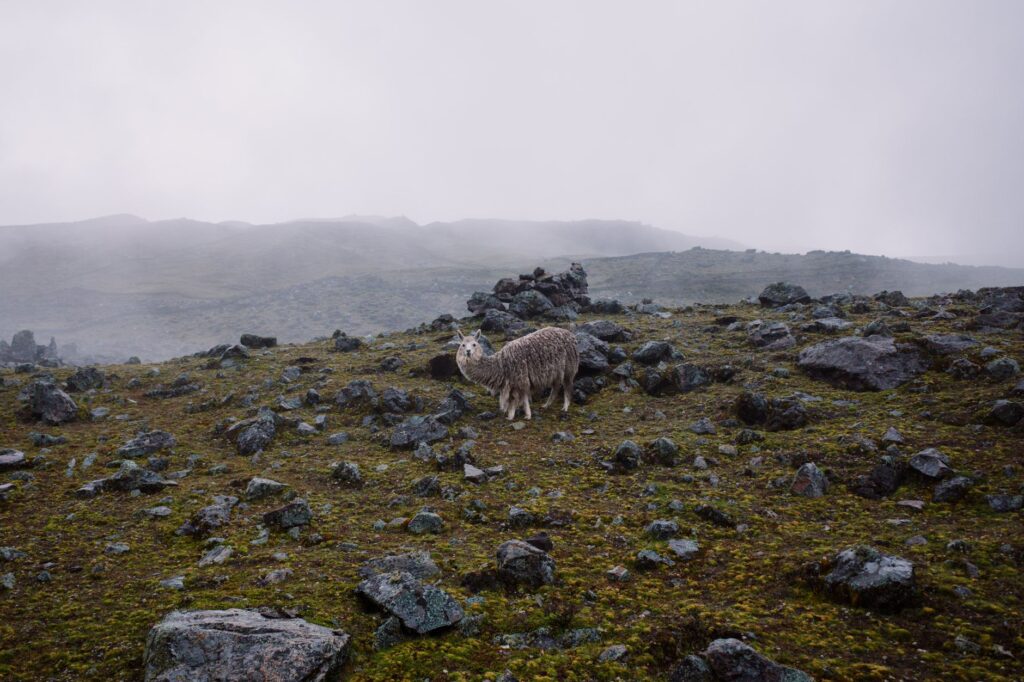
Sangay National Park is not merely a refuge for large fauna; it functions as a gigantic water tower for central and southern Ecuador. Paramos and cloud forests act as natural sponges that capture mist, regulate water flows, and mitigate erosion on steep slopes. The spectacled bear, by acting as an umbrella species, indirectly protects hundreds of endemic flora and fauna species sharing its habitat.
The alteration of the cloud forest through the loss of large mammals triggers an unpredictable trophic cascade. Without the selective pressure and seed dispersal carried out by the bear, the floristic composition of the understory slowly alters, modifying soil water retention and accelerating runoff processes during extreme precipitation periods. Therefore, protecting the Andean bear is, in practical terms, safeguarding the hydrological infrastructure of the entire eastern region of the country.
Protecting the corridors of the Andean bear in the eastern Andes is not an act of conservationist romanticism, but an urgent geohydrological necessity for the climatic stability of the western Amazon basin.
Recent hydrometeorological research confirms that micro-catchments with higher recorded presence of Tremarctos ornatus exhibit stable infiltration indices and lower soil loss from landslides. This demonstrates that biodiversity conservation and integrated land management are inextricably connected, reinforcing the urgency of legally shielding connection zones between eastern national parks and private forest remnants.
Practical Guide
Planning a scientific approach or responsible ecotourism venture into the area of influence of Sangay National Park requires logistical rigor, absolute respect for environmental regulations, and a deep understanding of the extreme climatic conditions of the eastern cordillera.
When to Go
The most stable period to explore the eastern foothills comprises the months of December to February and July to August, when precipitation slightly decreases, although the cloud forest maintains its characteristic humidity. Torrential rains between April and June increase the risk of landslides on secondary access roads.
How to Get There
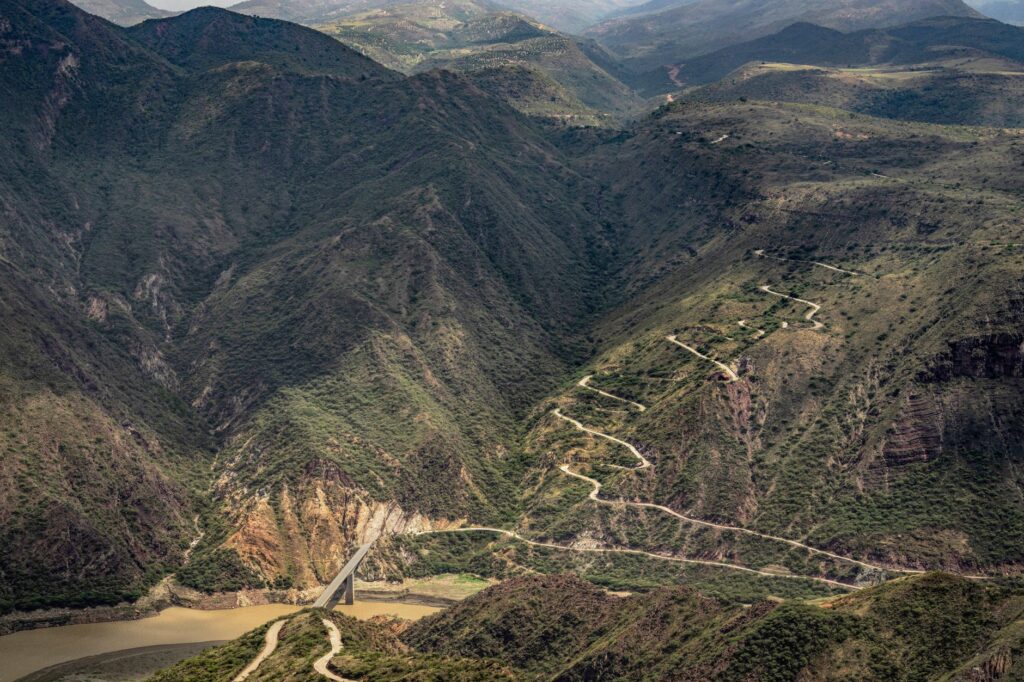
The main access toward the park’s foothills is from Quito or Ambato to gateway cities such as Macas or Baños de Agua Santa. From these points, four-wheel-drive vehicles and certified local guides authorized by the Ministry of Environment are required to enter authorized trails in the buffer zone.

Requirements and Regulations
Registering entry at the offices of the Ministry of Environment, Water and Ecological Transition (MAATE) is mandatory. The use of drones, feeding wildlife, collecting botanical samples without research permits, and entering outside marked trails are strictly prohibited.
Recommended Gear
Indispensable footwear includes high-traction trekking shoes for muddy terrains, breathable waterproof membrane outerwear, thermal layering for sudden temperature drops, water purification systems, and airtight containers to protect electronic equipment from permanent ambient humidity.
The Final Pulse of the Mist
At dusk, when clouds roll down the Andean cliffs and wrap centuries-old tree trunks in sepulchral silence, the forest regains its ancestral rhythm. In some inaccessible corner of that green labyrinth, the spectacled bear continues its silent march, oblivious to political maps and international debates regarding its future. Its dark silhouette, fleetingly silhouetted against the emerald green of the bromelias, remains the most persistent reminder that South America’s mountainous nature still preserves corners where life beats with an indomitable and primordial force.