
Introduction to the Natural Volcanic Trail in the Atlantic
The GR 131 long-distance trail, widely known as the Natural Volcanic Trail, represents one of the most fascinating and demanding island hiking challenges in Europe. Throughout its journey across the Canary Islands, this itinerary not only connects the geographical extremes of each island via a backbone of ridges and calderas, but also offers a radical immersion in a geography sculpted by fire and shaped by trade winds. Planning an expedition along this route requires understanding that volcanic terrain shows no mercy to improvisation: abrasive basaltic rock, extreme thermal amplitude between the coast and the summit, and the historical scarcity of natural water sources turn every stage into an exercise in logistical precision.
Unlike traditional continental trails where lush forests and rushing rivers accompany the hiker, the GR 131 runs through a geological amphitheater where the horizon is dominated by badlands, recent lava flows, vertiginous ridges, and an endless ocean that acts as a constant witness. This report examines with technical rigor the preparations, effort management, essential equipment, and safety protocols necessary to successfully face a challenge that tests both physical endurance and mental adaptability against the unleashed force of insular nature.
The Geology of the Archipelago as a Technical Challenge
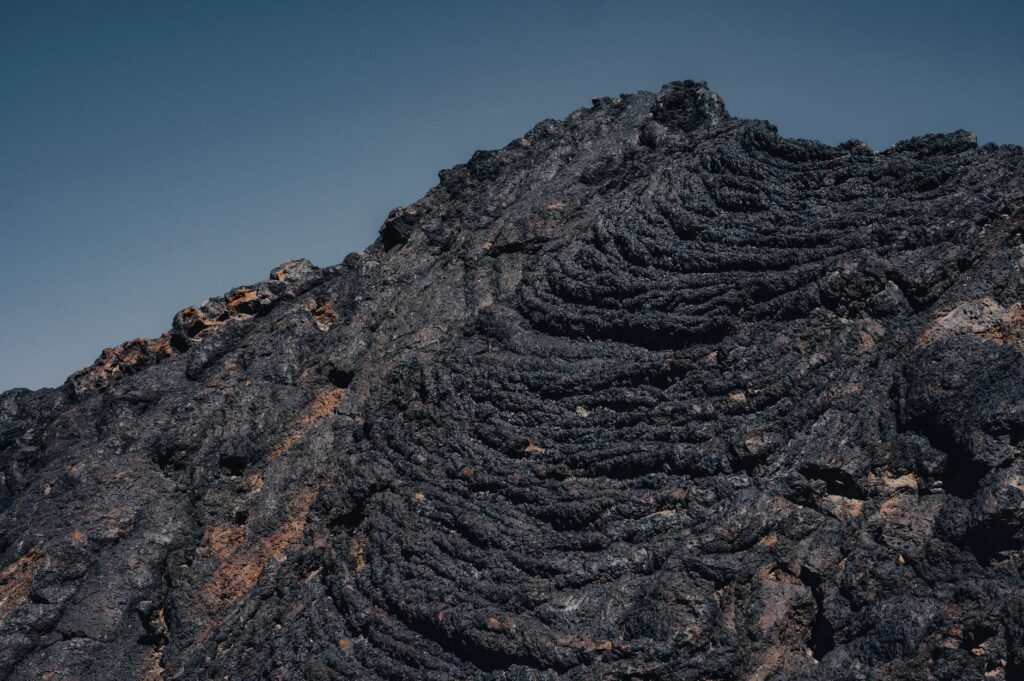
Understanding the nature of the terrain is the first step to ensuring safety on any high-altitude island trek. The islands that make up the GR 131 route —with special prominence in this analysis for the sections crossing Tenerife or La Palma— are the result of millions of years of submarine and subaerial volcanic activity. The substrate walked upon is composed of pyroclasts, loose volcanic ash, basaltic scoria, and recent lava flows presenting a highly abrasive surface for footwear and extreme instability underfoot. Spontaneous rockfalls on the slopes of volcanic cones are a real risk factor that demands constant attention and strict adherence to marked paths.
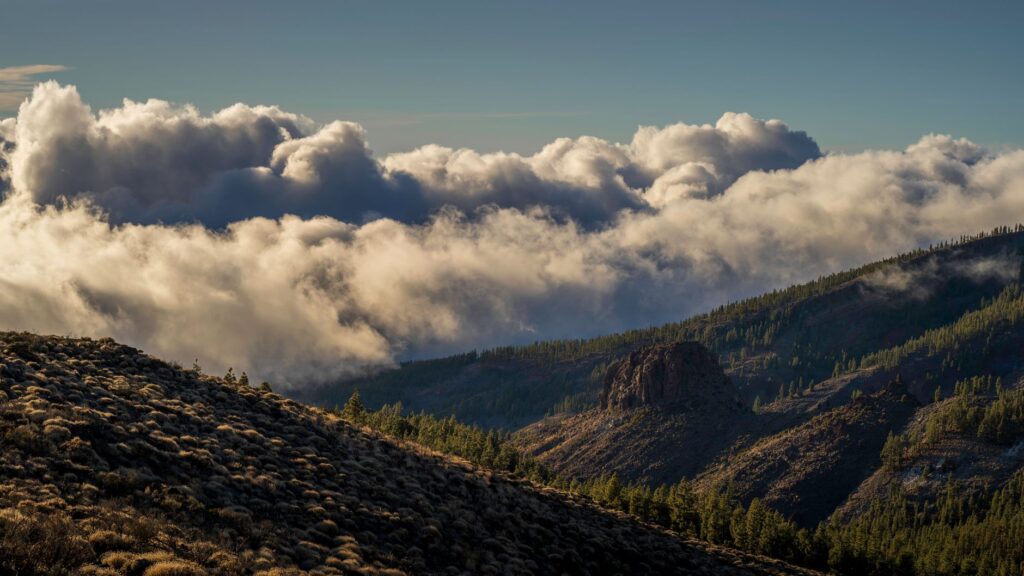
In addition to the mechanical instability of the ground, the accumulated altitude over short distances subjects the cardiovascular system to considerable stress. It is not uncommon to ascend from sea level to over two thousand meters of altitude in just a few hours of continuous marching. This abrupt gain in elevation drastically alters weather conditions: while a gentle subtropical breeze prevails on the coast, ultraviolet radiation is extreme at the summits, atmospheric pressure drops, and gale-force winds can appear without warning, drastically reducing windchill even during summer months.
Hiking in volcanic terrain requires footwear with maximum grip and structural rigidity capable of protecting the plantar arch against the relentless hardness of basaltic rock.
Hydration Strategy and Supply Management in Arid Environments
One of the greatest logistical challenges faced by expeditioners on the GR 131 is managing water resources. Except for a few points in mid-altitude zones featuring traditional cisterns or pools—many of which are non-potable or subject to seasonal rainfall—the route is completely devoid of natural springs at higher elevations. This means the walker must carry all the water needed for the entire day in their backpack, calculating a minimum average of four to five liters daily per person, an amount that can increase significantly depending on insolation and required physical effort.
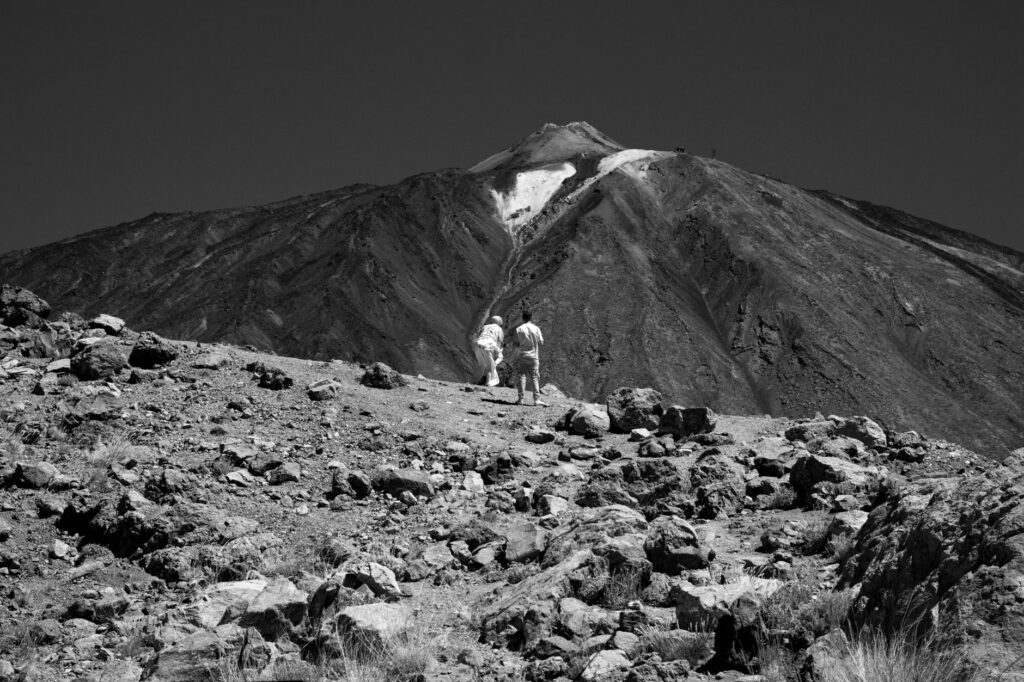
Planning supply points must be done weeks in advance, identifying population centers, local shops, or refreshment points located at island road crossings that intersect the trail. Furthermore, it is imperative to have high-efficiency chemical purification or filtration systems in case it becomes necessary to resort to agricultural water tanks of dubious origin during emergency situations. Dehydration in high volcanic altitudes sets in silently due to the desiccating effect of trade winds and altitude, making regular technical stops for electrolyte intake an unbreakable golden rule.
The Refuge System and Camping Regulations
Lodging along the GR 131 requires precise knowledge of available infrastructure networks and strict environmental regulations protecting natural spaces, many of which are cataloged as National Parks or Integral Natural Reserves. The supply of staffed refuges is limited, and in many cases, traditional accommodations are reduced to rehabilitated forest cabins operating on a self-management basis, requiring mandatory advance booking through the corresponding island councils.
For those sections where the only alternative is camping, Canarian legislation is extremely rigorous. Free camping is prohibited across most of the route. Overnight stays are only permitted in authorized campsites, which usually have very strict occupancy quotas to preserve fragile endemic flora, such as summit retama shrubs or giant tajinastes. Ignoring these guidelines not only results in severe financial penalties but puts the conservation of unique ecosystems in severe jeopardy—ecosystems that evolved in strict isolation.
- Booking spaces in refuges and campsites at least three months in advance.
- Mandatory use of homologated gas stoves; lighting fires is strictly prohibited due to the extreme risk of forest fires.
- Zero-impact principle: all solid waste, including organic matter, must be carried out of protected natural areas.
- Advance route registration and itinerary communication to local emergency services in case of winter expeditions.
Technical Equipment and Layered Clothing for Extreme Climates
The climatic variability of the Canary Islands archipelago is legendary. In a single day of trekking along the GR 131, it is possible to experience the abrasive solar radiation of the nearby African desert, the dense and cold moisture of the laurisilva forests, and the freezing gusts of volcanic summits. For this reason, the layered clothing principle is not an optional recommendation, but a matter of operational survival. The base layer must be made of merino wool or quick-drying synthetic fabrics that effectively wick away sweat, preventing body cooling during rest stops.
The mid-layer provides necessary thermal insulation through lightweight fleece jackets or high-compression down coats, while the outer shell must guarantee absolute waterproofing and breathability against horizontal rain driven by the sea of clouds phenomenon. As for technical marching gear, trekking poles with wide baskets are essential to relieve joints during prolonged descents over loose volcanic ash, and a satellite emergency beacon is highly advisable due to lack of mobile phone coverage in deep ravines and volcanic calderas.
Practical guide
How to get there: The main access to the archipelago is through the international airports of Tenerife North, Tenerife South, or La Palma, depending on the chosen island to start the GR 131 trek. Regular ferry connections operated by companies such as Fred. Olsen and Naviera Armas are available for transit between islands.
Best time of year: The months between October and May offer the mildest temperatures for hiking in midlands and summits, avoiding the stifling summer heat. However, winter can bring snow and ice episodes to higher summits such as Teide or Roque de los Muchachos.
Permits and regulations: Processing permits to stay overnight in protected areas must be managed exclusively through the electronic headquarters of the Island Councils and Spain’s National Parks Network.
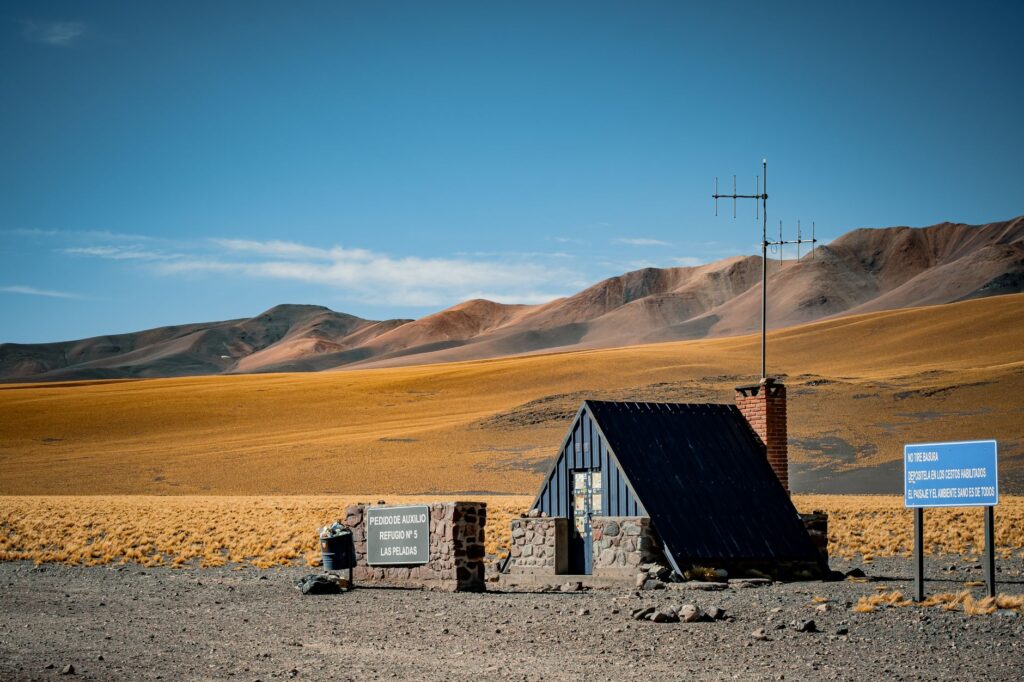
Safety and emergencies: The unified emergency number in the archipelago is 112. It is essential to download the mobile application My112, which allows precise geolocation of the trekker’s position in case of accidents in hard-to-reach areas.
The Silence of the Summits and the Memory of the Earth
When the sun begins to set over the Atlantic horizon and the shadows of the great volcanos stretch for kilometers across the sea of clouds, the GR 131 reveals its most intimate and transformative dimension. In that moment of absolute silence, broken only by the distant rustle of the wind among the basaltic rock formations, the trekker understands the true meaning of the traverse. It is not merely about completing a physical challenge or checking summits off a notepad, but about establishing an intimate dialogue with a primal earth that remains alive, reminding us of our own fragility and the immense beauty of a world constantly renewing itself from the depths of the oceans.