
The Morning That Awakens Among Buttresses and Market Stalls
Dawn in the capital of Badajoz does not announce itself with the clamor of sprawling metropolises, but with a muted murmur rising from the left bank of the Guadiana River. Just a few meters from Europe’s longest Moorish citadel, the Badajoz Central Market opens its doors like a secular temple where early 20th-century iron architecture engages in dialogue with the ceaseless hustle of wholesalers. Here, the Extremenian sunlight streams through high windows, bathing marble countertops in golden reflections while early shoppers inspect produce fresh from riverside market gardens.
This space is not merely a commercial exchange point; it constitutes a living archive of the collective memory of the borderlands. Among fishmonger stalls, stocked directly from Atlantic and Andalusian ports thanks to the proximity of the Portuguese border, vendors hawk their goods with a cadence that betrays the cultural cross-pollination of the Raya. Walking through its aisles is to witness a daily performance where time folds inward, allowing ancestral recipes to regain relevance with every single transaction.
The relationship between the urban market and the fertile Lower Vegas of the Guadiana is an ancient pact anchored in seasonality and respect for clayey soils. Farmers unloading crates of vegetables at dawn have no truck with distant intermediaries or globalized supply chains; their metric is the cycle of floods and dry spells. In this commercial ecosystem, local produce is not a gourmet marketing label, but the only logical response to a landscape defined by alternating scarcity and generosity.
The Pulse of Corrals and Neighboring Pastures
Moving toward the interior of the grand commercial hall, the soundscape shifts. The metallic echo of scales gives way to the deep aroma of cured meats from the nearby pasturages and oak groves. Small family farms from surrounding districts find their natural showcase in this market—a bridge thrown between the secular isolation of the Extremenian countryside and the appetite of a city seeking to reconnect with its edible roots.

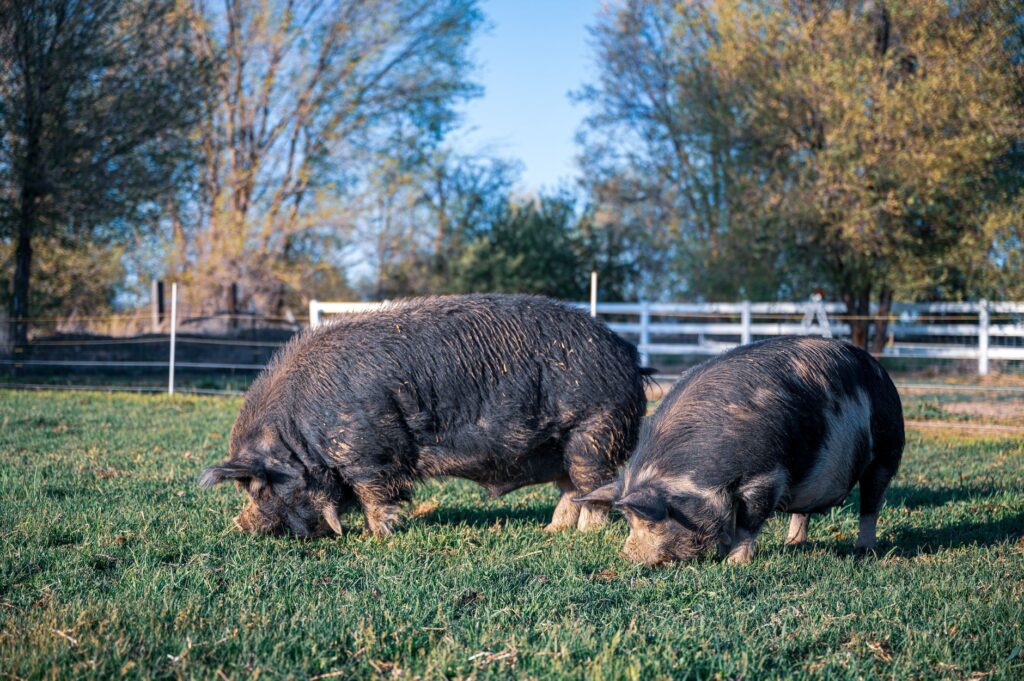
Charcuterie display cases feature rows of acorn-fed Iberian pork cuts, whose woody and toasted-acorn nuances result directly from the open dehesa ecosystem. Master carvers wield knives with near-choreographic precision, explaining to buyers the subtle distinctions between batches from different provincial valleys. This is not merely about acquiring sustenance, but about understanding the human effort behind every translucent slice.
The municipal market remains the final stronghold where personal trust still weighs heavier than any quality certificate printed on glossy paper.
Alongside Iberian ham reside goat and sheep cheeses crafted with traditional rennet in regional villages like Alburquerque or San Vicente de Alcántara. These small-scale productions, often limited to a few dozen wheels per week, resist industrial homogenization thanks to the loyalty of a clientele seeking character-driven flavors that brook no shortcuts or chemical accelerators in their aging rooms.
The River Pantry: Hidden Treasures of the Guadiana
One of the most fascinating and least understood aspects of the local culinary culture is its deep connection to the riverine aquatic environment. Though Extremadura is commonly associated with arid pasturelands or northern mountain ranges, the lower course of the Guadiana and its tributaries have historically nourished local communities with a variety of resources that now reclaim their prominence in the region’s most avant-garde kitchens.
In specialized market stalls, live tencas—the quintessential fish of Extremenian ponds—are handled with the delicate care required by a fragile species. Traditionally prepared in escabeche or fried with a hint of wild pennyroyal, they represent the quintessence of survival cooking transformed into popular high cuisine. Local fishmongers recall how this resource saved countless families during the post-war years, turning a muddy dweller of the estuaries into a bite of aristocratic simplicity.
Likewise, river-valley vegetables grown in the alluvial soils of the river—such as wild asparagus, hand-foraged cardoons, and local tomato varieties carrying the true scent of rain-soaked earth—form a unique chromatic and gustatory palette. Local chefs visit the market seeking these raw materials to apply contemporary techniques, ensuring that tradition projects toward the future without losing an ounce of authenticity.
Between Badajoz and Elvas: Historical Smuggling Turned Culinary Kinship
Geography shapes character, and the border location of Badajoz has turned its market into an irreplaceable cross-border meeting point. Just a few kilometers from the Portuguese dividing line, the building’s aisles see Portuguese shoppers cross the frontier drawn by the freshness of meat and produce, while locals cross in return to stock up on top-tier salted cod and Alentejan convent pastries.
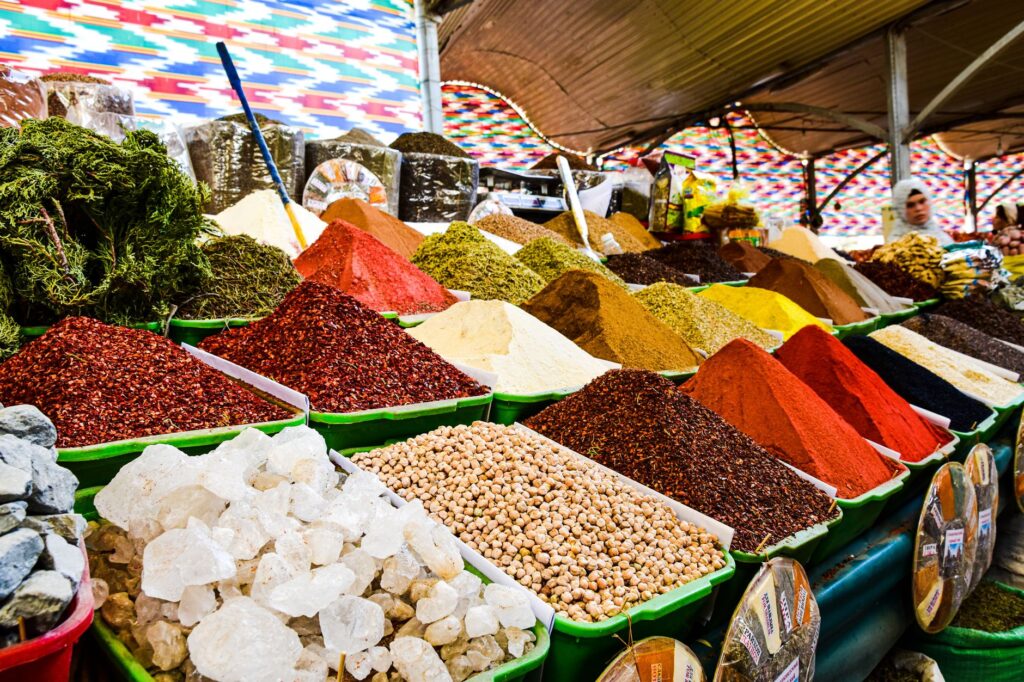
This continuous transfer of culinary customs has forged a hybrid identity felt immediately in spice stalls and fish markets. The use of cilantro, so often dismissed in other peninsular regions, is here an omnipresent ingredient that links Extremenian stews with Alentejan soups. Vendors share anecdotes of past decades, when the trade in colonial goods and coffee was governed by the cunning of petty smuggling—a past that has now transformed into a robust gastronomic brotherhood.
Portuguese influence goes beyond ingredients; it permeates the philosophy of slow eating, of understanding meals as an irreplaceable social act. The bars and taverns surrounding the market’s outer perimeter act as a natural extension of the stalls, where tapas of golden salt cod, wild truffle-like earth mushrooms, and scrambled wild greens are washed down with Designation of Origin Ribera del Guadiana wines, completing a perfect circle of conviviality and neighborliness.
The Slow Fire of the Pot: Recipes Defying Time
At the heart of local homes, market-acquired produce is transformed through procedures that have barely changed in centuries. Wood-burning hearths have yielded to ceramic stovetops, but cooking times and required patience remain identical. Dishes like Extremenian gazpacho—much denser and heartier than its Andalusian variant due to the inclusion of mashed bread and hard-boiled eggs—or zorongollo demand absolute respect for the raw ingredients.
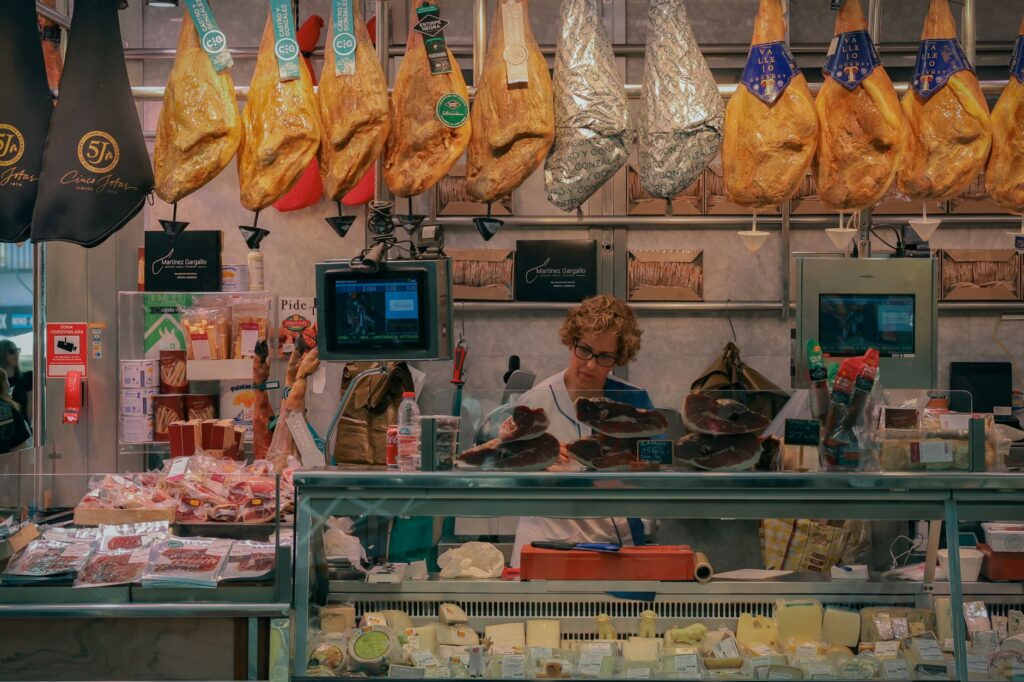
Market vendors frequently act as impromptu culinary advisors, dictating recipes to younger shoppers eager to replicate the exact flavor of their grandmothers’ traditional stews. This oral exchange is the mortar holding the city’s social fabric together. Knowing how to choose the right marbled pork belly, the proper ham bone, and the exact measure of smoked paprika is a knowledge learned not in cooking schools, but by observing the expert hands of those behind the counter for fifty years.
True culinary sustainability does not lie in complex certifications, but in a community’s capacity to consume what its immediate environment produces without depleting it.
The systematic use of paprika and garlic in local gastronomy responds to a historical need for preservation and flavor enhancement in a climate of blistering summers. Today, these exact spices combine with small game meats, such as hare and partridge harvested from Lower Vegas hunting estates, yielding dense stews that comfort the body and explain the resilience of a territory tempered by the elements.
Iron Architecture and Working-Class Memory
The Badajoz Central Market building is itself a historical document demanding careful reading. Conceived in an era when iron engineering promised a luminous future for Spanish cities, its diaphanous structure allowed the ventilation necessary for proper food preservation in Extremadura’s extreme climate. Cast-iron columns and metal trusses support a roof that has witnessed dictatorships, democratic transitions, and economic crises without losing its primary function.
Restoration work undertaken in recent decades has carefully preserved the building’s original patina, avoiding the temptation to turn it into a theme park for disoriented tourists. Here, old-school stalls coexist with modest on-site tasting initiatives, but the soul of the place still belongs to the woman buying a quarter-kilo of chickpeas and the butcher who has addressed her by her first name for three decades.
This respect for social function over aesthetic display is what sets Badajoz apart from other European urban markets converted into elite leisure zones. The morning bustle is genuine, composed of homemakers, local restaurateurs, and pensioners who turn daily shopping into an indispensable socialization ritual to combat urban loneliness and keep the pulse of historic neighborhoods alive.
Practical guide
How to get there: Badajoz boasts excellent rail connections via the Mid-Distance line linking it with Madrid, Mérida, and Seville, alongside long-distance bus networks. Badajoz Airport, located about 14 kilometers from the center, operates regular domestic flights.
When to visit: Spring and autumn are the optimal seasons to explore the market and the surrounding river valleys. During these months, the weather is mild, coinciding with delicate vegetable harvests and the wild mushroom season.
Market hours: The Central Market opens Monday through Saturday, from 7:00 AM to 2:30 PM. The moment of peak activity and visual richness occurs between 9:00 AM and 11:30 AM, when stalls are fully stocked and shopper flow is constant.
What to buy: Essential purchases include acorn-fed Iberian cured meats from the Olivenza region, artisanal goat cheeses from the Raya, designation-of-origin smoked paprika from La Vera, and, if traveling with adequate storage, local cured pork loin or cecina.
Recommended accommodation: Opt for small boutique hotels in the old quarter of Badajoz or restored rural houses in the river valley estates for a complete immersion in the agrarian landscape.
Local etiquette tips: It is customary to greet vendors with a polite ‘buenos días’ before requesting goods. Avoid touching fruit directly with your hands; point out what you desire and let the vendor select items at their optimal ripening point.
The Last Whisper of the Guadiana at Dusk
When the market’s metal shutters roll down and silence begins to spread across adjacent squares, local life shifts toward the riverbanks. This is the moment when the oblique light of the Extremenian sunset sets fire to the citadel walls and bronze-tints the placid waters of the Guadiana. In nearby bars, the last patrons finish a glass of local white wine while mentally reviewing their shopping list for the following day—an infinite cycle renewing itself every dawn.
This borderland territory, so often overlooked by major peninsular tourist circuits, jealously guards one of the most honest and authentic cuisines on the Iberian Peninsula. At the crossroads between Extremadura and Portugal, the food market and its surrounding valleys prove that true wealth lies not in ostentation, but in the capacity to preserve the memory of simple flavors that anchor humanity to its most cherished landscape.