

The Living Pulse of a Nation Defined by its Palate
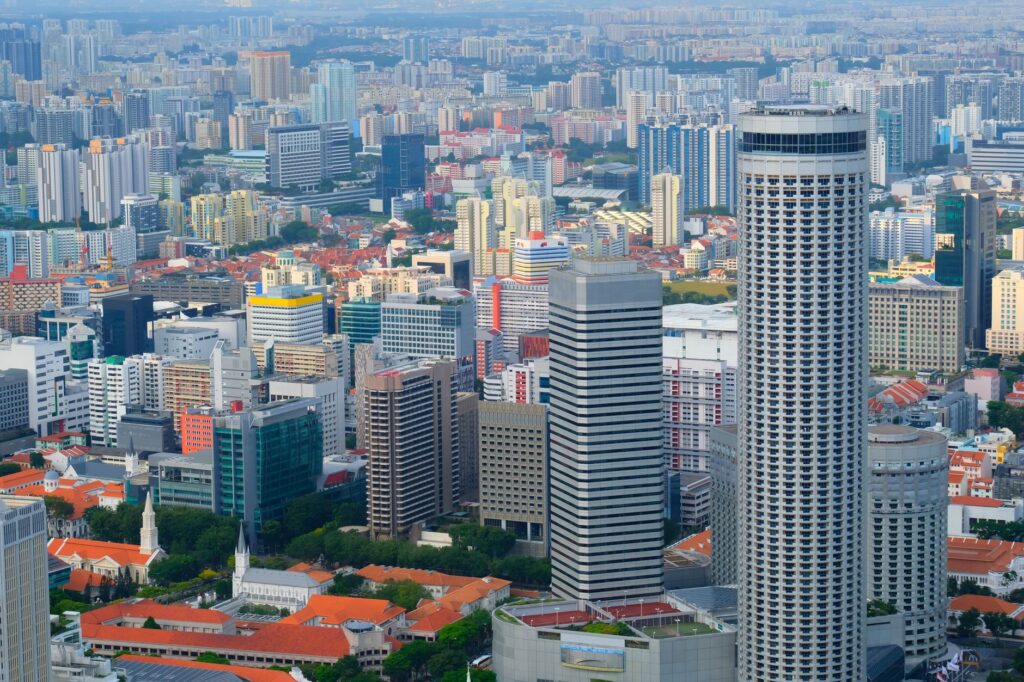
Singapore is far more than a financial hub at the crossroads of Asia; it is a living organism that breathes through the steam of its woks and the pungent aroma of spices wafting through the tropical humidity. To walk its streets is to experience a sensory blitz where glass skyscrapers stand alongside the dense smoke of traditional markets. Here, food is not merely sustenance; it is the social glue binding a multicultural society of Chinese, Malay, Indian, and Eurasian heritage. The phrase Singapore is still cooking serves as a powerful reminder that despite the pressures of globalization, the island’s heart continues to beat in its kitchens.
Over the past decades, Singapore has achieved a rare feat: elevating its street food to the status of UNESCO Intangible Cultural Heritage while simultaneously becoming a global fine-dining powerhouse. This duality is not a contradiction but a synergy. A diner can enjoy a plate of Hainanese Chicken Rice for a few dollars at a bustling stall and, hours later, sit in a minimalist atelier to taste a deconstructed reinterpretation of local flavors. This is the chronicle of a nation that never stops cooking, innovating, and eating with a passion that borders on the religious.
The Sanctity of Hawker Centers: Democracy on a Plate
To understand the Singaporean psyche, one must spend time in its Hawker Centers. These open-air spaces, often cooled only by industrial ceiling fans, are the great social levelers of the island. Here, a high-flying finance executive in a luxury watch stands in line with a construction worker for the same bowl of Laksa or Char Kway Teow. There are no hierarchies, only the pursuit of the perfect flavor. Centers like Maxwell Road, Old Airport Road, and Tiong Bahru are temples where culinary knowledge is passed down through generations, even as they face the challenges of an aging workforce.
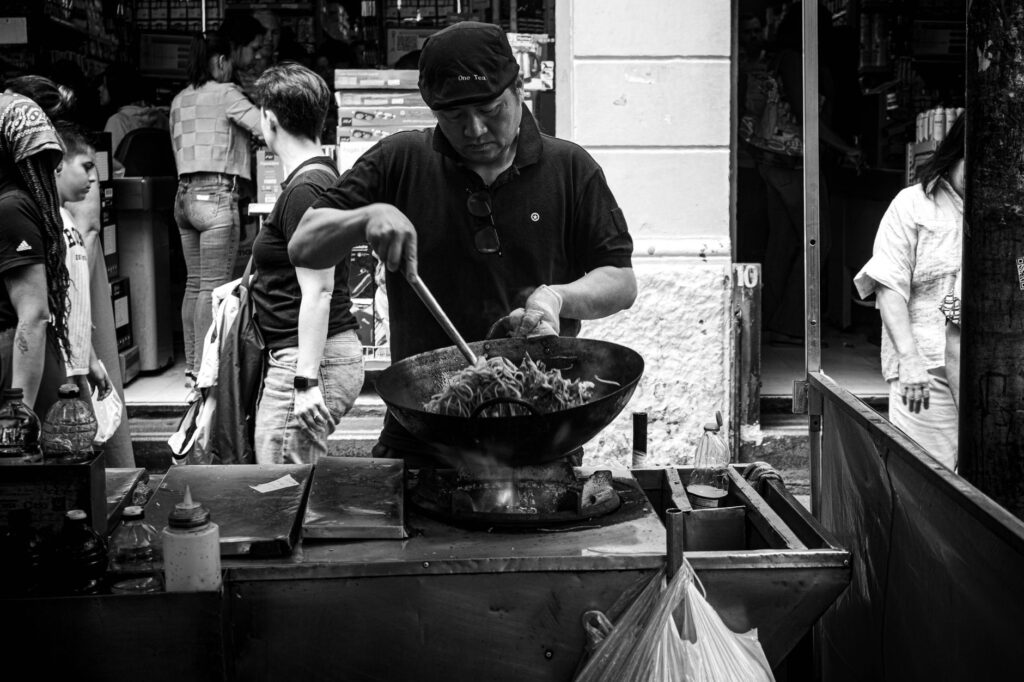
The technique of Wok Hei, or the ‘breath of the wok,’ is the soul of street cooking. It is that smoky, almost mystical charred flavor achieved only when the metal reaches extreme temperatures and the chef manages the flame with surgical precision. Watching a seventy-year-old veteran stir-fry noodles is like observing a dance choreographed by decades of repetition. However, the industry is shifting. A new generation of ‘hawkerpreneurs’ is injecting fresh energy, applying modern marketing and efficient processes without sacrificing the essence of their grandparents’ recipes.
«Singaporean cuisine is the only language in which every citizen, regardless of ethnic background, is absolutely fluent.»
Peranakan Heritage: Asia’s Original Fusion
If Singapore has a cuisine that can be called truly its own, it is Peranakan or Nonya food. Born from the union of Chinese immigrants and local Malay women centuries ago, this gastronomy is an early example of organic fusion. It is a laborious cuisine, requiring hours of manual preparation—pounding spices in a stone mortar to create rempah, the spice paste base that defines every dish. The use of the buah keluak nut, which is toxic if not treated properly, symbolizes the complexity and patience inherent in this tradition.
Dishes like Ayam Buah Keluak (chicken braised with black nuts) offer an earthy, bitter, and profound flavor profile unlike anything else in the world. In neighborhoods like Katong and Joo Chiat, the colorful facades of heritage shophouses hide restaurants that keep this flame alive. Nonya cooking is not fast food; it is a labor of love, where families fiercely guard their secret Sambal Belacan recipes. It is here that Singapore shows its most intimate and sophisticated side, far from the neon lights of the central business district.
Innovation at the Edge: The Culinary Avant-Garde
While hawkers maintain tradition, a new wave of chefs is positioning Singapore as the culinary laboratory of Southeast Asia. Restaurants like Odette, led by Julien Royer, or Burnt Ends, by Dave Pynt, prove that the island has the infrastructure and the palate to sustain world-class concepts. What is fascinating is how these fine-dining establishments are integrating local ingredients once considered humble. It is no longer rare to find pandan, blue ginger, or calamansi featured in high-end French or Australian tasting menus.
This sophistication extends to the world of mixology. Singapore is home to some of the world’s best bars, where mixologists use laboratory techniques to extract the essence of local spices. The beverage scene is no longer limited to the classic Singapore Sling; it is now about artisanal fermentations, vacuum distillations, and a constant search for sustainability. The city is cooking up a new liquid identity that is as complex and layered as its food.
Sustainability and the Future of Food
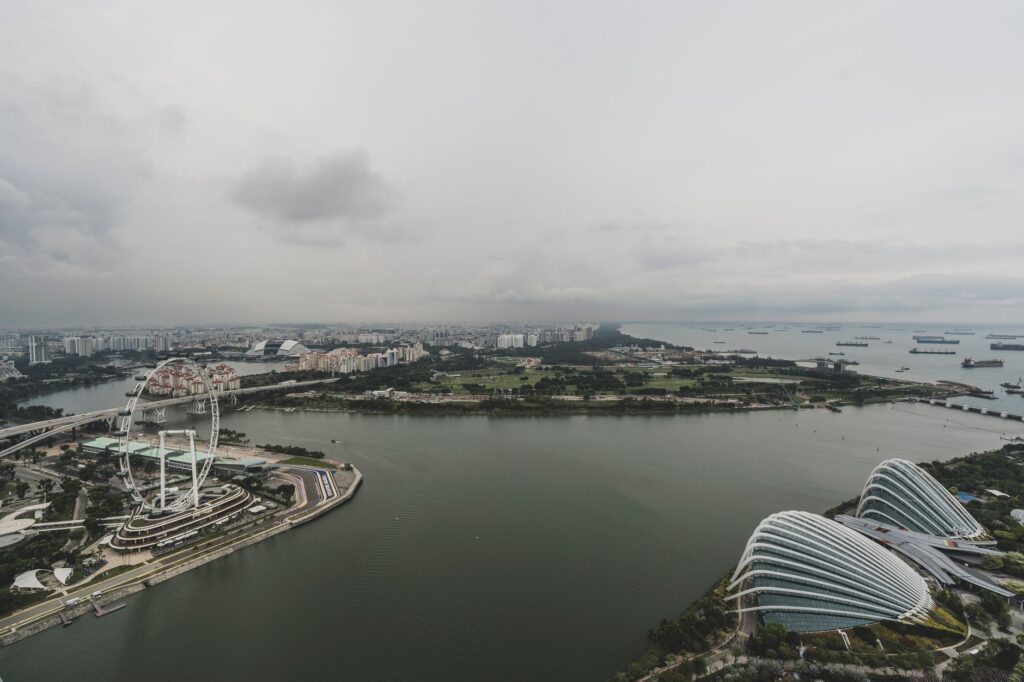
With limited land and a historical reliance on imports, Singapore has set a ’30 by 30′ goal: to produce 30% of its nutritional needs locally by 2030. This has sparked an explosion of high-tech vertical farms and lab-grown meat laboratories. Singapore was, in fact, the first country in the world to authorize the sale of lab-grown chicken. This futuristic mindset translates to the plate, where chefs are beginning to experiment with ingredients produced right on the island.
The farm-to-table concept takes on a different meaning in an asphalt jungle. It involves growing microgreens on shopping mall rooftops and raising fish in closed aquaponics systems. Food resilience is the new star ingredient. Singapore is proving that a nation can be a gastronomic powerhouse without vast agricultural lands, betting on science and creativity to feed its population sustainably.
Wet Markets: The Source of the Craft
For the home cook and the professional chef alike, the day begins at the Wet Markets. Markets such as Tekka in Little India or the Chinatown Complex are the epicenters of fresh produce. The name derives from the floors that are constantly hosed down to keep the fish and meat sections clean. Here, haggling is an art form, and product knowledge is absolute. It is where you find the best mango varieties, the most fragrant spices, and the liveliest seafood.
Visiting these markets is essential to understanding regional seasonality. While the equator lacks traditional seasons, the rhythm is dictated by harvests in neighboring countries. The arrival of the durian season, the ‘King of Fruits,’ transforms the city. Its smell, loved by some and loathed by others, permeates the markets and sparks passionate debates over which variety—such as the coveted Mao Shan Wang—is superior. The wet market is a reminder that behind every sophisticated dish lies a deep respect for raw ingredients.
«In Singapore, the question ‘Have you eaten?’ is the most sincere and common greeting, surpassing any hello or how are you.»
The Spice Routes of Little India and Kampong Glam
Singapore’s geography is a map of flavors. In Little India, the air is heavy with turmeric, cumin, and mustard seeds. Fish Head Curry, a dish born from the interaction between the Indian community and local tastes, is a testament to the island’s cultural adaptability. Meanwhile, in Kampong Glam, the Malay-Arab quarter, the aroma of grilled Satay and Nasi Lemak dominates. Rice cooked in coconut milk and pandan leaves is, for many, the nation’s definitive breakfast.
These areas are not just tourist enclaves but living centers of culinary culture. Preserving these traditions is vital for maintaining authenticity in a city changing at breakneck speed. Respect for dietary laws, such as Halal, is seamlessly integrated into the global offering, ensuring everyone has a seat at the table. Singapore continues to cook because it has learned to blend all these influences into a single pot, creating a flavor that is greater than the sum of its parts.
Practical guide
To fully enjoy Singapore’s food scene, it is essential to follow a few unwritten rules. The chope system involves placing a packet of tissues on a table at a hawker center to reserve it while you order; it is a sacred rule respected by all. Regarding transport, the MRT (Mass Rapid Transit) system is flawless and efficiently connects all the culinary districts mentioned.
- Best Time to Visit: Any month is good, but the Singapore Food Festival (usually in July) offers unique experiences.
- Transport: Use an EZ-Link card for the metro and buses. It is the fastest way to move between markets.
- Etiquette: Tipping is not required; most restaurants include a 10% service charge. In hawker centers, tips are not expected.
- Health: Tap water in Singapore is perfectly potable and meets WHO standards.
- Attire: Light cotton clothing and comfortable walking shoes are a must. Humidity is high, and you will walk a lot between stalls.
A Legacy Forged in Fire
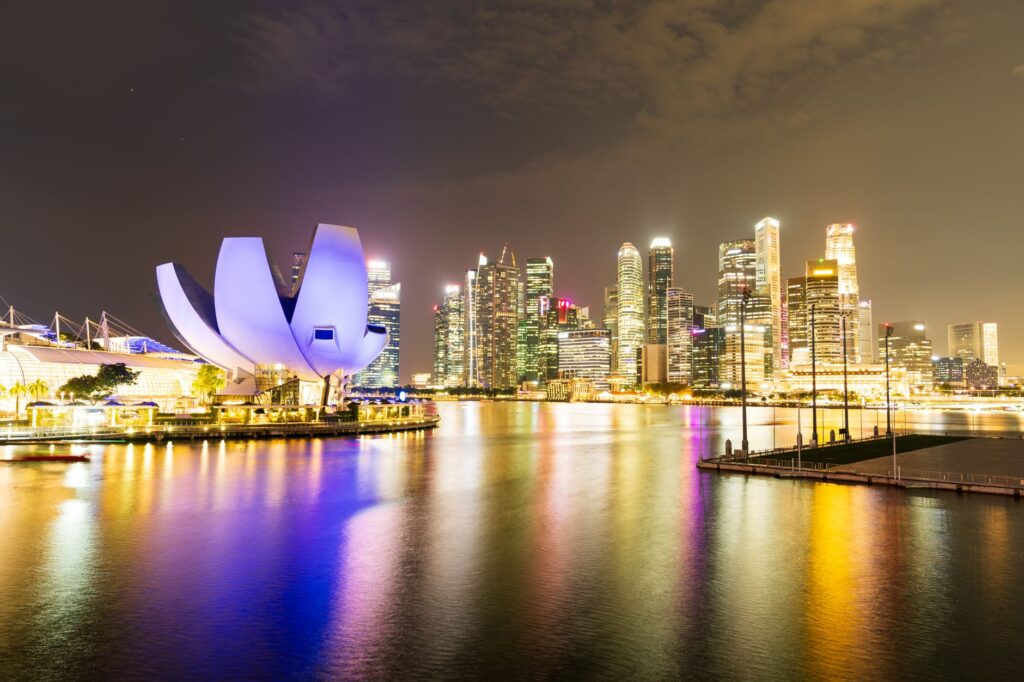
As night falls and the lights of Marina Bay reflect off the water, Singapore does not sleep—it dines. The city is still cooking because its people understand that food is the purest way to preserve memory. Every bowl of noodles, every curry, and every Cendol dessert is a link connecting its past as a trading port to its future as a tech metropolis. The true magic of Singapore lies not in its smart buildings, but in the persistence of an old man who continues to prepare the same chili sauce he has made for fifty years with the same devotion as day one.
That resilience, that ability to keep the fire burning despite the storms of time, is what makes this island unique. Singapore is cooking not just to feed bodies, but to nourish a collective soul that recognizes itself in the crunch of Kaya Toast at dawn. As long as there is someone willing to wait thirty minutes for a plate of rice, the spirit of the island will remain intact, vibrant, and deliciously unquenchable.