Introduction to the Iron Arteries of the Namib
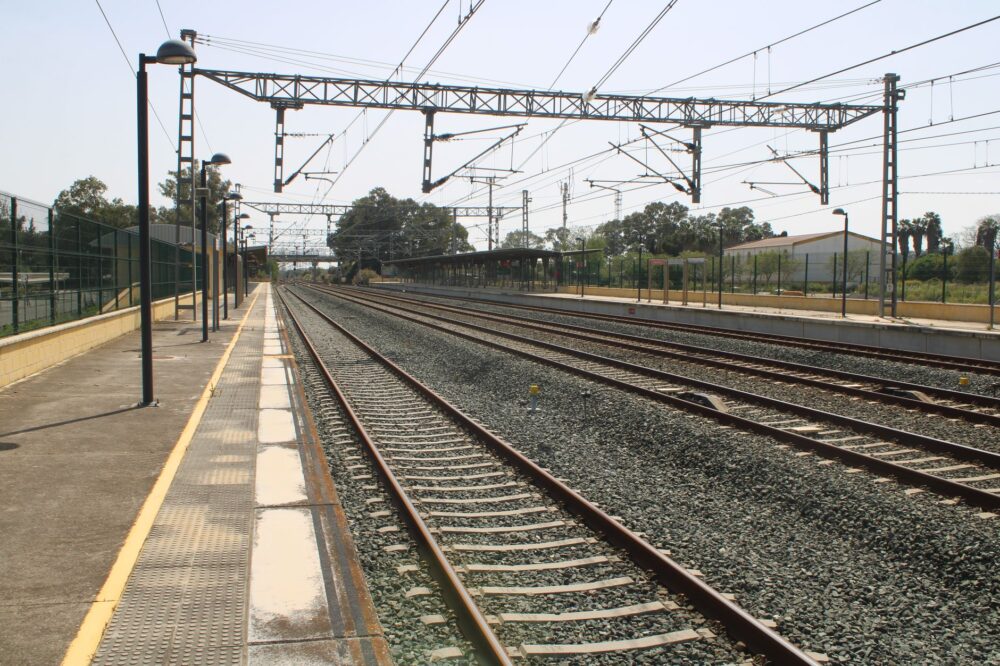
The arid immensity of Namibia has historically posed a monumental challenge to connectivity and land transport. In a territory where desert plains and mountain ranges impose their own geological laws, the railway network stands as a monument to early 20th-century engineering. Far from being a mere museum relic, this narrow-gauge system—measuring a mere 1,067 millimeters, locally known as the Cape gauge—continues to operate as the invisible backbone supplying mining communities and isolated rural settlements between the Atlantic coast and the continental interior.
Understanding the scale of this infrastructure requires delving into the historical archives of the German colonial era, when military urgency and the exploitation of mineral deposits dictated routes that today defy desertification and the relentless advance of dunes. This report examines the current state of the network operated by TransNamib, analyzing logistical challenges, socio-economic impacts on local populations, and the complex coexistence between heavy freight machinery and passenger services resisting the passage of time.
Colonial Genesis and Impossible Routes
At the turn of the 20th century, the German Empire saw in the then-territory of South West Africa a strategic opportunity to consolidate its territorial dominion. The construction of the first rail lines did not respond to criteria of social cohesion, but rather to a strict extractive and military security logic. The inaugural section connecting Swakopmund with the interior, popularly known as the Staatsbahn, was designed to overcome the impassable barrier of the Namib Desert, a sea of sand where ox wagons succumbed to water scarcity and extreme temperatures.

Engineers of the era faced unprecedented topographical problems. The constant advance of shifting dunes demanded permanent crews of workers dedicated to manually clearing the tracks, a Herculean task that remains necessary today in specific sectors of the central corridor. With the discovery of diamonds in Lüderitz and strategic minerals in Tsumeb, the network expanded anarchically yet tenaciously, creating a transportation mesh that would forever transform the economic geography of southern Africa.
The Role of Steam Locomotives in Conquering the Desert
During the first decades of operation, traction relied almost exclusively on steam locomotives specially adapted to function with minimal water resources, an extremely scarce commodity in the desert. These mechanical colossi, many manufactured in Germany by companies such as Henschel and Borsig, incorporated condensers to recycle water vapor, a crucial technological innovation in an environment where every drop counted for the survival of the convoy and its crew.

Today, although the fleet has evolved toward diesel-electric traction, TransNamib’s central workshops in Windhoek and Usakos preserve a technical culture inherited from those pioneers. Veteran turners and mechanics keep half-century-old parts operational, applying artisanal industrial recycling in the face of difficulties in importing specialized spare parts for such a globally restricted railway gauge.
The Logistics of Copper and Uranium: The Economic Pulse
Freight traffic represents the raison d’être and primary source of revenue for the Namibian railway system. Mining trains connect the uranium deposits of the Erongo region and base metal mines in the north with deep-water ports at Walvis Bay. This intermodal connection proves vital for de-congesting national highways, reducing wear and tear on paved roads, and minimizing the carbon footprint associated with heavy mineral road transport.
However, the infrastructure suffers accelerated wear due to saline corrosion originating from Atlantic coastal fog and the thermal impact of the desert, where temperature differentials between day and night exceed forty degrees Celsius. The modernization of rails and wooden sleepers with reinforced concrete alternatives is progressing progressively, though limited state budgets force authorities to prioritize high commercial yield sections over secondary branch lines of a social vocation.

The railway in the desert is not merely a communication line; it is a fragile pact against oblivion linking the dust of the mines with the immensity of the ocean.
Human Mobility and Isolation in the Northern Corridor
Beyond industrial cargo figures, the train plays an irreplaceable role for rural communities located along the corridor extending toward Tsumeb and Oshikango. For many inhabitants of remote villages, the passenger railway service—frequently affected by delays derived from mechanical failures—constitutes the only affordable transport alternative to travel to urban centers in search of medical attention, education, or markets to commercialize local agricultural produce.
Aboard the carriages, a micro-society is woven where local traders, students returning home on weekends, and railway workers familiar with every kilometer of track coexist. This daily interaction turns the journey into a space of cultural resistance, where the slowness of travel is offset by community cohesion that no road bus can replicate. Passenger resilience in the face of habitual service interruptions reflects a patience molded by the harshness of the geographical environment itself.
Centenary Stations: Functional Architecture in the Wasteland
Railway stations in Namibia are architectural landmarks that contrast sharply with the monotony of the surrounding landscape. German neo-Gothic style buildings, characterized by pitched roofs, local stone walls, and robust timber structures, dot the route as reminders of an era of iron colonization. Stations such as Karibib, Omaruru, and Aus not only functioned as technical stopover points but as administrative enclaves equipped with water towers and coal depots.
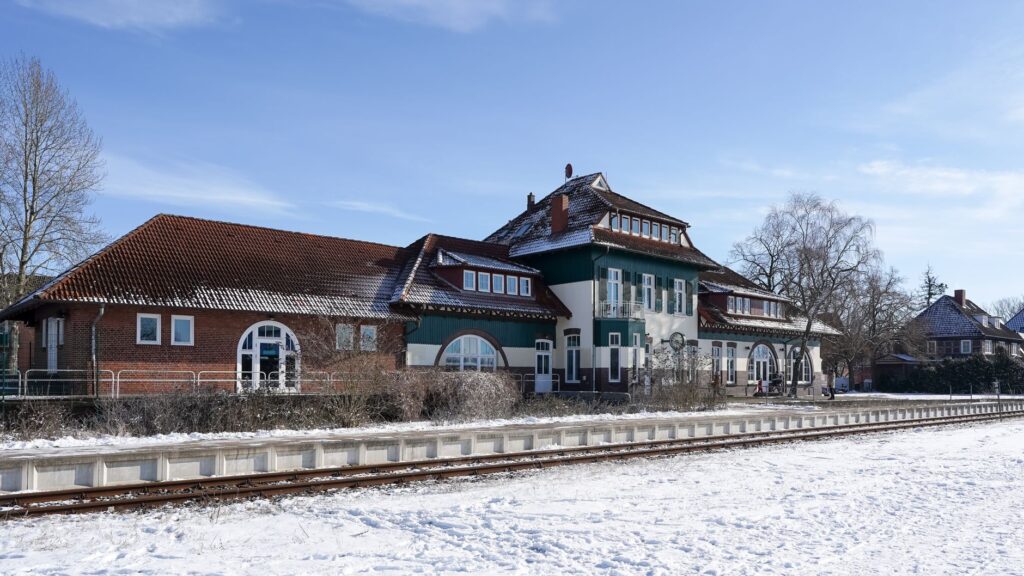
Currently, much of this infrastructure is in an advanced state of deterioration, while other buildings have been converted into small local museums or points of heritage interest for inquisitive travelers. Their architectural preservation represents a challenge for the National Monuments Council of Namibia, which seeks to balance historical memory with the country’s urban and industrial development needs.
Contemporary Challenges and Transport Sustainability
The Namibian railway system finds itself at a historical crossroads. Dependence on an aging network clashes with the government’s ambition to position the country as the primary logistical corridor of the Southern African Development Community (SADC). Expansion projects and interconnection with railway systems of neighboring countries like Botswana and Angola periodically appear on regional development agendas, though their practical execution encounters financial and bureaucratic barriers.

The transition toward more sustainable transport models grants these tracks renewed relevance. In a global context where emissions reduction is a priority, revitalizing the African railway emerges as an indispensable strategic solution. Nonetheless, this requires massive investments in digital signaling, rolling stock renewal, and specialized technical training to ensure the infrastructure meets 21st-century standards without losing its historical identity.
Practical guide
- How to get there: Hosea Kutako International Airport (WDH), near Windhoek, is the main international gateway. From there, access to the railway network is primarily achieved through the capital’s central station.
- Best time to visit: The dry season months, between May and October, offer more moderate temperatures and lower risk of track disruptions caused by seasonal rains or flash floods.
- Logistics and transport: Passenger services operated by TransNamib are limited and subject to frequent timetable modifications. It is essential to check the current status of routes directly at local ticket offices before planning long-distance travel.
- Accommodation: Major cities along the route (Windhoek, Swakopmund, Omaruru) feature varied hotel infrastructure, ranging from historical guesthouses to eco-tourism camps.
- Safety advice: The desert climate requires carrying adequate water provisions, broad-spectrum sunscreen, and light yet warm clothing for cold highland nights.
Epilogue: The Metallic Beat Beneath the Desert Stars
When the sun dips below the Namib horizon, the temperature drops sharply and absolute silence blankets the gravel plains. It is at that moment when the distant echo of a locomotive whistle acquires an almost poetic dimension, reminding travelers that human presence in this corner of the planet is a constant exercise of audacity and perseverance.
The railway tracks crossing the desert are not mere strokes of steel upon the sand; they represent the thread of a history of resistance where engineering merges with the immensity of the African landscape, demonstrating that even in the most hostile environments, the will to connect distant worlds prevails against all odds.