
Origins of a Geological and Social Transformation
The island of Lanzarote, declared a Biosphere Reserve by UNESCO in 1993, has faced for decades an unsustainable paradox: balancing global fascination for its unique volcanic landscape with the extreme fragility of its arid ecosystems. The island’s transport model, historically dependent on internal combustion vehicles to move millions of annual visitors to enclaves such as Timanfaya National Park, reached a point of operational and environmental saturation. Accumulated emissions and pressure on secondary road infrastructures forced local authorities to fundamentally rethink mobility, moving away from mass asphalt to embrace a paradigm of deep energy transition.
This transformation does not stem from an isolated office, but from a pact forged between scientists from the Spanish National Research Council (CSIC), sustainable mobility engineers from the Cabildo of Lanzarote, and local communities in the municipalities of Yaiza and Tinajo. The core premise of the new plan is as simple as it is demanding: the volcanic territory must not bear the burden of obsolete infrastructure. To achieve this, the transport strategy has been redesigned around two complementary pillars: the progressive replacement of the island’s bus fleet with vehicles powered by green hydrogen, and the recovery of ancient bridle paths and malpaís trails as exclusive routes for pedestrian and bicycle traffic.
The use of green hydrogen in island public transport represents a technological milestone in the Canary Islands archipelago. Unlike conventional electric batteries, which face weight and autonomy challenges in terrain with steep slopes and high summer temperatures, hydrogen fuel cells offer superior efficiency and zero direct emissions, emitting only water vapor. The first refueling stations, powered entirely by local wind and photovoltaic energy plants, already supply clean fuel to regular lines connecting Arrecife with major tourist centers and protected natural areas.
The Engineering of Green Hydrogen in Volcanic Environments
Implementing a transport network based on green hydrogen in a volcanic island required overcoming complex technical challenges. Engineers had to design storage tanks capable of resisting saline corrosion typical of the Atlantic environment and the extreme thermal variations of the lava soil. Likewise, a pilot plant for hydrogen production through water electrolysis using surplus local renewable energy was established, ensuring that the complete molecule cycle is 100% sustainable, from generation to combustion in bus exhaust pipes.
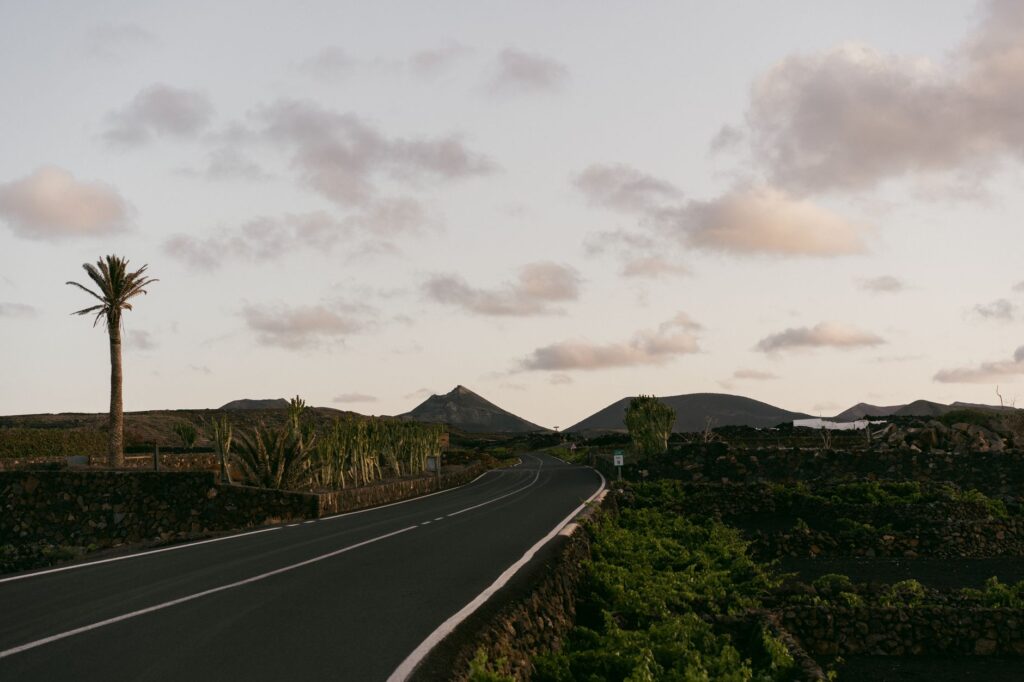
At the same time, land routes have been optimized using real-time geolocation systems and traffic light priority at access points to visitor centers. This not only reduces waiting times for residents and travelers but also optimizes the energy consumption of each unit. Drivers of the island transport company have received specialized training in efficient driving and fuel cell management, integrating sustainability criteria into their daily operations and becoming active ambassadors of the island’s environmental model.
The integration of these clean technologies aligns with European decarbonization targets for island and outermost regions. The project has served as a testbed for other mid-Atlantic archipelagos, demonstrating that energy transition is viable even in territories with severe geographical limitations. Financing, structured through European recovery funds and public island co-financing, has ensured that technological deployment does not fall on local taxpayers, but is instead funded through responsible tourism management fees.
Malpaís Trails and the Recovery of Territory on Foot
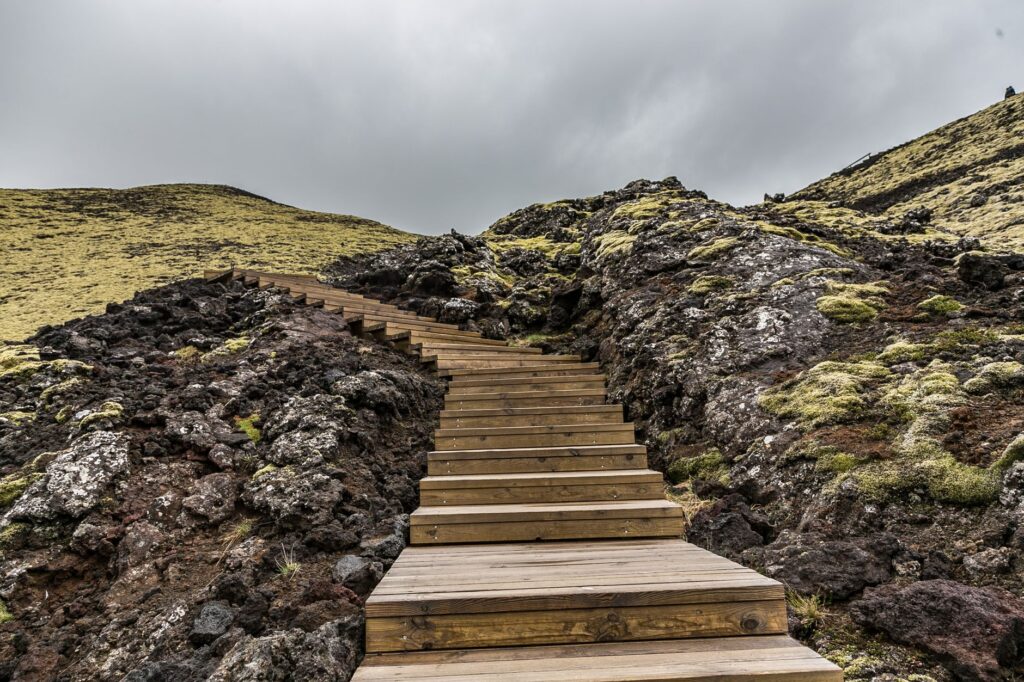
The other major axis of this transformation is active mobility. For decades, the widening of roads to accommodate private traffic fragmented the volcanic landscape and destroyed historic routes used by shepherds and farmers. Today, an ambitious landscape restoration project has returned priority to malpaís paths, connecting major urban centers and natural attractions through a network of perfectly marked trails free of motor vehicles.
These trails are not mere recreational infrastructures; they function as real communication arteries for local residents and as a zero-emission travel alternative for visitors wishing to explore the island at a human pace. The fragile volcanic pavement, rich in plant endemics such as lichens and tabaibales, has been protected by treated wood and dry-stone walkways that prevent erosion caused by heavy foot traffic. Every kilometer recovered represents a victory against ecological fragmentation and a commitment to slow observation tourism.
Local hiking associations and environmental groups actively participate in maintaining these routes, carrying out biodiversity monitoring and waste cleanup tasks. This participatory governance ensures that decisions regarding trail layout and use respond to the real needs of the ecosystem and its inhabitants, avoiding overcrowding and ensuring that the landscape experience respects Lanzarote’s fragile geological balances.

“True luxury in Lanzarote is no longer speed or artificial isolation, but the ability to move in harmony with the earth beneath our feet, leaving no trace other than the echo of our footsteps on the ash.”
Vehicular Access Restrictions and Flow Management
To complement the offer of clean transport and restored trails, the Cabildo implemented a strict system of quotas and restrictions for private vehicles in areas of high environmental sensitivity, especially around the Fire Mountains. Private car access to certain peripheral parking lots has been limited, replaced by a mandatory shuttle system powered by hydrogen connecting reception centers with key observation points.
This measure, initially received with caution by the car rental sector, has proven to be a resounding success in terms of fluidity and conservation. The endless lines of cars clogging secondary roads during the summer months are gone. Now, visitor flow is regulated to the millimeter, ensuring that the natural park’s carrying capacity is never exceeded at any time of day. Visitor and emission data are public and updated in real time via an island mobile application.
The economic impact of these restrictions has been analyzed by circular economy experts, who conclude that while the total number of vehicles in protected areas has decreased, the added value of the tourism experience has increased exponentially. Visitors appreciate the absence of noise and visual pollution, which translates into longer stays, greater respect for natural heritage, and an increase in the consumption of certified local products in municipal markets.
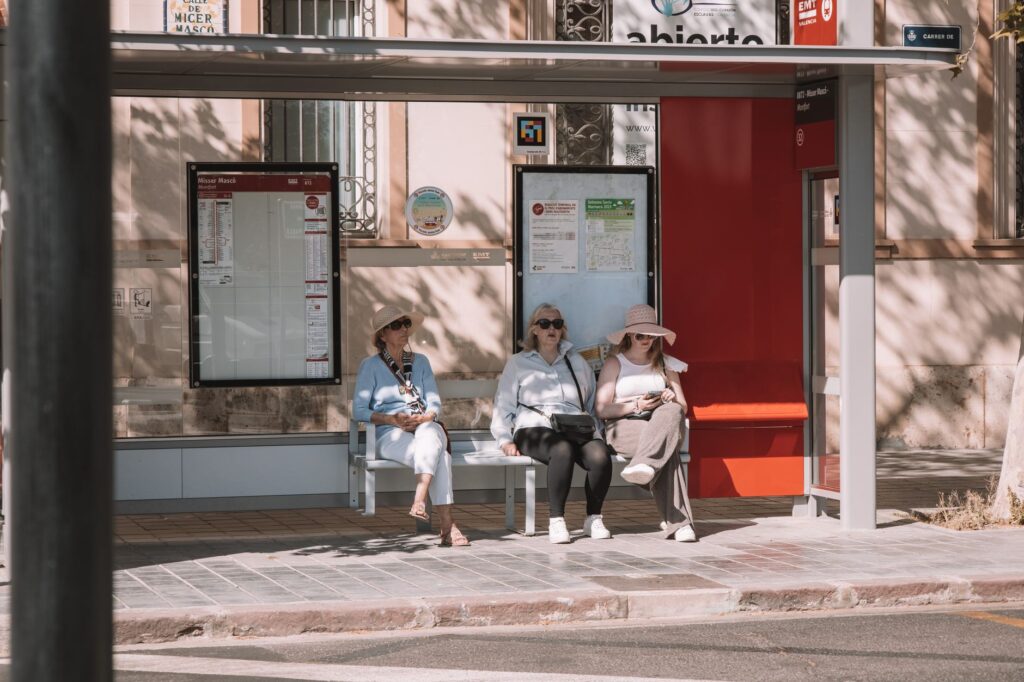
Bioclimatic Architecture and Integrated Bus Stops
The transformation of transport in Lanzarote is not limited to vehicles and paths; it also encompasses the design of waiting infrastructures. The new bus shelters have been conceived under strict island bioclimatic architecture criteria. Built with local materials such as basalt stone, reclaimed wood, and plant roofs that self-regulate interior temperature, these stops blend visually with the volcanic landscape without generating aesthetic impact.
In addition, each stop is equipped with autonomous solar panels powering low-intensity LED lighting systems, USB charging ports for mobile devices, and electronic ink screens providing real-time hydrogen bus schedules. This comprehensive approach demonstrates that functionality and sustainable design can go hand in hand, offering travelers a comfortable, informative, and environmentally friendly experience from the very first moment of their journey.
Landscape architects in charge of the project worked closely with local artisans to rescue traditional dry-stone construction techniques, ensuring each shelter reflects the island’s cultural identity. Standardized metal structures clashing with the island skyline are a thing of the past; today, bus stops are community meeting points celebrating the sober and striking aesthetics of Lanzarote’s volcanic landscape.
Socioeconomic Challenges and the Voice of the Local Community
Every major territorial transition generates inevitable debates and challenges. In Lanzarote, the reconversion of the transport model has raised questions about equitable access to services by residents of villages further inland. To mitigate any inequality, the Cabildo established subsidized fares and resident transport cards guaranteeing free or substantially discounted travel across the entire hydrogen bus network, prioritizing work and student mobility needs over seasonal tourist pressure.
Community meetings held in cultural centers in Tinajo, Haría, and San Bartolomé allowed for adjusting line schedules to fit the shifts of primary sector workers and service personnel. This active listening has been fundamental in consolidating social support for the mobility plan. Local farmers and ranchers, who depend on rural roads to transport their products, view traffic pacification and the restoration of traditional paths positively, suffering less damage from uncontrolled rental vehicle traffic.
The hotel and restaurant sector has also had to adapt. Many establishments have replaced their courtesy vehicle fleets with electric bicycles and reserved spaces for public shuttles, integrating detailed information on how to get around the island without a car on their websites. This public-private synergy consolidates Lanzarote as an international benchmark in managing mature tourist destinations under strict criteria of sustainability and bioclimatic respect.
Practical guide
How to get there: Lanzarote Airport (ACE) operates direct connections with major European and Spanish cities. From there, regular bus lines connect with the Arrecife intermodal station and major tourist centers.
Island transport: Use the hydrogen-powered bus network operated by IntercityBus Lanzarote. Acquire the island purse card for significant discounts on journeys and access to reduced fares.
Active mobility: The island trail network and malpaís paths are open year-round. Firm-soled footwear, broad-spectrum sunscreen, and sufficient water are recommended, as water sources in volcanic areas are nonexistent.
Reservations in natural areas: To visit the Cabildo’s Art, Culture, and Tourism Centers (such as Timanfaya), booking tickets and shuttle spaces in advance through their official website platform is essential.
When to travel: Spring months (April to June) and autumn (September to November) offer optimal temperatures for hiking and fewer crowds at geological points of interest.
The Echo of Silence Over Black Ash
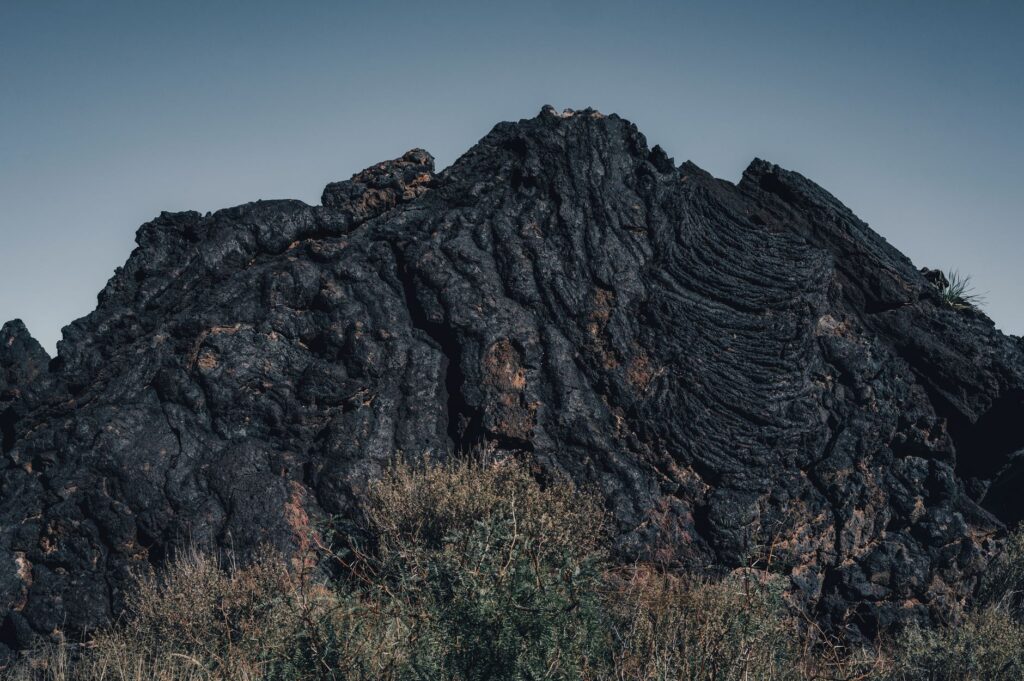
At dusk, when the last rays of sun set the ridges of the Fire Mountains ablaze and the visitor flow dissipates toward coastal villages, Lanzarote recovers its primal pulse. On the malpaís paths winding between lava fields and ancient lichens, the only sound accompanying the hiker is the subtle crunch of volcanic stone beneath boots and the steady whisper of the trade wind. This silence is not an absence of life, but the triumph of peaceful coexistence between human beings and a geologically unforgiving territory.
The island’s commitment to green hydrogen and active mobility proves that the planet’s most fragile destinations are not doomed to succumb under the weight of their own tourism success. With political vision, scientific rigor, and the unwavering commitment of its communities, redrawing maps of connectivity without altering the soul of the land is possible. Lanzarote thus stands as a beacon in the Atlantic, reminding us that true travel consists of learning to stop, listening to the heartbeat of the soil, and traversing the world with the certainty that every respectful step preserves the future for those yet to arrive.