
The Iron and Light Cathedral Where the Poniente Beats
Beneath the early 20th-century metal structures that shape the silhouette of Almería’s Central Market, the morning does not begin with the quiet dignity of a monument, but with the dull thud of fish boxes emptying onto crushed ice. Built on the former grounds of the San Francisco convent, this enclosure is far more than a commercial trading floor; it functions as a living archive preserving the most genuine essences of a province defined by the duality between the Alboran Sea and the luminous aridity of its plastic-covered fields.
Stepping inside alters the temperature and density of the air, loading it with saline notes, the pungent perfume of freshly cut herbs, and the rich, heavy aroma of early harvest extra virgin olive oil. Here, every stall maintains an invisible hierarchy respected for generations—an unspoken order that transforms daily shopping into a liturgical act where the vendor acts as both confessor and culinary guide for a clientele seeking the exact ingredient for every traditional stew.
The Architecture of Food in the Deep South
The original design of the building, conceived to maximize cross-ventilation and natural light, plays a fundamental role in preserving and displaying the treasures arriving from the coastal strip and inland valleys. Fish stalls draw the eye toward species that only attain their true culinary peak in these southern waters, while vegetables originating from traditional greenhouses and small Poniente market gardens exhibit geometric perfection and a concentrated flavor that defies stereotypes about intensive agriculture.
Along the interior aisles, time seems to slow down despite the bustle of shopping carts and the shouts of the stallholders. It is within this microcosm that the true social fabric of the city is woven—an intergenerational meeting space where young chefs of the new Almerían culinary wave rub shoulders with the matriarchs who have spent decades dictating the rules of local home cooking.

The Botanical Miracle of Sandmulch Farms and Valleys
A few short kilometers west of the capital, the landscape transforms abruptly into a territory of white plastic and fertile soil that has revolutionized the European pantry. Yet beneath the industrial scale of the Poniente greenhouses, family-run farming models and historical terraced plots endure, cultivating native varieties nearly lost elsewhere on the continent, from deep-grooved Raff tomatoes to firm-textured zucchinis with an intensely sweet profile.
This geographical contrast—stretching from the Tabernas Desert and the peaks of Sierra Nevada to the coastal strip—imbues the vegetables with unusual mineral concentration. Subjected to controlled water stress and intense insolation, the plants develop natural defense mechanisms that translate into complex organoleptic profiles, highly prized by chefs who champion regional food sovereignty.
The Ancient Wisdom of Water and Soil
Millennial management of water resources in this semi-arid strip has conditioned every traditional dish. From Moorish irrigation ditches to modern hyper-technified drip systems, water stewardship serves as the invisible thread linking field to table. In the market, this culture translates into the constant presence of produce that tolerates no mediocrity: thick-fleshed roasting peppers, Almagra-adapted eggplants, and Piel de Sapo melons that accumulate sugars under the afternoon sun.
The market is not the end of the food chain, but the mirror where Almería’s land and sea look upon each other to recognize themselves every morning.

Local farmers who bring their harvest directly to the stalls act as guardians of a fragile biodiversity. Their empirical knowledge of lunar phases for planting and manual harvesting ensures that the produce retains its structural integrity and flavor profile right up to the moment of sale.
The Fish Market and the Alboran Sea: Abyssal Biodiversity
If the garden provides sweetness and earthy structure, the Alboran Sea imbues Almerían gastronomy with an untamed character. Cold, nutrient-rich currents circulating through the Strait of Gibraltar collide in this corner of the Mediterranean, creating an exceptionally fertile marine ecosystem teeming with high-value culinary species that rarely reach fish markets beyond the immediate locality.
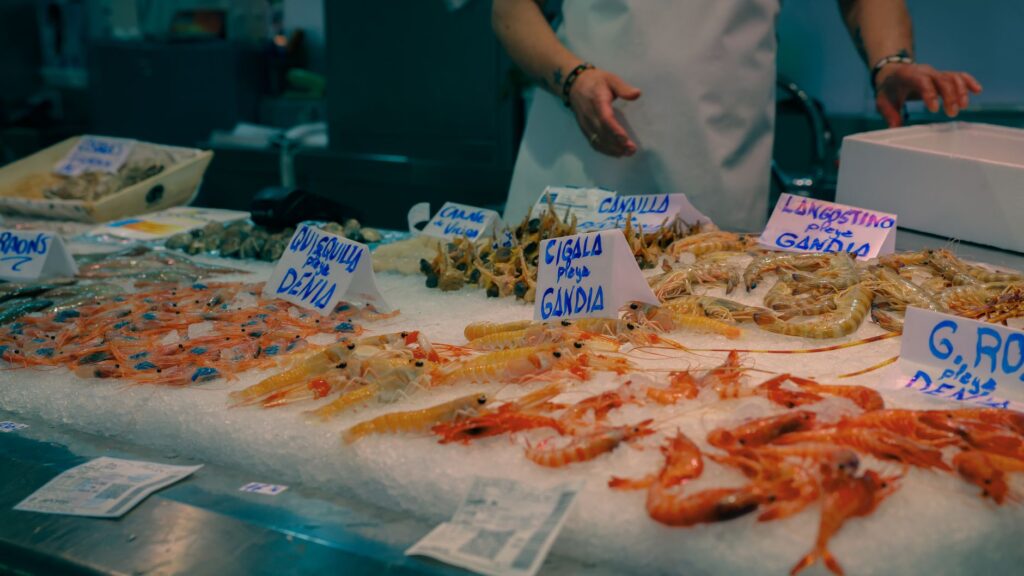
Among the market stalls, the John Dory displays its sharp contours alongside deep-water crayfish and the popular ‘galanes’ or parrotfish, small iridescent specimens whose delicate white flesh demands exceptionally subtle cooking methods. Here, freshness is measured not in hours but in heartbeats; fish arrives from the ports of Roquetas de Mar and Adra mere hours before being displayed upon beds of flaked ice.
The Liturgy of Wild Catch
Veteran fishmongers handle their knives with surgical precision, cleaning and sectioning complex cuts while explaining the subtle differences between rock-dwelling and mud-dwelling catches to prospective buyers. There are no shortcuts at these counters: the brightness of the eye, the firmness of the flesh, and the scent of clean iodine serve as indisputable certificates of authenticity.
This direct relationship between the fisherman, the market middleman, and the final consumer fosters a zero-kilometer circular economy that sustains dozens of seafaring families and guarantees the survival of traditional fishing arts increasingly threatened by global industrial pressure.
Practical guide
How to get there: Almería’s Central Market is located in the urban core at Plaza Cetina, easily accessible on foot from any point in the historic center or via the urban bus network.
Recommended visiting hours: From Monday to Saturday, the optimal window is between 08:00 and 11:30 AM, coinciding with peak activity at the fresh fish and produce stalls.
Essential specialties: Look for premium Raff tomatoes, red prawns from Almería at specialized seafood stalls, and artisanal canned mackerel and bonito.

Recommended accommodation: Boutique hotels and charmingly restored properties in former bourgeois mansions within the historic center to experience urban life on foot.
The Pulse of Traditional Stoves and Contemporary Avant-Garde
Almerían cuisine has successfully shed tourist clichés to take refuge in unvarnished authenticity where ingredients reign supreme. Around the market, centennial taverns and small family-run dining rooms serve spoon dishes that summarize the history of a people accustomed to scarcity yet endowed with infinite creativity to transform humble components into masterpieces.
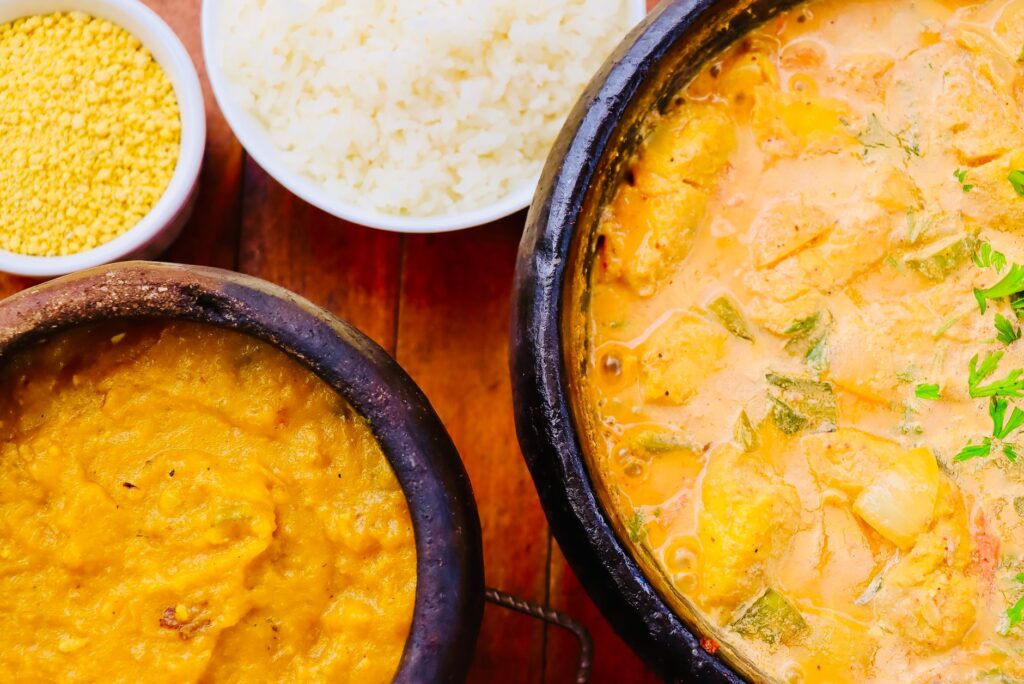
Semolina flour bread crumbs, traditionally served with fried fish, dried peppers, and radishes, constitute the unofficial national dish of rainy days, though they are consumed with fervor under any climatic circumstance. Alongside them, fish broths with parrotfish, ‘gurullos’ pasta with hare, and various wild chard stews demonstrate that the culinary identity of this land is built upon the memory of local resources.
The New Cuisine of Desert and Coast
In parallel with this resistance cooking, a new generation of restaurateurs is reinterpreting the classic recipe book by applying contemporary techniques without diluting the primordial purity of the ingredients. These chefs collaborate closely with central market vendors to design seasonal menus that change almost daily based on fish market arrivals and garden harvests.
True haute cuisine in Almería does not seek artificial surprise, but absolute respect for the original flavor born from an extreme land and a generous sea.
This fluid dialogue between the primary sector and fine dining has placed Almería firmly on the international gastronomic map, attracting discerning travelers seeking genuine experiences far from the mass-market circuits of conventional sun-and-sand tourism.
Epílogue: Dusk Over the Bay and the Taste of Memory
As afternoon begins to fade over the port of Almería and golden reflections merge with the silhouettes of moored fishing boats, the city adopts a leisurely, almost contemplative rhythm. This is the moment when markets pull down their metal shutters and activity shifts to the bars of maritime taverns, where the murmurs of conversation blend with the distant sound of waves breaking on La Goleta beach.
Sitting before a plate of freshly fried fish at dusk, with the saline breeze filling the air and the profound certainty of having understood the invisible codes uniting desert, orchard, and sea, represents the perfect culmination of a journey that transcends mere culinary tourism to become a deep, enduring life lesson.