
The Liquid Artery of Indochina and Its Shifting Geography
The Mekong Delta is not merely a geographical region; it is a living organism where solid ground constantly yields to the advance of tides and the imposing flow of the Mother River. Connecting this vast labyrinth of canals, streams, and distributaries has historically represented a titanic challenge for locals and transport authorities alike. Unlike the conventional land-based infrastructure that dominates modern development plans, here the primary highway remains liquid. Boats are not a mere tourist attraction, but the indispensable backbone ensuring economic survival, food supply, and the daily mobility of millions.
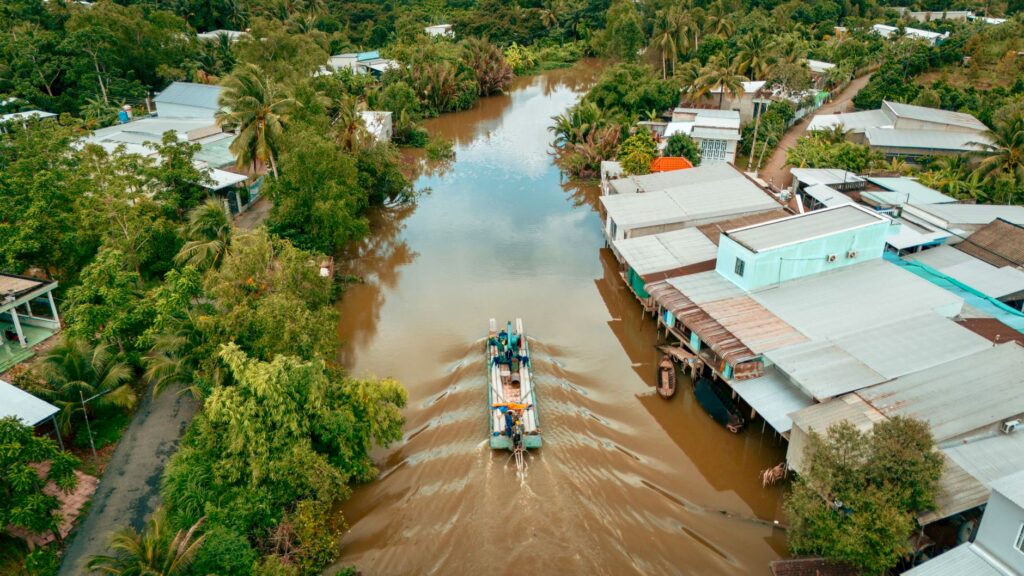
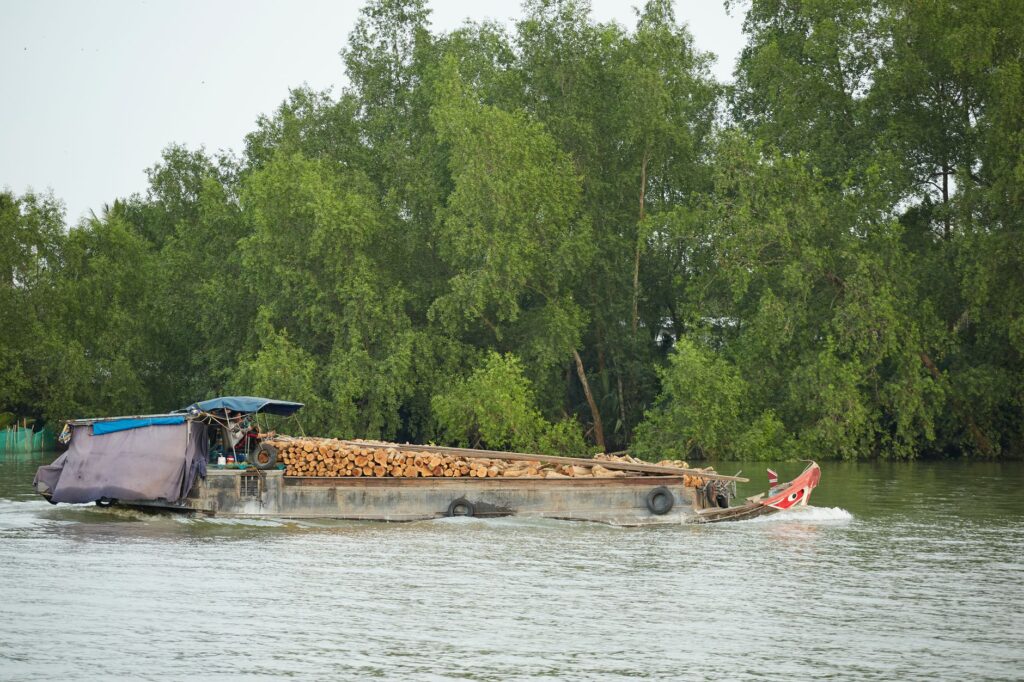
The configuration of this transport network comprises thousands of kilometers of natural and artificial navigable waterways. From large cargo vessels carrying rice toward the port of Ho Chi Minh City to small sampans connecting isolated hamlets, every link serves a precise function. However, pressure from climate change, upstream dam construction on the Lancang River, and accelerated sedimentation are drastically altering water levels. This ecological instability threatens to fracture a connectivity that has self-regulated organically for centuries, demanding urgent technical and logistical adaptation.
Motorized Sampans and River Navigation Engineering
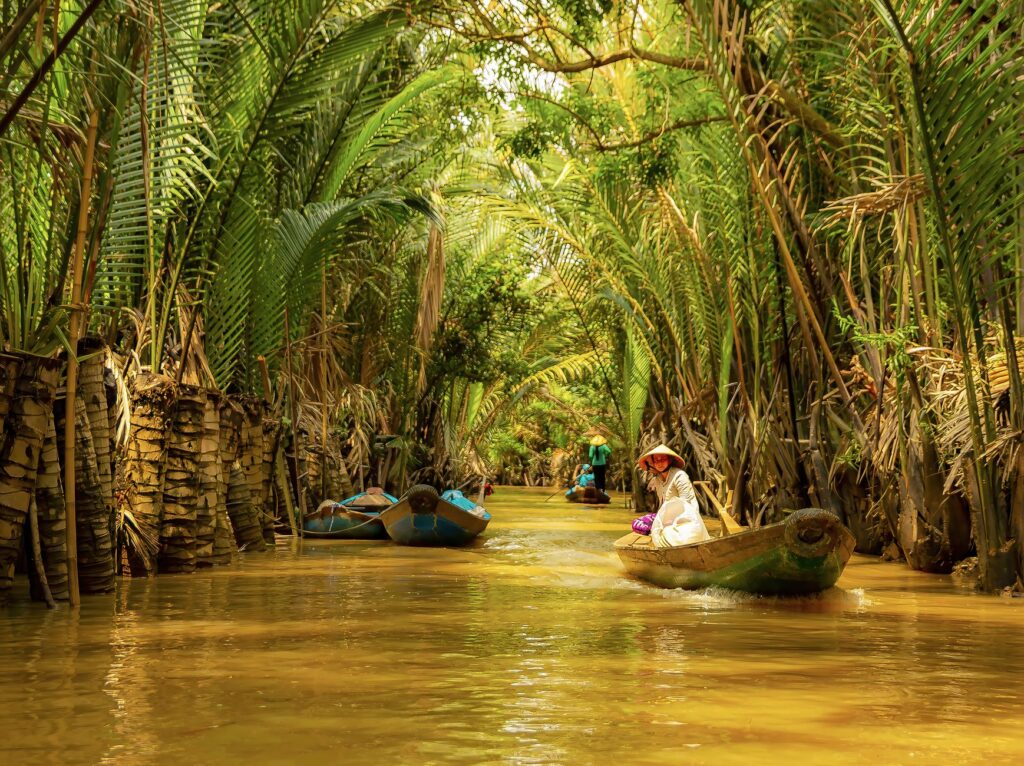
The operational heart of mobility in the delta beats to the rhythm of sampan engines and light cargo boats. These vessels, adapted over generations to shallow conditions and winding currents, constitute the aquatic equivalent of terrestrial utility vehicles. Local shipyards, situated along minor tributaries, build flexible wooden hulls and fiberglass shells capable of withstanding constant impact against floating logs and silt banks. Propulsion choices reflect extreme efficiency: long-shaft diesel engines that allow operators to quickly lift the propeller to clear vegetal obstacles.
Despite their apparent rustic simplicity, managing these fleets requires meticulous coordination. River cooperatives regulate transit schedules in narrower canals to avoid collisions during peak trading hours. Simultaneously, operators face challenges from rising fuel costs and stringent emissions regulations that the Vietnamese government is beginning to implement to curb waterway pollution. The transition toward electric or hybrid engines emerges as an unavoidable necessity, though initial technology costs hinder massive adoption among independent shipowners.
Floating Markets: Commerce as a Logistical Node
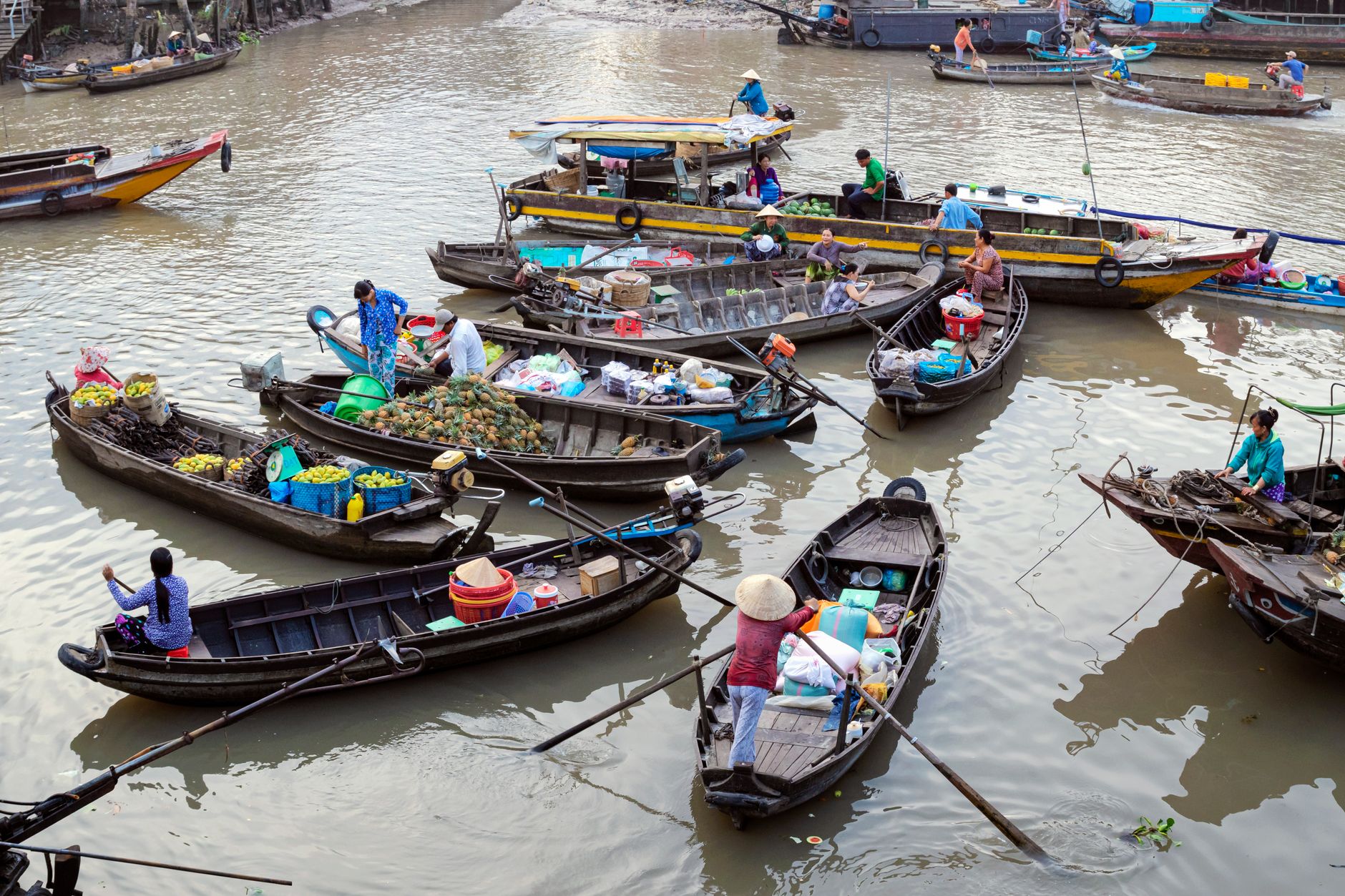
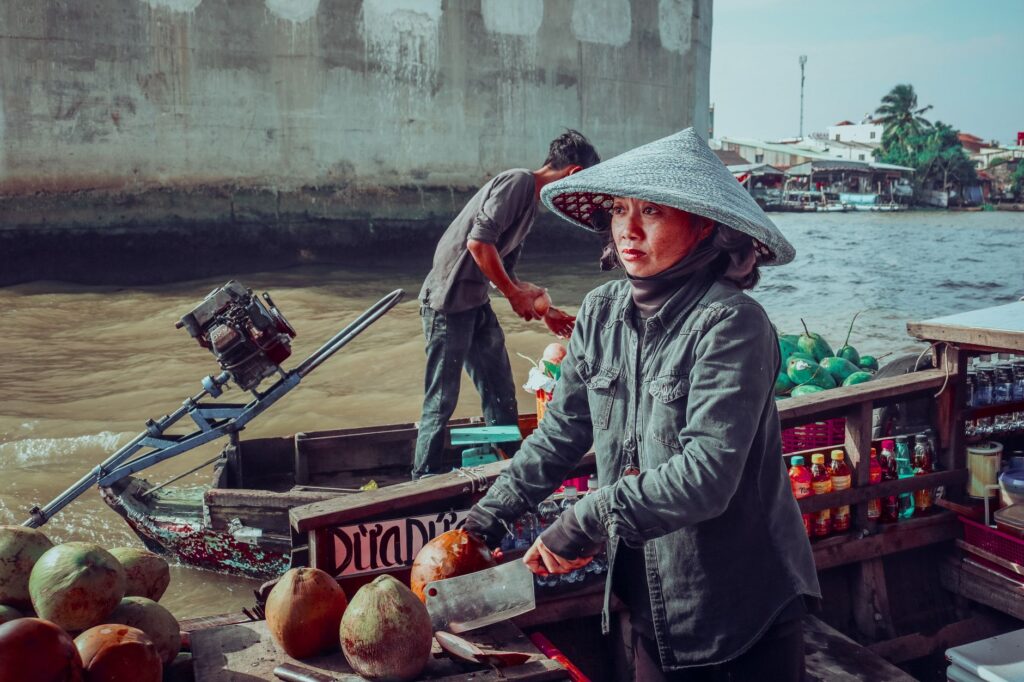
The famous floating markets of Cái Răng and Phong Điền are far more than picturesque postcards for international travelers; they function as genuine wholesale distribution logistics centers. At these river confluences, merchandise is transshipped directly from boat to boat without touching solid ground. Farmers hang a sample of their harvest on a long bamboo pole situated at the bow—known as a bẹo—to announce their product from a distance, optimizing negotiation time amid the bustle of the channels.
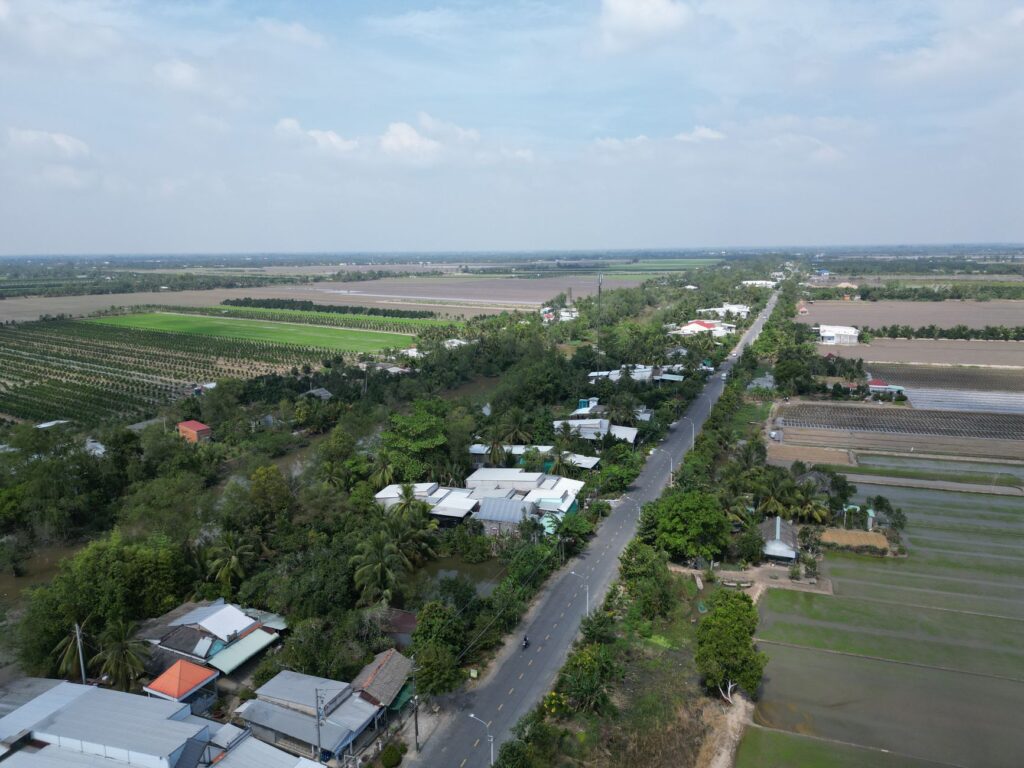
The viability of these markets faces a silent yet profound transformation today. The proliferation of asphalt roads and concrete bridges over the past decade has allowed a significant portion of agricultural production to be transported by trucks directly to urban centers. Nonetheless, water transport maintains economic supremacy for bulk goods such as rice, bricks, and construction sand. The current challenge lies in finding a regulatory balance that preserves the cultural identity of floating markets while modernizing their docking infrastructure and environmental sanitation.
Bamboo Footbridges and the Rural Road Network
Complementing river routes, an intricate network of rural paths and pedestrian bridges connects diverse riverside settlements. Popularly known as cầu khỉ or monkey bridges due to the posture pedestrians must adopt to cross them, these structures of woven bamboo and lightweight timber are masterpieces of vernacular engineering. Although provincial administrations have gradually replaced hundreds of these artisanal bridges with reinforced concrete footpaths, in the delta’s most secluded areas bamboo remains the premier construction material due to its low cost and rapid replacement following monsoon seasons.
This duality between modern concrete and traditional bamboo reflects regional development tensions. New bridges permit motorcycle transit, the most popular land transport medium in Vietnam, facilitating access to health centers and schools. However, constructing fixed spans often interrupts the natural flow of high-mast watercraft, forcing navigators to modify traditional routes or await specific opening schedules, adding friction to a logistics network historically characterized by absolute fluidity.
The Impact of Climate Change on Water Routes
The stability of the entire Mekong Delta transport system stands at a critical crossroads due to climate change. The combination of sea-level rise, land subsidence—aggravated by massive groundwater extraction—and reduced summer river discharge is causing severe canal salinization. This phenomenon not only ruins agricultural crops but also corrodes the metallic hulls of commercial vessels and complicates navigability in stretches where drafts drop alarmingly during the dry season.
Port authorities and civil engineers implement mitigation measures, such as constant dredging of main channels and the construction of lock gates to regulate saltwater intrusion. Despite these efforts, climatic uncertainty forces a rethink of long-term planning. Routes that were safe and predictable for decades now demand real-time bathymetric monitoring systems and early warning protocols to prevent barges from running aground amid vital commercial lanes.
Mass Tourism and the Saturation of Historic Channels
Growing influxes of international visitors have introduced unprecedented pressure on traditional canals. Fleets of high-speed tourist boats travel daily along the same narrow routes used by local freighters and artisanal fishers. This forced coexistence generates operational conflicts and considerable safety risks, besides accelerating riverbank erosion due to constant wake generated by high-powered vessels moving at inappropriate speeds in confined spaces.
The water that sustains life in the delta is also the frontier testing human capacity to adapt without destroying the landscape’s fragile balance.
To counteract this degradation, local communities have begun managing river ecotourism cooperatives that limit group sizes and promote traditional rowing boats or low-power electric motors. This strategy seeks to reconcile economic revenue generation with the preservation of natural and cultural heritage, demonstrating that a sustainable tourism mobility model is viable provided respect for local dynamics takes precedence over rapid landscape consumption.
Practical guide
Planning a trip focused on understanding the Mekong Delta transport system requires abandoning conventional routes and adopting a flexible mindset. Essential logistical aspects for traversing the region with rigor and safety are detailed below:
- Main starting point: Ho Chi Minh City is the neuralgic access node. Regular services to major delta cities such as Cần Thơ and Mỹ Tho depart from the Miền Tây bus station.
- Vessel selection: To explore minor channels, always hire authorized local sampans at official municipal piers, ensuring the boat provides mandatory life jackets.
- Best time for navigation: The dry season, spanning from December to April, offers the most stable visibility and flow conditions, though the rainy season (May to November) reveals the region’s true hydrological dynamism.
- Land connectivity: Motorcycle rentals are useful for exploring rural roads, but exceed safety limits on major national highways due to heavy freight traffic; local buses are preferable for long journeys.
- River safety rules: Always respect local skippers’ instructions regarding tidal currents and avoid navigating overloaded barges during seasonal floods.
Final reflection on current and memory
At the end of each day, when the tropical sun sinks beyond the horizon and dyes the channels a deep copper hue, the delta regains a solemn silence interrupted only by the distant murmur of a diesel engine and the rhythmic splashing of oars. Transport infrastructure in this Vietnamese outpost is not measured by asphalt monumentality or supersonic train speeds, but by the resilience capacity of its inhabitants. Every bamboo bridge repaired on time and every sampan cutting against the tide are living testimonies of a civilization molded by water. Understanding this fragile mobility ecosystem means recognizing that the future of development lies not in dominating nature, but in learning to navigate in perfect harmony with its unpredictable currents.