
The Silent Geometry of French Design
In the heart of Lyon, far from the industrial bustle that characterizes the metropolitan periphery and hidden behind the imposing stone doorways of historical districts, spaces survive where time seems to have adopted a different cadence. The fine marquetry workshops display no garish signs or commercial pitches; their presence is betrayed solely by the dense aroma of noble woods seasoned for decades, of camphor, and of organic animal glues warming slowly in a double boiler. Here, in this labyrinth of cobbled alleyways where the Saône and the Rhône rivers configure a peninsula of architectural memory, a small group of master artisans continues to apply techniques rooted in the final decades of the Renaissance, which reached their aesthetic zenith during the era of the great European courts. The question running through this creative territory is far from minor in an era dominated by automated mass production and three-dimensional digital modeling: how to maintain the exact tension between the mathematical precision of contemporary design and the unpredictable pulse of the human hand manipulating a veneer sheet barely six tenths of a millimeter thick?
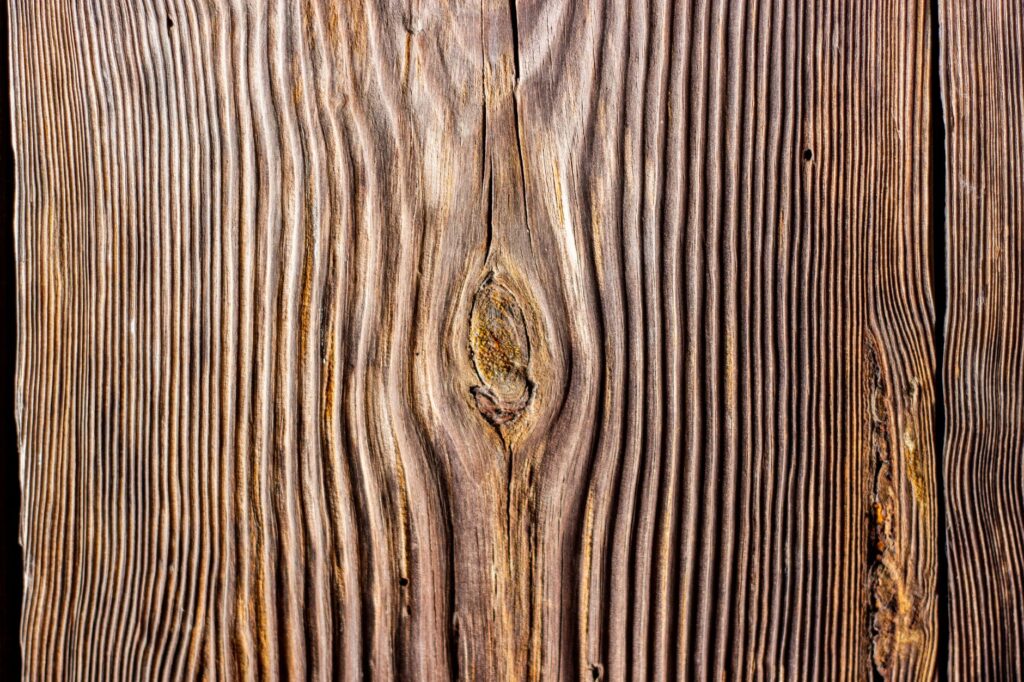
To understand the magnitude of this craft in twenty-first-century Lyon, one must abandon the superficial notion of furniture as a merely utilitarian object. Every table, wall cladding, and decorative panel leaving these workshops is conceived as a portable piece of architecture, a fragmented map where descriptive geometry, an encyclopedic knowledge of botanical species, and a chromatic sensitivity cultivated through decades of meticulous observation converge. Wood veneer, obtained through longitudinal or tangential cuts of the most select logs, becomes in the marqueterie maker’s hands a pictorial palette where contrasts are achieved not with synthetic pigments, but by harnessing the natural variations of sapwood and heartwood, the capricious grains of American walnut, the shimmering reflections of European sycamore, and the almost abyssal depth of Macassar ebony.
From Log to Workbench: The Selection of Living Matter
The creative process does not begin at the cutting table, but in specialized warehouses housing batches of raw timber. Lyon’s master marqueters periodically travel to the timber ports of northern Europe and controlled forestry auctions to acquire unique lots of bird’s-eye maple, vaporized pearwood, or elm burl. Each sheet of veneer is examined with the meticulousness of a precious gem appraiser. Artisans search for the absence of hidden internal tensions, treacherous knots that could fracture during final sanding, or density variations that might alter the absorption of traditional varnishes. This selection phase is decisive, as marquetry is, by definition, an unforgiving discipline: a half-millimeter error in reading the grain completely destroys the visual continuity of the geometric composition.
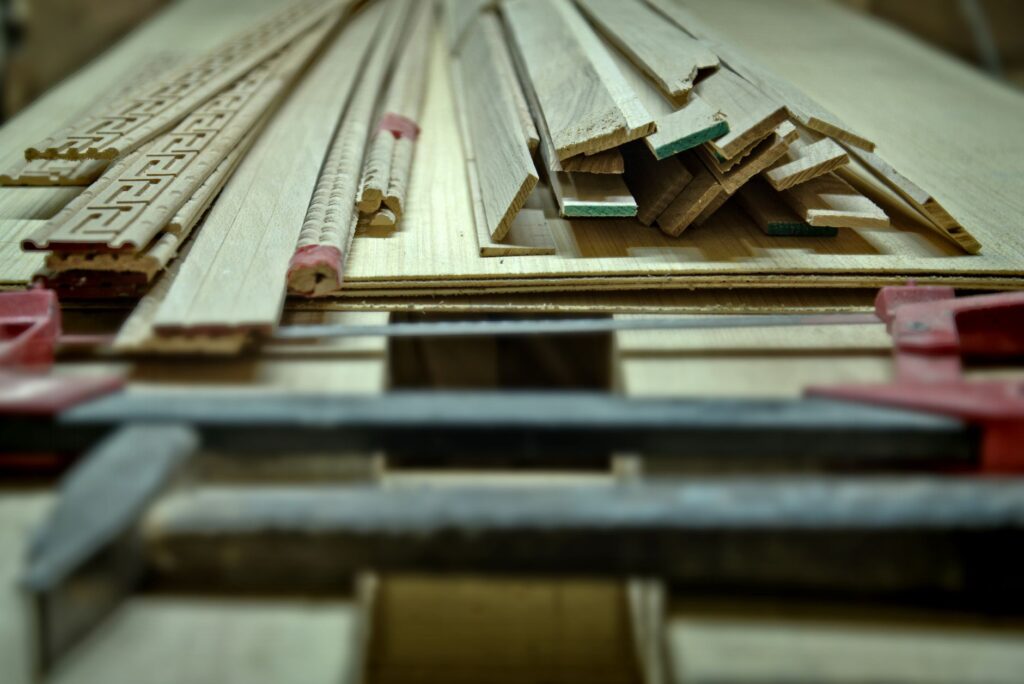
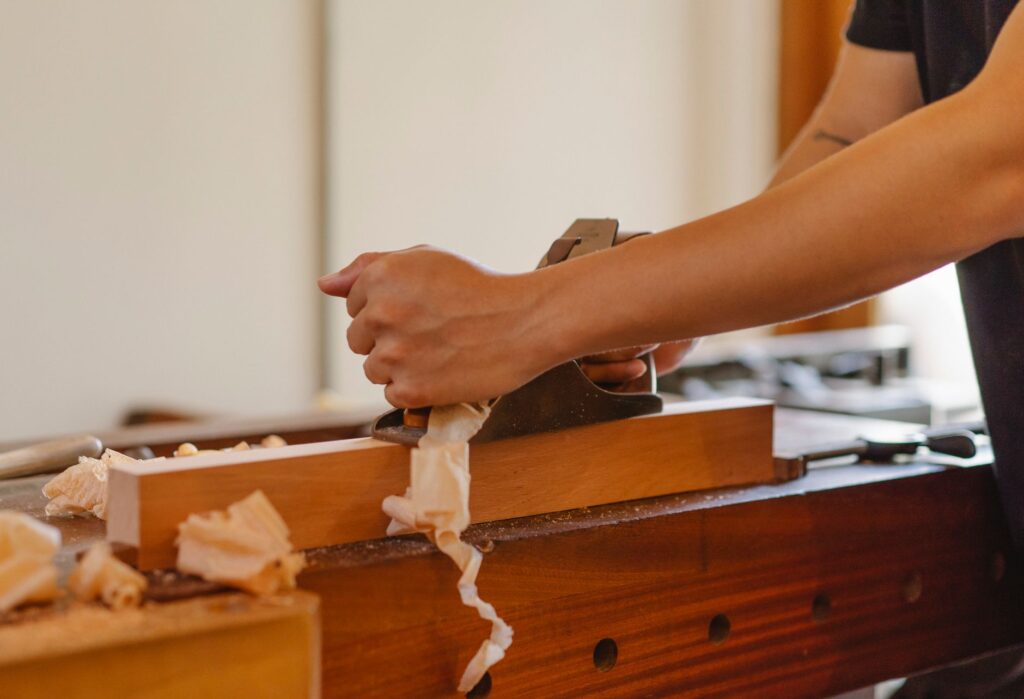
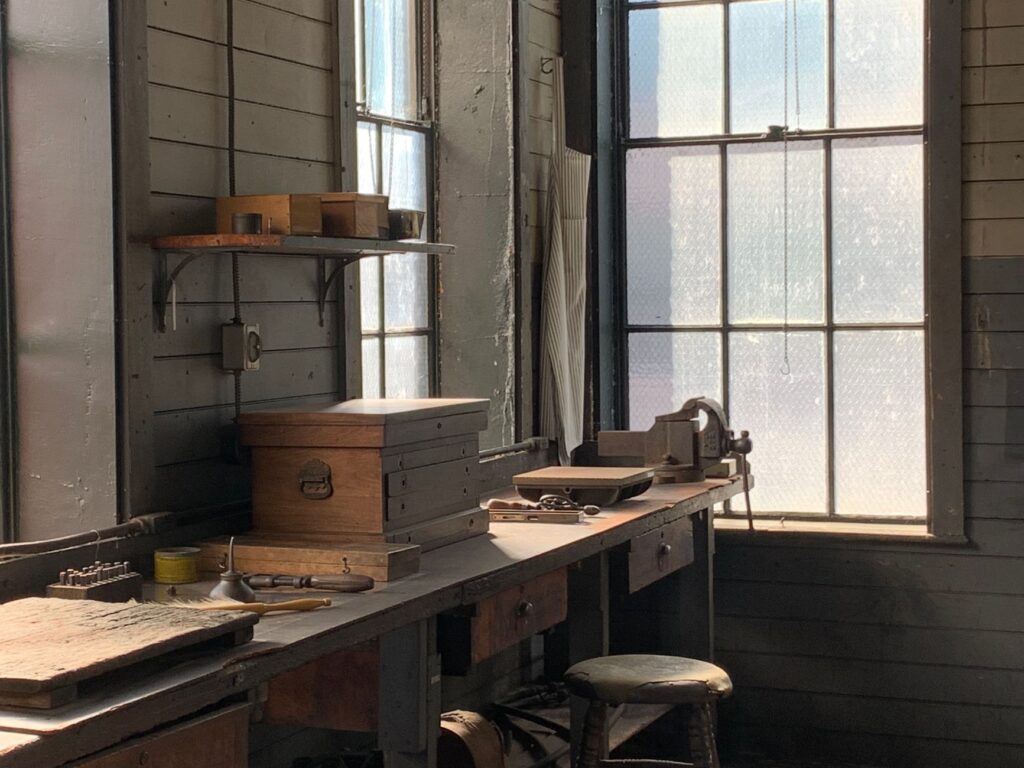
Once in the workshop, the sheets undergo an acclimatization process that can last for months. Wood, even when cut and pressed, continues to respond to fluctuations in ambient humidity and workshop temperature. The workbenches, strategically positioned toward large north-facing windows to capture stable, glare-free zenithal light, are equipped with hand tools that in many cases are over a century old. Paring knives, carbon-steel chisels sharpened on Japanese waterstones, fret saws with adjustable tension, and traditional marquetry graveyards coexist with silent dust-extraction systems and state-of-the-art pneumatic presses, demonstrating that tradition and technological innovation are not mutually exclusive concepts, but rather indispensable allies in guaranteeing the economic and aesthetic viability of the sector.
Marquetry does not seek to imitate nature, but to reorganize its apparent chaos through an invisible geometric law that grants noble material a new architectural and poetic dimension.
Cutting the pieces requires absolute concentration and physical mastery of gesture acquired only after years of tutored apprenticeship. Unlike laser cutters or water-jet cutting systems—frequently employed in the interior design industry for their speed—the artisan using the chevalet de marqueterie (the classic inclined cutting bench operated by foot) introduces a microscopic angular variation in the saw blade’s edge. This infinitesimal beveling, imperceptible to the naked eye, allows the pieces to interlock hermetically without gaps or the need for filler putties. It is an almost surgical assembly work where fitting a single floral leaf or geometric meander may require hundreds of tiny wood tesserae cut simultaneously using the packet technique.
The Art of Fire Shading and Tonal Composition
One of the most fascinating and lesser-known aspects of high-end marquetry is the shading technique, a procedure that endows flat designs with surprising three-dimensionality. By using fine river sand heated in cast-iron pans over small stoves, the artisan submerges specific edges of the cut wood pieces into the boiling sand for just a few seconds. Extreme heat superficially and controllably burns the cellulosic fibers, generating a subtle gradient ranging from the natural tone of the wood to a deep charcoal-brown. This shading makes it possible to simulate volumes, curves, cast shadows, and spatial depths in floral motifs, urban landscapes, or modernist-inspired abstract compositions.
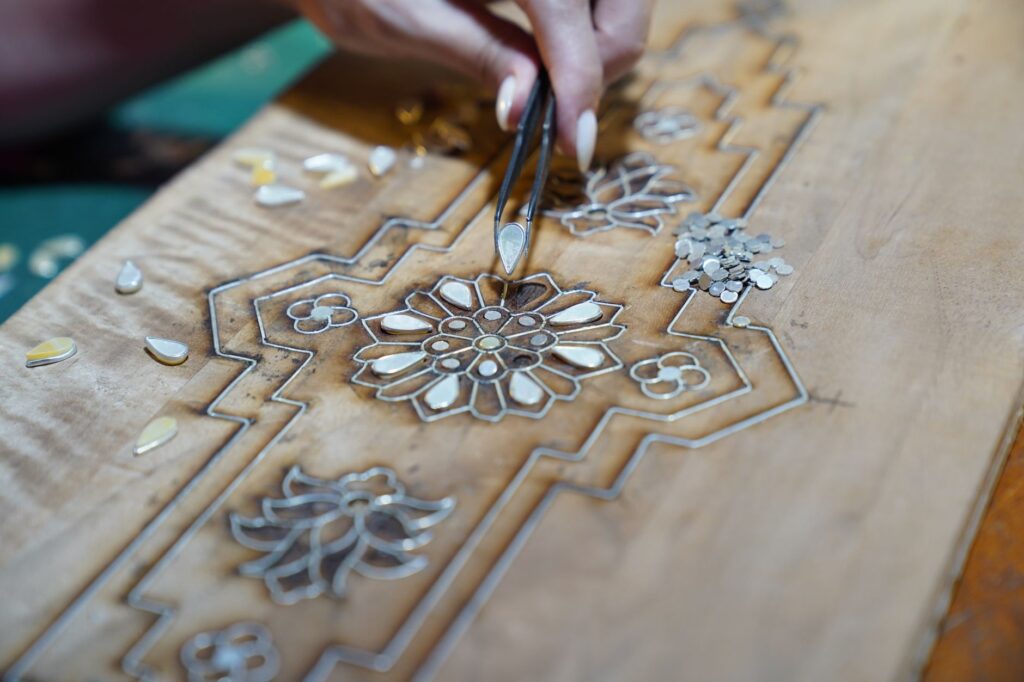
The final composition is assembled on a gummed paper backing applied to the reverse side of the design. The artisan works with inverted marquetry, viewing only the rear face while piecing the fragments together like a three-dimensional puzzle. Once the mosaic is complete—which may contain anywhere from twenty to several thousand individual fragments—definitive gluing onto a substrate panel (generally high-stability plywoods or lightweight honeycomb panels to minimize the final furniture weight) takes place. Pressure is applied uniformly via vacuum presses or heated platen mechanical presses, ensuring the adhesive penetrates the pores without altering the flatness of the surface.
Heritage Restoration and Commissions for Global Collectors
The ecosystem of Lyonese workshops is not sustained solely by creating contemporary design pieces for galleries in Paris, Milan, or New York; a fundamental part of their daily activity is tied to restoring historical furniture from museums, private collections, and European palaces. Intervening on a commed stamped by the great eighteenth-century French cabinetmakers demands an ethical and methodological rigor comparable to that of pictorial restoration. The use of undocumented exotic woods in the original piece is prohibited, and any replacement of lost fragments must be documented through exhaustive photographic and analytical reports guaranteeing intervention reversibility.
These restoration laboratories decipher the hidden biography of furniture. Beneath successive layers of oxidized varnishes and waxes accumulated over three hundred years, restorers uncover workshop marks, signatures engraved with a drypoint inside drawers, and traces of earlier repairs carried out in different eras. Each intervention is a silent dialogue between the current cabinetmaker and the anonymous maker who conceived the original piece in the Age of Enlightenment. This profound respect for historical materiality contrasts with and nourishes the creativity of contemporary commissions, where internationally renowned interior architects turn to Lyon in search of exclusive solutions for luxury yachts, private residences, and boutique hotels demanding a uniqueness unattainable by mass industrial production.
The Transmission of Knowledge and Generational Handover
One of the greatest challenges facing these workshops is the transmission of technical knowledge in a hyperconnected society that has relegated manual trades to a secondary plane. The applied arts schools of the Auvergne-Rhône-Alpes region have promoted dual training programs in collaboration with active masters, ensuring a new generation of young creators acquires not only mechanical dexterity, but also the patience and intellectual rigor demanded by working with living materials. The drop-out rate in early learning phases is high, as mastering the blade and reading veneer sheets requires exclusive dedication for several years before achieving the productive autonomy necessary in the sustainable luxury market.
- Rigorous selection of noble wood veneers with sustainable forest management certification.
- Exclusive use of traditional, highly reversible organic animal glues.
- Manual cutting via an inclined bench and fret saw for millimetric, gap-free fitting.
- Thermal shading technique with sand to provide visual volume and three-dimensionality.
- Final finishes based on natural waxes and shellac varnishes applied with a French polishing pad.
This commitment to sustainability is not a marketing strategy, but an intrinsic requirement of the craft. The wood used in Lyon’s workshops comes, in vast majority, from European forests managed under strict rotation and conservation criteria, or from certified surplus stocks of historical cabinetry industries. Recycling small scrap pieces to create abstract geometric compositions of small format demonstrates that the zero-waste culture has been present in these workshops long before becoming a global mandate of contemporary design.
Practical guide
How to get there: Lyon features excellent rail connections via the TGV high-speed network, located less than two hours from Paris and directly connected to Lyon-Saint Exupéry International Airport via the Rhônexpress high-speed tram service.
When to visit: Spring and early autumn offer ideal weather conditions for walking through the historic districts of Vieux Lyon and the Croix-Rousse, while also coinciding with open-door workshop cycles organized by the region’s Arts and Crafts network.
How to access the workshops: Most cabinetmaking and fine marquetry workshops are active workplaces that do not operate as retail shops. Professional and cultural visits must be requested several weeks in advance through the Lyon Tourist Office or local artisan associations.
Recommended accommodation: To maintain coherence with the cultural experience, staying in boutique hotels housed in rehabilitated historical buildings on the Presqu’île or in design apartments within the Renaissance quarter is strongly advised, allowing guests to experience contemporary interior design seamlessly integrated into secular structures.
Gastronomy and design: Traditional Lyonese *bouchons* coexist today with fine dining ventures that prioritize both culinary experience and interior design, frequently collaborating with local woodworkers to create bespoke wooden furniture and tableware.
Workshop etiquette: As these are active workplaces handling dangerous cutting tools and delicate materials, strict adherence to the master artisan’s safety instructions is mandatory, alongside avoiding camera flash and keeping mobile phones on silent mode.
Recommended reading and documentation: To delve deeper into the history of French furniture and marquetry techniques prior to your visit, consulting specialized holdings at the Lyon Municipal Library and historical catalogues of the city’s Museum of Decorative Arts is recommended.
The Eternal Reflection of the Grain
As dusk falls, when golden twilight washes over the bridges spanning the Rhône and bathes the ochre facades of the Croix-Rousse, Lyon’s marquetry workshops extinguish their work lamps and sweep up the wood shavings carpeting the floor like a fine layer of vegetable gold. In that everyday silence lies the true essence of a craft refusing to succumb to the speed of the present. Every panel composed of thousands of microscopic fragments of maple, pearwood, and walnut is not merely a decorative element meant to embellish an exclusive space; it is tangible proof that humanity continues to find in the resistance of natural matter and the slowness of expert hands a refuge against the fleeting transience of the modern world. The grains intersect, embrace, and continue their mute journey, projecting into the future the intact memory of the forests that once watched them grow.