
Introduction to Europe’s Roof
The Mont Blanc massif, rising majestically to 4,807 meters above sea level, represents far more than Western Europe’s highest peak. It is a complex high-mountain ecosystem, a millennia-old geological archive, and the historical epicenter of global mountaineering. Situated on the border between France and Italy, with extensions into Switzerland, this colossus of granite and ice shapes the climate, culture, and economy of entire communities that depend on its imposing presence. Understanding Mont Blanc today requires transcending the romantic postcard of Victorian mountaineering to delve into a complex reality marked by accelerating climate change, massive tourism pressure, and the urgent need to manage a territory as fragile as it is dynamic.
Since its first recorded ascent in 1786 by Jacques Balmat and Dr. Michel Paccard, driven by naturalist Horace-Bénédict de Saussure, the massif has served as a natural laboratory for alpine science. Surrounding valleys, such as Chamonix on the French side and Courmayeur on the Italian side, have evolved from isolated agricultural and pastoral communities into global meccas for adventure tourism and glaciological research. However, rapid glacial retreat, rock wall instability caused by permafrost thawing, and seasonal overcrowding raise fundamental questions about the future of the European high mountains.
Geological Origins and Tectonic Dynamics
The formation of Mont Blanc is the result of a titanic continental collision process that began tens of millions of years ago, when the African plate pushed against the Eurasian plate. This collision caused the folding and uplift of the Alps, a young orogenic system in geological terms. The core of the massif is composed primarily of plutonic rocks, specifically Variscan-age granite, which was subsequently exposed and sculpted by the intense erosive action of glaciers during Quaternary periods.
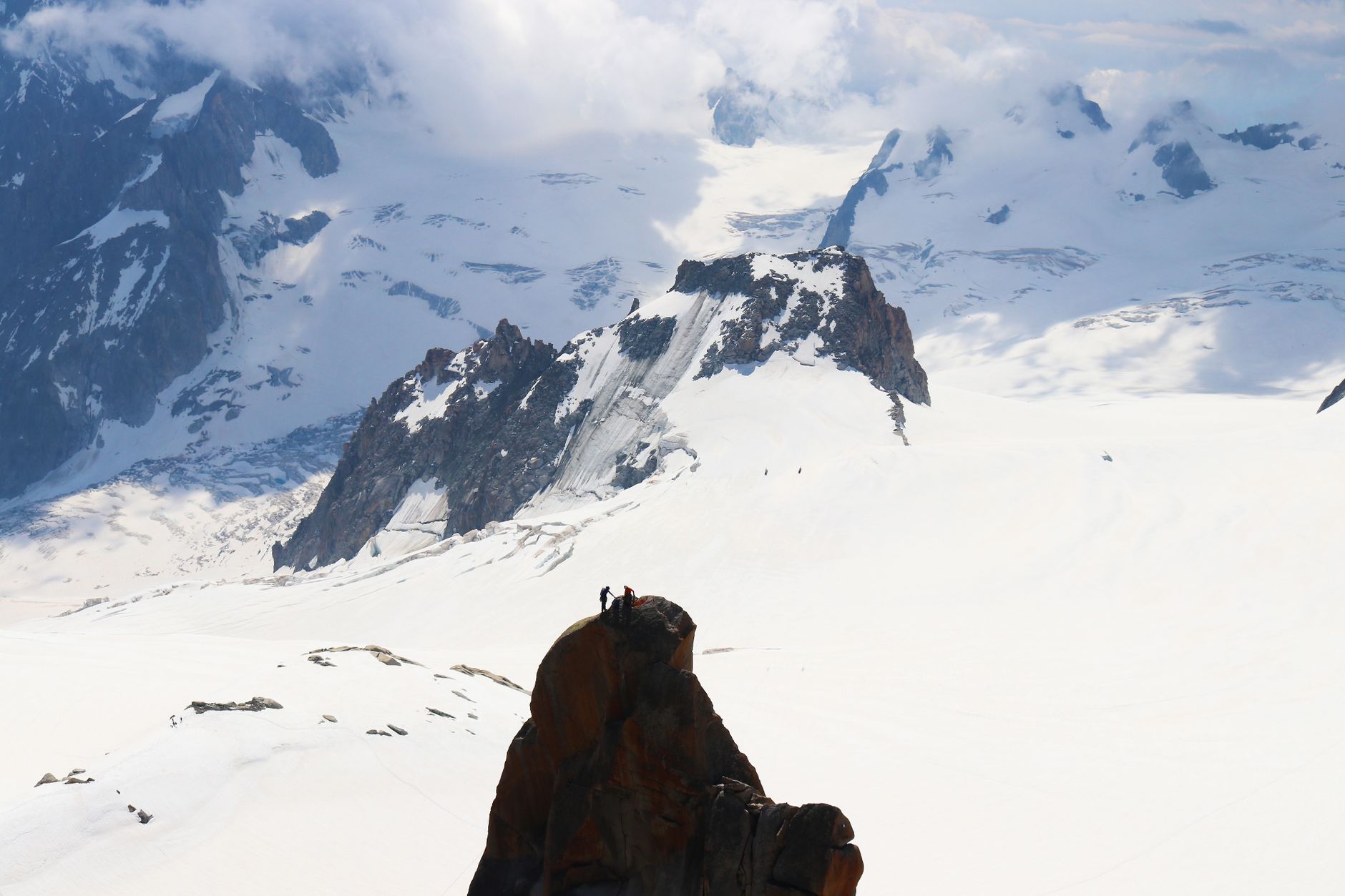
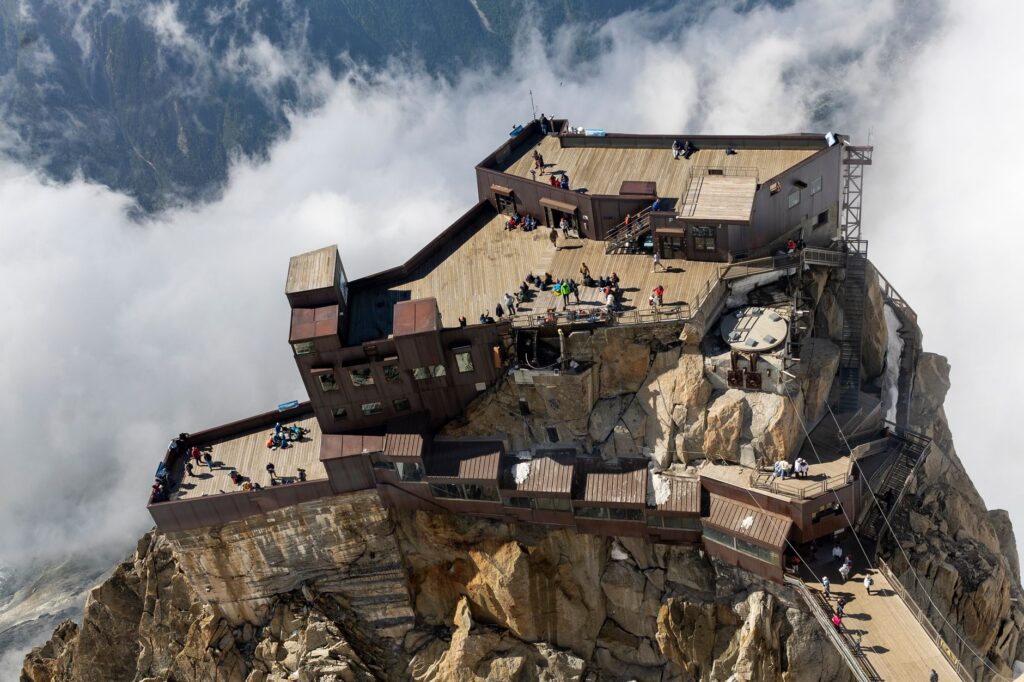
The famous granite spires surrounding the main summit—such as the Aiguille du Midi or the Drus—owe their steep, vertical shapes to freeze-thaw weathering (gelifraction), a continuous cycle of water freezing and thawing within rock fissures that fragments the stone over millennia. This geological substrate not only defines the visual landscape but also determines the technical difficulty of climbing routes and the stability of high-altitude infrastructure, such as mountain refuges and cable cars that traverse the alpine air.
The granite of Mont Blanc preserves within its crystalline structure the thermal and tectonic memory of the deepest movements of the European continental crust.
Glacial Rhythms and the Permafrost Alarm
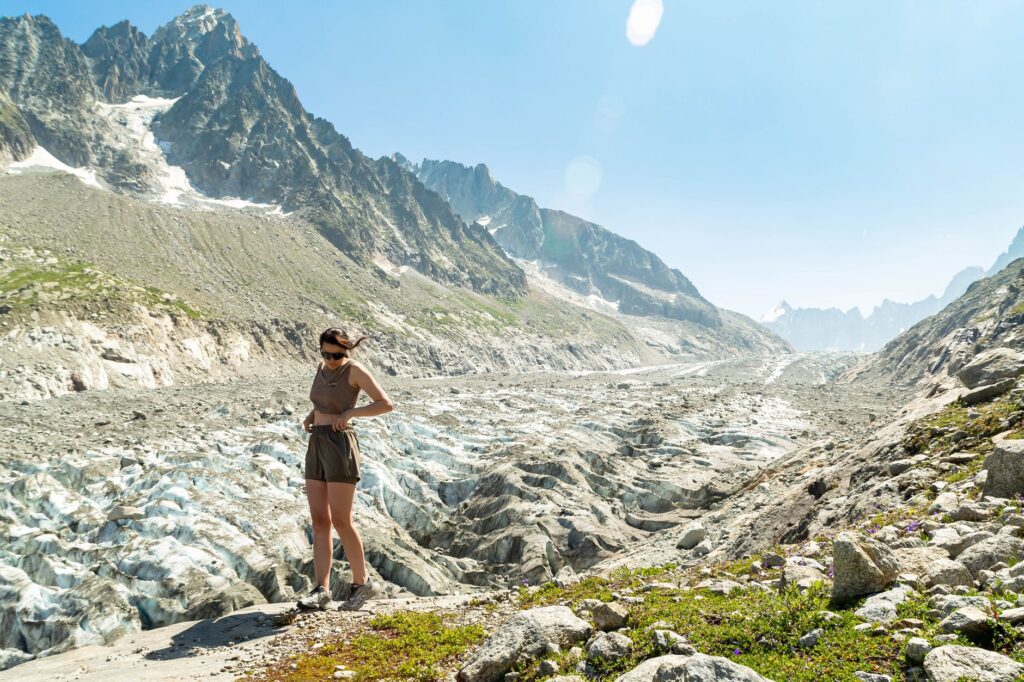
The Mont Blanc landscape is dominated by ice giants such as the Mer de Glace, France’s longest glacier. For centuries, these frozen rivers advanced and retreated following natural climatic cycles, but recent decades have recorded unprecedented acceleration in mass and volume loss. Global warming is drastically affecting alpine glaciers, altering the hydrological regimes of European rivers originating in these peaks and sharply increasing the risk of sudden rock and serac avalanches.
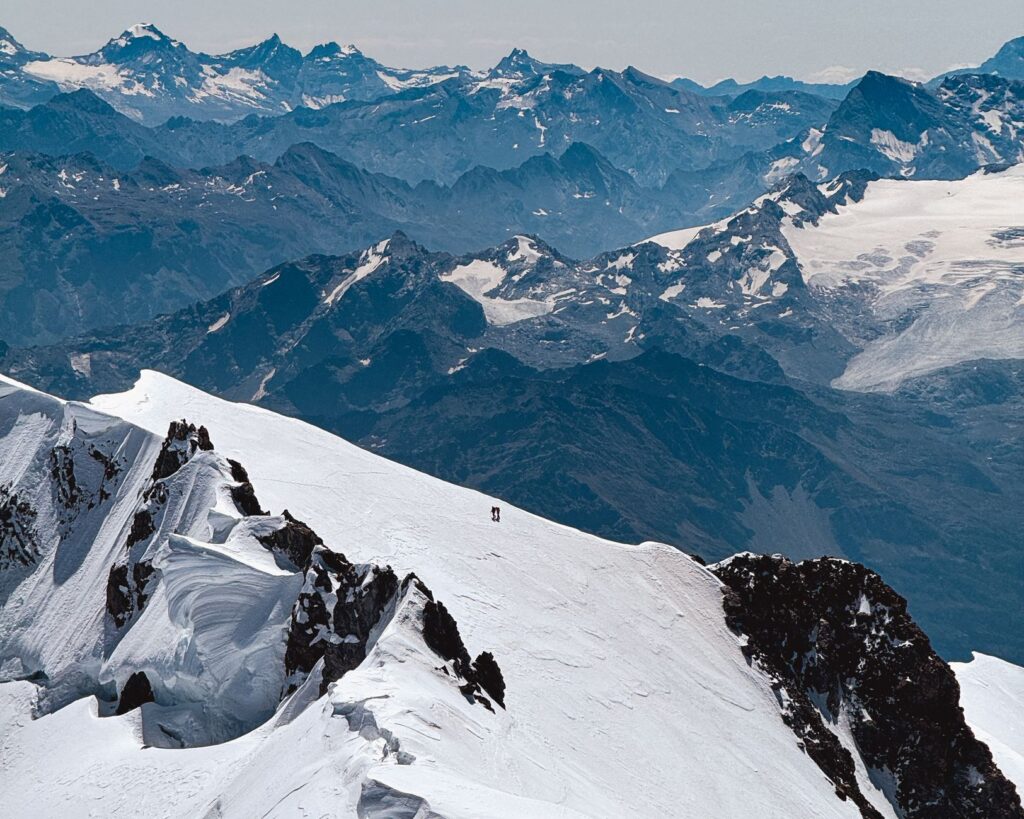
Concurrently, the thaw of permafrost—ground that should remain permanently frozen at high altitudes—is destabilizing traditional mountaineering routes. Entire rock faces once considered stable due to ice cementation now experience massive rockfalls during the summer months. Mountain guides, scientists, and rescue services constantly adapt safety protocols in an alpine environment changing at a speed that far exceeds historical forecasts from meteorological observatories.
The Historical Evolution of Mountaineering
The history of Mont Blanc is essentially the history of modern mountaineering’s birth. Before the 18th century, high summits were considered by local populations to be the abode of demons, evil spirits, and unfathomable dangers. The Balmat-Paccard expedition transformed this cultural perception, turning the summit conquest into a scientific and sporting endeavor. During the Golden Age of mountaineering in the 19th century, British and local climbers systematically explored every ridge, couloir, and spire of the massif, establishing the foundations of modern rock and ice technique.
Today, mountaineering on Mont Blanc faces a profound ethical and practical debate. With thousands of aspirants attempting to crown the summit each summer season via classic routes like the Goûter route, overcrowding compromises safety and generates waste management challenges at refuges situated above 3,800 meters. Local authorities and guide associations actively promote awareness regarding the need for rigorous physical preparation, appropriate equipment, and strict respect for changing high-mountain weather conditions.
Biodiversity and Adaptation in Extreme Conditions
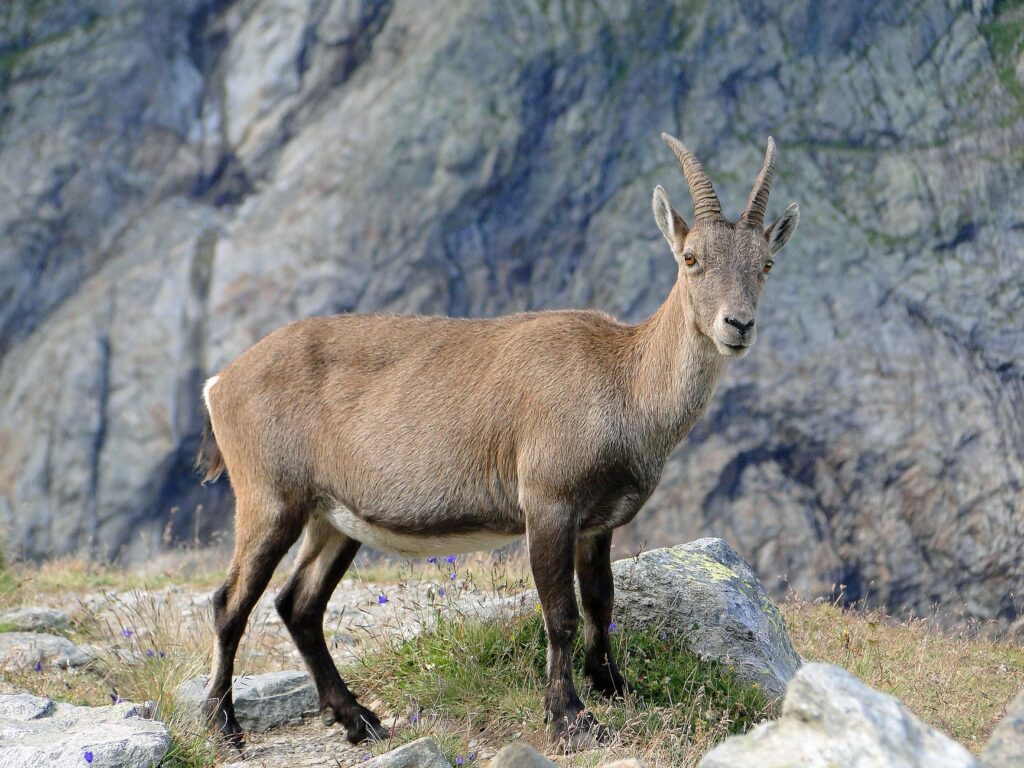
Despite the apparent hostility of its environment, the Mont Blanc massif hosts highly specialized biodiversity that has developed remarkable physiological and behavioral adaptations to survive in the alpine and nival zones. Iconic species such as the alpine chamois (Rupicapra rupicapra) and the alpine ibex (Capra ibex) navigate near-vertical rocky cliffs with ease, while the viviparous lizard and various bird species like the wallcreeper (Tichodroma muraria) find their ideal habitat in cracks and rocky outcrops.
Flora also defies thermal limits. Cushion plants, such as the famous Edelweiss (Leontopodium nivale), develop a dense layer of woolly trichomes that protect them both from extreme ultraviolet radiation at high altitudes and from moisture loss caused by katabatic winds. However, rising temperatures are causing lower-altitude species to migrate upward, competing for increasingly restricted living space on the massif’s peaks.
Connectivity Infrastructure and Mobility Challenges
Transport management around Mont Blanc represents one of Western Europe’s most complex logistical challenges. The Mont Blanc Tunnel, inaugurated in 1965, connects Chamonix with Courmayeur, carrying heavy freight and tourist traffic across the mountain range daily. This road corridor has historically been the subject of intense debate regarding safety, environmental impact, and the need to prioritize more sustainable transport alternatives.
In parallel, the network of ski lifts, cable cars, and cogwheel railways—such as the historic Montenvers Train—facilitates access for millions of annual visitors seeking to contemplate the high mountains without undertaking technical ascents. Balancing the right to public enjoyment of nature with strict preservation of the alpine environment requires ambitious regional mobility plans, promotion of electric public transport, and restrictions in the most saturated valleys during peak summer seasons.
Sustainable Tourism and Conservation Strategies
Faced with human pressure, the governments of France, Italy, and Switzerland, alongside local and scientific administrations, have promoted various environmental protection frameworks and integrated management plans. The priority objective is to transition from an extractive, mass tourism model toward responsible ecotourism that values environmental education, respect for wildlife, and carbon footprint reduction in refuges and ski resorts.

Initiatives such as capping capacity at high-mountain refuges during peak season, utilizing renewable energy in facilities, and volunteer trail-cleanup programs demonstrate that a paradigm shift is possible. Conserving Mont Blanc does not mean freezing the landscape in an unchanging museum, but rather allowing natural processes to take their course while ensuring the long-term ecological viability of one of the continent’s most treasured natural sanctuaries.
The true summit of Mont Blanc is measured not merely in meters of altitude reached, but in our collective ability to preserve its integrity for future generations.
Practical Information for the Responsible Traveler
Planning a visit or expedition to the Mont Blanc region requires rigor, foresight, and profound respect for alpine meteorology. Essential guidelines for a safe and environmentally respectful experience include:
- Best time to visit: For mid- and high-mountain trekking, July through September offers the most stable conditions, though refuges require reservations months in advance. For ski touring and winter mountaineering, the optimal window is between March and May.
- Access and transport: Regional trains to Saint-Gervais-les-Bains or Martigny are recommended to connect with the valleys via local electric bus networks, reducing reliance on private vehicles.
- Strict waste management regulations apply: everything carried up the mountain must be brought back down by the traveler, including organic waste to avoid altering fragile local wildlife.
- Consulting daily avalanche risk bulletins and route condition reports issued by the High Mountain Gendarmerie or local guide offices is mandatory before starting any route above 2,500 meters.
- Overnight stays in staffed refuges require strict adherence to nighttime etiquette, the use of personal sleeping bag liners, and punctuality for dinner and breakfast times established by wardens.
Final Reflections on the Alpine Future
The Mont Blanc massif remains a geological and cultural totem in the European landscape. Its capacity to inspire both reverential fear and scientific exploration remains intact after more than two centuries of modern mountaineering. Yet the transformation signals emitted by its glaciers and rock faces serve as an unappealable reminder of our vulnerability to global changes. Visiting, studying, and traversing this territory demands an attitude of profound humility, recognizing that the greatness of the high mountains lies precisely in their indomitable and wild freedom.