
Introduction to the Great Eurasian Artery
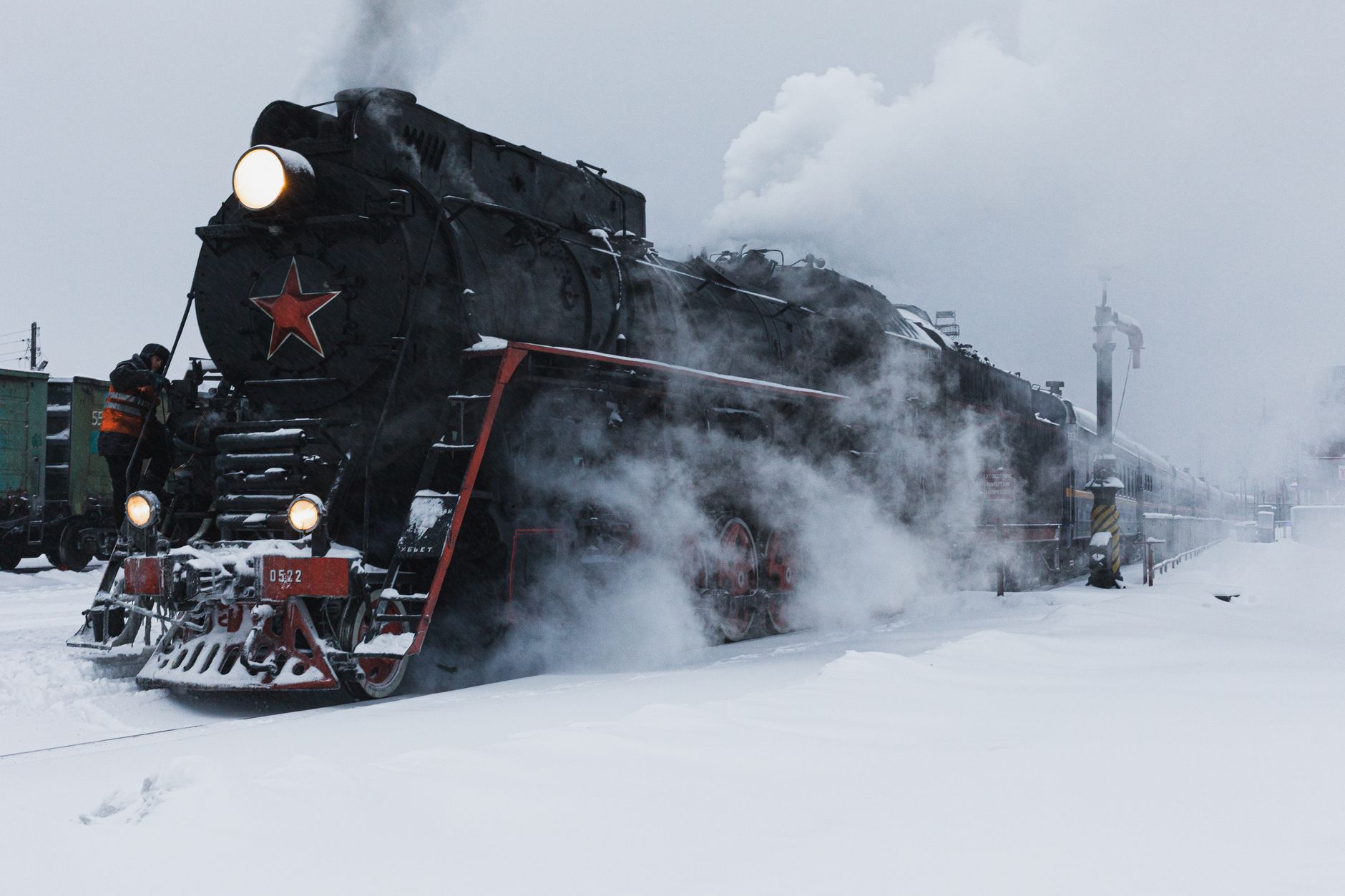
The Trans-Siberian Railway is not merely a track; it is the most extensive terrestrial transport infrastructure ever built and the backbone uniting European Russia with the Pacific Ocean. Spanning over nine thousand kilometers along its primary route between Moscow and Vladivostok, this system defies geographical immensity, extreme weather conditions, and the logistical challenges of connecting two continents. Understanding its current operation requires looking beyond romantic travel narratives to analyze its critical role in freight transport, passenger mobility, and the territorial cohesion of the Russian Federation.
Since its partial inauguration in the late 19th century and its consolidation throughout the 20th century, the route has undergone continuous modernization processes. Track electrification, double-tracking in key sections, and integration with international logistics networks have transformed this corridor into a viable alternative to maritime and air transport for specific trade routes between Asia and Europe. However, maintenance challenges and fleet management in environments where temperatures can drop to minus fifty degrees Celsius continue to demand a monumental engineering effort.
Historical Origins and the Geopolitical Vision of the Russian Empire
The genesis of the Trans-Siberian answered an urgent need for national security and economic development. By the late 19th century, the territories of the Russian Far East were practically isolated from the country’s political and administrative center. Journeys by horse-drawn carriage or sled across Siberia took months, limiting state presence, trade, and military deployment on the Pacific coast. The decision by Tsar Alexander III, championed by his then-Minister of Finance and future Prime Minister Sergei Witte, marked a turning point in the history of global civil engineering.

Construction officially began in 1891 in the city of Chelyabinsk, marking the formal start of a titanic enterprise divided into several complex geographical sections: Ussuri, Western Siberia, Central Siberia, and Circumbaikal. Thousands of workers, including displaced peasants, convicts, and soldiers, labored under grueling conditions to carve a path through impenetrable taiga, permafrost, and rugged mountain ranges. The completion of this initial phase drastically reduced transit times and solidified Russian sovereignty over a vast region rich in natural resources.
Technical Infrastructure and Track Layout
The track gauge used in the Russian network, known as the Russian gauge of 1520 millimeters, constitutes a fundamental technical characteristic that differentiates this system from most of Western Europe and China, requiring complex gauge-changing processes at borders. This historical decision, made for military defense reasons to hinder a hypothetical invasion through the direct use of foreign rolling stock, continues to define the logistics of the corridor today.
The main route, formally inaugurated in its entirety at the beginning of the 20th century though subject to constant improvements, is divided into three main historical branches: the Trans-Siberian proper (from Moscow to Vladivostok through Russian territory), the Trans-Manchurian (connecting Chita with Harbin and northern China), and the Trans-Mongolian (diverging from Ulan-Ude toward Ulaanbaatar and Beijing). Each branch presents particular technical specifications, freight transfer stations, and signaling systems adapted to the traffic density of each region.

The Role of the Trans-Siberian in the Global Logistics Chain
In the landscape of international freight transport, the Siberian rail corridor functions as a key land alternative within the Silk Road and intermodal links between East Asia and the European Union. Although maritime transport continues to capture the highest container volume due to its low cost per ton, rail offers a decisive competitive advantage in terms of time: freight convoys can complete the journey between the Chinese border and European logistics hubs within twelve to fifteen days.
Intermodal terminals located at strategic points such as Yekaterinburg, Novosibirsk, and Vladivostok operate twenty-four hours a day to manage the transfer of standardized containers (TEUs). The efficiency of these logistics nodes depends on precise synchronization between national railway companies, private logistics operators, and customs authorities, a complex machinery designed to minimize bottlenecks at international borders.
The true dimension of the Trans-Siberian lies not only in its geographical length, but in its capacity to keep supply chains active across one of the most hostile environments on the planet.
Rolling Stock and the Passenger Train Experience
For travelers traversing the entire line, the train offers an X-ray of Eurasian social diversity. Passenger services operate with a combination of trains strictly regulated by state railway companies and specialized tourist convoys. Passenger carriages are traditionally divided into three main classes: Spalny Vagon (SV or first class, featuring two-berth compartments), Kupe (second class, featuring four-berth compartments), and Platskart (third class, an open-berth system in a common carriage that fosters intense communal life during the journey).
The autonomy of these trains is notable. Each carriage includes a provodnik or provodnitsa (car attendant) responsible for maintaining cleanliness, regulating heating via traditional coal boilers or modern electrical systems, and ensuring passengers have permanent hot water thanks to the traditional corridor samovar. Stops at intermediate stations, ranging from a few minutes to over half a hour in major cities, allow passengers to purchase fresh local produce from street vendors on the platforms.
Engineering Challenges Against Climate and Permafrost
Maintaining railway infrastructure in Siberia represents a permanent technical challenge. The permafrost phenomenon, affecting vast areas of the eastern layout, causes the ground to thaw during summer months, altering the stability of embankments and misaligning rail tracks. Railway engineers must apply advanced foundation techniques, passive cooling systems beneath the tracks, and constant satellite monitoring to detect millimeter-level deformations before they pose a threat to traffic safety.
Similarly, the winter season requires the use of specialized heavy machinery for snow removal, de-icing trains equipped with turbines, and heating systems in switch mechanisms to prevent the freezing of mechanical parts. Accelerated metal corrosion due to the intensive use of de-icing salts and extreme annual thermal amplitudes compel periodic replacement of rails and reinforced concrete ties.
Regional Connectivity and Impact on Siberian Communities
Beyond its international dimension, the Trans-Siberian acts as the sole lifeline for dozens of isolated settlements in the taiga. For many communities located along the route, the train is not a tourism option, but the only available transport medium to receive medical supplies, food, mail, and access educational or health services in larger cities.

So-called local or commuter trains make stops at virtually every halt, connecting remote villages with provincial urban centers. This social function of the railway requires significant state subsidies to keep fares affordable for local residents, ensuring that the depopulation of rural Siberian areas is not aggravated by absolute isolation.
Safety, Signaling, and Technological Modernization
Managing thousands of kilometers of single and double track requires highly reliable automated signaling and control systems. Over recent decades, the network has implemented automatic block systems, centralized traffic control (CTC), and satellite communications to supervise the exact position of each convoy in real time.
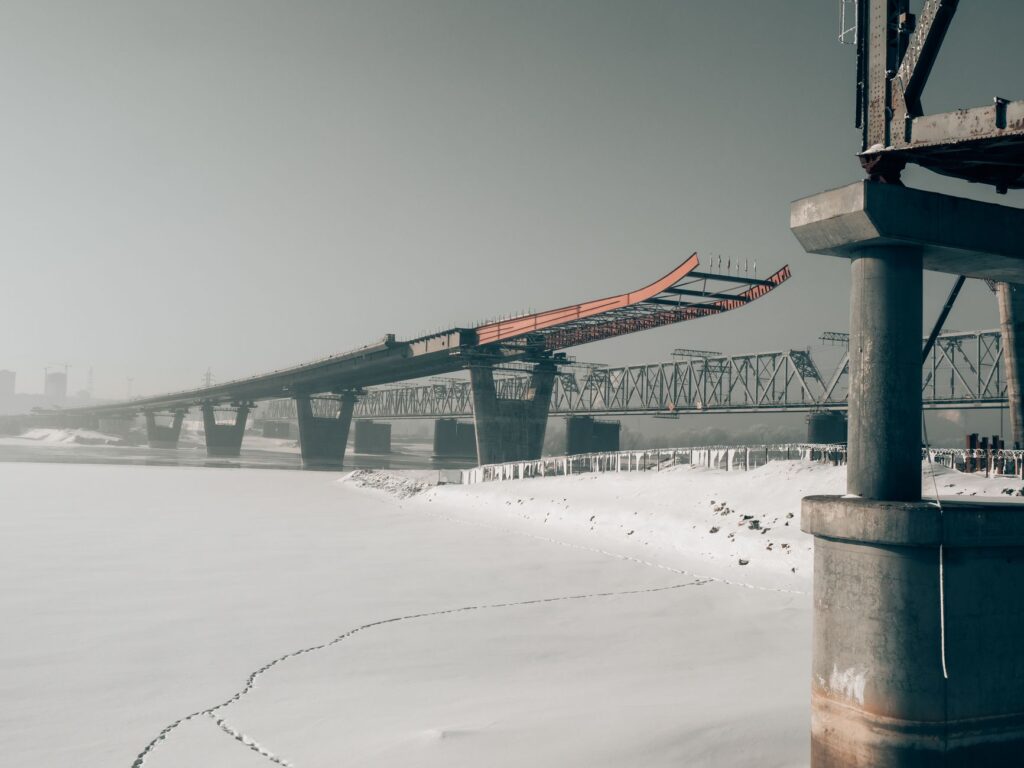
Rail safety also encompasses the protection of monumental bridges crossing major river channels, such as the Ob River in Novosibirsk, the Yenisey in Krasnoyarsk, and the Amur in Khabarovsk. These large-scale metal structures undergo periodic ultrasonic inspections to prevent material fatigue, ensuring the continuity of a line that cannot afford prolonged interruptions due to the economic and logistical impact.
Travel Planning and Practical Information for Researchers and Professionals
For professionals, researchers, and specialized travelers who study or traverse the corridor, planning requires precise knowledge of railway geography and administrative protocols. Although electronic ticketing has significantly simplified seat booking through official platforms, visa management, transit permits for specific border zones, and understanding time zones (Moscow time governs the entire railway system regardless of local time) are critical aspects.
It is recommended to divide long journeys into logical stages in key cities such as Nizhny Novgorod, Kazan, Yekaterinburg, Irkutsk (access point to Lake Baikal), and Ulan-Ude. This approach allows travelers not only to mitigate the fatigue accumulated from days of continuous transit, but also to observe firsthand the cultural, economic, and architectural diversity that defines the various republics and oblasts crossed by the route.
Rigorous planning of an itinerary along this rail corridor requires understanding that punctuality and logistics are subordinate to geographical immensity and the operational conditions of a network in constant adaptation.
Conclusion: The Future of Land Transport in Eurasia
The Trans-Siberian Railway remains at the center of Eurasia’s mobility and trade strategies. Its ability to evolve from an imperial colonization project into a modern logistics corridor demonstrates the resilience of its infrastructure. As new upgrades to freight capacity, the digitization of customs processes, and the partial renewal of rolling stock are planned, the Siberian axis consolidates its status as an undisputed masterpiece of transport engineering and an enduring testament to human capacity for connecting extreme territories.