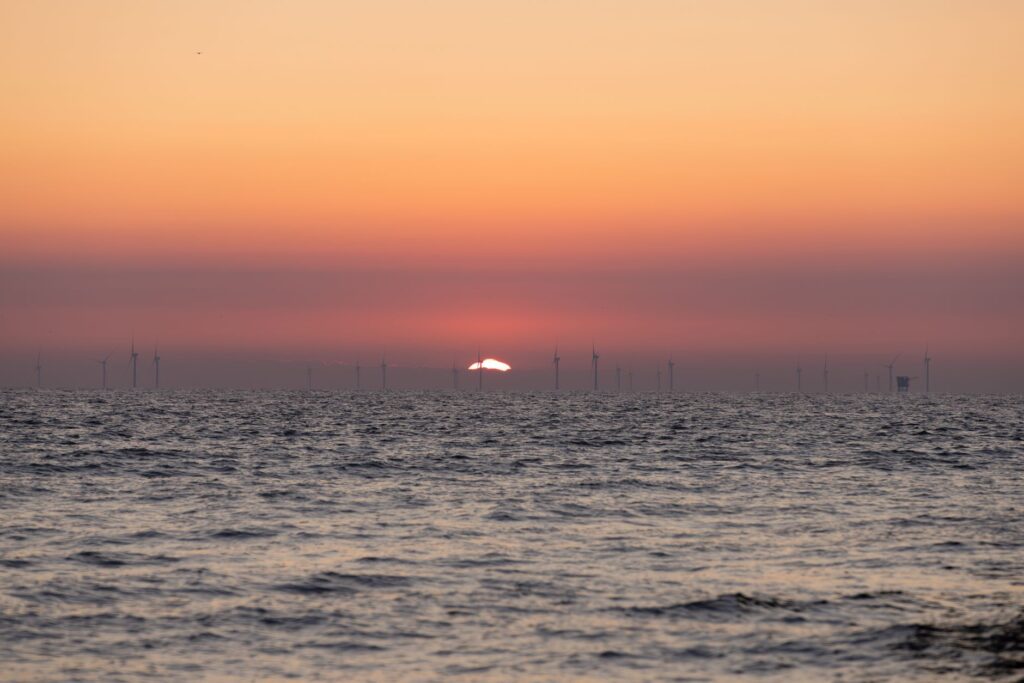
At the northern edge of Scotland, where the tempestuous North Sea crashes against the Atlantic Ocean, the wind rarely rests. For millennia, the fierce marine currents of the Pentland Firth and the unrelenting gales sweeping over red sandstone cliffs dictated the rhythms of isolation and survival for the Orkney archipelago. Yet, over the past two decades, this collection of seventy islands—roughly twenty of them inhabited—has transformed its most formidable climatic challenge into the driving force behind one of the world’s most advanced socio-technical transformations. Orkney generates well over one hundred and twenty percent of its total annual electricity demand from local renewable sources. Today, the archipelago is channeling that abundant power into a community-led transport system engineered to overcome geographic isolation without compromising its fragile maritime ecology.
Far removed from metropolitan boardrooms and academic testing grounds, the green transition here is unfolding at an intensely human scale. For residents on outer isles such as Eday, Stronsay, and Westray, transport decarbonization is not an abstract bureaucratic mandate; it is a practical lifeline. The Orcadian approach demonstrates how peripheral and island communities can build clean transport infrastructure, using surplus wind and tidal power to run shared electric vehicle clubs, supply marine hydrogen fueling facilities, and pioneer short-hop zero-emission regional aviation.
The North Atlantic Testing Ground: Converting Surplus Power into Clean Kilometers
Orkney’s unique geography places it at an extraordinary convergence of natural forces. Blessed with consistent winds and some of the fastest tidal flows on Earth, the islands began deploying commercial and community-owned wind turbines in the early 2000s. The local grid rapidly reached its transmission capacity, generating far more electricity than its subsea connection could export to the Scottish mainland. Faced with the prospect of curtailing turbines during severe storms, the local community, alongside the European Marine Energy Centre (EMEC), turned to the archipelago’s most carbon-intensive and fossil-fuel-reliant sectors: inter-island maritime transit, rural passenger travel, and domestic logistics.
Inter-island travel in Orkney is not a discretionary luxury; it is the fundamental infrastructure that ensures access to specialist medical care at the Balfour Hospital in Kirkwall, enables children to attend secondary school, delivers fresh produce, and allows livestock and agricultural goods to reach regional markets. Decarbonizing this multimodal network required bespoke engineering solutions tailored to high-salinity environments, subpolar gales, and the distinct needs of rural communities.

True energy sovereignty does not simply mean generating clean megawatts; it means empowering local residents to cross rough waters and reach home powered by the very wind that batters their roofs.
Community EV Fleets and Car Clubs: Sustainable Wheels for Island Roads
The earliest tangible shift in Orkney’s transport landscape took place across its road network. The archipelago boasts one of the highest concentrations of electric vehicles (EVs) per capita in the United Kingdom. This high adoption rate is not driven by private luxury consumption, but rather by community development trusts establishing shared vehicle clubs and cooperative charging networks.
On islands such as Shapinsay and Rousay, internal travel distances are relatively short but vital for connecting isolated crofts to ferry terminals. Through community-owned electric vans and passenger cars, island trusts provide shared transport for elderly residents attending medical appointments, coordinate bulk provisioning runs, and sync local rides with scheduled ferry arrivals. Smart charging points, positioned near slipways and community halls, draw power directly from island-owned wind turbines, keeping transport expenditure within the local economy rather than exporting capital to multinational fossil fuel suppliers.
- Community Asset Reinvestment: Revenue generated from local wind turbines directly finances the leasing, maintenance, and insurance of shared EV fleets.
- Combating Transport Poverty: Shared zero-emission vehicles provide reliable personal mobility for households unable to justify the cost of an independent car on smaller islands.
- Dynamic Grid Balancing: EV charging infrastructure utilizes demand-side management to absorb overnight wind generation spikes, stabilizing autonomous island microgrids.
Decarbonizing the Straits: Marine Hydrogen and Clean Island Ferries
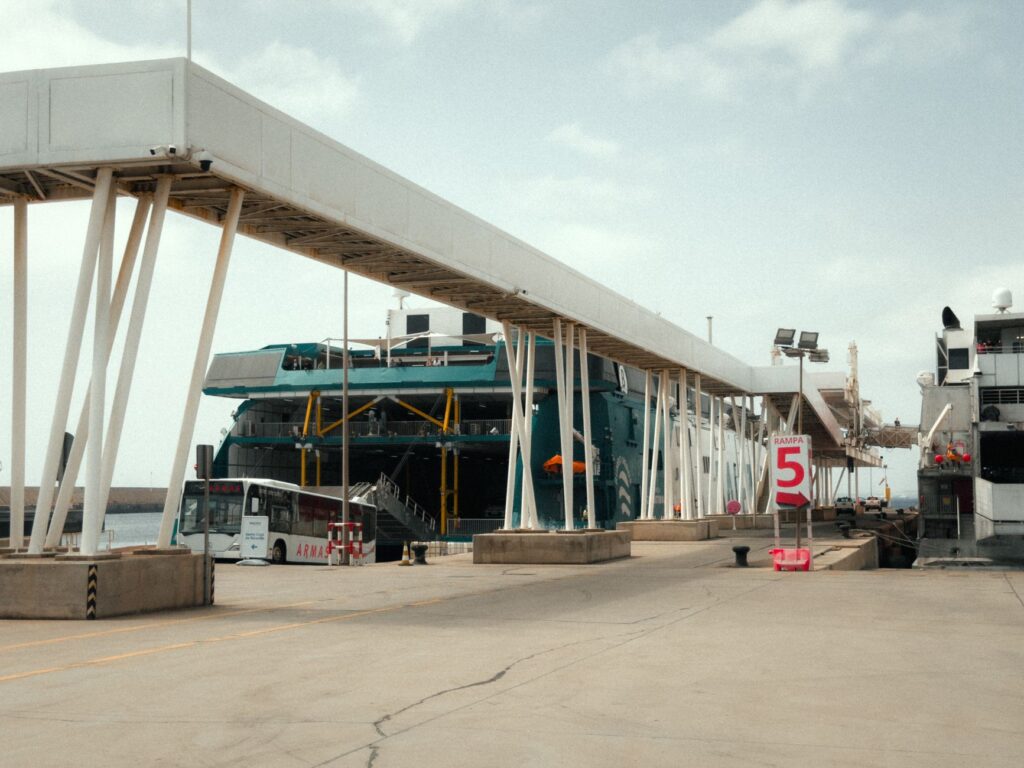
The backbone of Orcadian connectivity—and its largest single source of transport emissions—remains the fleet of nine dedicated passenger and roll-on/roll-off vehicle ferries operated by Orkney Ferries. Replacing marine diesel engines on these vessels represents a major technical hurdle due to the heavy power requirements of crossing open water in severe sea states.
Orkney’s answer has been to establish an end-to-end green hydrogen maritime supply chain. On the island of Eday, where tidal streams racing through the Fall of Warness produce abundant predictable power, EMEC operates a 0.5-megawatt electrolyzer. The resulting green hydrogen gas is compressed, loaded into specialized mobile tube trailers, and shipped across the sounds to Kirkwall and Shapinsay.

Pioneering demonstration projects, including Surf ‘n’ Turf and HyDIME, have integrated proton-exchange membrane (PEM) fuel cells at harbour facilities. These provide shore-side power to auxiliary vessel systems while ferries are berthed overnight, eliminating diesel emissions and fine particulates in harbour towns. Furthermore, ongoing trials with dual-fuel maritime engines and fuel-cell propulsion are paving the way for the procurement of fully zero-emission ferry replacements designed specifically for the hydrodynamic conditions of the Northern Isles.
Pioneering the Skies: Electric Flight Across Historic Archipelagos
Orkney is famous among aviators and travelers for hosting the shortest scheduled commercial flight in the world: the Loganair route between Westray and Papa Westray. The flight officially spans two minutes on the timetable, but frequently takes less than ninety seconds with favorable headwinds. This minuscule geographical gap has turned the archipelago into the ultimate real-world testbed for clean short-haul aviation.
Kirkwall Airport is home to the Sustainable Aviation Test Centre, where aerospace consortia, research institutes, and regional airlines trial hybrid-electric, battery-powered, and hydrogen-combustion aircraft. These test programs evaluate battery degradation, fast-charging protocols, and electric motor reliability under rigorous subpolar operating conditions characterized by maritime turbulence, freezing fog, and high corrosion risks.
For remote populations on islands like North Ronaldsay, air links provide indispensable support for postal delivery, emergency pharmaceutical transport, and routine veterinary services. Replacing legacy turboprops with low-noise, zero-emission electric airframes will significantly reduce operating costs on public service obligation routes, safeguarding essential connectivity while maintaining near-silent operations around sensitive coastal bird habitats.
Socioeconomic Anchors: Halting Rural Depopulation Through Clean Connectivity
For over a century, peripheral Scottish island communities struggled against steady demographic decline. The scarcity of specialized employment and the punishing logistics of island life pushed younger generations toward urban centers on the mainland. Orkney’s transport and clean energy revolution has acted as a decisive counterweight to this historic brain drain.
The growth of the marine energy, smart grid, and green mobility sectors has established hundreds of permanent, highly skilled careers in Kirkwall, Stromness, and the outer isles. Engineers, marine technicians, battery specialists, and environmental managers now live and work across the archipelago. Young families have returned or settled in the outer islands, confident that modern, low-emission transit systems provide reliable, sustainable access to schools, commerce, and culture.
When a remote community secures control over its energy production and transport routes, it ceases to be a vulnerable periphery and becomes the vanguard of a resilient modern economy.
Revenues generated from community-owned energy infrastructure are reinvested at the local parish level, funding concessionary travel schemes, maintaining local hall facilities, and underwriting micro-freight subsidies. Transport is no longer an expensive, fragile vulnerability; it has become an asset built, managed, and sustained by the islanders themselves.
Decentralized Infrastructure and Island Microgrids
The operational resilience of Orkney’s clean transport architecture relies entirely on its decentralized design. Rather than depending on a single central power nexus, the archipelago employs a series of smart, self-healing microgrids that can island themselves if subsea cables sustain damage from severe storms or anchor drag.

At ferry piers and island airfields, large-scale battery energy storage systems (BESS) are paired directly with local renewable generation. These stationary batteries capture excess wind and tidal power during peak production windows, discharging rapidly to replenish electric vehicles, support vessel hotel loads, or feed back into the local distribution grid during lulls. This automated balancing provides energy resilience while proving that remote transport networks can operate reliably without continuous baseload fossil generation.
Core Technical Pillars
- Stationary Battery Energy Storage (BESS): Installed at key ports to deliver high-current bursts for fast vehicle charging without triggering local grid voltage drops.
- Green Hydrogen Logistics: Hydrogen serves as a long-duration chemical storage medium, turning un-exportable wind and marine energy into storable, transportable maritime fuel.
- Predictive Route Optimization: Vessel telematics and meteorological sensors optimize inter-island ferry speeds against dynamic tidal streams, cutting kinetic energy expenditure.
Universal Lessons from a Northern Outpost
While Orkney enjoys distinct wind and tidal dynamics, the foundational tenets of its sustainable mobility framework offer valuable precedents for coastal communities, mountain valleys, and isolated territories globally. The islands challenge the conventional assumption that peripheral, low-density regions must inevitably lag behind urban centers in the adoption of green transport technologies.
The primary takeaway is the indispensable role of community ownership. Technical innovation succeeds when local populations hold equity in the generation assets and operational infrastructure that power their journeys. The second lesson is technological pragmatism: there is no single silver bullet. Direct battery electrification excels for road transit and short flights, while green hydrogen and clean maritime fuels are essential for heavy marine logistics in challenging waters.
Finally, Orkney showcases the power of systemic integration. By viewing energy generation, grid management, and multimodal transport as parts of a unified civic ecosystem, remote communities can insulate themselves from geopolitical fossil fuel shocks while leading the global charge toward genuine territorial sustainability.
Practical Travel Guide for the Conscious Visitor
Traveling responsibly through the Orkney archipelago requires thoughtful preparation, flexibility, and a willingness to align with the weather-dependent realities of northern maritime life.
Reaching and Navigating the Archipelago
To keep transit emissions low, travelers can take ScotRail’s scenic Far North Line train from Inverness to Thurso or Wick, continuing by foot onto the ferry from Scrabster to Stromness (operated by NorthLink Ferries) or from Gills Bay to St Margaret’s Hope via Pentland Ferries, which operates the eco-designed catamaran MV Alfred.
On Mainland Orkney, Stagecoach operates public bus routes linking Kirkwall, Stromness, Tingwall, and major heritage sites such as Skara Brae and the Ring of Brodgar. To explore the North and South Isles, Orkney Ferries welcomes foot passengers and cyclists aboard its inter-island vessels. Bicycles and e-bikes travel easily, providing a zero-emission, unhurried way to navigate the quiet single-track roads of Westray, Stronsay, Sanday, and Hoy.
Respecting Island Communities
When staying on smaller isles, visitors should prioritize community-run shops, support local craft producers, and respect working farms and crofting access codes. Wildlife enthusiasts visiting coastal cliffs and RSPB nature reserves should keep dogs on leads and maintain a respectful distance from nesting seabird colonies and seal haul-outs. In Orkney, sustainable mobility is not merely a technical achievement; it is an active, daily partnership between people, land, and sea.