
The Stone Gates Where the Mountain Range Sets the Course
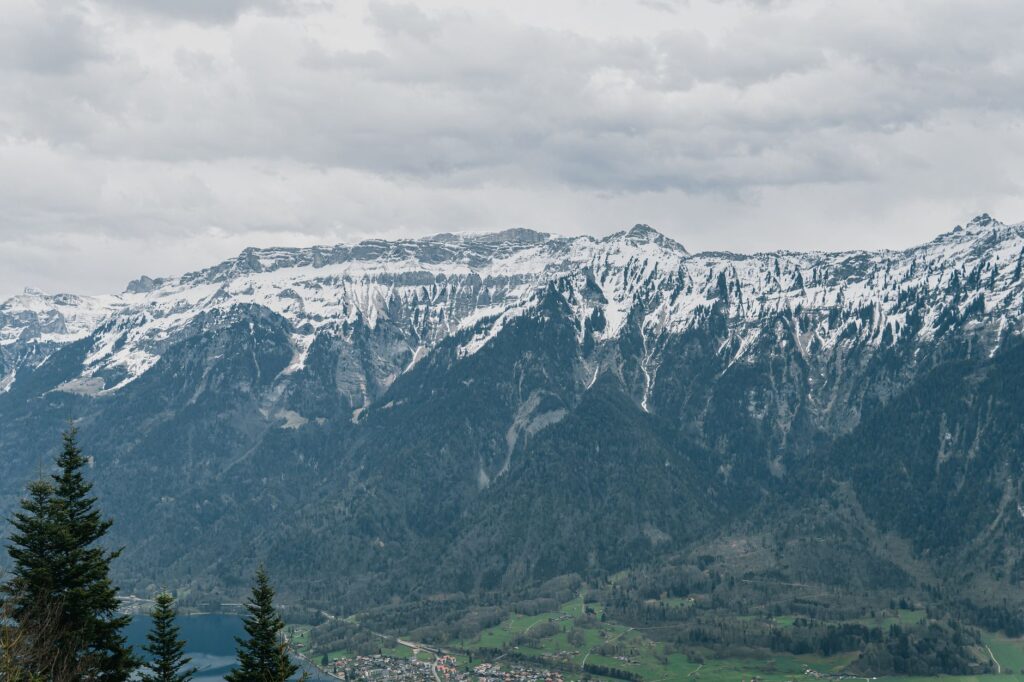
In the heart of the Grisons, the Swiss municipality of Chur rises some six hundred meters above sea level as an enclave where alpine geography shapes every human movement. The limestone masses surrounding the town not only impose a visual perimeter of stony solidity but also act as topographical guidelines for a transport network as complex as it is integrated. From dawn, when the first rays of sunlight illuminate the highest peaks before touching the valley floor, the activity around the mobility infrastructures dictates the rhythm of a community exceeding thirty-five thousand residents. The streets of the old town, with their medieval layout and compact cobblestones, contrast with the millimetric precision of the platforms and bays that articulate the daily transit of residents and travelers.
The history of this thousand-year-old settlement is inextricably linked to its status as a natural crossroads. Situated in a widening of the Rhine valley, the city has functioned since antiquity as a mandatory stopping point for those crossing the alpine passes toward Italy or northern Europe. Today, this vocation for transit translates into a system where urban buses, narrow-gauge railways, and regional services converge in hubs designed to optimize transfers. The passenger experience in this environment rests on punctuality and the intuitive reading of public space, where informational signs and digital displays combine with traditional carved wooden signage at mountain gateways.
Platform Architecture and the Human Scale of Transit
The design of large transport infrastructures in Chur reflects a philosophy where industrial functionality dialogues with respect for the surrounding landscape. Canopies made of laminated glass and steel do not compete with ecclesiastical domes or the gabled roofs of historic townhouses, but instead integrate into the topography through clean, luminous volumes. Passengers descending from trains arriving from Zurich or the southern valleys find a main concourse conceived as a covered plaza, a transition space between the speed of the railway journey and the pedestrian calm of the urban center. This architecture of reception avoids large impersonal crowds, preferring an organic distribution that facilitates visual orientation without unnecessary detours.
The synchronization between different transport modes is the pillar upon which daily mobility rests across the canton. While urban buses connect residential neighborhoods situated on higher slopes with the commercial core, regional postal bus lines extend the network’s reach toward lateral valleys where trains do not run. This technical deployment does not seek gratuitous aesthetic wonder, but rather silent efficiency. Each vehicle features adapted spaces for bicycles and mountain luggage, reflecting a deep understanding of the needs of a population combining work commutes with active outdoor leisure. Drivers and station personnel operate with discreet professionalism, guided by strict safety regulations and preventive maintenance that ensure operability during the rigors of the alpine winter.
Commercial Vitality and the Pedestrian Arteries of the Historic Centre
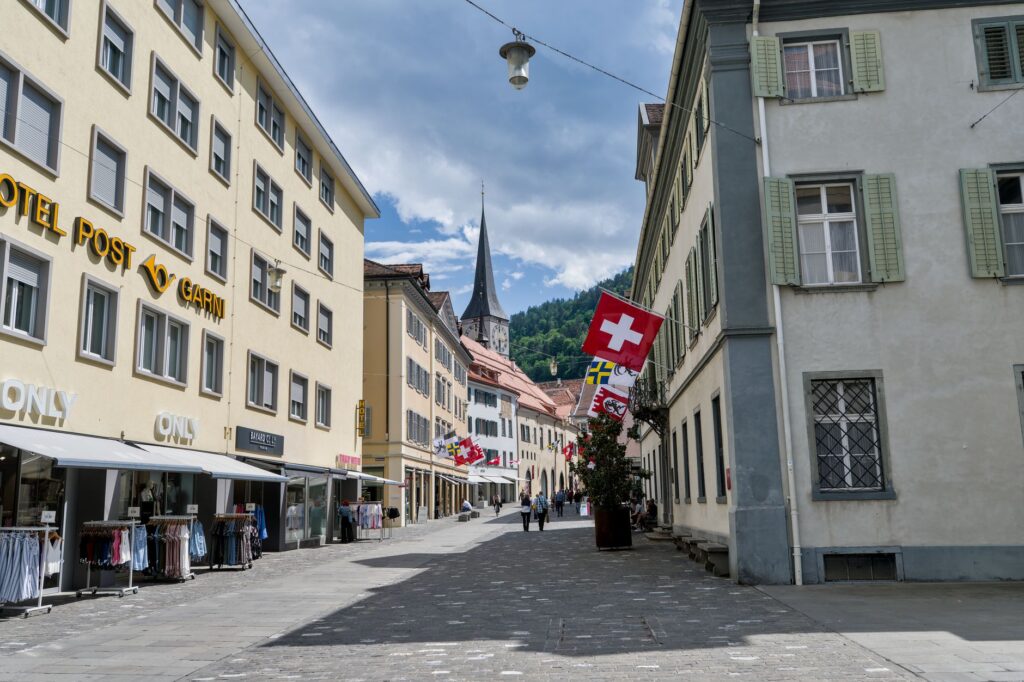
Beyond the main terminals, mobility in Chur is experienced on foot within its old town, designated as a priority pedestrian zone. Traffic restrictions on alleys like Obere Gasse have transformed local commerce, allowing pedestrians to walk without the interference of private automobiles. Traditional grocery stores, independent bookstores, and street-level cafes benefit from this steady flow of people arriving in the city via public transport and exploring the cobbled squares at a leisurely pace. The urban infrastructure prioritizes walkers through lowered curbs, warm lighting, and drinking water fountains sculpted from local granite that dot the busiest corners.
This model of coexistence between pedestrians and public transport demonstrates that mid-sized cities can manage their mobility flows without resorting to large urban highways that fragment the social fabric. Residents of peripheral neighborhoods use circular bus routes to reach the center in minutes, reducing dependence on private cars and easing pressure on public parking lots. The efficiency of this system lies in the predictability of its schedules and the comfort of shelters shielded from cold winds descending from the peaks. Thus, citizens embrace public transport not as an administrative imposition, but as a natural extension of their own homes and their way of life within the community.
Seasonal Coexistence Between Snow and Open Routes
Winter in the Grisons radically transforms the operational conditions of any transport network. When heavy snowfalls cover roofs and mountain roads, municipal road maintenance teams deploy a coordinated operation to keep open the main arteries connecting Chur with winter sports centers and neighboring towns. Snowplows operate from the early hours of the morning, spreading gravel and salt on steep slopes to ensure school buses and postal services meet their schedules with maximum safety. This capacity to respond to climatic adversity is the result of decades of accumulated experience in a territory where alpine weather dictates the rules of the game.
The strength of a transport infrastructure is measured not solely by its top speed, but by its capacity to guarantee the continuity of community life when nature unleashes its harshest force upon the valley.
For residents, this winter routine forms part of shared normality. Travelers learn to read information panels with the certainty that weather-related alterations will be minimal and properly communicated through mobile apps and platform notices. Intermodality is put to the test during these weeks of extreme cold, when skiers combine commuter trains with funiculars and cable cars ascending vertically toward ski slopes. The result is a mobility ecosystem where each link performs its function with rigor, allowing the city to preserve its economic and social dynamism regardless of how many centimeters of snow accumulate on the shoulders.
Link Between Historical Heritage and Railway Modernity
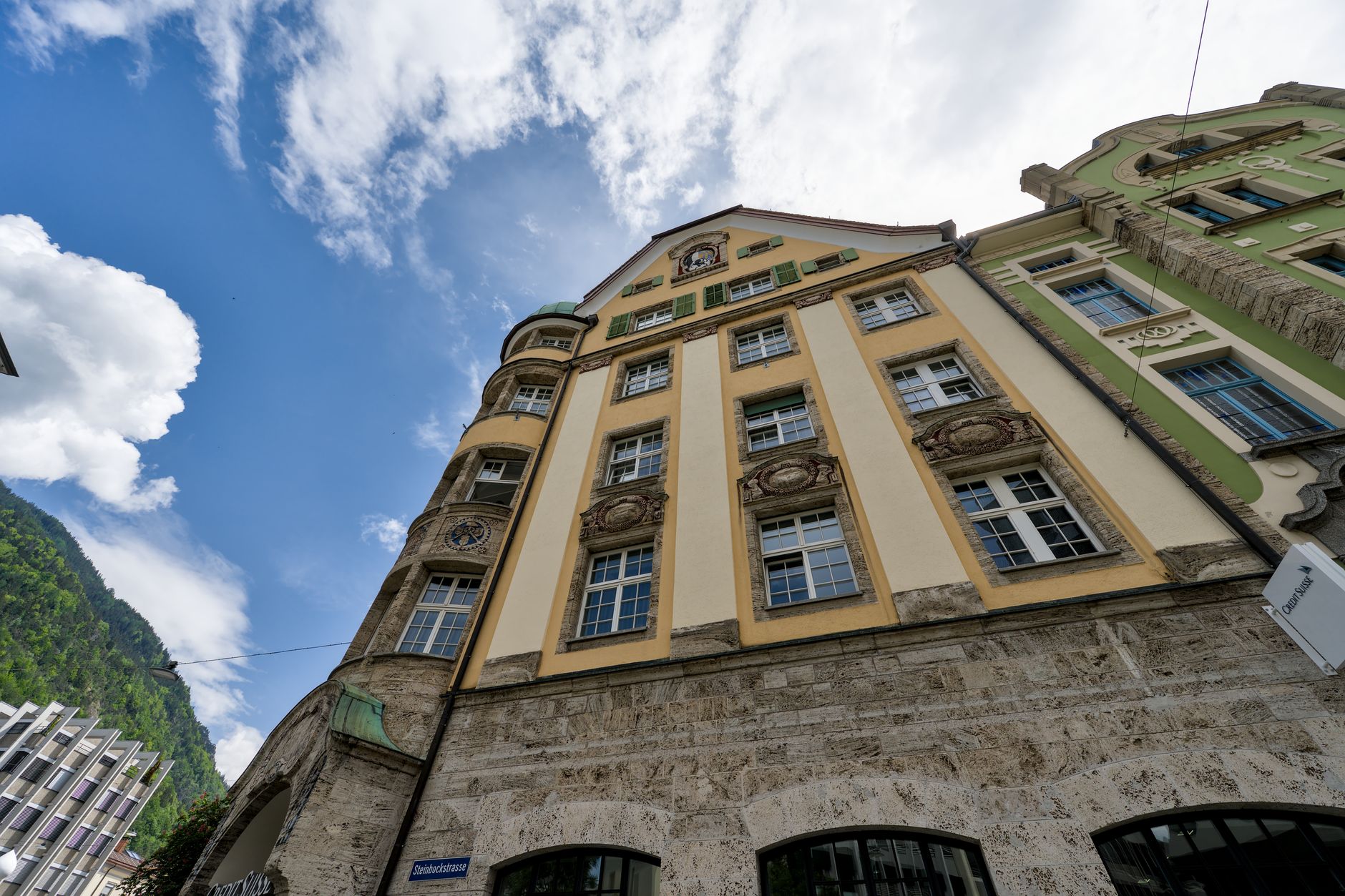
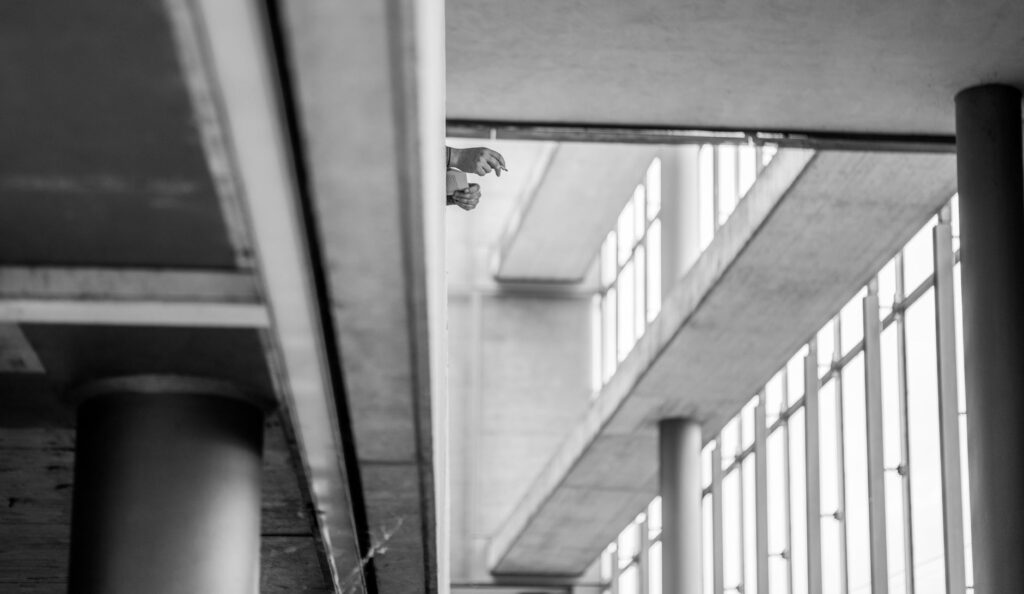
The city’s architectural heritage intertwines subtly with the railway tracks, which mark the eastern edge of the historic center without isolating it. Nineteenth-century ashlar stone buildings coexist with contemporary tempered glass canopies, creating a visual dialogue spanning several eras of Swiss transport engineering. Old storage warehouses and freight depots situated next to former rail docks have been rehabilitated in recent years to house cultural centers, design studios, and administrative offices, transforming former logistical spaces into foci of civic attraction.
This urban reconversion process demonstrates how alpine cities can reinterpret their industrial past without destroying the traces of their collective memory. The railway tracks, far from being an impassable barrier, have become a vertebral axis cleanly separating residential zones from commercial sectors, facilitating subways and pedestrian overpasses equipped with elevators and accessible ramps for reduced mobility. Landscape integration is completed by planting native species on railway embankments, a detail softening the visual impact of ballast and visually connecting the infrastructure with the pine forests blanketing surrounding slopes.
Environmental Sustainability and Energy Transition in Travel
In the realm of sustainability, Chur’s transport network advances firmly toward the complete decarbonization of its fleets and services. The regional bus company has incorporated electric propulsion units and plug-in hybrid vehicles designed to withstand regional thermal demands without compromising operational autonomy. These units are recharged using electricity sourced from local hydroelectric plants, closing a zero-kilometer energy cycle reinforcing the canton’s ecological commitment. Users particularly appreciate the drastic reduction of noise emissions in central streets, where the gentle hum of electric motors has replaced the roar of older internal combustion engines.
Quick-charging stations located next to the main bus terminal maintain high frequency without requiring long refueling pauses. Likewise, local administration promotes active mobility through secure bicycle parking lots equipped with video surveillance and free inflation points. The transition toward a truly sustainable transport model is not imposed through arbitrary prohibitions, but by offering real, comfortable, and competitive alternatives to private car use. This pragmatic approach has ensured that a very high percentage of the active population chooses public transport or bicycles for daily commutes to work or study.
Practical guide
How to get there: Chur features excellent direct rail connections from Zurich and other major Swiss cities via regular services operated by Swiss Federal Railways (SBB) and regional companies.
Urban mobility: The urban bus network efficiently covers all city neighborhoods and integrates into a single ticket valid also for nearby mountain lifts.
When to travel: Spring and summer months offer mild weather ideal for combining urban journeys with hiking trails, while winter attracts snow sports enthusiasts.
Official language: German is the primary language spoken in administration, commerce, and signage, though Romansh and Italian hold historical recognition in the region.

Accommodation: Hotel options are concentrated around the old town and near the railway station, facilitating walking access to all points of interest.
Currency: The Swiss Franc (CHF) is the legal tender; carrying some cash for small shops is recommended, though credit cards are widely accepted.
The Serene Valley Horizon and the Final Pause in the Mountains
As evening begins to fall over the Rhine valley, golden light bathes Chur’s bell towers and historic facades, offering an unmatched scene of serenity. Travelers waiting at the terminal for the last return train to Zurich or St. Gallen observe how the city’s movement slows harmoniously, free of rush or stridency. In that quiet moment, transport infrastructure ceases to be a mere mechanism of transfer, becoming instead the guiding thread uniting the intimate life of its inhabitants with the majestic immensity of the Swiss Alps—an enduring reminder that travel and habitation can always walk hand in hand.