
A Green Oasis in the Southeastern Peninsula of Spain
In the southeastern region of the Iberian Peninsula, the territory of Elche in Spain unfolds as a vast tapestry where historically rooted vegetation completely redefines the traveler’s experience. At an average altitude of ninety-six meters above sea level, this city in Alicante hosts a unique ecosystem that combines the agricultural heritage of Al-Andalus with the persistence of a community adapted to a rigorous climatic regime. Far from mass-tourism circuits, the municipality invites a leisurely exploration that prioritizes the wellbeing derived from direct contact with urban nature and respect for local earth cycles.
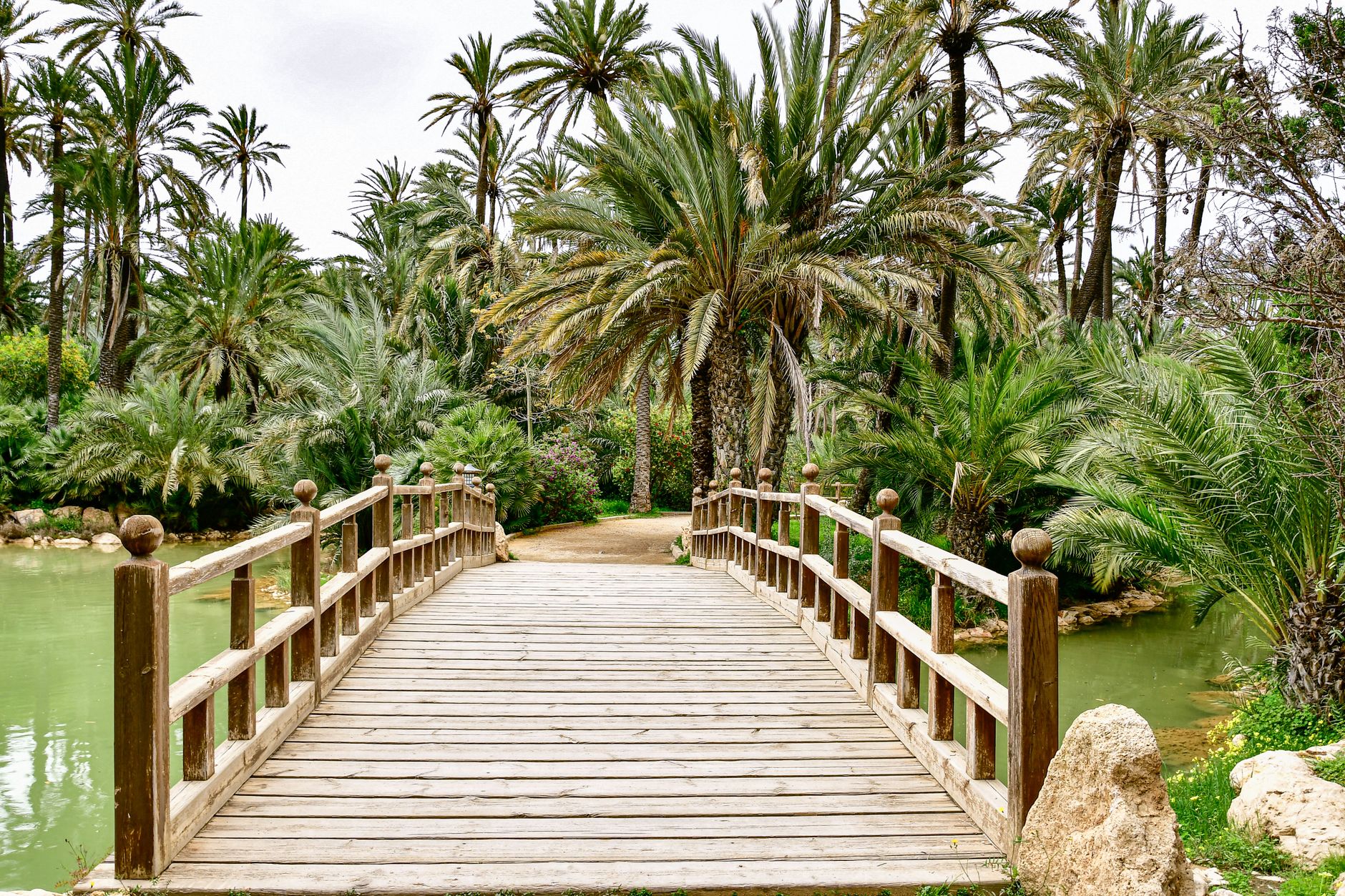
The urban fabric does not impose itself upon nature; rather, it coexists with it in a delicate balance. Historic irrigation ditches, orchards delimited by traditional masonry walls, and alignments of palm trees form a network that regulates the local microclimate, offering freshness during the warmest months and a constant visual refuge for those walking through. The traveler arriving in this corner of the Valencian Community quickly discovers that the beauty of the place lies in its capacity to maintain a human scale, where the rhythm of the stroll is set by the shade generated by thousands of Phoenix dactylifera specimens.
The Architecture of the Palm Tree and Agricultural Legacy
The Palm Grove of Elche is not merely an aesthetic space, but a living document of agronomic adaptation. Massively introduced during Islamic rule, this irrigated farming system harnessed the scarce waters of the Vinalopó River through complex hydraulic engineering inherited from antiquity. Walking along the paths crossing these historic orchards reveals how traditional agriculture managed to transform a semi-arid environment into a productive oasis. The terraces, designed to retain moisture, continue to operate today under principles of millennial sustainability that deserve the conscious visitor’s attention.
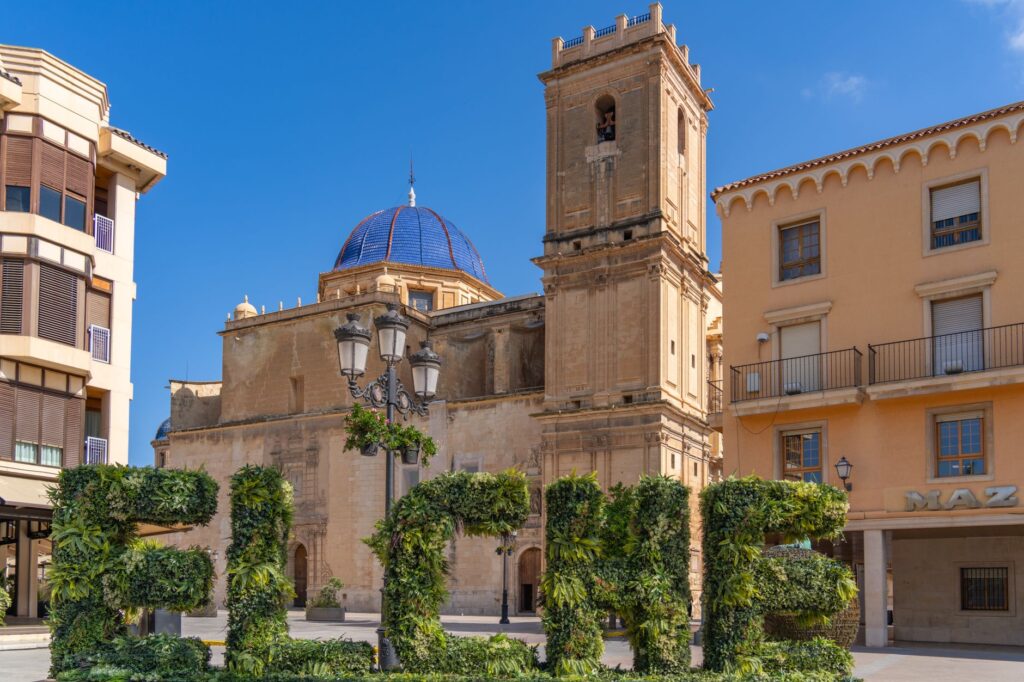
The plant heritage of Elche represents an uninterrupted dialogue between human labor and the resilience of arid soil.
Each individual palm tree tells a story of community management. Pruning tasks, seasonal date harvesting, and the whitening technique—used to protect leaves destined for Palm Sunday—are forms of knowledge transmitted from generation to generation. For the traveler interested in wellbeing and authenticity, observing these practices without artifice constitutes a masterclass in heritage sustainability. The involvement of local residents in preserving this landscape ensures that the visitor is not a mere spectator, but a respectful witness to a heritage declared a UNESCO World Heritage site.
Daily Life Around Markets and Squares
The pulse of the city is clearly perceived in its arcaded squares and municipal markets, where daily commercial activity reflects the identity of southern Alicante, Spain. Around the Basilica of Santa Maria and adjacent streets, life unfolds among stalls of stone fruits, vegetables from the local market garden, and handcrafted products made with care. Here, the traveler finds a space conducive to quiet observation, seated at a terrace café while the everyday murmur of local inhabitants establishes the soundtrack of the day.
Local gastronomy drinks directly from this agricultural environment. Rice dishes made with proximity produce, stews paired with local olive oil, and desserts where dates are the undisputed protagonist form an honest and sustainable culinary proposal. Consuming in traditional establishments fosters the zero-kilometer economy and reinforces the visitor’s commitment to preserving the indigenous social fabric. Each dish served in these traditional taverns narrates the history of a territory that has managed to nourish itself from its own land without depleting it.
Historical Heritage and Spaces of Silence
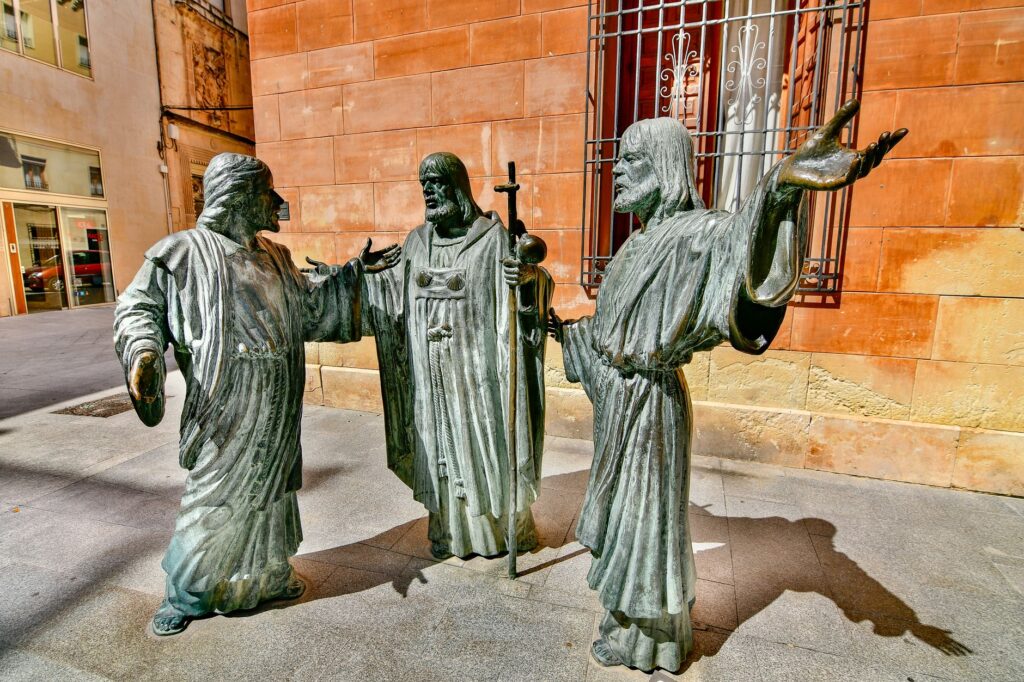
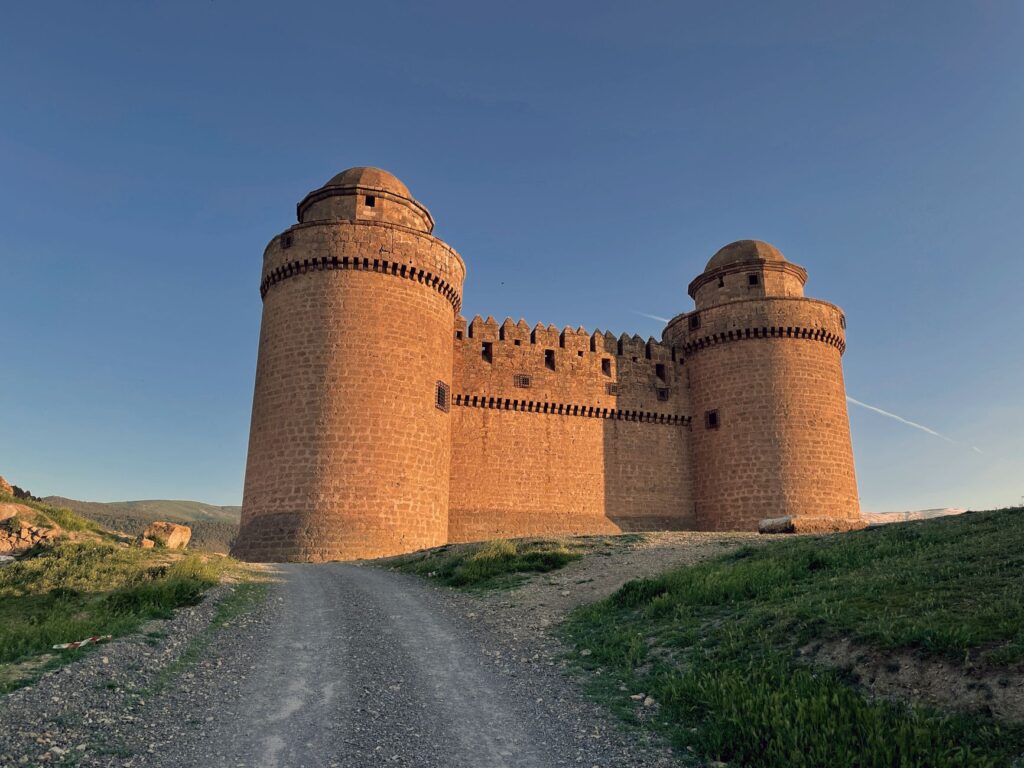
The old town of Elche, historically known as the Vila Fosca, holds vestiges of its medieval and Renaissance past. The Calahorra Tower and the Altamira Palace recall the strategic importance of an enclave that successfully guarded its sovereignty over the centuries. Yet the true luxury for the contemporary traveler lies in the fluid transition between these stone monuments and the immediate lushness of urban parks. The Municipal Park, acting as a green corridor between the historic center and the Palm Grove, offers a haven of tranquility where birdsong replaces the noise of motor traffic.
This care for public space responds to a conscious decision to prioritize the physical and mental wellbeing of residents and visitors alike. Pedestrian paths, designed to connect major cultural landmarks without the need for motor vehicles, invite walking without haste. It is in this aimless wandering that Elche reveals its friendliest face: a constant invitation to contemplation, reflective pause, and the rediscovery of a personal time that large cities long ago forgot.
The Craftsmanship of Esparto Grass and White Palm
Beyond agriculture and monumental architecture, the identity of Elche rests upon traditional trades that have resisted the onslaught of mass industrialization. Esparto grass basketry and the complex crafting of white palm for liturgical and ornamental festivities are clear examples of craftsmanship deeply rooted in the territory. Modest workshops located in traditional neighborhoods continue to shape these natural fibers using manual techniques that have barely changed over past centuries.
Approaching these artisans and learning about the time required for selecting, drying, and braiding palm leaves brings an ethical dimension to the journey. The visitor understands that acquiring a local handcrafted piece is not an act of superficial consumption, but a direct contribution to the survival of an endangered trade. This form of responsible tourism encourages the valuation of handmade work, revalorizing human effort over standardized production and returning to the object its authentic cultural and narrative value.
Practical Guide for Conscious Visitors
How to get there: Elche boasts excellent train and bus connections from Alicante and Murcia. The Alicante-Elche airport is located just fifteen kilometers from the city center, connected via regular intercity bus lines.
When to visit: The spring months (April to June) and autumn (September to November) offer mild temperatures ideal for exploring the orchards and historic center on foot, avoiding intense summer heat.
Getting around: Most of the historic center and the main palm orchards are accessible exclusively on foot or by bicycle, thanks to an extensive network of bike lanes and restricted-traffic streets.
Accommodation: It is recommended to choose small charming hotels and family-run guesthouses located in the old town, fostering the economic development of small local businesses.
Responsible dining: Look for traditional markets and restaurants that highlight the use of local market garden produce and proximity extra virgin olive oil.
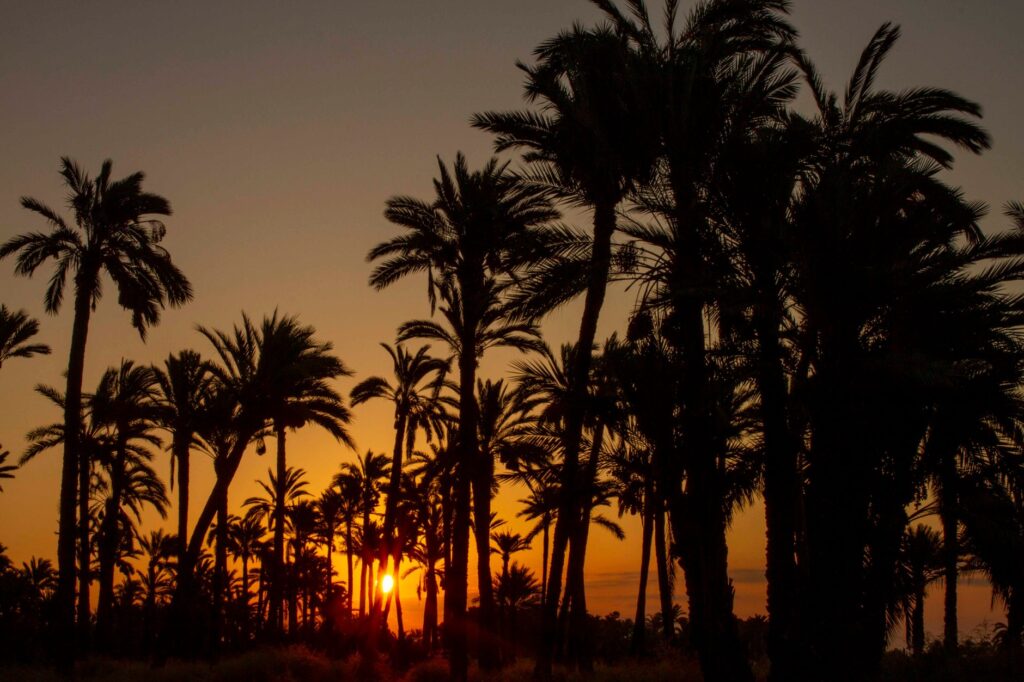
A Horizon of Shade and Memory
At dusk, when oblique sunrays pierce through the palm fronds and cast elongated shadows over rammed-earth walls, Elche acquires an almost liturgical solemnity. It is the moment when local residents step out for a stroll along traditional paths, maintaining a secular custom that defines the city’s welcoming character. The traveler contemplating this landscape from the quietness of a stone bench understands that true travel does not consist in accumulating destinations, but in tuning into the leisurely rhythm of places that have preserved their soul against modern haste.
This balance between heritage conservation and daily life makes the Alicante municipality a benchmark for sustainable wellbeing. Upon bidding farewell to its millennial orchards, one carries the certainty of having walked through a space where nature and culture walk hand in hand, reminding us that the future of tourism lies in the ability to view the environment with respect, gratitude, and profound attention to the details that truly matter.