
The Carved Wooden Doors That Guard the Passage of Time
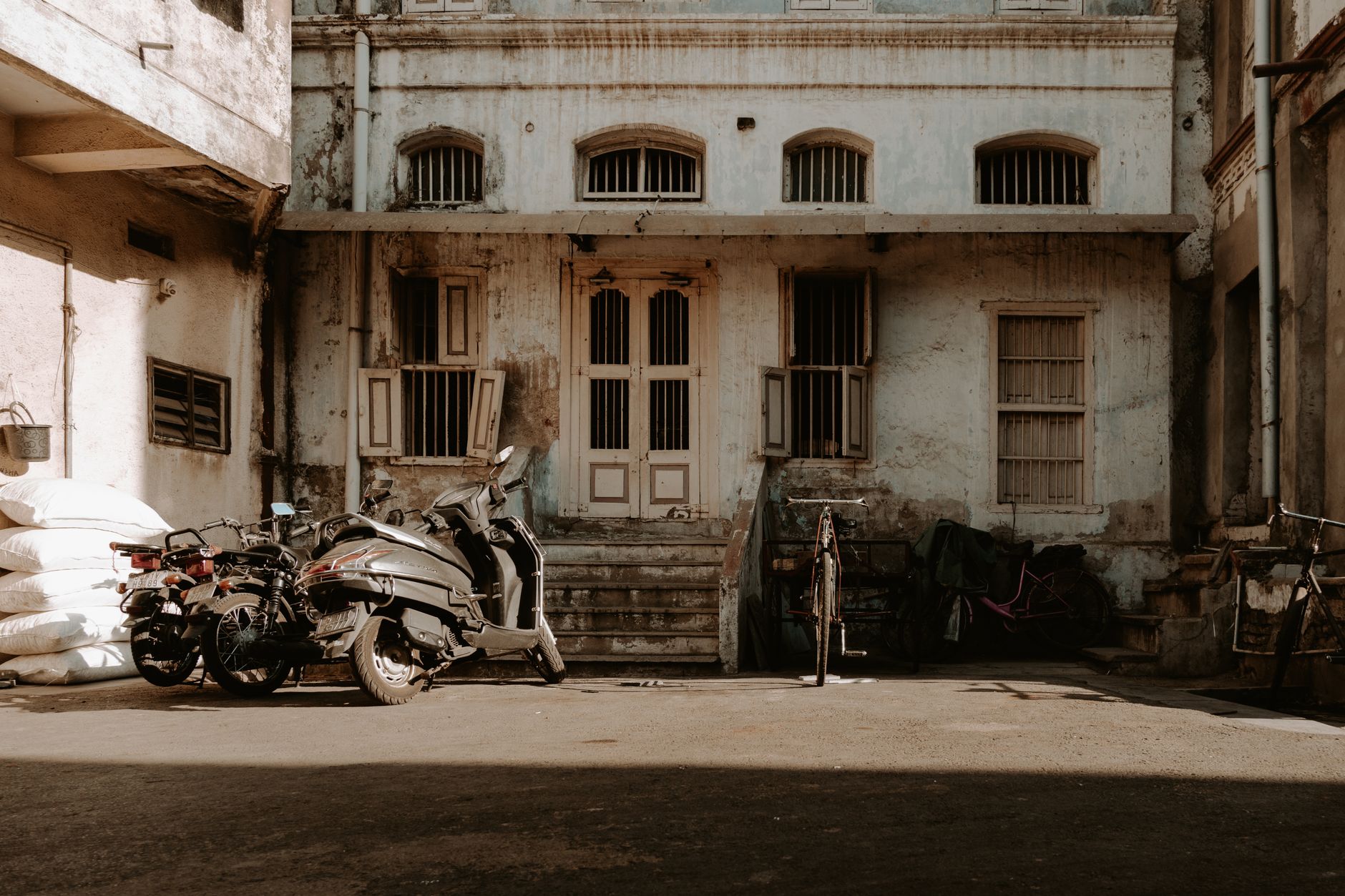
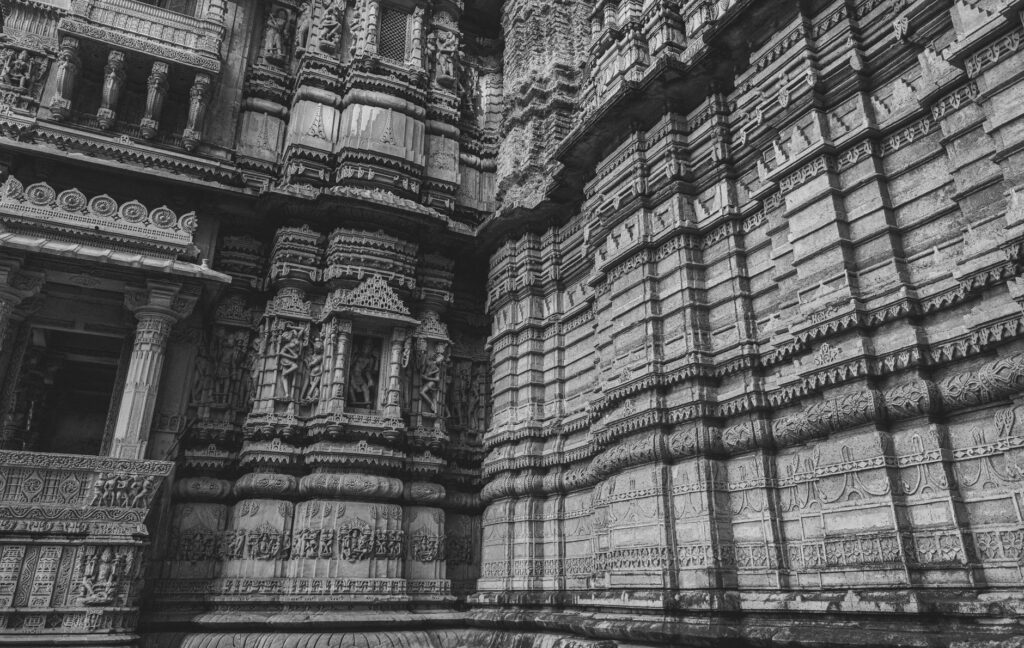
Along the banks of the Sabarmati River in the western Indian state of Gujarat, the metropolis of Ahmedabad unfolds as a vast inhabited archive. Founded in the 15th century by Sultan Ahmed Shah, this urban center is far from a mere monumental stage dedicated to passive contemplation; it remains a dynamic organism where architectural heritage continues to dictate the rhythm of daily life. The traditional residential clusters, known locally as pols, define a labyrinthine layout of narrow streets and dead ends originally engineered for mutual defense and protection against extreme climatic conditions. Walking through these neighborhoods, the gaze is inevitably drawn to the carved wooden brackets framing the facades—authentic canvases where historical carpenters captured floral motifs, mythological figures, and symbols of family prosperity that still greet today’s passersby.
The human scale of these structures responds to a deeply rooted communal logic. Historically, each pol operated as a small autonomous republic equipped with shared spaces, water wells, and controlled entry points that regulated outside access. Today, this spatial distribution continues to foster intense neighborhood coexistence. Elderly residents converse on stone benches positioned beside doorways, while children transform interior courtyards into impromptu play areas. This compact urban fabric demonstrates that liveability depends not on unbridled horizontal expansion, but on proximity and the shared care of common goods.
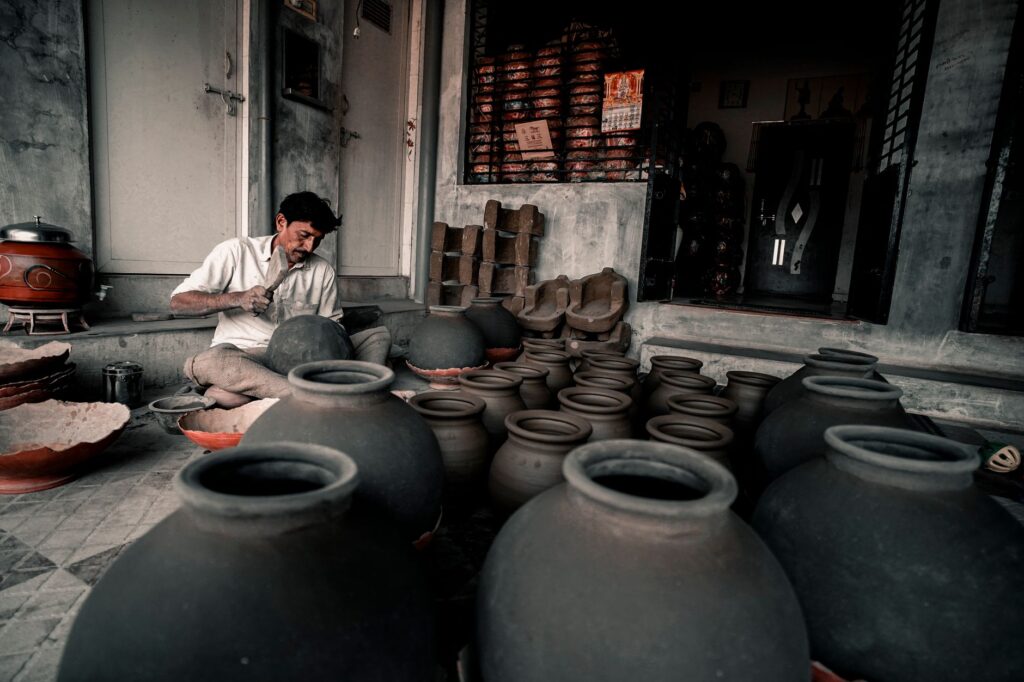
Far from the aseptic circuits of contemporary tourism resorts, life in Ahmedabad beats to the rhythm of its street markets and craft workshops housed on the ground floors of residential buildings. Here, heritage is never locked behind glass display cases; it absorbs dye, creaks beneath handlooms, and renews itself with every solar cycle. Observing the daily routines of these neighborhoods requires a receptive, unhurried attitude that reveals how local residents have managed to preserve their cultural legacy without renouncing the dynamics of modern commerce.
The Art of Weaving and the Persistence of the Handloom
The economic and cultural history of Ahmedabad is inextricably linked to the world of textiles. For centuries, the surrounding region was renowned for the finuess of its cottons and the complexity of its resist-dyeing techniques, such as the celebrated bandhani. In craft workshops tucked away in historic alleys and within the courtyards of the pols, dyers continue working with steaming vats and natural pigments, repeating ancient gestures that transform plain white cloths into explosions of color and geometry.

This craft represents far more than a basic economic subsistence activity; it is the cornerstone upon which the city’s collective identity was built. Guilds of weavers historically structured social life, establishing codes of mutual assistance and the transmission of knowledge passed down from parents to children. Although industrialization brought large cotton mills to the city in the 19th and 20th centuries—earning it the moniker of the Manchester of the East—the artisanal sector never vanished. It survived by adapting to niches where mass production fails to replicate the warmth of handmade labor.
Visiting these workshops exposes the rigorous discipline required for each piece. The meticulous placement of cotton threads or the precise application of knots prior to dyeing demand hours of silent concentration. Contemporary artisans prudently combine traditional designs with fresh color palettes, ensuring the commercial viability of their creations without betraying the visual memory inherited from their ancestors. This capacity for harmonious evolution constitutes one of the most valuable lessons offered by the living heritage of the Gujarati metropolis.
Residential Architecture and Communal Coexistence
The structure of the pols cannot be understood solely as a defensive or climatic solution; it is, above all, an advanced exercise in social design. Houses typically feature multiple levels organized around an open central courtyard, an architectural resource that facilitates natural ventilation and ensures illumination across family quarters. Party walls shared between adjacent dwellings reinforce a strong sense of neighborliness where privacy and collective life find a unique equilibrium.
Daily rituals and religious festivities involving entire neighborhoods take place within these interior courtyards. During seasonal festivals, stone surfaces are cleaned and decorated with intricate geometric patterns crafted from colored powders, transforming the ground into a gallery of ephemeral art. Architecture acts here as a catalyst for collective memory, reminding every generation of the bonds of solidarity that sustain the community against climate adversities or accelerated urban shifts.
The true architecture of a city resides not solely in its stone monuments, but in the capacity of its shared spaces to sustain the dignity of everyday life.
Nevertheless, conserving this architectural heritage presents complex challenges. Many families choose to abandon traditional homes in search of modern comforts in urban peripheries, leading to the progressive decay of valuable historic buildings. In response, various local initiatives driven by historians, architects, and residents promote respectful restoration of the pols, proving that it is entirely possible to inhabit the past without turning it into an untouchable museum exhibit.
The Commercial Pulse of Centenary Markets
Commerce in Ahmedabad is a permanent spectacle of voices, aromas, and colors that overflows enclosed establishments to occupy public squares, sidewalks, and arcades. Traditional markets, such as the bustling Manek Chowk, shift their function across the twenty-four hours of the day. At dawn, they operate as lively distribution centers for fresh vegetables and produce; by afternoon, they transform into focal points for jewelry and textile sales; and as night falls, their spaces fill with street food stalls serving local specialties like fafda or khaman.
This versatility reflects the economic agility of a population accustomed to trade for generations. Shopkeepers and merchants maintain business relationships grounded in mutual trust and networks of kinship or neighborhood that transcend simple monetary transactions. For the traveler, wandering through these markets means immersing oneself in an ecosystem where bargaining is not a hostile confrontation, but a form of social interaction and reciprocal recognition between buyer and seller.
The presence of these traditional markets in the old quarter contrasts with the proliferation of modern shopping malls in the city’s newer residential zones. Far from mutually excluding each other, both models coexist within a metropolis exceeding six million inhabitants. Citizens move naturally between the artisanal hustle of the historic center and the functionality of peripheral commercial areas, evidencing a plural identity capable of integrating ancient and modern timelines without unbridgeable fractures.
Modern Heritage and Urban Planning
Although Ahmedabad’s origins date back to the medieval sultanate period, its urban landscape also preserves exceptional testimonies of 20th-century modern architecture. Following India’s independence, the city experienced a remarkable industrial boom driven by textile business families who promoted not only economic activity but also the cultural and institutional modernization of the region.
The Modernist Legacy in the Indian Tropics
Within this context of progressive patronage, international architectural figures such as Le Corbusier and Louis Kahn were invited to design landmark buildings in Ahmedabad. The Sanskar Kendra Museum, designed by Le Corbusier, and the Indian Institute of Management Ahmedabad (IIMA) complex, a masterpiece by Louis Kahn, represent foundational milestones where the brutalist language of exposed concrete engages with Gujarat’s extreme climatic conditions through screens, shaded courtyards, and massive thermal masses.
These buildings demonstrate that architectural modernity did not entail a blind break with the local environment, but rather an educated reinterpretation of traditional principles of solar protection and cross-ventilation. Local architects, led by figures such as Balkrishna Doshi, continued this research trajectory by designing educational, residential, and cultural spaces that prioritize human scale and collective well-being over mere formal ostentation.
For the urbanism enthusiast, exploring these works is a revealing experience. The contrast between the dense medieval fabric of the pols and the geometric sobriety of modern campuses illustrates Ahmedabad’s capacity to assimilate multiple historical layers without losing visual and social coherence.

Practical guide
- How to get there: Sardar Vallabhbhai Patel International Airport connects Ahmedabad with major domestic and international aviation hubs. Additionally, the central railway station offers excellent connections to Mumbai, Delhi, and other major Indian cities.
- When to visit: The months between November and February offer the most pleasant temperatures for exploring the city on foot, avoiding the intense heat and monsoonal rains of summer.
- Urban transit: The historic pols district is best explored on foot or by cycle-rickshaw. For longer trips to the outskirts and modern zones, auto-rickshaws and city buses are economical and efficient.
- Accommodation: Varied options range from boutique hotels located in restored heritage mansions within the old quarter to modern lodging properties along major avenues.
- Local gastronomy: Trying the Gujarati thali is strongly recommended, a generous platter combining sweet, savory, and spicy flavors in vegetarian preparations featuring pulses, grains, and fresh vegetables.
- Code of conduct: When visiting temples and traditional residential spaces like the pols, dress modestly and remove footwear before entering sacred areas or private homes.
- Responsible choices: Support fair trade by purchasing directly from local artisans in traditional workshops and avoid generating plastic waste during your urban explorations.
Final Reflection on a City Open to the Traveler
Ahmedabad does not yield itself immediately to the impatient traveler. It demands time to digest its contrasts, to understand the murmur of its looms, and to decipher the complex geometries of its courtyards. At a time when many tourist destinations are reduced to static backdrops designed for rapid consumption, this Gujarati metropolis offers the rare opportunity to contemplate a living heritage, inhabited by citizens who daily tend to their urban memory.
The true wealth of a journey is measured not by the number of monuments photographed, but by the depth of understanding achieved regarding the ways other communities inhabit and share the world.
Walking its streets, conversing respectfully with its artisans, and observing community life within the pols allows foreign visitors to transcend the mere status of tourist and become conscious observers. Ahmedabad reminds us that history is not a set of inert ruins, but an uninterrupted conversation between past and present, woven with patience, thread by thread, in the very heart of India.