
The Invisible Geography of Córdoba’s Springs
In the heart of Argentina, the topography of the Córdoba province traces a heterogeneous relief where the mountains act as the great collectors of atmospheric humidity. At an average elevation of around 390 meters in its urban core while scaling notably toward the western mountain ranges, water sets the rhythm of existence. The streams and rivers crossing this territory are not mere geographical accidents; they constitute authentic biological corridors connecting the heights with agricultural valleys and human settlements.
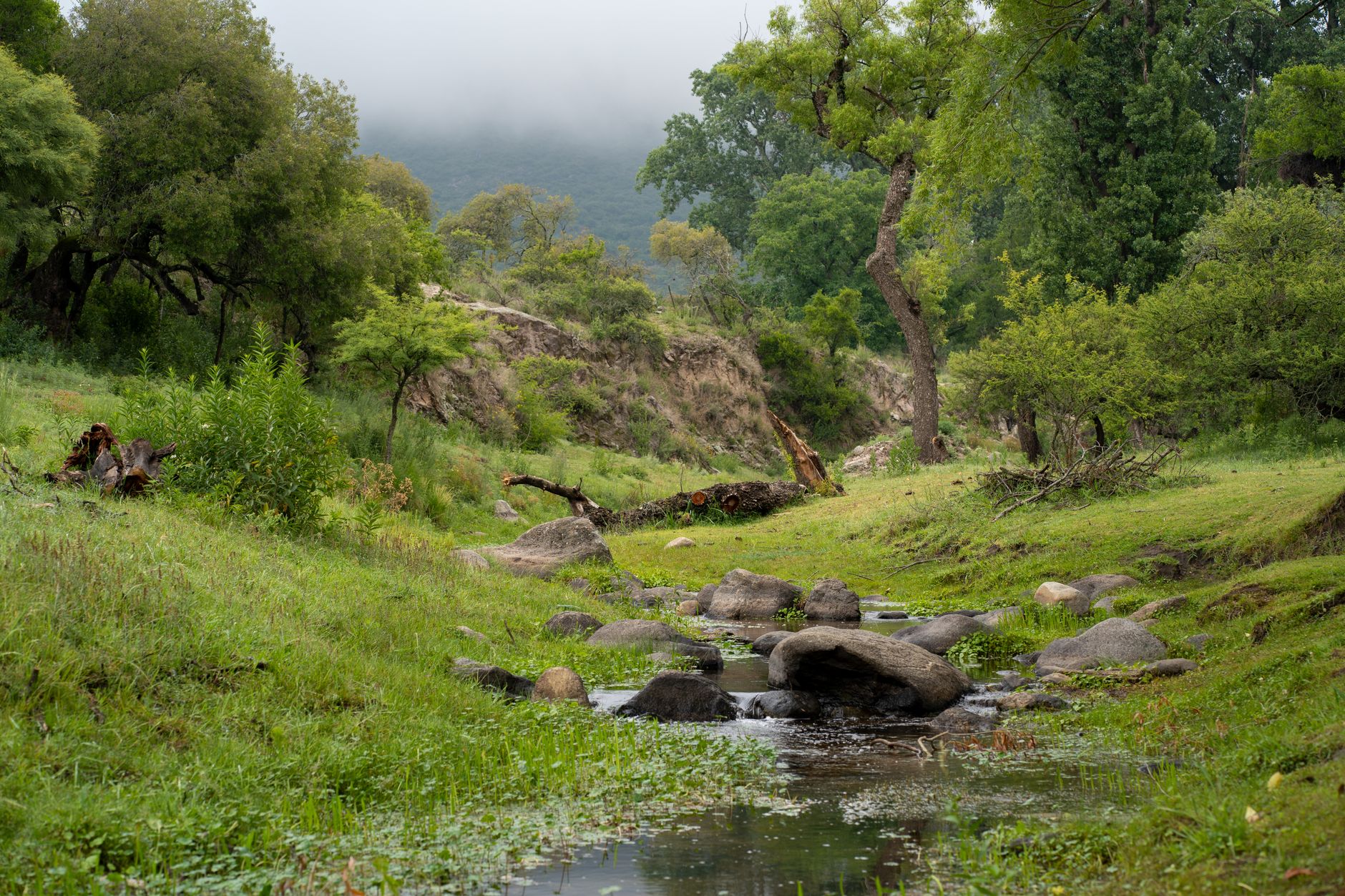
The region’s hydrological cycle depends on a markedly seasonal precipitation regime. During the summer months, storms concentrate much of the annual flow, transforming shallow beds into rushing torrents that mold the granitic stone. This fluvial dynamic has sculpted canyons, natural pools, and reservoirs that today support both urban supply and a rich biodiversity adapted to constant water level fluctuations.
Understanding this ecosystem requires looking beyond the surface water mirror. The mountain soils, characterized by a permeable sediment layer over consolidated bedrock, act as natural sponges that filter and retain moisture. Conserving this native vegetation cover is essential to prevent erosion and ensure that underground aquifers maintain constant recharge throughout the year.
Native Flora as the Framework of Ecological Balance
The plant landscape accompanying the river courses in Córdoba is a testament to botanical resilience. Native species such as the molle, the horco molle, and high-altitude tabaquillo groves form green galleries bordering the streams, offering shade, shelter, and food to numerous wildlife species. These plant formations fulfill a fundamental thermoregulatory role, reducing direct evaporation and maintaining water temperatures at optimal levels for aquatic organisms.
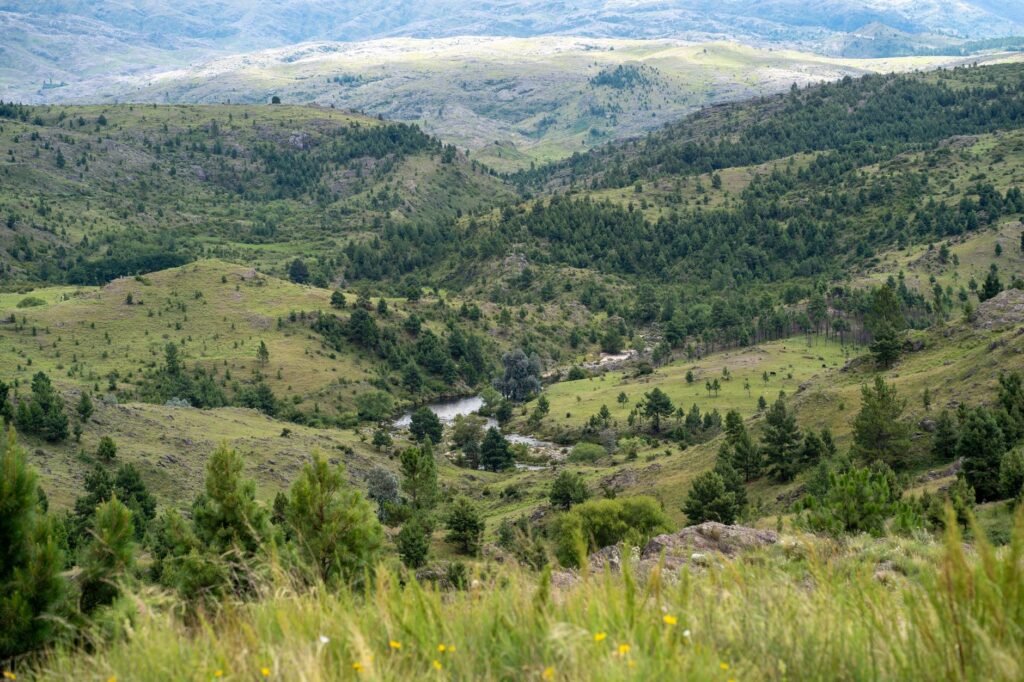
As the altitudinal gradient ascends, the native forest gives way to high-altitude grasslands dominated by grasses adapted to intense radiation and winter frosts. This plant mosaic is not static; it responds to a delicate balance shaped over millennia by natural fires and interaction with local fauna. However, human pressure and the introduction of invasive exotic species have significantly modified the original composition of these habitats.
Ecological restoration policies in the region now prioritize the eradication of non-native tree species, such as pine or privet, which consume much higher volumes of water compared to native flora. By recovering the original vegetation, the riverbeds also regain their self-purification capacity, and their banks consolidate against sudden floods.
Fluvial Fauna and Riparian Birds in Mountain Streams
The crystal-clear waters of the Cordobese rivers harbor a faunal community specialized in inhabiting oxygenated currents and stony bottoms. Native fish such as mojarras, dientudos, and various species of madrecitas find their reproductive habitat in deep pools and quiet stretches. The presence of these organisms constitutes a key bioindicator of the system’s environmental health, given their notable sensitivity to organic pollution.
Along the riverbanks, birdlife finds a sanctuary for feeding and nesting. Species such as the great kiskadee, the ringed kingfisher, and various heron varieties constantly patrol the margins in search of food. Likewise, endemic amphibians, such as certain local toad species, strictly depend on the persistence of temporary ponds and water quality to complete their life cycles, currently facing critical challenges derived from habitat alteration.

The preservation of internal migration routes for aquatic fauna is an inescapable challenge for contemporary environmental management. River fragmentation through dams and weirs alters the natural movement of organisms, underlining the need to implement fish ladders and biological corridors free of artificial obstacles.
Coastal Communities and Water Memory
The relationship between human populations and rivers in Córdoba has deep roots preceding European colonization. The original cultures inhabiting these lands developed water management systems based on irrigation channels and agricultural plots that respected the carrying capacity of the environment. Today, riparian municipalities face the challenge of reconciling demographic growth with the protection of water sources increasingly strained by urban demand and mass tourism.
Organized local communities play a leading role in defending water resources. Through citizen science initiatives, neighborhood groups conduct periodic monitoring of water quality, measuring physicochemical parameters and detecting illegal discharges. This citizen commitment complements institutional control efforts and fosters a collective awareness rooted in patrimonial pride.
The water memory of the city and its surroundings is also manifested in toponymy and ancient hydraulic infrastructure still preserved. Nineteenth-century flour mills powered by hydraulic force and historic irrigation channels remind observers that regional progress was inextricably linked to the rational and respectful use of fluvial energy.
Contemporary Challenges Amid Climate Change
Variations in global precipitation patterns directly impact Córdoba’s hydrological regime. Increasingly frequent prolonged drought periods drastically reduce summer flows, increasing the risk of forest fires on mountain slopes and generating severe water stress episodes in headwater basins.

Faced with this scenario, resource management requires adaptive approaches that transcend mere reaction to emergencies. Researchers and urban planners promote the implementation of sustainable urban drainage systems, strict protection of high-altitude natural sponges, and optimization of distribution networks to minimize losses in municipal aqueducts.
Water in the mountains is not an inexhaustible asset; it is the guiding thread sustaining the biodiversity and identity of an entire region learning, through low-water periods, the value of every single drop.
Environmental education thus consolidates as the most effective tool to transform the bond between visitors and the natural environment. Understanding that every individual action impacts the entire watershed is the first step toward a truly sustainable and participatory water culture.
Low-Impact Practices to Explore Córdoba’s Nature
Exploring Córdoba’s natural landscapes requires adopting an attitude of silent observation and minimal interference. Trails crossing provincial water reserves must be traveled exclusively on foot or by bicycle, avoiding erosion of fragile soils by using authorized tracks and respecting official signage at all times.

Waste management constitutes another fundamental pillar of responsible visitation. All waste generated during the journey must be returned to urban centers for proper management, strictly prohibiting the abandonment of plastics or organic matter in wild areas where they can alter local wildlife diets or contaminate river courses.
Additionally, the use of biodegradable sunscreens and repellents is advised to prevent the accumulation of synthetic chemical compounds in surface waters. Small everyday decisions during travel ensure that mountain streams and forests preserve their purity for future generations.
Practical guide
How to get there: Ingeniero Aeronáutico Ambrosio Taravella International Airport connects Córdoba with major national hubs. From the air terminal or central bus station, provincial roads provide easy access to neighboring mountain valleys.
When to go: The optimal hiking season spans the autumn months (March to May) and spring (September to November), when temperatures are mild and torrential summer rains are avoided.

Access requirements: Most natural reserves and public trails are freely accessible, though some private protected areas or provincial parks require prior entry registration and payment of a symbolic conservation fee.
Equipment recommendations: Trekking footwear with good grip, layered clothing to adapt to sudden mountain thermal changes, a reusable water bottle, and bags for personal waste management.
Visual Epilogue and Commitment to the Territory
As evening falls, golden light slips over the granitic crests of the mountains, tinting the stream water with amber reflections that seem to halt time. In that moment of stillness, the constant murmur of water reminds us that nature in Córdoba is not a static backdrop, but a living organism beating to the rhythm of its springs. Respecting this shared home is the only path to ensure the pulse of the mountains continues to resonate unaltered across the Argentine horizon.