High atop Cap Diamant, where the St. Lawrence River widens, stands a city that has managed to stop time without becoming a museum. Quebec, the capital of the province of the same name in Canada, is the only city in North America to have preserved its ramparts intact, along with its bastions, gates, and defensive works. Founded by French explorer Samuel de Champlain in the early 17th century, its historic district was inscribed on UNESCO’s World Heritage List in 1985. Walking its cobbled streets is to step into four centuries of history, but also into the daily life of those who inhabit it.
The city is divided in two: the Upper Town, on the cliff, the religious and administrative center with churches, convents, and monuments such as the Citadel and the Château Frontenac; and the Lower Town, which grew around Place Royale and the old harbor. Together they form an exceptional urban ensemble, an outstanding example of a fortified colonial town. This report proposes a leisurely journey through that heritage, without losing sight of the people who keep it alive.
A stroll through the Upper Town: between ramparts and bell towers
Access to the Upper Town can be gained through Porte Saint-Louis or Porte Saint-Jean, two of the four gates still standing. Once through them, visitors find a maze of narrow streets, quiet squares, and stone buildings dating from the 17th and 18th centuries. The Notre-Dame de Québec basilica-cathedral, rebuilt after several fires, presides over Place de l’Hôtel-de-Ville. Not far away, the Ursuline convent, founded in 1639, remains a living testament to the educational and missionary work of religious orders.
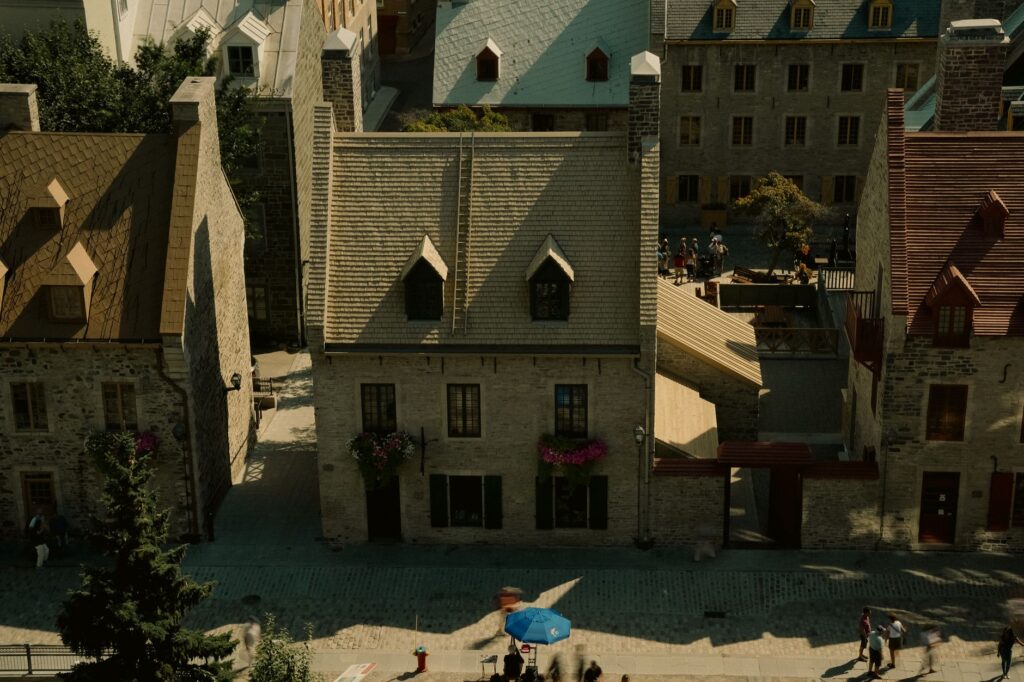
The Upper Town was, and still is, the administrative and religious heart of Quebec. Here you’ll find the City Hall, the courthouse, and numerous institutional buildings. But there is also room for daily life: cafés, bookshops, schools, and markets. The coexistence of heritage and modern life is one of the great achievements of this city, which has managed to integrate contemporary services into a historic setting without betraying its essence.
The rampart is not just a relic: it is the frame that orders the life of a city that knows it is unique on the continent.
The Lower Town and the origins of the colony
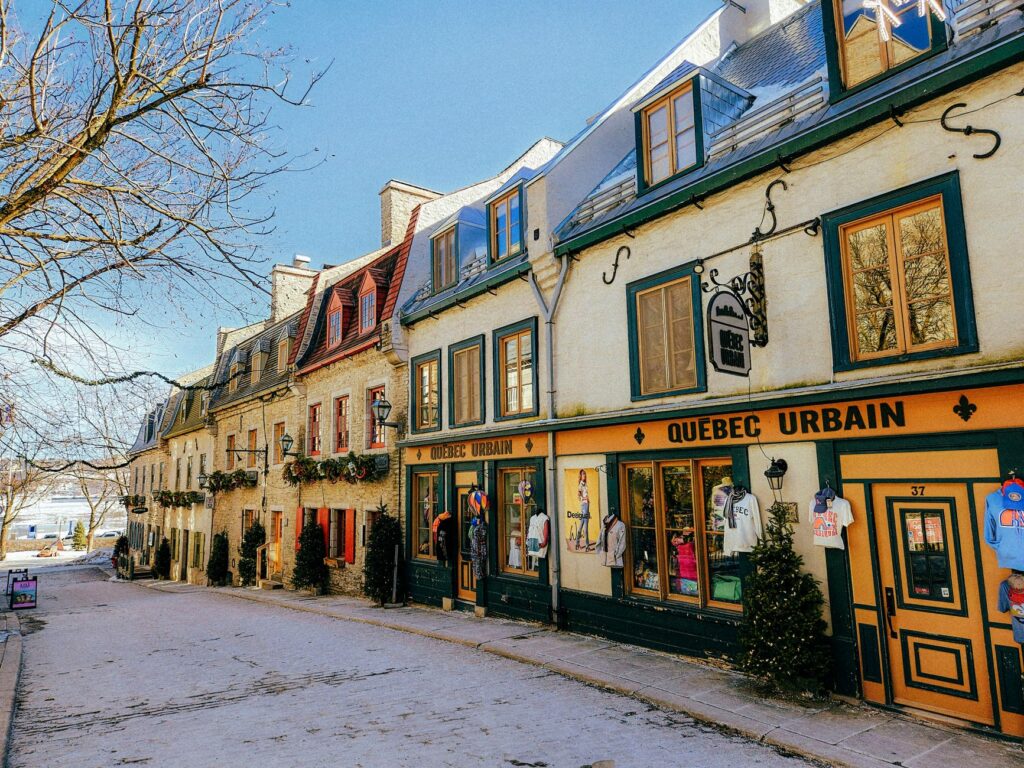
Descending via the Casse-Cou staircase or taking the funicular to the Lower Town is to travel back to the origins of New France. Place Royale, where Champlain established his first dwelling in 1608, was the commercial and maritime center of the colony. Today, its restored stone houses contain boutiques, galleries, and restaurants, but retain the original layout. The Petit-Champlain district, at the foot of the cliff, is one of the oldest in North America and offers an almost intact image of French colonial architecture.
The Lower Town grew around the port, and its history is linked to the fur trade, fishing, and shipbuilding. The axis connecting Place Royale with the old port is an eloquent testimony to the stages of European settlement in the Americas. Walking its cobbled streets, lined with houses with sloping roofs, allows you to imagine the bustle of that port that was key to Atlantic trade.
The fortifications: a stone belt embracing history
Quebec is the only city north of Mexico to have preserved its ramparts. These extend for about four and a half kilometers and include bastions, gates, and defensive works. The Citadel, a star-shaped fortress built by the British after the Seven Years’ War, is still an active military installation, but also a museum and a privileged viewpoint over the river. The Dauphine Redoubt, for its part, is an example of French defensive architecture.
The fortification system not only protected the city from external attacks but also defined its growth. For centuries, the wall marked the boundary between urban and rural, and today it is a tree-lined promenade offering exceptional views. The conservation of this ensemble has been possible thanks to pioneering legislation, such as the Cultural Property Act of 1963 and the creation of the Vieux-Québec heritage site. Coordinated management among federal, provincial, and municipal governments has been key to maintaining the site’s integrity.
The Château Frontenac: the profile that defines a city
With its towers and copper roofs, the Château Frontenac is the most photographed building in Quebec and a symbol of the city. Inaugurated in 1893 as a luxury hotel for railway travelers, it was designed by architect Bruce Price. Its silhouette, dominating the Upper Town from atop the cliff, has become the iconic image of Quebec worldwide. Although it is a working hotel, its public spaces are open to visitors, who can wander its halls and admire the views over the St. Lawrence River.
The Château Frontenac is not just a monumental building: it is a landmark for Quebecers. Its presence has marked the city’s visual identity and inspired artists and writers. At its feet, the Dufferin Terrace offers a panoramic walk connecting the Upper Town with the Plains of Abraham park, the scene of the decisive 1759 battle between the French and the British.

Living heritage: artisans, merchants, and neighbors
Beyond the monuments, Quebec’s heritage is sustained by those who inhabit it. In the Saint-Roch district, a former industrial area now revitalized, artisan workshops, art galleries, and specialty cafés coexist. On rue Saint-Jean, one of the main commercial arteries, family shops hold their ground against large chains. The city has managed to maintain a balance between tourism and daily life, though not without tensions.
Quebec’s population is predominantly French-speaking, and language is an essential component of its identity. Heritage is not only material: it is also intangible, expressed in festivals like the Quebec Winter Carnival, in gastronomy—with dishes like poutine or tourtière—and in traditions such as music and dance. Residents actively participate in the conservation of their environment, and authorities consult neighborhood councils before modifying urban plans.
Gastronomy as a reflection of history
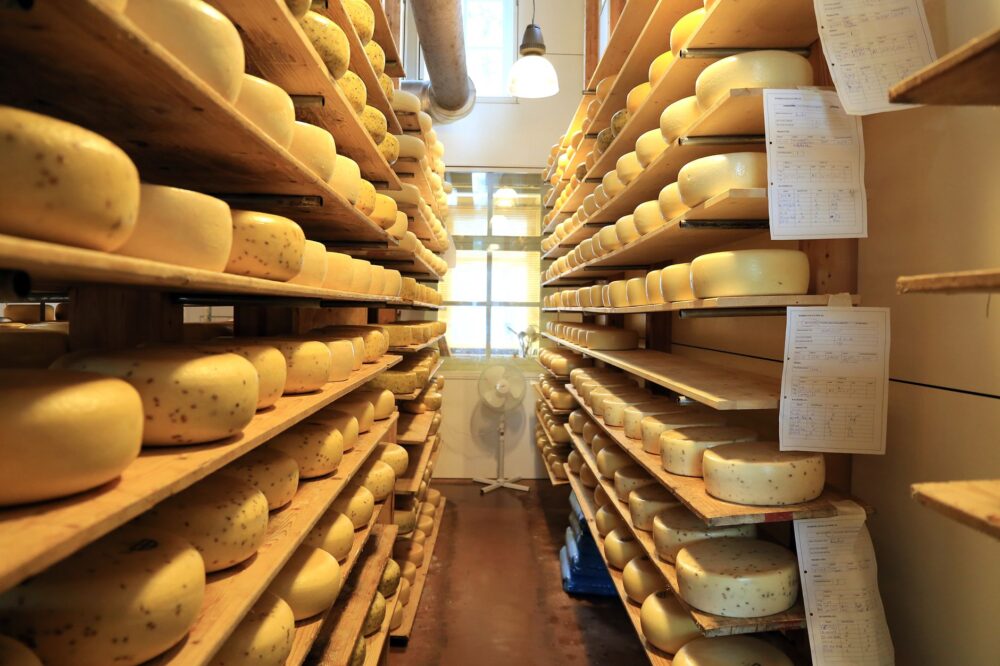
Quebec’s cuisine is a melting pot of French, British, and Indigenous influences. In markets like the Vieux-Port, local producers offer cheeses, honeys, ciders, and seasonal vegetables. Restaurants in the Upper and Lower Towns reinterpret traditional dishes with contemporary techniques. Gastronomy is a gateway to local culture, and many visitors discover the city’s history through its flavors.

Don’t miss maple syrup, the province’s symbol, or products from the Charlevoix region, near the city. The culture of coffee and artisan baking has also flourished in recent years, with establishments that have become meeting points for residents and visitors. The culinary offer adapts to all budgets, from street stalls to fine dining.
What to visit beyond the walls
Although the historic district is the main attraction, Quebec offers much more. The Plains of Abraham park, with its 98 hectares, is a green lung where you can stroll, picnic, or play sports. The Museum of Civilization, in the Lower Town, offers a deep look at the region’s history. Île d’Orléans, a few minutes away by car, preserves a rural landscape with stone houses and agricultural producers.
For architecture lovers, Université Laval, founded in 1663, has a campus mixing historic and modern buildings. The Limoilou district, to the north, is an example of urban revitalization with murals, markets, and an emerging cultural scene. The city invites you to explore without rushing, letting yourself be carried by its streets and discovering corners that don’t appear in guidebooks.
Practical guide
To make the most of a visit to Quebec, it’s best to plan according to the season. Summer (June to September) is ideal for walking and enjoying terraces, while winter offers the Carnival and snowy landscapes. Spring and autumn are quieter and more affordable. Comfortable shoes are recommended, as the cobbled streets and slopes are demanding.
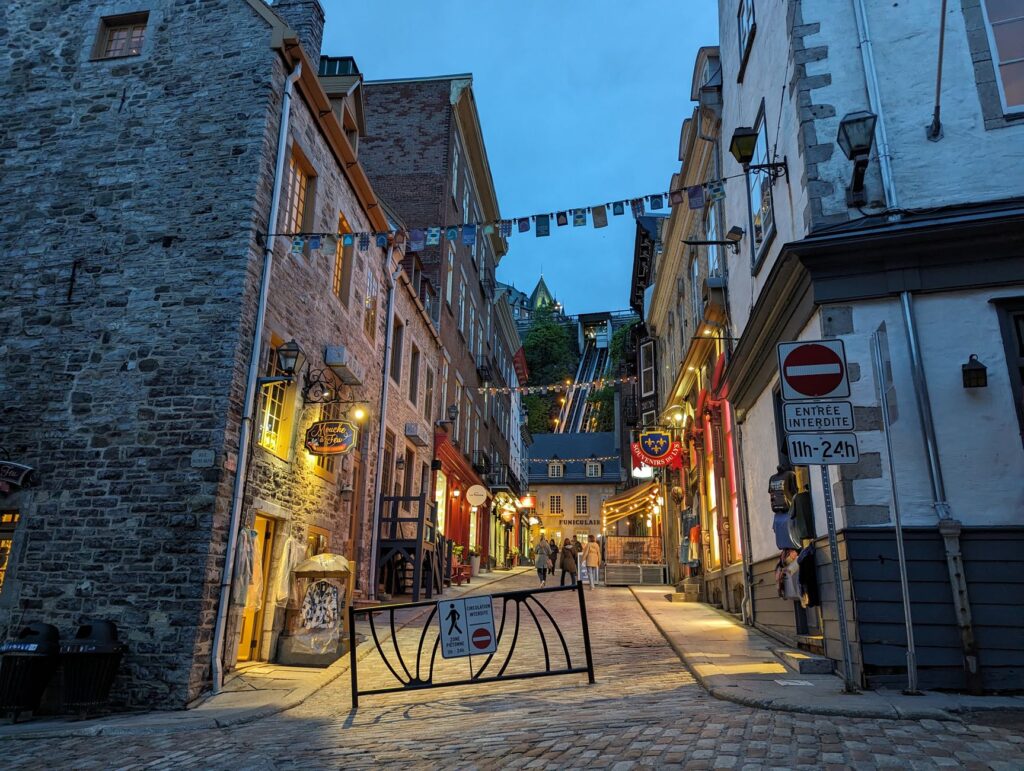
- Transport: The historic center is very walkable. For longer distances, there are city buses and a funicular connecting the Upper and Lower Towns. Jean Lesage International Airport is about 20 minutes away by car.
- Accommodation: There are options for all tastes, from boutique hotels in historic houses to hostels and tourist apartments. Booking in advance is advisable in high season.
- Language: French is the official language; English is spoken in tourist areas, but learning a few words in French will be well received.
- Currency: The Canadian dollar. Most establishments accept cards, but it’s wise to carry some cash for small businesses.
- Safety: Quebec is a safe city. As in any tourist destination, be mindful of personal belongings in crowds.
- Respect for heritage: Climbing the ramparts or damaging historic buildings is not allowed. Visitors are asked to respect conservation rules and not enter restricted areas.
Traveling to Quebec is accepting that history is not a backdrop, but a way of life that renews itself every day.
A closing between lights and stone
At dusk, when lights come on across the stone facades and the river reflects the sky, Quebec reveals its true dimension. It is not just a beautiful city: it is a testament to resistance and adaptation, a place where past and present join hands. Quebecers have managed to protect their heritage without renouncing modernity, and that balance is perhaps their greatest achievement.
Travelers leaving Quebec do so with the feeling of having encountered something more than a tourist destination. They have walked through a city that breathes history, but also pulses with the life of its inhabitants. And that combination, rare and valuable, is what makes this walled city an unforgettable place.