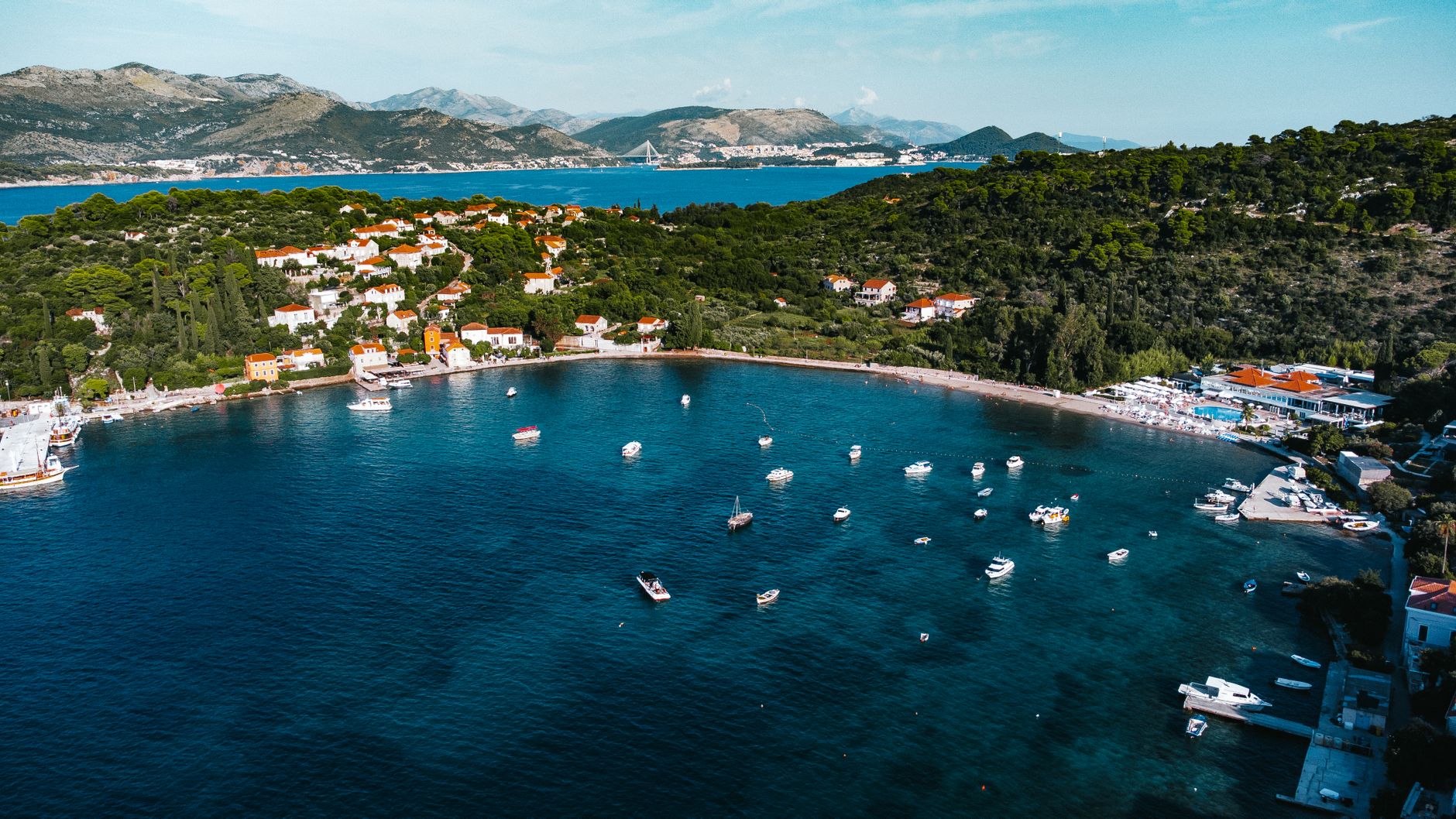

The Kornati archipelago, in the Croatian Adriatic, is a string of islands, islets, and limestone reefs emerging from a transparent sea. With around a hundred formations, most uninhabited, this Croatian national park offers a landscape where bare rock, salt, and wind have sculpted a unique way of life. Far from being an empty paradise, Kornati is a living territory, marked by centuries of shepherding, fishing, and cautious navigation.
This report delves into the relationship between the island landscape and the daily life of those who inhabit or visit it. It is not a nautical guide or an adventure tale, but a slow observation of how the sea dictates the rhythm of an archipelago that demands respect and adaptation.
A landscape shaped by limestone and wind
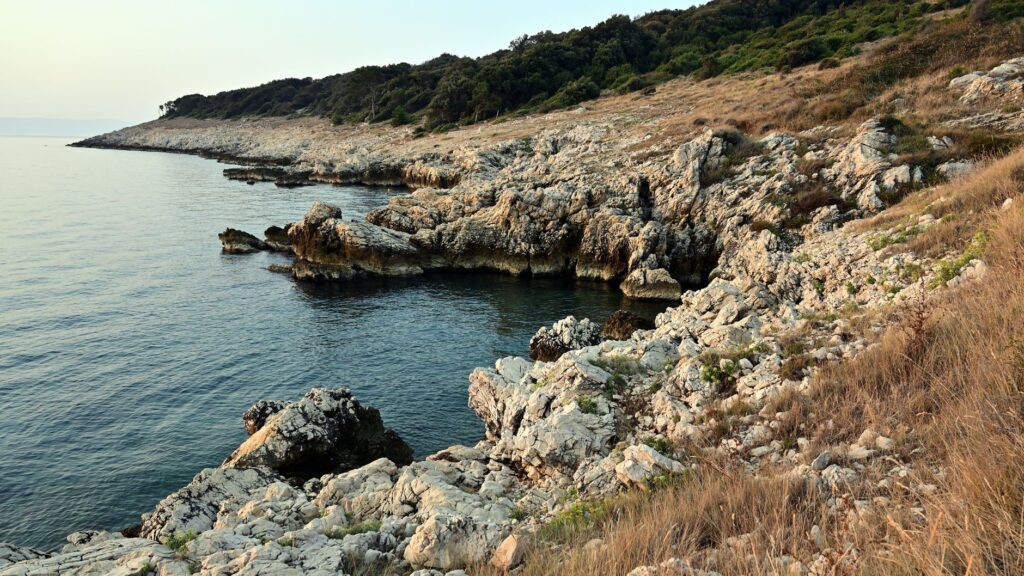
The geology of Kornati is the starting point for understanding its character. The islands are extensions of the Dalmatian coast, formed by sedimentary rocks that fracture and dissolve over time. The result is steep cliffs, deep coves, and rocky surfaces where fertile soil is scarce. Erosion has created a labyrinth of channels and sea passages that have served as shelters for sailors for centuries.
The wind, especially the bora in winter and the maestral in summer, is a constant actor. It shapes the rock forms but also conditions human life: shepherds know when to shelter the livestock, fishermen know the hours when the sea becomes treacherous. Adapting to the climate is a skill passed down from generation to generation.
Shepherds and fishermen: trades that endure
Although most islands are uninhabited, some maintain a seasonal human presence. Sheep shepherds have long been the main inhabitants of Kornati, making use of the low pastures that grow among the stones. Their life is austere: long walks, dry-stone shelters, and total dependence on natural cycles.
Fishing has also been an economic pillar. The waters of Kornati are rich in species such as sea bass, sea bream, and octopus, but overexploitation and tourism have reduced catches. Local fishermen combine their activity with transporting visitors, a transition that reflects the need to diversify in a limited environment.
«The sea is not an enemy, but it is not an unconditional ally either. It gives and takes depending on how we treat it,» summarizes a fisherman from the island of Kornat, the largest in the archipelago.
The sea as pantry and pathway
For the inhabitants of Kornati, the sea is not just a landscape: it is a pantry and a road. Distances between islands are measured in sailing time, not kilometers. Boats are work tools, not luxury objects. The maritime tradition is reflected in wooden vessels, adapted to local conditions, and in a deep knowledge of winds and currents.

Responsible navigation is now a central issue. The national park has established ecological mooring zones to protect seagrass meadows, a crucial marine plant for the ecosystem. Visitors must follow strict rules: no anchoring on seagrass, no fishing in protected areas, and no leaving waste. The balance between use and conservation is fragile.
The human footprint in a fragile environment
Tourism has transformed Kornati in recent decades. Every summer, hundreds of boats navigate its waters, drawn by the beauty of the landscape and the sense of isolation. However, this influx poses challenges: pressure on resources, waste generation, and impact on marine fauna.
The national park is working on sustainability projects, such as promoting ecological moorings and raising visitor awareness. Locals, for their part, have learned to coexist with tourism, although some express concern about overcrowding. The key, according to experts, lies in low-impact tourism that respects natural rhythms and contributes to the local economy without degrading the environment.
Kornatska kuća: dry-stone architecture
The traditional dwelling of Kornati, known as kornatska kuća, is an example of adaptation to the environment. Built with limestone extracted from the land itself, these houses have thick walls, tile roofs, and small windows that protect against wind and sun. Their simple and functional design reflects the austerity of life on the islands.

Many of these houses are in ruins, but some have been restored as shelters for shepherds or as tourist accommodation. Traditional architecture is not only cultural heritage but also a lesson in sustainability: local materials, solar orientation, and natural ventilation.
Posidonia: the lung of the Adriatic
Beneath the surface, meadows of Posidonia oceanica form a vital ecosystem. This marine plant oxygenates the water, stabilizes the seabed, and provides refuge for numerous species. In Kornati, its presence is abundant but also vulnerable to boat anchoring and pollution.
The SASPAS project, led by the national park, has installed ecological buoys to prevent damage to Posidonia. Sailors should use these buoys or anchor in sandy areas. Protecting Posidonia is protecting the future of the archipelago.
Fauna and flora: life on the rock
Despite its apparent aridity, Kornati harbors surprising biodiversity. Birds such as the peregrine falcon and the yellow-legged gull nest on the cliffs. On land, plants resistant to salt and wind, such as rosemary and sage, cover the cracks. Marine fauna includes turtles, dolphins, and a wide variety of fish.

The conservation of these habitats is one of the park’s objectives. Human activities are regulated to minimize impact, and periodic censuses are carried out to monitor populations.
Responsible navigation: rules and common sense
Navigating Kornati requires preparation and respect. The national park sets clear rules: speed limits in sensitive areas, fishing bans in protected zones, and the obligation to carry waste back to land. It is also advisable to check weather conditions, as winds can change rapidly.
The experience of sailing between the islands is unique but must be done consciously. Locals advise avoiding peak hours and seeking quiet coves where silence is only broken by the sound of water.

Practical guide
To visit Kornati, advance planning is necessary. Access is mainly by boat, either on organized excursions from Zadar or Šibenik, or on private vessels. The national park charges an entrance fee that varies by season and type of visit.
- Best time: May to June and September to October, to avoid summer crowds.
- What to bring: sun protection, enough water, suitable footwear for walking on stone, and a bag for collecting waste.
- Accommodation: there are few options on the islands; most visitors stay on the mainland or on boats.
- Environmental respect: do not anchor on Posidonia, do not leave litter, do not disturb wildlife.
- Official information: check the Kornati National Park website for updated fees and rules.
A balance that depends on everyone
Kornati is an example of how human life can adapt to an extreme environment, but also of the fragility of that balance. The future of the archipelago depends on the ability of locals and visitors to coexist with the sea without exhausting it. Stone and salt are witnesses to centuries of history; preserving them is a shared responsibility.
«We do not inherit the land from our parents, we borrow it from our children,» recalls a local saying that resonates in every cove of Kornati.
At the end of the day, when the sun sets over the islands and the sea turns silver, it becomes clear that Kornati is not a destination to conquer but a place to understand. Daily life on this archipelago of stone and salt is a reminder that nature sets the pace, and we can only follow its rhythm.