
Amsterdam is not a city you explore by taxi. It runs on a dense network of trams, buses, metro lines, ferries and bike lanes that operates with the quiet precision of a well-wound clock. For visitors, understanding that system is not a logistical detail: it is the difference between watching the city through a window and actually inhabiting it for a few days.
The useful question is not which mode of transport is fastest, but which one suits each leg of the journey. In the Netherlands, everyday mobility is planned in advance and paid for with contactless cards. Anyone willing to walk and combine modes will find a friendlier, cheaper and far more legible Amsterdam.
A city built to work without cars
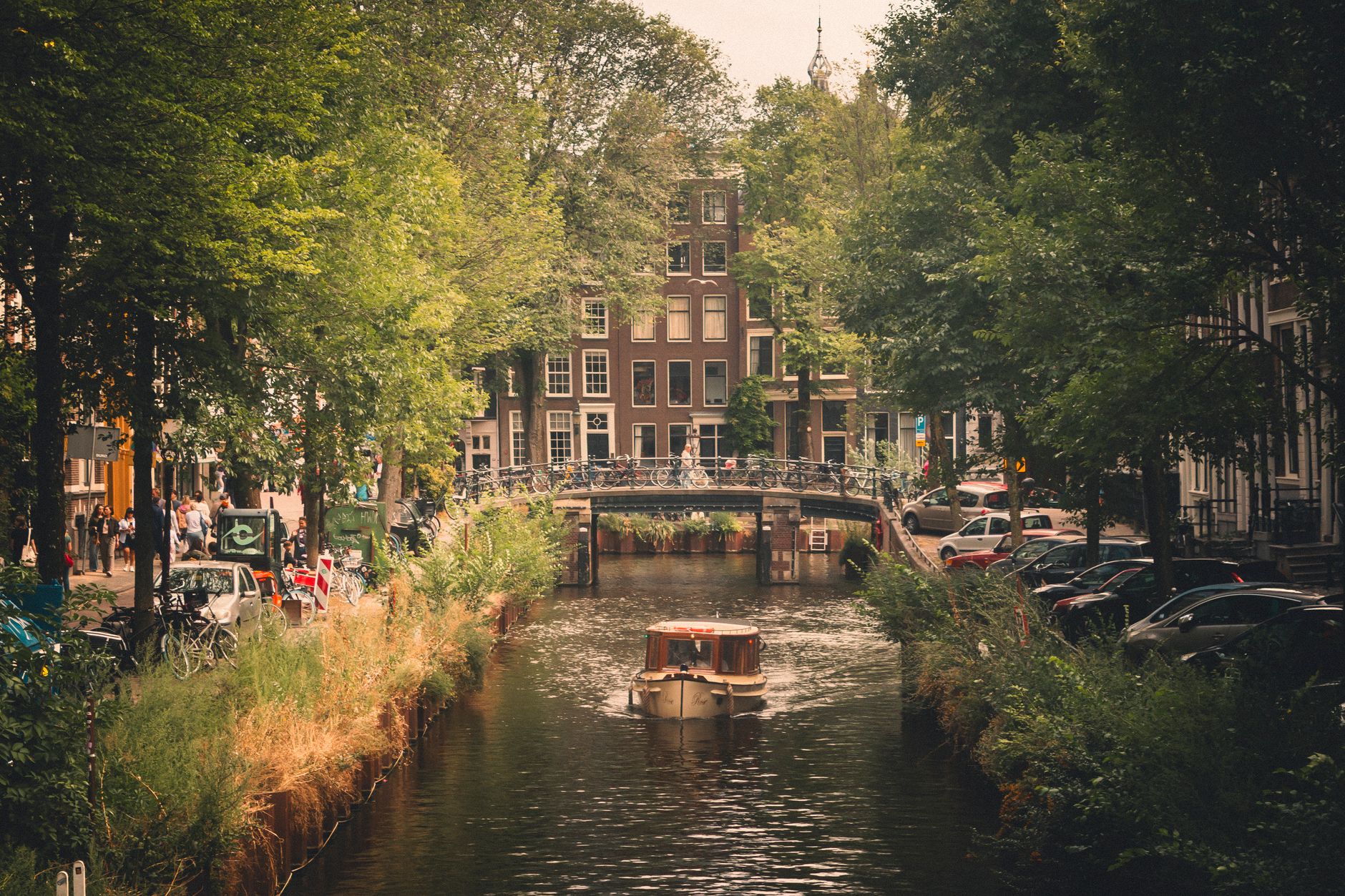
Amsterdam’s historic centre spreads across a web of canals that makes heavy car traffic impractical. Streets are narrow, bridges are numerous and parking is scarce and expensive. That geography pushed the city, decades ago, to prioritise pedestrians, bicycles and public transport.
The result is a model visitors notice immediately: wide pavements, traffic lights with generous timing for those on foot and a street hierarchy in which cars are the exception. Moving well through Amsterdam begins with accepting that cars are not part of the equation.
That decision is not only practical. It is also the most honest way to understand how the city lives year-round.
The tram as the backbone
The tram network is the backbone of urban transport. Its lines connect Central Station with neighbourhoods such as Oud-Zuid, De Pijp, the Jordaan and the museum district, and they usually run at high frequencies for most of the day.
For visitors, trams offer a double advantage: they cover long distances and, at the same time, let you see the city at street level. Boarding a tram is a way of orienting yourself, not just of getting around.
In Amsterdam, the tram does not compete with walking: it complements it. Combining both is almost always the best strategy.
It is worth checking the line map on arrival and memorising two or three key stops near your accommodation. With that, half the city is solved.
Bicycles: respect before enthusiasm
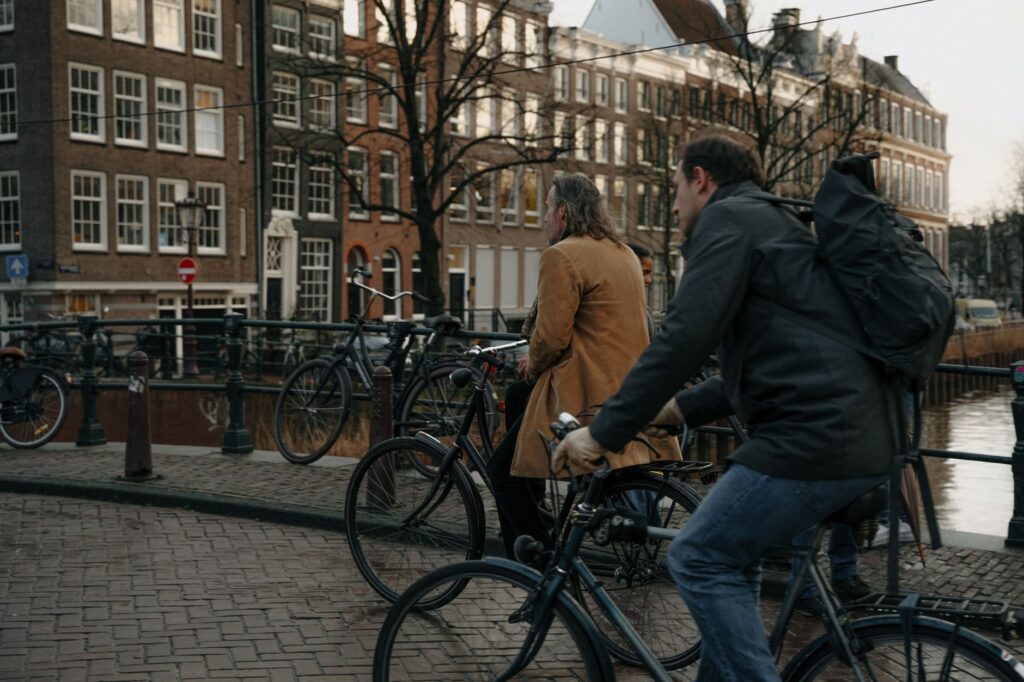
Renting a bicycle is tempting, and understandable. But cycling in Amsterdam demands more than pedalling: it demands understanding the rules. Bike lanes are serious infrastructure, not a recreational space, and locals use them to get to work, not to stroll.
Before renting, watch how cyclists behave at an intersection, learn hand signals and choose quiet routes, such as those along the Vondelpark or the Amstel river. The bicycle is an excellent tool for those who respect the system; for those who improvise, it is a source of scares.
If doubt persists, walking and using the tram offers an equally rich experience with no risk.
Metro, buses and free ferries
Amsterdam’s metro is fast and useful for long journeys, especially to areas far from the centre or towards Bijlmer station. However, its underground route makes it less appealing for those who want to see the city.
Buses cover neighbourhoods the tram does not reach and are practical for getting to peripheral museums or residential areas. Then there are the ferries crossing the IJ, free for pedestrians and cyclists, connecting Central Station with areas such as Noord.
- Tram: ideal for medium distances and scenic routes.
- Metro: useful for long, fast journeys.
- Bus: practical for peripheral areas.
- Ferry: free, comfortable and with good harbour views.
Each mode has its logic. The key is not to insist on using only one.
How to pay without complications
In the Netherlands, public transport is paid for with a contactless bank card or a rechargeable transport card. The system is simple once understood: you tap in and tap out, and the fare is calculated by distance.
For stays of several days, it is worth comparing the options available on Amsterdam’s official transport website and choosing the one that best fits your expected number of trips. There is no single formula: it depends on how much you walk and how many journeys you make.
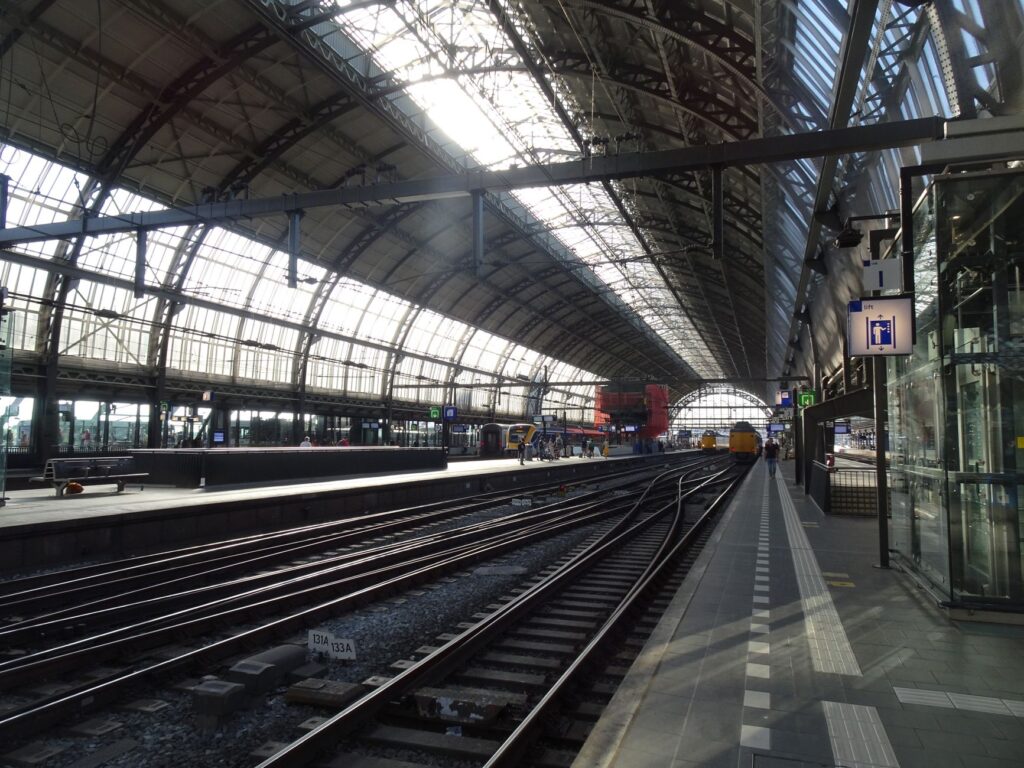
The important thing is not to improvise at the machine, with a queue behind you and time pressure. Spending ten minutes understanding the system on arrival saves confusion for the rest of the trip.
Neighbourhoods best read on foot
There are parts of Amsterdam where public transport is unnecessary. The Jordaan, with its narrow streets and quiet canals, is best enjoyed walking without a fixed route. The same goes for the Nine Streets area, a maze of small shops and cafés where any vehicle feels intrusive.
By contrast, neighbourhoods such as Oud-Zuid, home to the Van Gogh Museum and the Rijksmuseum, benefit from a combination of tram and walking. Arriving by public transport and then exploring on foot is the most efficient and pleasant strategy.
The best route through Amsterdam is not the shortest one, but the one that alternates mechanical journeys with stretches on foot.
That alternation allows two scales of observation: the speed of the tram and the slowness of a walk.
Plan before you set out
Planning makes the difference. Checking line maps, identifying nearby stops and anticipating waiting times avoids frustration. In high season, some lines get crowded and it is wise to leave margin.
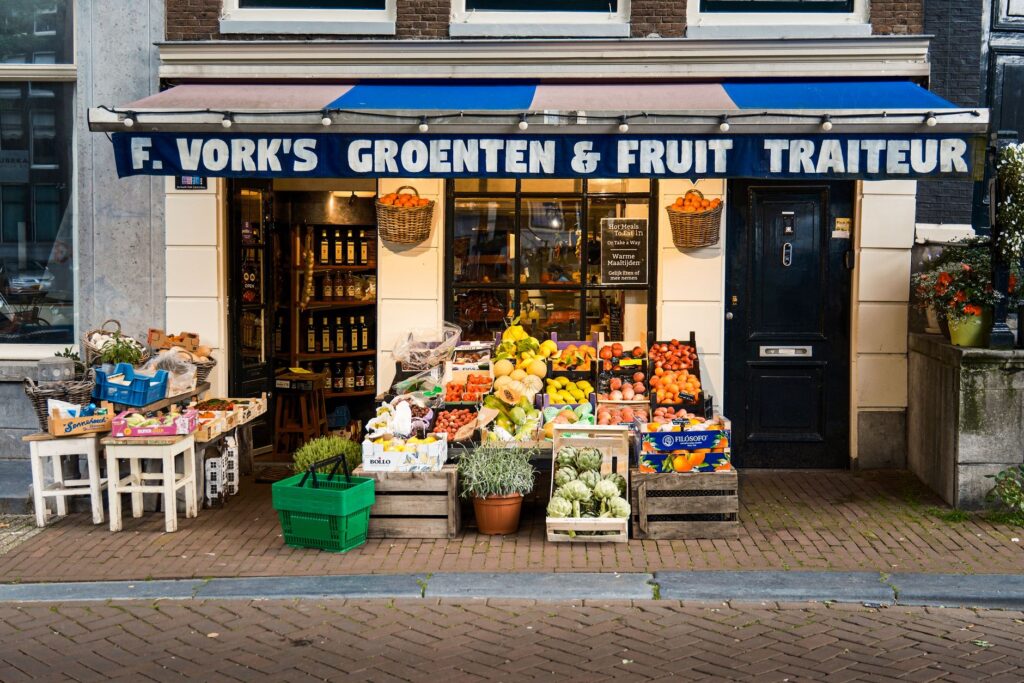
It also helps to group visits by area: one day for the historic centre, another for the museums, another for Noord. This reduces journeys and gives your walking a purpose.
Visitors who plan discover that Amsterdam is a compact city, generous with those who respect it. The reward is a calmer, cheaper trip.
Safety and coexistence on the street
Amsterdam is a safe city, but coexistence demands attention. Bike lanes are sacred: walking in them is the fastest way to earn a reproach. Trams, silent, appear without warning at some crossings.
Looking before crossing, respecting traffic lights and not stopping in the middle of a bike lane are basic rules locals appreciate. Courtesy on the street is part of the mobility system.
With those precautions, getting around Amsterdam is straightforward even for first-time visitors.
Practical guide
Before travelling, check Amsterdam’s official transport website for current lines, fares and payment options. Carry a contactless card or consider a rechargeable transport card depending on the length of your stay.

Stay near a tram or metro stop: you will save time and walk less than necessary. Book museum visits in advance and group activities by neighbourhood to reduce journeys.
- Always walk if the journey is under twenty minutes.
- Use the tram for medium distances and the metro for long ones.
- Avoid renting a bicycle if you are unsure of your skills in dense traffic.
- Take advantage of the free ferries to cross the IJ.
- Always tap in and tap out on public transport.
- Leave margin in high season: lines can get crowded.
With these guidelines, the city becomes predictable and the trip more enjoyable.
The journey begins when you step off the tram
There is a moment, late in the afternoon, when Amsterdam becomes especially clear. The canals reflect a low light, bicycles cross the bridges and the tram pulls away with a soft sound. Anyone who has decided to move without a car then discovers that the city was never an obstacle, but a route.
Moving well through Amsterdam is not about optimising every minute, but about choosing the right rhythm. Walk, wait, board, step off. The city rewards that patience with an intimacy no taxi ride can offer.