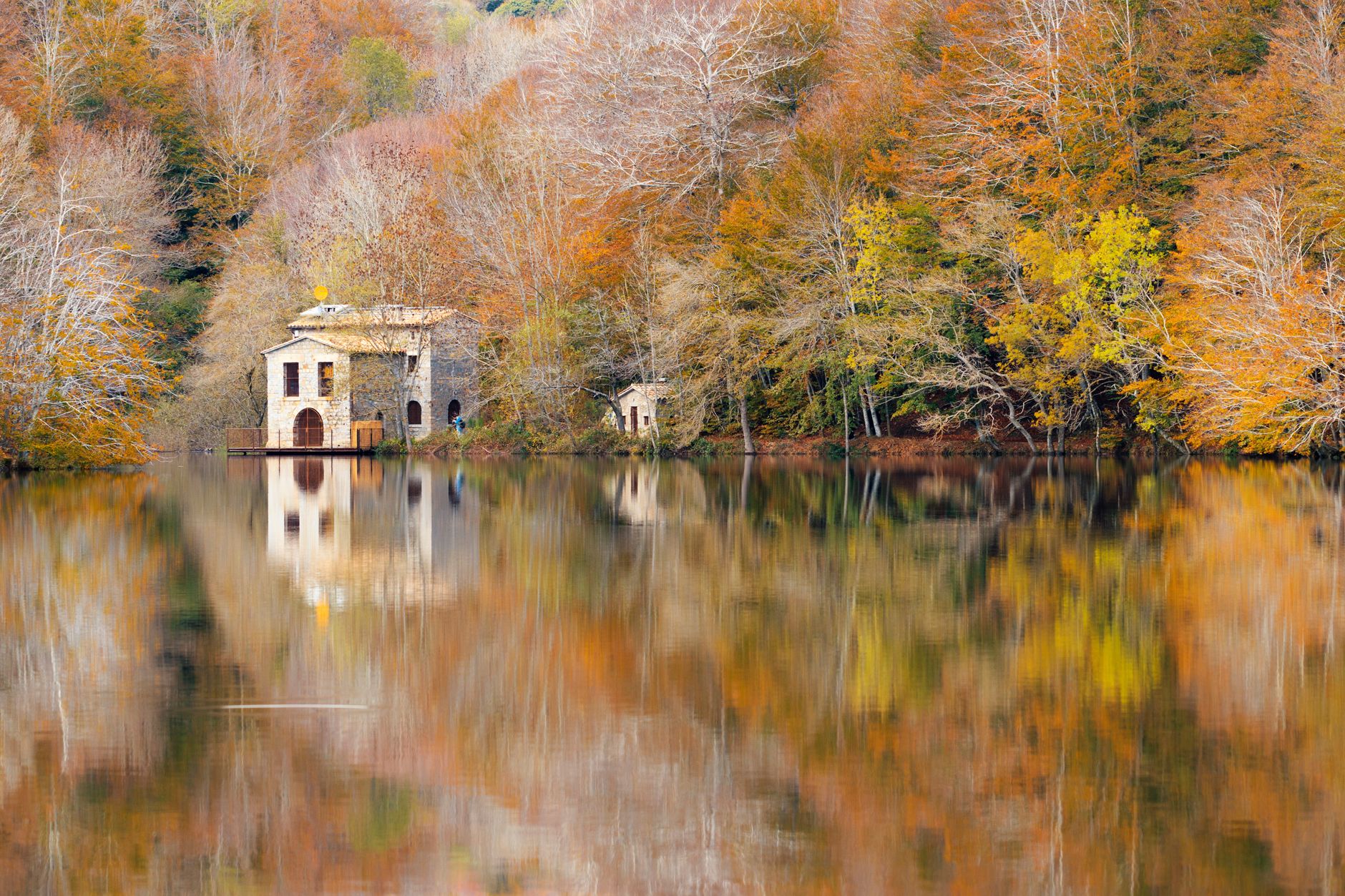

In the far northeast of Navarre, Spain, the Irati Forest spreads a blanket of beeches and firs that ranks among the largest and best-preserved in Europe. It is not a theme park or a film set: it is a real forest, with biological cycles, local communities and access rules. Visiting Irati demands more than suitable footwear; it requires understanding that this is a protected area where every step counts.
High season brings a maintenance fee at some access points, a measure designed to fund conservation and regulate the flow of visitors. Far from being an obstacle, this fee has become a management tool that allows people to enjoy the environment without compromising its future.
A forest with clear rules
The Irati Forest stretches across the Navarrese valleys of Aezkoa and Salazar, and to a lesser extent the French valleys of Cize and Soule. Its management combines historic forestry —documented since the 15th century— with the protection of nature reserves such as Mendilatz, Tristuibartea and the integral reserve of Lizardoia. This coexistence of use and conservation explains its current good health.
Visitors find a network of marked trails, park-and-ride areas and information points staffed by wardens. In high season, some access points, such as Casas de Irati or Arrazola, charge a maintenance fee. This is not a tourist toll, but a direct contribution to the care of the forest and to services such as picnic areas, waymarked routes and cleaning.
The fee is not a toll: it is the visitor’s direct contribution to the upkeep of a forest that belongs to everyone.
Information about opening times, winter closures and road conditions is crucial before setting out. Visitor centres, such as Casas de Irati or the Irati-Abodi Mountain Centre, provide up-to-date data and rental services for bicycles, skis or snowshoes depending on the season.

Trails for every pace
The range of routes is wide and varied. From the Ochagavía access in the Salazar valley, trails such as the Cascada del Cubo and the Urbeltza river path, the Zabaleta Forest or the Irabia Reservoir circuit set off. These are low or medium difficulty walks that allow you to venture into the heart of the beech forest without exceptional fitness.
For those seeking more challenge, the Irati-Abodi Mountain Centre, in the Pikatua area, serves as a base for ascents and longer, steeper routes. In winter, its tracks adapt to cross-country skiing and snowshoeing, with options for all levels. The legendary Mount Orhy, with its alpine profile, is the first two-thousander of the Pyrenees and offers a panoramic balcony that is hard to match.
From the Aezkoa valley, the Arrazola information point and the Irabia Reservoir dam are other common access points. Routes such as Anbulolatz or the path to the Chapel of San Esteban start there. Further on, the Orbaizeta Arms Factory, declared a Site of Cultural Interest, adds a layer of industrial history to the hiking experience.
Heritage you can walk through
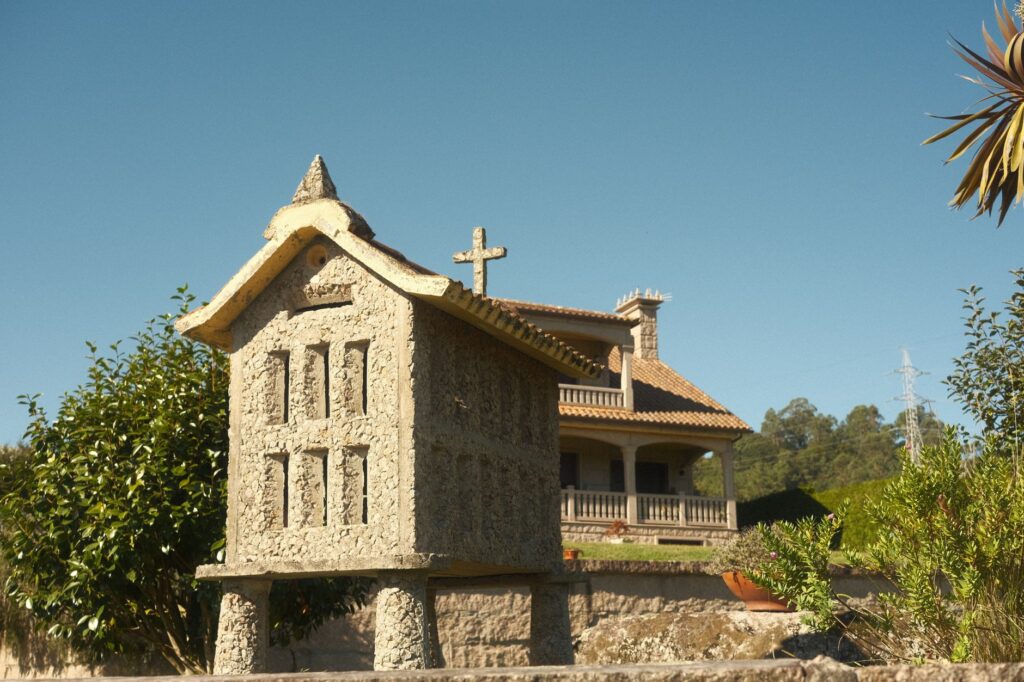
The forest is not empty. It is crossed by old paths used by charcoal burners, transhumant shepherds and snow gatherers. In the Aezkoa valley, fifteen of Navarre’s twenty-two granaries, known as hórreos, are preserved and declared Sites of Cultural Interest. These structures, complementary to the houses, were used to store grain safe from damp and rodents. Finding them requires wandering unhurriedly through villages such as Aribe, Garralda or Villanueva de Aezkoa.
In Abaurregaina/Abaurrea Alta, the highest village in Navarre, the old cemetery has been turned into a museum, the Garden and Labyrinth of Steles. More than thirty medieval steles were recovered there, and the space evokes the cycle of life and its tortuous path towards death. It is a place to pause and reflect, not to photograph without looking.
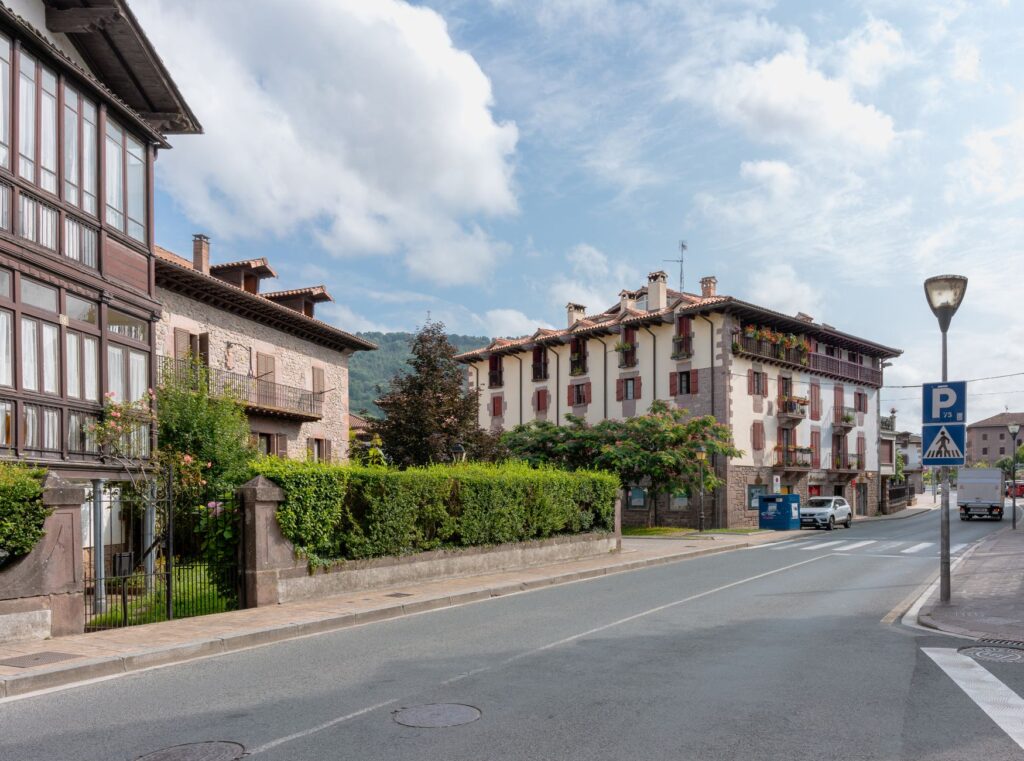
In the Salazar valley, Ochagavía is one of the most beautiful villages in Navarre. Its silverwork cross over the Zatoya river, its blazoned houses and the bridge over the Anduña river make up an unmistakable Pyrenean architectural scene. From the upper part of the village, a cobbled path leads to the Sanctuary of Nuestra Señora de Muskilda, from the 12th century, with oak board roofs that surprise first-time visitors.
The wildlife you don’t see but is there
The Irati Forest is a Special Protection Area for Birds. Woodpeckers, black woodpeckers and white-backed woodpeckers find one of their last strongholds here. Large birds of prey such as the bearded vulture, the peregrine falcon and the golden eagle also soar overhead. Deer, roe deer and wild boar inhabit the undergrowth, and their presence is perceived more through tracks than direct sightings.
Observing without disturbing is the unwritten rule. Keeping your distance, staying on the trails and avoiding unnecessary noise are gestures that help wildlife continue to find refuge in this forest. Environmental richness is not a marketing claim, but a fragile reality that depends on the behaviour of each visitor.
Beyond hiking: cycling and snow
The Irati Mountain Bike Space brings together sixteen mountain bike trails for all levels, with more than four hundred kilometres of rideable paths connecting the Salazar and Aezkoa valleys with the French valleys of Zuberoa and Cize. The visitor centres offer bicycle rental and small repair workshops, making logistics easier for those travelling without their own equipment.
In winter, the Irati-Abodi Mountain Centre becomes the starting point for cross-country skiing, with easy tracks totalling twenty-two kilometres, and for ski touring or snowshoeing. Snow transforms the landscape, but also access conditions: it is advisable to check road conditions before heading up.
Mountain gastronomy
After walking, local cuisine offers hearty, honest dishes. Shepherd’s migas, autumn mushrooms, veal and suckling lamb, trout Navarre-style —fried with ham— or game stews are some of the classics. To finish, homemade milk-based desserts, with sheep’s cheese and pacharán as the stars.
Eating in the Aezkoa or Salazar valleys is also a way to support the rural economy. Local restaurants and accommodation depend to a large extent on nature tourism, and their survival is tied to a respectful, sustained model of visiting.
Practical guide
When to go: Spring and autumn offer spectacular colours and fewer crowds. Summer is high season, with more services but also more visitors. Winter can close access due to snow; check road conditions.
Getting there: The main access points start from Ochagavía (Salazar valley) and Orbaizeta (Aezkoa valley). From Ochagavía, the NA-2012 road leads to the Casas de Irati Visitor Centre in about forty minutes. From Orbaizeta, the Arrazola information point is about eight minutes by car.
Fees: In high season, some access points charge a maintenance fee. The Irati-Abodi Mountain Centre (Pikatua area) and the Orbaizeta Arms Factory access do not. Bring cash or check accepted payment methods.
What to bring: Hiking boots, water, sun protection and warm clothing even in summer. In winter, chains or snow tyres if driving up. For cycling routes, helmet and basic repair kit.
Rules: Do not leave the marked trails, do not leave waste, do not disturb wildlife and respect the wardens’ instructions. The maintenance fee is a direct contribution to conservation; paying it is part of the experience.
Accommodation: Rural hotels, country houses, hostels and campsites in the Aezkoa and Salazar valleys. Book in advance in high season and summer.
A closing thought
At dusk, when light filters through the beeches and the silence is broken only by the wind, the Irati Forest reminds you why it remains an exceptional place. It is not just a destination; it is a territory that demands a certain way of being. Walking without rush, looking without invading and leaving with the feeling of having contributed, even minimally, to keeping this forest as it is.