
In the heart of the Avon Valley in southwest England, the city of Bath stands as a living testament to how thermal water can shape a place’s destiny. The United Kingdom finds here one of its most unique heritage sites, recognized by UNESCO in 1987. Unlike contemporary wellness destinations, Bath makes no promises of miracle cures or revolutionary treatments; its appeal lies in the layering of centuries of history, where waters emerging at over 40 degrees Celsius have been the silent engine of an unparalleled urban evolution.
The city invites a leisurely journey, to wander its oolitic limestone streets and understand how geology and architecture intertwine to create an urban landscape that has inspired writers, artists, and travelers for generations. This report explores Bath as a territory of thermal heritage, analyzing its historical layers and offering keys for an informed and respectful visit.
The Roman Legacy of Aquae Sulis
Bath’s thermal history begins in the 1st century AD, when the Romans, drawn by the natural hot springs, founded the settlement of Aquae Sulis. The bath complex they built became one of the most important north of the Alps, a social and religious center dedicated to the goddess Sulis Minerva. Today, the Roman Baths museum allows visitors to descend to the same stone platforms trodden by the citizens of Roman Britain.
The Great Bath, with its main pool fed by the sacred spring, still steams, offering an evocative image of what life was like here. The remains of the temple and the votive objects recovered reveal the spiritual significance these waters held. The authenticity of the springs is unquestionable, and their constant flow has been the common thread of the city’s history.
The water that springs in Bath is not a modern tourist attraction, but the very origin of a city that has known how to integrate its natural heritage with human ambition.
The Middle Ages and the Rise of Wool
After the Roman withdrawal, Bath did not lose its relevance. During the Middle Ages, it became a prominent center of the wool industry, and the abbey that dominates today’s skyline was built over an earlier church. The city maintained its link with the waters, although it was in the 18th century that it underwent its most radical transformation.
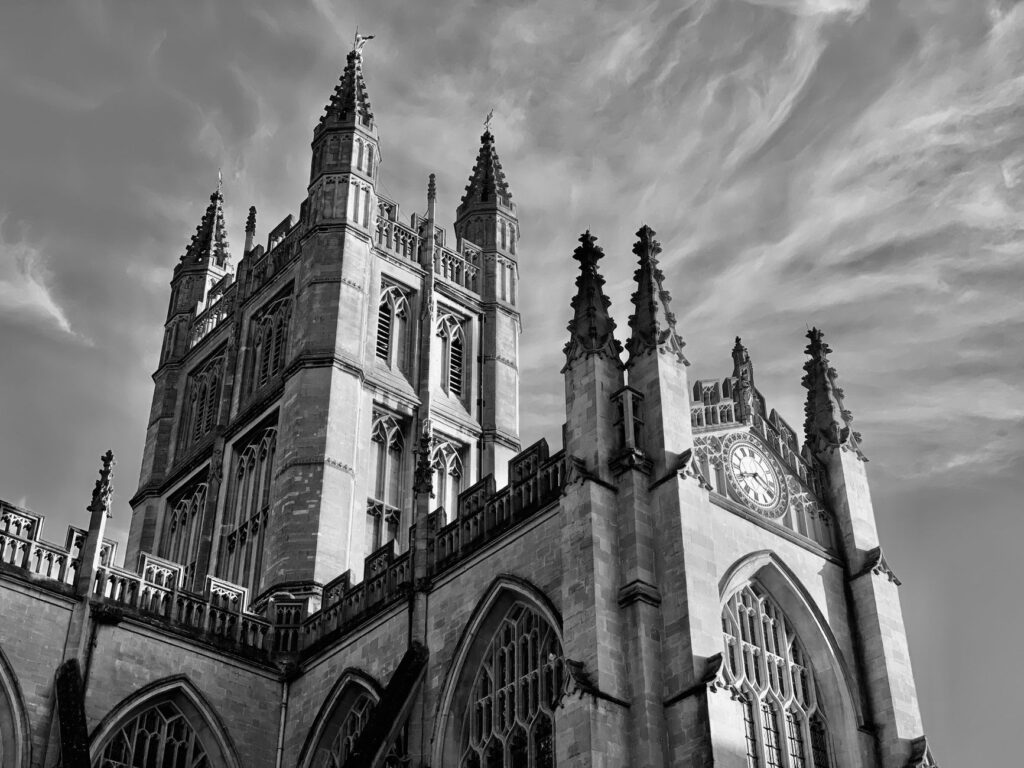
Bath Abbey, with its Gothic façade and stained glass windows, is a reminder of the economic power of wool and the continuity of a settlement that adapted to the times. Walking around its surroundings is to understand the transition between the medieval city and the Georgian splendor that was to come.
The 18th Century: The Georgian City and Thermal Leisure
Under the reigns of George I, II, and III, Bath transformed into an elegant fashionable destination. Architects such as John Wood the Elder, Ralph Allen, and Richard ‘Beau’ Nash drove an urban program that turned the city into a benchmark of Palladian neoclassicism. Public buildings, such as the Assembly Rooms and the Pump Room, became stages of social life, where the aristocracy came to ‘take the waters’ and participate in an intense cultural life.
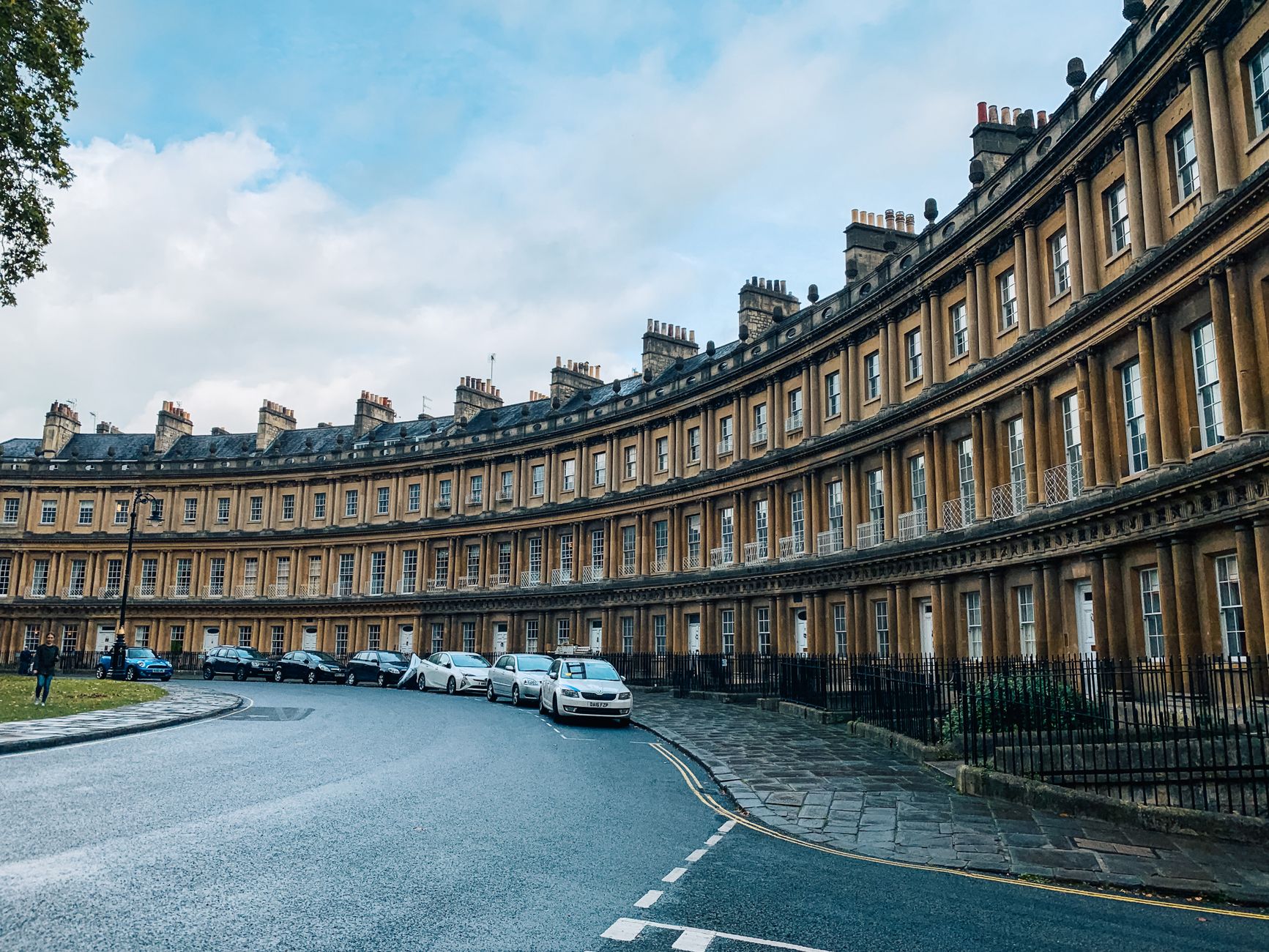
The Royal Crescent, the Circus, and Queen Square are outstanding examples of this era. The integration of architecture with the surrounding landscape created a garden city model avant la lettre, where green hills merge with stone façades. This urban ensemble reflects the social ambitions of a spa city that aspired to be the most beautiful in Europe.
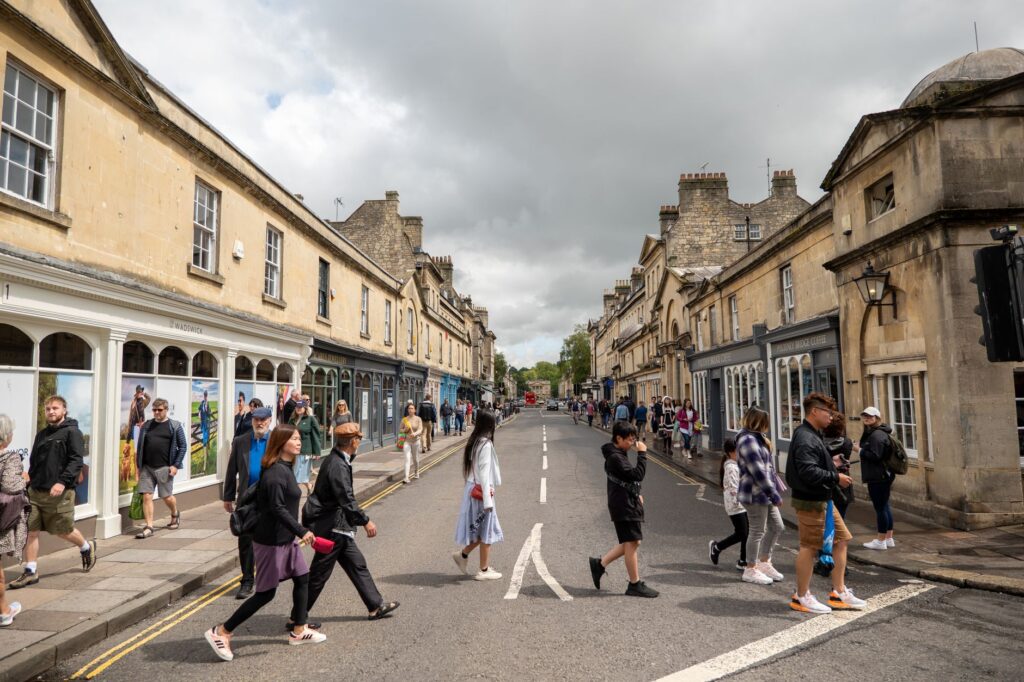
Bath is not just an open-air museum; it is a testimony to how leisure and health, understood as social practices, can shape an exceptional urban landscape.
Palladian Architecture and Landscape
The Palladian style, inspired by the villas of Andrea Palladio, found fertile ground in Bath. Georgian architects adapted its principles to the scale of an entire city, creating terraces, crescents, and squares that integrate harmoniously with the environment. The use of local limestone, known as Bath stone, provides a visual uniformity that still defines the city’s character today.
The Royal Crescent, a curve of thirty terraced houses, is perhaps the most iconic example. Its design, by John Wood the Younger, combines monumentality with residential functionality. From its gardens, views over the Avon Valley are a reminder of the intention of its creators: to build a city that was a pleasure for the senses.
The Pump Room and Social Life
The Pump Room, located next to the Roman Baths, was the epicenter of Georgian sociability. Here, visitors could drink the thermal waters, believed to be beneficial, and socialize under the watchful eye of a master of ceremonies. Today, the building retains its function as a tea room and restaurant, allowing visitors to experience a fragment of that elegant life.
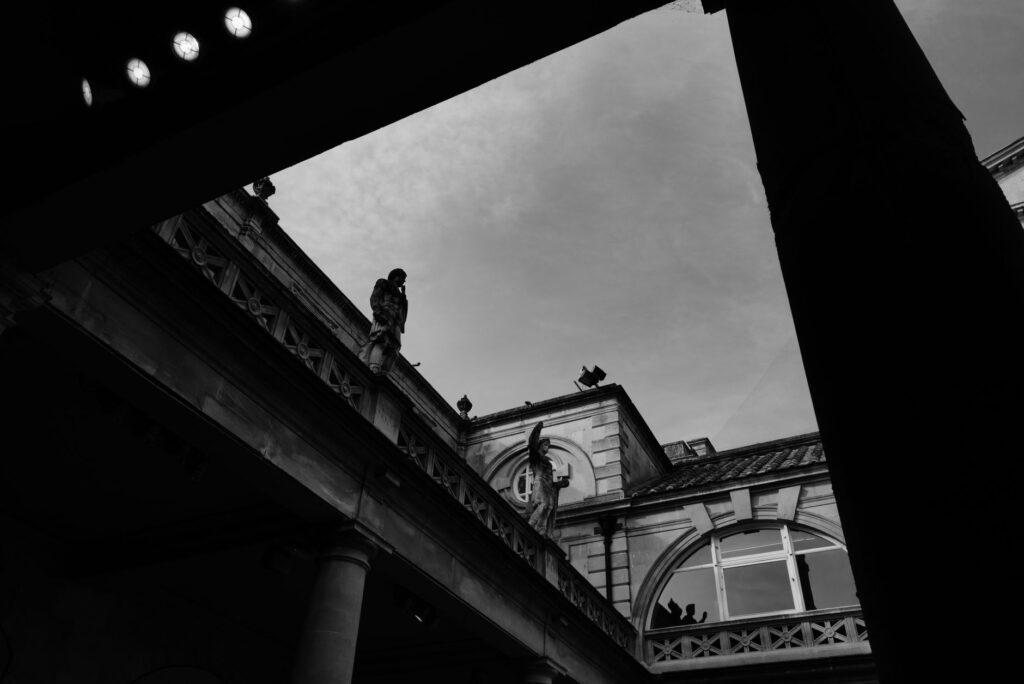
The neoclassical architecture of the Pump Room, with its columns and grand salon, reflects the importance the city placed on presentation and social ritual. Next to it, the Roman baths and the abbey form an ensemble that summarizes centuries of history in just a few meters.
The Thermal Waters: Geology and Heritage
Bath’s waters come from rain that filters through the limestone of the Mendip Hills and emerges through geological faults. Their constant temperature and mineral composition have been objects of study and admiration. Although swimming in the Roman baths is no longer permitted, the complex offers an educational experience about the importance of these springs.
The new thermal center, Thermae Bath Spa, allows visitors to bathe in thermal waters in a contemporary setting, but always against the backdrop of historical heritage. It is essential to remember that there are no medical promises; it is an experience of wellness and connection with history.
Museums and Culture in Bath
Beyond the baths, Bath hosts a rich cultural offering. The Holburne Museum, the Victoria Art Gallery, and the Museum of East Asian Art are some of the institutions that complement a visit. The city has also been the setting for works by Jane Austen, who lived here and set part of her novels in its streets.
The Jane Austen Centre offers a look at the writer’s life and the social context of her time. For literature lovers, walking through Bath is discovering the settings that inspired one of the most important novelists in the English language.
Practical guide
To make the most of a visit to Bath, it is advisable to plan ahead, especially in high season. The city is compact and can be explored on foot, although the hills can be challenging. Public transport is efficient, with buses connecting the main points of interest.
- Best time: Spring and autumn offer pleasant weather and fewer crowds. Summer is popular but busy.
- What to bring: Comfortable shoes for walking on cobblestones and clothing suitable for rain, frequent in southwest England.
- Bookings: The Roman Baths and Thermae Bath Spa often require advance booking. Check current schedules and rates on official websites.
- Accessibility: Many historic buildings have limited wheelchair access; inquire before your visit.
- Accommodation: There are options for all budgets, from boutique hotels to bed and breakfasts in Georgian houses.
It is important to remember that Bath is a living city, not a theme park. Respecting the environment and its residents is part of the experience. The tourist office offers detailed information and maps.
A Walk Along the River Avon
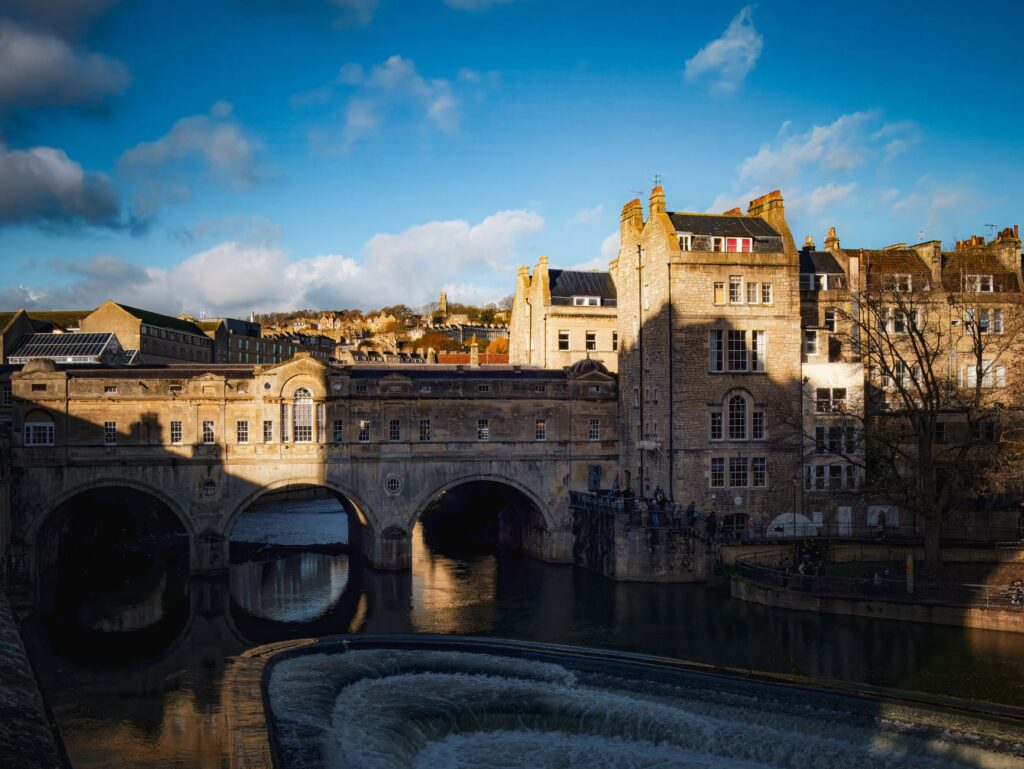
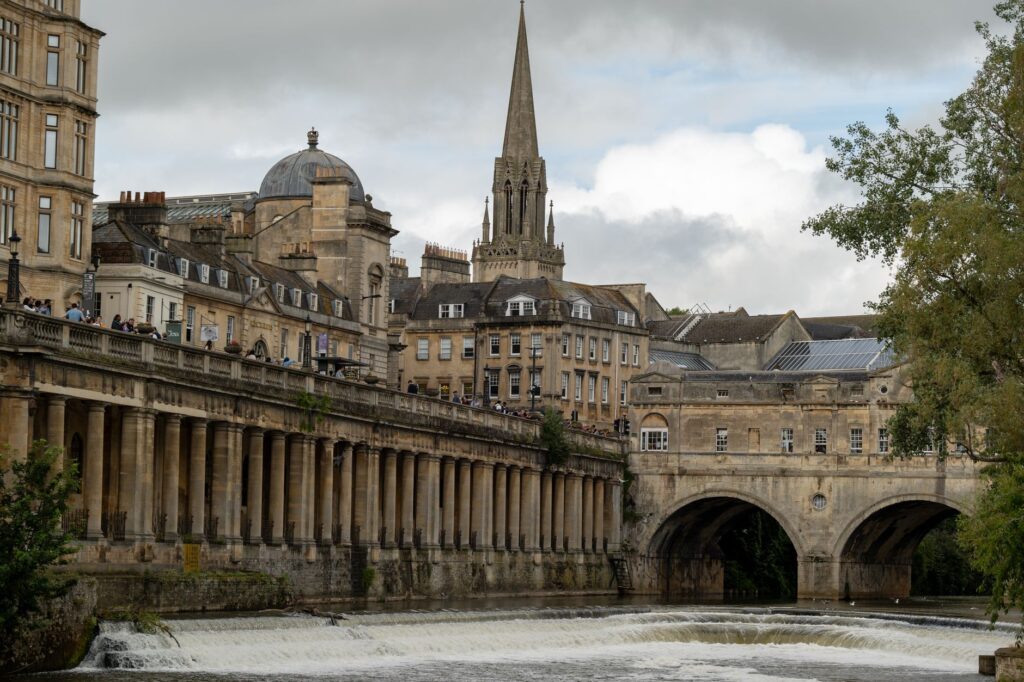
The River Avon crosses the city, offering river walks and views of historic bridges. Pulteney Bridge, with its three arches and shops, is a masterpiece of Georgian engineering. Walking along the river at sunset, with the abbey and Palladian buildings reflected in the water, is one of the most memorable experiences Bath offers.
Parade Gardens, next to the river, are an ideal place to rest and watch the flow of local life. In summer, concerts and outdoor events are held.
The Future of Thermal Heritage
Bath faces the challenge of preserving its heritage while adapting to modern needs. Managing the UNESCO site involves a balance between conservation and development. Projects such as transport improvements and pedestrianization aim to reduce traffic impact and enhance the experience for residents and visitors.
The city remains an example of how a thermal destination can evolve without losing its essence. Its history, architecture, and landscape continue to attract those seeking to understand the relationship between water, health, and society over time.
Ultimately, Bath is much more than a wellness destination; it is an open book about European history, written in stone and water. A place where past and present meet on every corner, inviting the traveler to immerse themselves in a heritage that continues to flow.