The Last Steam Footprint in the Forested Gorge
In northern Romania, where the Maramureș Carpathians reach their densely forested peak, a historic iron artery survives, defying the passage of time and modernization. The Vaser Valley forest railway line, known locally as the Mocănița, is much more than a railway curiosity or seasonal attraction: it is the last industrial narrow-gauge transport system powered by steam locomotives still operational on the European continent. Spanning over fifty kilometers of 760-millimeter tracks, this route snakes parallel to the Vaser River, penetrating a natural reserve completely inaccessible by road, where the sole effective lifeline remains the metallic whistle of the boiler and the rhythmic clatter over wooden ties.
The genesis of this infrastructure dates back to the early 20th century, when the Austro-Hungarian Empire conceived the layout to extract timber from the fir and beech forests blanketing these steep slopes. However, its contemporary relevance lies in its capacity to sustain the daily lives of isolated communities lacking paved road access. Every week, the train fulfills an indispensable logistical double function: it supplies foresters, beekeepers, and small settlements with food, fuel, and tools, while evacuating sustainable timber production and transporting the few remaining residents to the town of Vișeu de Sus. This report examines the complex synergy between mountain railway engineering, environmental conservation, and the survival of an endangered transport model.
Geography of an Impassable Gorge
The Vaser Valley is not a terrain designed for conventional human transit. The slopes of the Carpathian Mountains drop steeply here, carved by millennia of erosion and covered by dense primary forests still inhabited by large mammals such as brown bears, wolves, and lynx. Geographical conditions prevent the construction of stable conventional roads; landslides triggered by torrential rains and spring thaws frequently destroy any temporary asphalt trace. In this hostile environment, the narrow-gauge railway stands out as the sole engineering solution with sufficient resilience to withstand the harshness of the surroundings.
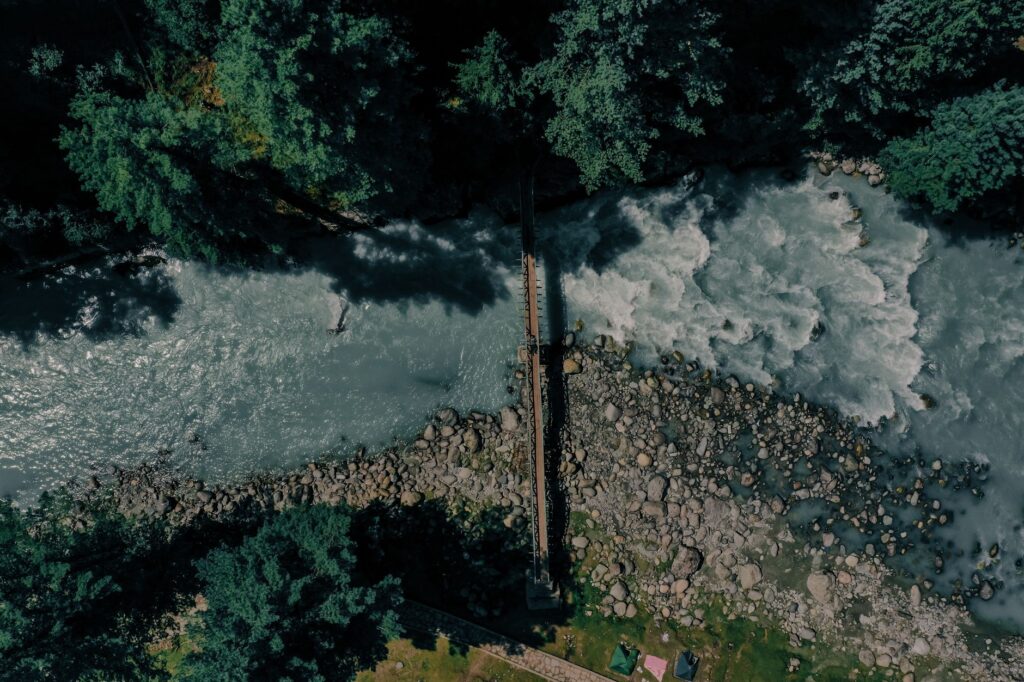
The track layout adheres meticulously to the relief, winding along narrow gorges where the operational margin of error is measured in centimeters. Original engineers avoided massive tunnels, opting instead for a layout of tight curves and metal bridges crossing the Vaser River multiple times. This direct dependence on the natural topography turns track maintenance into a titanic and constant task, executed largely by hand by local crews who inspect the rails inch by inch for deformations caused by winter frost heaving.
Engineering and Anatomy of the Locomotives
The operational heart of the Vaser line lies in its fleet of steam locomotives, authentic mechanical museum pieces that continue to perform heavy daily work. Most of these machines were built in the mid-20th century at Romanian workshops in Reșița and Faur, based on classic Austro-Hungarian designs specifically adapted for narrow-gauge demands and steep high-mountain grades. These saturated-steam locomotives burn local wood as their primary fuel, an abundant resource in the forestry region that eliminates dependence on costly imported mineral coal or diesel supply chains.
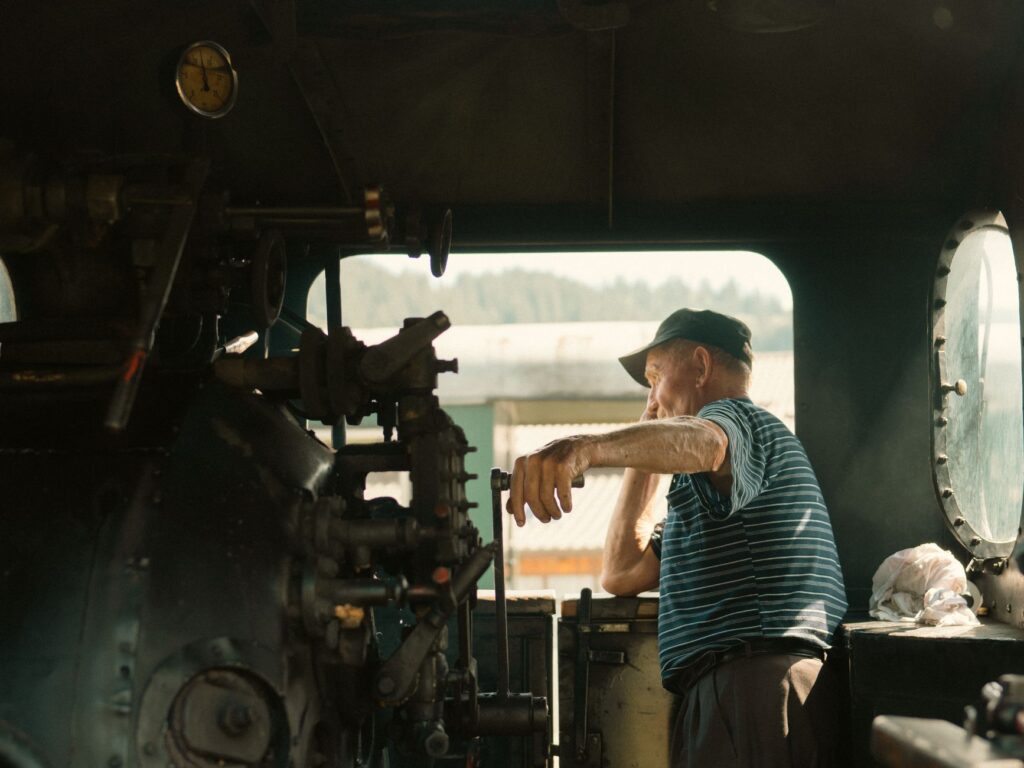
Operating these machines requires an artisanal mastery of pressure, draft, and steam distribution, knowledge passed down from generation to generation among the valley’s engineers and firemen. Unlike internal combustion engines, steam provides exceptionally high torque at low revolutions, a fundamental physical property for hauling heavy formations of log-laden flatcars or passenger carriages up grades exceeding thirty per thousand. Maintaining these century-old boilers demands a specialized workshop in Vișeu de Sus, where turners and boilermakers hand-forge replacement parts no longer industrially manufactured anywhere else in the world.

Steam in the Carpathians is not a nostalgic recreation, but an inexorable mechanical necessity: only the torque flexibility of a traditional boiler can conquer the mud and vertical grade of the Vaser Valley.
Seasonal Rhythms and Logistical Chains
The operation of the Vaser railway is relentlessly dictated by the cycle of the seasons, which radically transforms both technical challenges and transport flows. During winter, temperatures frequently drop below minus twenty degrees Celsius, freezing the water tanks required to feed the boilers and forcing maintenance crews to use wedge snowplows attached to the fronts of the locomotives. In this season, the line becomes the sole vital lifeline to prevent the absolute isolation of remote forestry settlements, guaranteeing the delivery of heating pellets and basic foodstuffs when snow blocks any attempt at foot transit.
Conversely, summer months experience an intense multi-functional transformation. Traditional timber transport is joined by tourists and hikers drawn to the purity of the pristine landscape, forcing operators to manage convoy crossings with millimeter precision on a single-track route with limited sidings. Coordination among station masters via analog radio systems and strict adherence to schedules based on each machine’s hauling capacity prevent head-on collisions on a route where digital communications are entirely nonexistent due to the depth of the mountain canyons.
Forest Sustainability and the Economic Debate
The continued existence of the Vaser railway presents a fascinating case study at the crossroads of industrial resource exploitation and environmental conservation. For decades, the line served almost exclusively intensive timber harvesting. In the 21st century, however, the model has evolved into a complex symbiosis: railway timber transport has been reduced to strictly controlled quotas certified under ecological sustainability standards, minimizing the erosive impact heavy timber trucks would cause if heavy forest access roads were permitted.
Environmentalists and forestry authorities recognize that the steam train, despite carbon emissions from wood combustion, generates an infinitely lower global environmental footprint than the road alternative. The absence of roads prevents the irreversible fragmentation of large carnivore habitats and protects the ecological corridors of the Carpathians. Nonetheless, balancing the operating costs of such ancient infrastructure with revenues derived from regulated tourism and local forestry remains a constant financial challenge dependent on state subsidies and rigorous management by private operators committed to heritage preservation.
Voices and Faces of the Track
Behind the technical machinery of the Vaser railway lies a tight-knit human community whose cultural identity is deeply intertwined with the rhythm of the trains. The engineers, many with grandparents and parents who also served on the line, speak of their locomotives as if they were living beings with distinct temperaments. Track maintenance, carried out with manual tools under rain or blazing sun, demands considerable physical effort that has forged a strong sense of working-class pride among the residents of Vișeu de Sus and the settlements deep within the valley.
For permanent residents inhabiting scattered cabins along the route, the train represents tangible connection to medical services, schools, and city markets. Informal stops along the track—where the engineer halts to deliver letters, sacks of flour, or medicine to an elderly person waiting by their fence—illustrate a profoundly human facet of transport that contrasts sharply with the cold efficiency of modern logistics corridors. This network of daily favors and mutual dependence consolidates a unique social fabric that would immediately vanish if the railway line were closed.

At-Risk Infrastructure and Institutional Resilience
The long-term survival of the Vaser forest railway is far from guaranteed and is fraught with structural threats. Railway infrastructure suffers accelerated wear: metal lattice bridges built early last century require urgent replacements, oak ties rot rapidly due to constant moist clay soil, and a scarcity of specialized turners capable of repairing mechanical steam components threatens to paralyze the fleet in the short term.
At the institutional level, the lack of a unified European heritage protection category complicates securing stable investment funds. Although the Romanian government has partially recognized the cultural value of the Mocănița, budgets allocated for narrow-gauge infrastructure maintenance are meager compared to demands from large national high-speed networks. The resilience of the system thus rests on the tenacity of current private operators and pressure from international railway conservation organizations advocating to preserve this living testimony of the industrial revolution in Europe’s most rugged natural environments.
Practical guide
How to get there: The exclusive starting point for the railway is Vișeu de Sus station, located in northern Rumania. Main road access is via the DN18 national highway. The nearest international airports with regular connections are Cluj-Napoca (CLJ) and Baia Mare (BAY), from where renting a vehicle or taking regional long-distance buses is required.

Trip planning: Trains operate with seasonal schedules. During summer months there are scheduled daily departures, while in winter service drops drastically or restricts to logistical convoys and special requests. Checking availability and booking tickets weeks in advance via the operating company’s official website (Căile Feroviare Forestiere) is essential.
Operational recommendations: The complete journey to Paltin terminal station takes approximately three hours each way. There is no mobile phone coverage across most of the Vaser gorge, so downloading offline maps and carrying cash for minor purchases at local stalls is recommended. Wearing warm clothing is mandatory even in summer, as temperatures drop noticeably when entering the shaded canyon and riding in open-air carriages.
The Final Throb of Steam in the Gorge
When the last column of white smoke dissipates among the ancient fir crowns and the echo of the metal whistle fades against the rock walls of the Vaser Valley, there remains the certainty of having witnessed a daily miracle of mechanical and human endurance. In an era dominated by digital automation and impersonal high-speed corridors, the Carpathian railway demonstrates that true efficiency sometimes lies in knowing how to adapt with slowness and respect to nature’s relentless pace. It is not merely a means of transport, but the vital pulse of a world stubbornly refusing to vanish into the oblivion of progress.