Introduction to the Insular Labyrinth of Southern Chile
The Chiloé Archipelago, nestled in the northwestern extreme of Chilean Patagonia, stands as a territory where solid earth seems to constantly negotiate its existence with the Pacific Ocean. Separated from the mainland by the Chacao Channel, this cluster of major and minor islands represents not only a unique enclave of biodiversity, but also a fascinating model of insular mobility. Here, inshore navigation and maritime connectivity infrastructure form the backbone of daily life, defying marine currents and southern weather with a precision inherited from ancestral traditions and adapted to contemporary engineering.
Far from conventional tourist circuits, venturing into Chiloé means understanding that movement is not a mere logistical formality, but an experience deeply rooted in the landscape. The ferries crossing the Chacao Channel and the interior waterways act as vital arteries connecting isolated communities, while the vernacular architecture of stilt houses and wooden churches declares the cultural resilience of a people shaped by water. This report explores how the island’s river and maritime transport network sustains a fragile and fascinating socioeconomic ecosystem.
The Geography of Tides and the Challenge of Austral Connectivity
Understanding the transport system in Chiloé requires examining the oceanographic conditions governing the region. The currents of the Chacao Channel can reach speeds exceeding nine knots, turning the crossing from Pargua to Chacao into a technical test for both experienced captains and the modern fleet of roll-on/roll-off ferries. This tidal dynamic, which oscillates drastically several times a day, has historically conditioned the mobility of inhabitants and goods, forcing the development of a port culture based on patience and empirical reading of the sea.

Over recent decades, docking infrastructure has evolved from precarious shingle jetties to hydraulic ramps capable of absorbing the sea level variance. However, the essence of minor navigation still depends on small wooden boats built by local rib carpenters. These vessels, powered by outboard motors or traditional sails, remain the only means to access smaller islets such as Quinchao, Lemuy, or the Guaitecas, proving that high technology must necessarily coexist with traditional construction wisdom.
Stilt Architecture: When Foundations Dialogue with High Tide
Human adaptation to the aquatic environment in Chiloé finds its highest visual expression in the architecture of stilt houses, known locally as palafitos. Located primarily along the coastal edges of Castro and Chonchi, these clusters of homes raised on luma or cypress pilings are not mere touristic postcards, but ingenious structural solutions to the extreme variability of tides. During low tide, the pilings are completely exposed over the marine mud; hours later, high tide transforms the foundations into a floating dock welcoming boats directly at the threshold of living rooms.
This architectural symbiosis reflects a profound understanding of coastal dynamics. The woods used, treated naturally to resist moisture and salinity, guarantee surprising durability. Rib carpentry and stilt construction share ancestral techniques where wooden joints are assembled without metal nails in their purest forms, allowing the structure to absorb ground movements and the constant pressure of water. Walking through these neighborhoods suspended over the sea is observing a live lesson in amphibious urbanism.
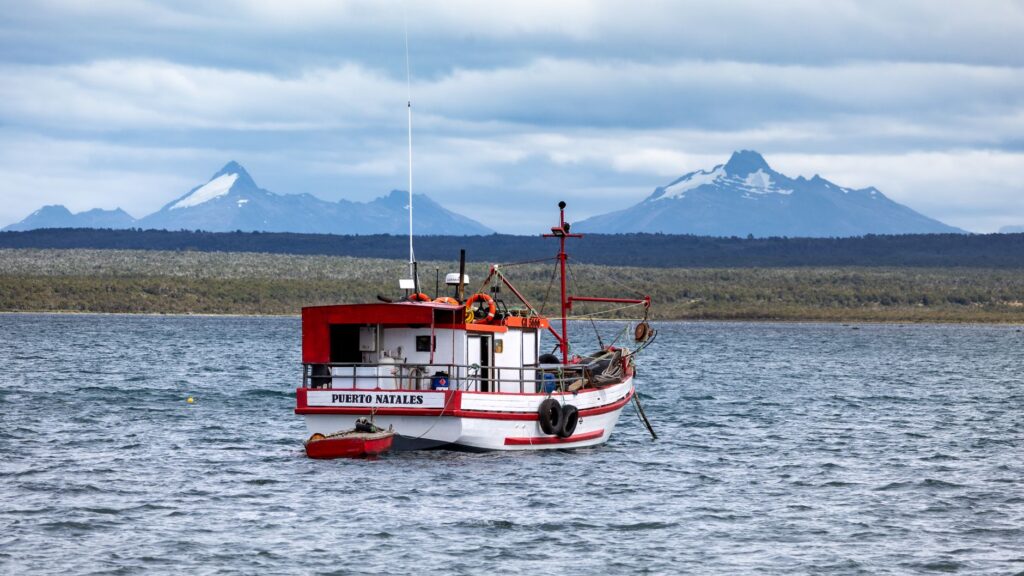
The sea does not separate Chiloé from the mainland; the currents and channels are the true streets of a community that has turned water into its home.
The Ferry Network: The Mechanical Pulse of the Chacao Channel
The ferry system operating continuously in the Chacao Channel constitutes the most important logistic link between the continental Ruta 5 Sur and the main island of Chiloé. Shipping companies operate fleets transporting cars, heavy cargo trucks, and passengers on a crossing taking approximately twenty minutes. This constant frequency contrasts with the unhurried pace of the island’s interior, evidencing a duality where modern economic urgency coexists with the tranquility of the inner channels.
Aboard these vessels, the travel experience transforms into a transition ritual. Passengers leave the mainland to submerge themselves in a microclimate where morning mist often blurs the horizon line. The planning of this transport faces constant challenges due to southern storms, which can suspend operations unexpectedly. Therefore, port authorities and private operators coordinate early weather alert systems guaranteeing navigation safety without collapsing the insular supply chain.
Rib Carpentry and the Shipyards of Tirúa and Achao
Beyond commercial routes, the survival of navigation in Chiloé depends on the expertise of master rib carpenters. In localities such as Achao and Estero de Lincay, artisanal shipyards continue operating under the same geometric principles transmitted from generation to generation. Selecting the appropriate wood —preferably mañío, coigüe, and alerce— is a meticulous process beginning months earlier in the forest, evaluating the grain and natural curvature of trees to shape frames and keels.
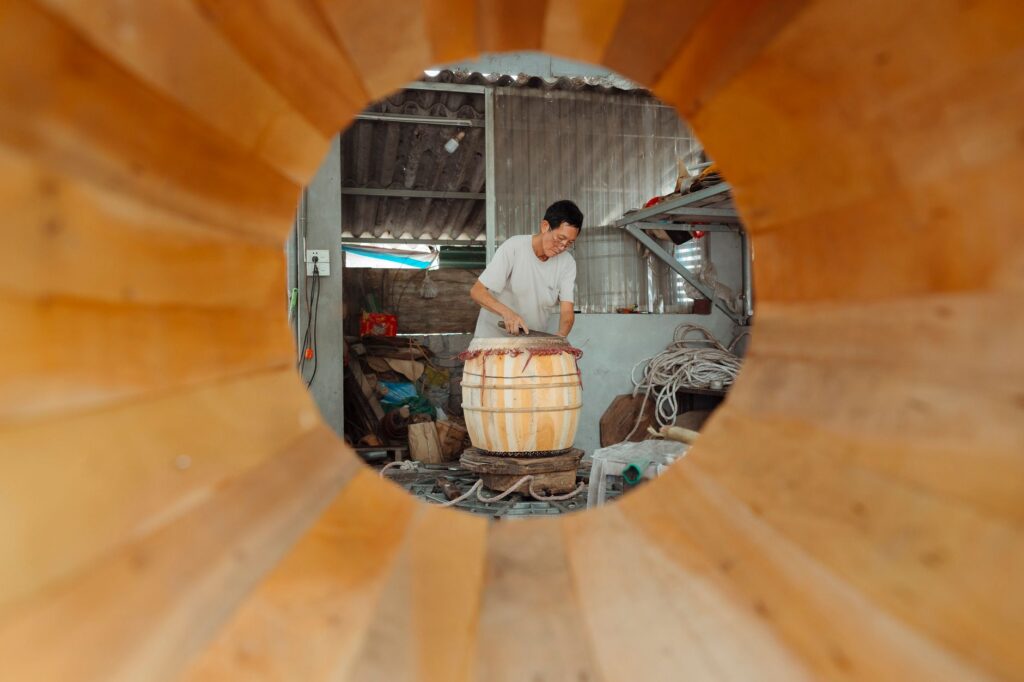
This endangered trade maintains a symmetrical relationship with local transport. Each hand-built boat is specifically designed to withstand the short, choppy waves of Patagonian channels. The introduction of maritime safety regulations has forced these shipyards to integrate modern buoyancy calculations without losing the artisanal soul of their constructions. The result is agile, robust vessels of indisputable formal beauty continuing to navigate waters where large ships cannot operate.
Sustainability and Responsible Tourism in Patagonian Channels
The steady increase of visitors to the archipelago has raised complex questions regarding the preservation of its fragile marine and terrestrial ecosystem. Nautical tourism, centered on observing migratory birds, colonies of Magellanic and Humboldt penguins, and interior fjords, demands a strict regulatory framework to prevent acoustic pollution and habitat degradation. Local communities, organized in tourist boat cooperatives, promote low-impact navigation models prioritizing environmental education over massification.

This sustainable approach seeks to balance the economic need to diversify insular income with protecting the marine resources upon which artisanal fishing and kelp harvesting depend. Travelers choosing to explore Chiloé through small-scale maritime routes contribute directly to the economy of families practicing responsible fishing, ensuring that the natural heritage remains intact for future generations of navigators and residents.
Practical guide
How to get there: The main access to Chiloé is by land and sea from Puerto Montt. After driving down Ruta 5 Sur to the town of Pargua, travelers must take the ferry crossing the Chacao Channel to the main island. Departures are continuous, operating 24 hours a day during peak season.
When to visit: The months between December and March offer the most stable weather conditions, with lower rainfall and longer days. However, the channels retain their melancholic beauty year-round, with autumn (April and May) being ideal for travelers seeking tranquility and landscapes free of tourism overcrowding.

Internal transport: To tour smaller islands like Quinchao or Lemuy, it is necessary to combine local bus services with small passenger and vehicular ferries operating from ports like Dalcahue and Chonchi. Checking local tide schedules is strongly recommended, as some minor routes adjust departures according to sea states.
Accommodation and gastronomy: Prioritize small family guesthouses set up in former stilt houses or larch-shingle mansions in Castro, Ancud, and Achao. Gastronomically, respect the seasonality of local products such as curanto seafood and rock fish caught by the artisanal inshore fleet.
Emotional Epilogue Facing the Inner Sea of Chiloé
At dusk, when mist begins to descend over the channels and island outlines merge with the gray of the Patagonian sky, Chiloé reveals its true face. In that instant of absolute silence, broken only by the rhythmic splashing of water against wooden pilings, one realizes this archipelago is not merely a geographical destination, but a state of contemplation. The boats returning to port after a long day of inshore work complete a millennial cycle defying time, inviting the traveler to slow down and listen to the deep breath of the southern world.