
In the heart of the northern Peruvian Amazon, where the Marañón and Ucayali rivers converge to give birth to the Amazon River, lies a colossal aquatic labyrinth known as Pacaya Samiria National Reserve. This amphibious territory, spanning over two million hectares, represents one of the most complex and best-preserved freshwater ecosystems on the planet. Far from the static image of firm jungle, Pacaya Samiria is a landscape in perpetual transformation, governed by the relentless rhythm of river floods and ebbs. Here, water is not merely a geographic feature, but the vital pulse sustaining a trophic web of astonishing biodiversity, where community conservation and science converge to protect emblematic species threatened by anthropogenic pressure and territorial transformation.
Among the turbid waters of the creeks, cochas, and tipishcas—horseshoe lagoons formed by ancient riverbeds—lives one of the most enigmatic aquatic mammals of the Neotropics: the pink river dolphin or bufeo (Inia geoffrensis). Unlike their marine relatives, these freshwater cetaceans have evolved through specific adaptations to a three-dimensional environment saturated with plant obstacles. During the high-water season, known locally as the creciente, rivers overflow their banks and submerge kilometers of alluvial forests, allowing dolphins to swim among tree trunks in search of fish. This anatomical flexibility, characterized by non-fused cervical vertebrae granting remarkable neck mobility, results from millions of years of evolution in a flooded habitat now facing unprecedented challenges.
The dynamics of high waters and fluvial architecture
The hydrological cycle of Pacaya Samiria absolutely dictates the biological and social life of the reserve. During the dry season, running from July to October, water bodies shrink drastically, confining aquatic fauna to main channels and deep cochas. This seasonal concentration generates intense predatory activity, where pink river dolphins exploit high fish densities to feed efficiently. However, this same vulnerability historically exposes them to conflicts with local fishing communities competing for the same fish resources during relative scarcity.
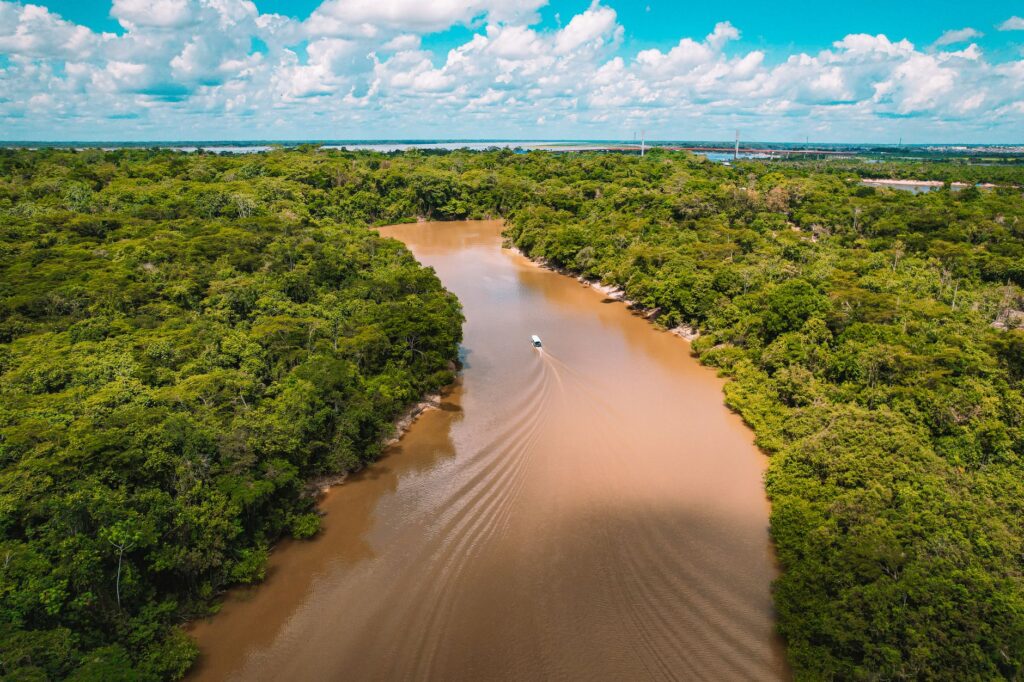
With the arrival of intense rains in the Andes and the ensuing flood, spanning from November to June, the landscape expands exponentially. The flooded forest, or varzea, becomes a vast lacustrine expanse where fish find shelter and abundant food among fallen fruits and floating seeds. Bufeos follow this vertical and horizontal migratory movement, penetrating the forest thicket with surprising agility. Scientific understanding of these seasonal migratory routes is fundamental for designing fisheries management and conservation strategies that harmonize the needs of riparian populations with the protection of aquatic mammals.
Biology and adaptations of Inia geoffrensis in the Amazonian labyrinth
The pink river dolphin stands out not only for its characteristic coloration—ranging from gray in juveniles to intense pink in adult males, resulting from scars from social interactions and cutaneous vascularization—but also for a series of unique physiological adaptations. Its echolocation system, highly developed through a prominent and mobile melon on the forehead, allows it to navigate and hunt in waters with practically zero visibility due to high suspended sediment loads. Its vision, though reduced by small eyes, suffices to perceive surface light changes.
Beyond its morphology, the social structure of Inia geoffrensis differs markedly from oceanic dolphins. They are typically found in small groups, frequently formed by a mother and calf, or in loose temporary associations during feeding. Calves’ prolonged dependence on mothers limits the species’ reproductive rate and makes it particularly vulnerable to any increase in adult mortality. Recent telemetry and systematic sighting studies have allowed Peruvian researchers to document critical breeding and nursing areas within the reserve, identifying zones where human intervention must be strictly regulated.
The impact of human activity and regional transformation
Despite being classified as a direct-use protected area where local communities conduct traditional subsistence activities under regulation, Pacaya Samiria is not an island immune to external pressures. On the reserve’s borders and along surrounding main river axes, infrastructure development, expansion of unregulated commercial fishing, and intense river traffic generate acoustic disturbances and collision risks for cetaceans. Likewise, heavy metal pollution from illegal mining activities in upstream basins poses a latent threat to the entire Amazonian trophic web.
Historically, the pink river dolphin has faced local myths that sometimes protected it from direct hunting, but in other contexts led to its use as bait for mota fish (Calophysus macropterus) fishing. Although Peruvian legislation strictly protects the species, effective law enforcement across such vast and remote expanses requires active participation from community vigilance committees. These local organizations, trained and backed by Peru’s Natural Protected Areas Service (Sernanp), act as the first line of defense in wildlife monitoring and illicit activity prevention.
The conservation of great Amazonian rivers cannot be understood as an isolated effort to protect individual species, but as the integral defense of a dynamic hydrological system where every flood and drought writes the future of biodiversity.
Citizen science and participatory monitoring in the basin
One of the most effective tools developed in Pacaya Samiria over the past decade is the strengthening of participatory biological monitoring. Riparian settlers, who previously relied exclusively on intensive resource extraction, have transformed into field custodians and researchers. Equipped with record books, GPS units, and standardized scientific guidelines, volunteer park rangers and local fishermen record the presence, frequency, and behavior of bufeos during daily tasks. This steady flow of quantitative data has enabled biologists to build more precise demographic models without disturbing the ecosystem’s tranquility.
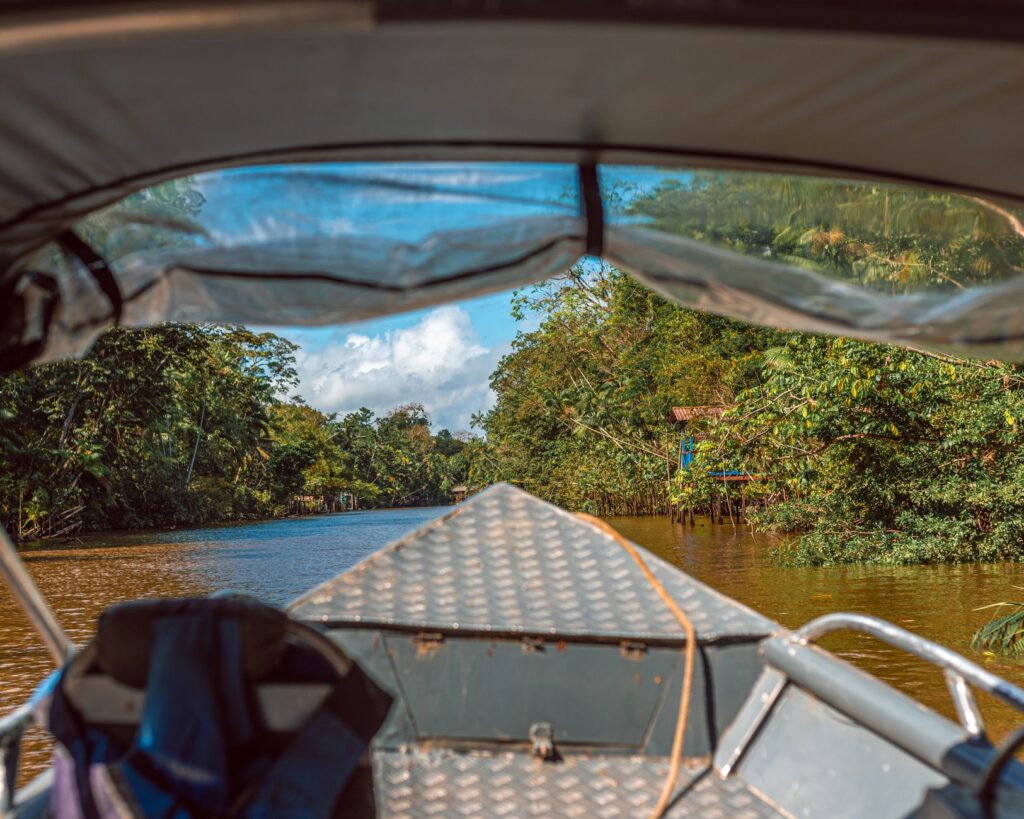
This participatory governance model demonstrates that long-term conservation is viable only when local communities perceive direct, tangible benefits from preserving their natural environment. Community-based ecotourism, focused on respectful observation of aquatic and terrestrial fauna, has generated complementary income sources reducing dependence on destructive extractive activities. Visitors navigating narrow creeks in smaller boats powered by low-impact engines witness a fragile yet resilient balance where science and traditional wisdom complement one another.
Practical guide
Planning a scientific observation and ecotourism trip to Pacaya Samiria National Reserve requires logistical rigor, strict respect for environmental regulations, and a clear understanding of Amazonian seasonality.
How to get there: The main access point to the reserve is the city of Iquitos, capital of the Loreto department, accessible exclusively by air from Lima or via river routes from Brazil and Colombia. From Iquitos, travelers proceed by road or river to towns like Nauta, the formal gateway to the Marañón basin.
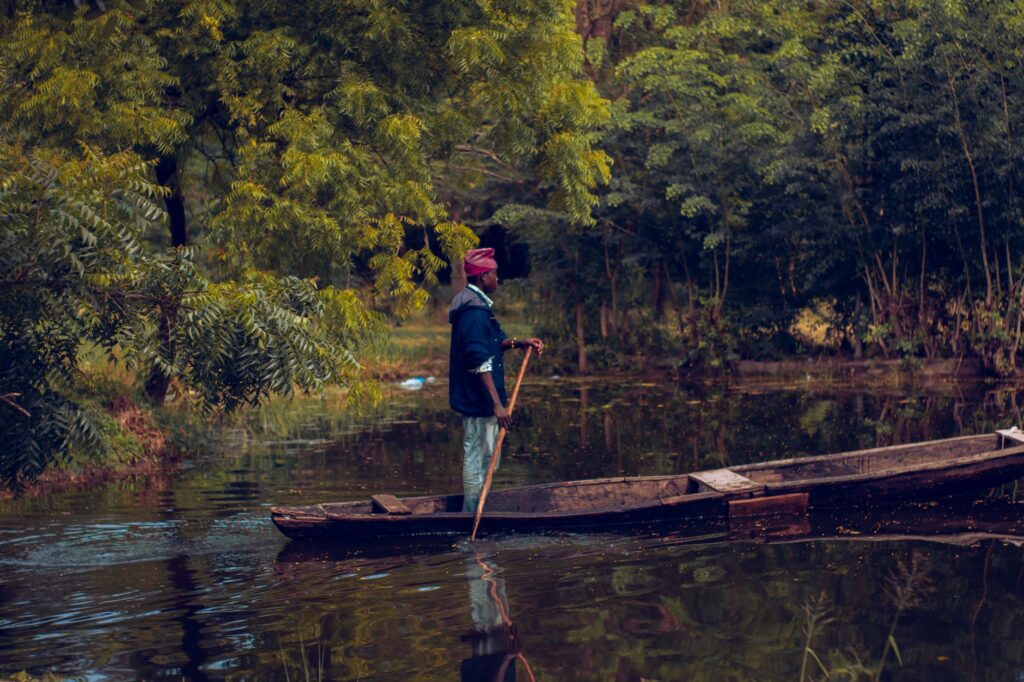
When to go: Choosing the season depends on trip objectives. The high-water season (November to June) allows navigation through flooded forests in search of aquatic fauna among trees, while the dry season (July to October) facilitates observing wildlife concentrations in main rivers and cochas.
Entry requirements: Entry to the reserve must be arranged strictly through tour operators authorized by Sernanp. Paying entrance fees and hiring certified local guides familiar with river safety routes and regulations is mandatory.
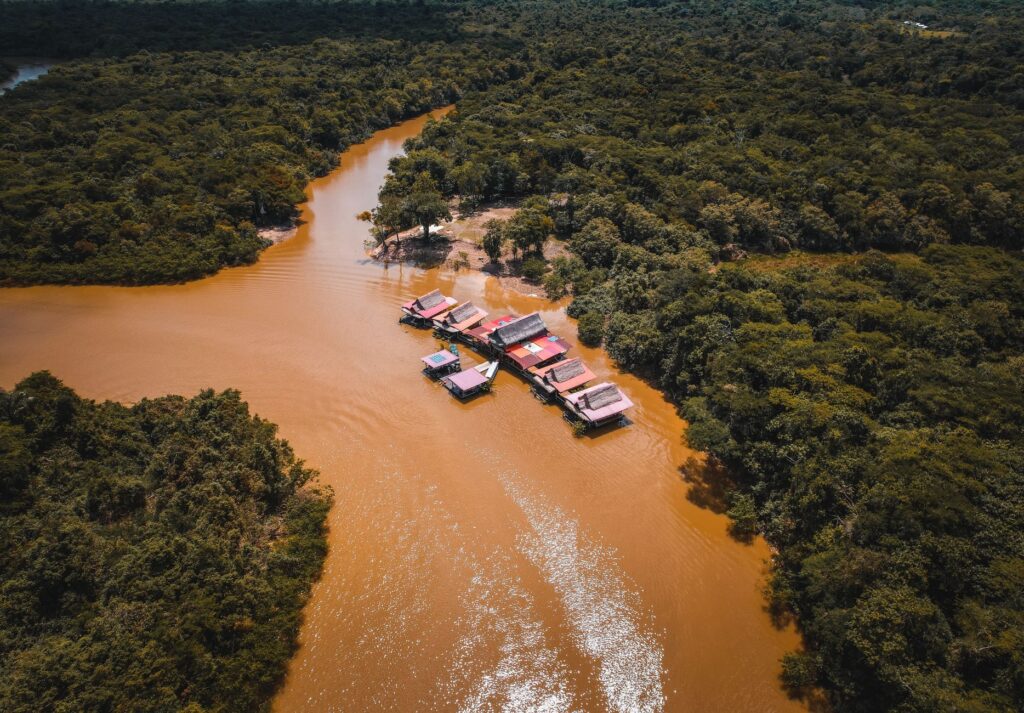
Accommodation and lodging: Options within the reserve are limited to authorized low-impact campsites and community-run lodges managed by local riparian populations, operating under strict energy sustainability and waste management standards.
Health and safety: Having up-to-date yellow fever vaccinations and recommended malaria prophylaxis is essential. Appropriate personal equipment for humid tropical climates, including long-sleeve clothing, quick-drying footwear, and effective insect protection, is required.
Photographic and optical equipment: Due to extreme humidity and low light conditions in flooded forests, waterproof cameras or protective housings are recommended, along with high-luminosity binoculars for distant wildlife identification.
The silence of water and the persistence of the future
When the sun sets over the horizon of Pacaya Samiria, the vastness of the varzea envelops in profound silence, interrupted only by the brief blow of a pink river dolphin breaking the water’s surface and the distant echo of nocturnal birds. This instant of stillness reveals the territory’s true dimension—a space where time seems measured by flood cycles rather than the modern world’s rush. The survival of Inia geoffrensis in this vast river sanctuary is not only a biological indicator of the Amazon basin’s health, but a testament to human capacity to correct course and learn to coexist with nature in its wildest, most overflowing state.