
Origins of an Unavoidable Transition in the Forest Heart
Germany’s Black Forest, a vast expanse of conifers and deep valleys stretching across the state of Baden-Württemberg, has long grappled with the paradox of its own tourism appeal. While millions of travelers arrive annually in search of pristine air and untouched landscapes, a historical reliance on private combustion-engine vehicles has placed unsustainable pressure on local county roads. Recognizing that motorization threatened the delicate equilibrium of forest ecosystems, local municipalities initiated a radical overhaul of their regional connectivity strategy years ago. This process goes far beyond merely restricting road traffic; it fundamentally redesigns how residents and visitors move between valleys and peaks.
At the core of this transformation lies the deployment of a multimodal transport system combining railway efficiency with hydrogen-fueled bus fleets and segregated greenway networks. Regional authorities, working closely with conservation associations and public transport operators, have invested in upgrading secondary rail lines to ensure competitive frequencies against the private car. This commitment to decarbonization is underpinned by a clear thesis: sustainable mobility in protected natural environments must not be a restrictive privilege, but a robust, accessible public infrastructure that outperforms private transport in terms of time and comfort.
Designing this network required an exhaustive diagnosis of rural mobility flows. Traditionally, local commuting traffic and recreational excursions converged on the same valleys during identical peak hours. To resolve this bottleneck, transport engineers implemented a demand-management system anchored in timed modal transfers and full tariff integration. Today, a single regional ticket allows travelers to combine regional trains, fuel-cell buses, and temporary access to public e-bikes distributed across strategic hubs adjacent to railway stations.
The Railway Backbone and the Hydrogen Bet
One of the most notable technical milestones in this alpine and forest corridor has been the progressive electrification of secondary tracks and the introduction of green-hydrogen-powered units. Where installing traditional overhead catenary lines proved unfeasible due to landscape impact or complex topography, zero-emission trains and buses were deployed. These vehicles not only eliminate direct carbon footprints but also dramatically reduce acoustic pollution, a decisive factor for the preservation of endemic fauna within regional nature reserves.
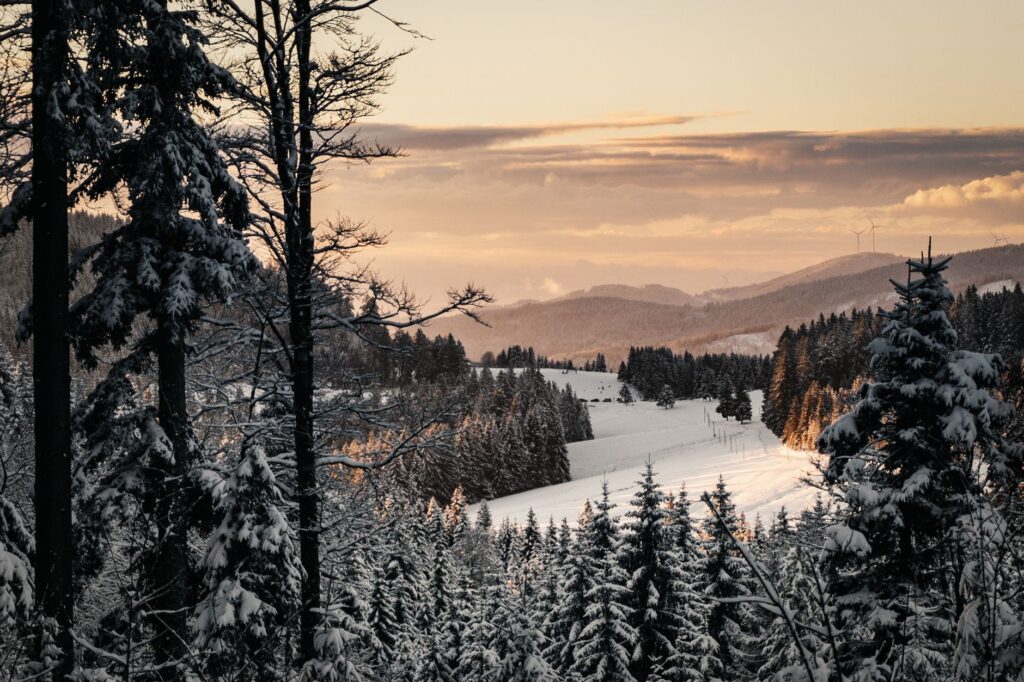
This energy transition in public transport was not without logistical hurdles. Securing a green hydrogen supply required establishing local production plants powered exclusively by photovoltaic parks and small-scale run-of-the-river hydroelectric facilities. Such energy self-sufficiency ensures that the transport network remains free from fossil fuel dependencies even during peak winter demand. Integrating local renewable sources guarantees that every kilometer traveled reinforces the territory’s energy sovereignty.
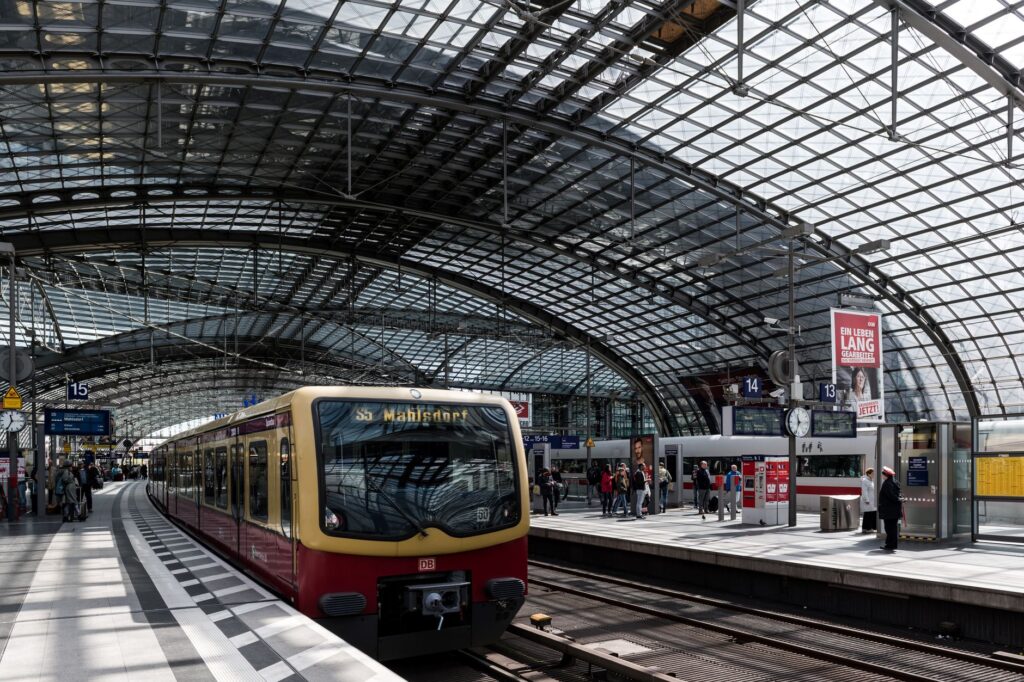
Simultaneously, railway stations have evolved from mere transit stops into integrated mobility hubs. Equipped with ultra-fast e-bike charging points, secure bicycle parking, and real-time digital displays providing updates on trail conditions and cycling routes, they facilitate frictionless intermodality. Users can park private vehicles on the regional periphery and complete the remainder of their journey through a seamless combination of public transit and active mobility.
Greenways and the Network of Shared Forest Paths
Soft infrastructure is just as vital as heavy engineering within the Black Forest’s strategy. Former logging tracks and decommissioned railway lines have been repurposed into high-capacity greenways connecting villages and natural landmarks without conflicting with motorized traffic. Paved with permeable materials to prevent soil erosion and aquifer sealing, these paths accommodate safe year-round transit for cyclists, pedestrians, and low-speed personal mobility devices.
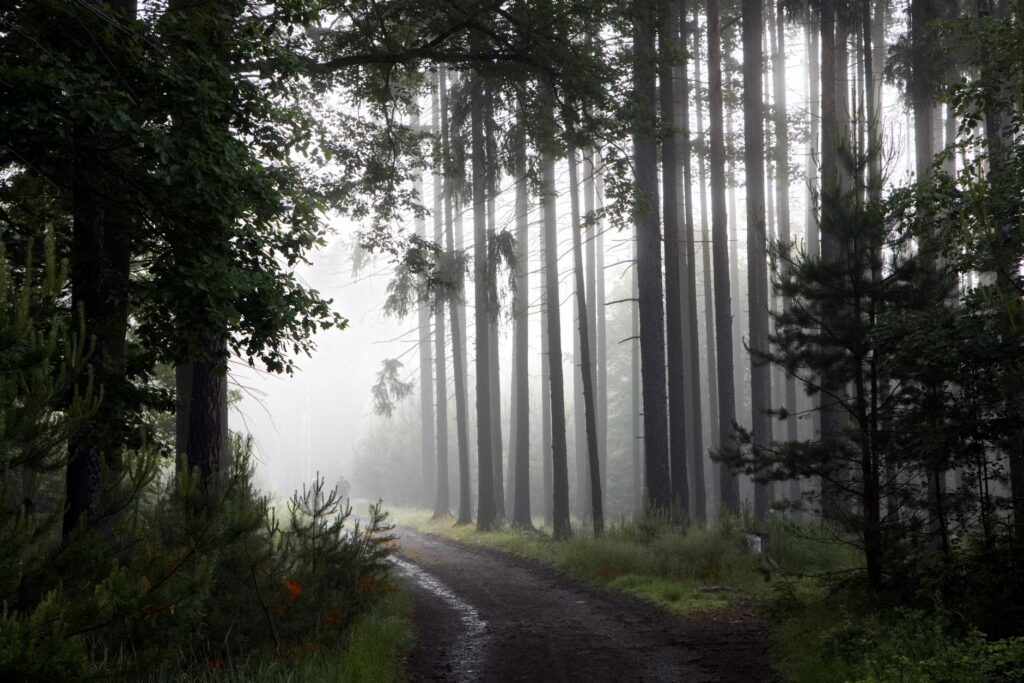
Balancing diverse user groups along shared forest paths required implementing smart signage and strict prioritization rules. On steeper gradients, dedicated lanes for cargo e-bikes were established, enabling local residents to transport goods or complete daily errands without relying on polluting vans. The design of these routes prioritizes safety and landscape integration, proving that civil infrastructure can coexist harmoniously with dense forest canopies.
This approach has revitalized the economy of small inland villages. By redirecting transit traffic to peripheral corridors and encouraging visitors to explore urban cores on foot or by bicycle, local commerce and family-run accommodation bookings have grown. Area merchants report that contemporary travelers appreciate the absence of noise and exhaust fumes, favoring the tranquility of vehicle-free streets.
The true success of sustainable transport infrastructure is measured not by the speed with which it moves crowds, but by the silence and health it restores to the landscape it traverses.
Community Governance and Citizen Participation
No transformation of this magnitude would have been possible without the consensus and active participation of local communities. Black Forest municipal councils established permanent neighborhood forums to debate cycle lane layouts, new bus timetables, and access restrictions to ecologically fragile areas. This decentralized governance framework helped mitigate initial skepticism from traditional sectors, such as the timber industry and small shops dependent on car access.
The financing model also reflects this shared commitment. European green transition funds were supplemented with municipal sustainability bonds and dedicated tourist taxes reinvested entirely in maintaining the public transport network and conserving local forests. Consequently, every visitor contributes directly to the wear and tear and subsequent improvement of the services they utilize, generating a virtuous circle of shared responsibility between the tourism industry and local government.
Regional schools and vocational training centers joined the project, training young technicians in hydrogen fleet maintenance and smart mobility network management. This emphasis on local talent ensures the long-term technical viability of a system requiring specialized competencies far removed from traditional internal combustion mechanics.
Outstanding Challenges and Seasonal Peak Management
Despite evident progress, the Black Forest faces significant challenges, particularly during autumn weekends and winter holiday periods when influxes of skiers and hikers test the system’s carrying capacity. During peak demand spikes, auxiliary hydrogen buses and rail reinforcements experience localized overcrowding, forcing operators to activate capacity-regulation protocols at major stations.
To counter this, authorities have launched digital advance-booking platforms allowing users to secure spaces on high-demand public transport services, discouraging spontaneous private car usage. Furthermore, active steps are taken to promote temporal and geographical visitor decentralization, offering alternative routes toward lesser-known valleys that possess spare capacity and equally efficient transport services.
Constant environmental monitoring serves as another key tool. Sensors installed at critical points measure air quality, noise levels, and pressure on protected trails. This publicly accessible real-time data enables managers to adjust transport frequencies and apply temporary access restrictions to forest zones before irreversible ecosystem damage occurs.
Practical guide
How to get there: Primary regional access is through the international airports of Stuttgart or Frankfurt, offering direct rail connections operated by Deutsche Bahn to major Black Forest hubs such as Offenburg or Freiburg. The regional railway network allows travelers to penetrate deep into the valleys without renting a car.
When to visit: While summer and winter remain peak seasons, the shoulder months of May through June and September through October offer the ideal balance of lower crowds, favorable weather for cycling infrastructure, and full operational capacity for reinforced public transport services.
How to get around: Acquiring the regional mobility card (such as KONUS or local equivalents), typically included with accommodation bookings, is essential. It grants unlimited use of regional trains and buses throughout the territory. For mountain stretches, public e-bikes available at main stations are strongly recommended.
Sustainability tips: Always respect trail signposting to avoid disturbing local wildlife. Utilize official transport apps to check real-time occupancy and avoid mid-morning peak hours during festive weekends.
Epilogue: The Forest That Breathes Through Movement
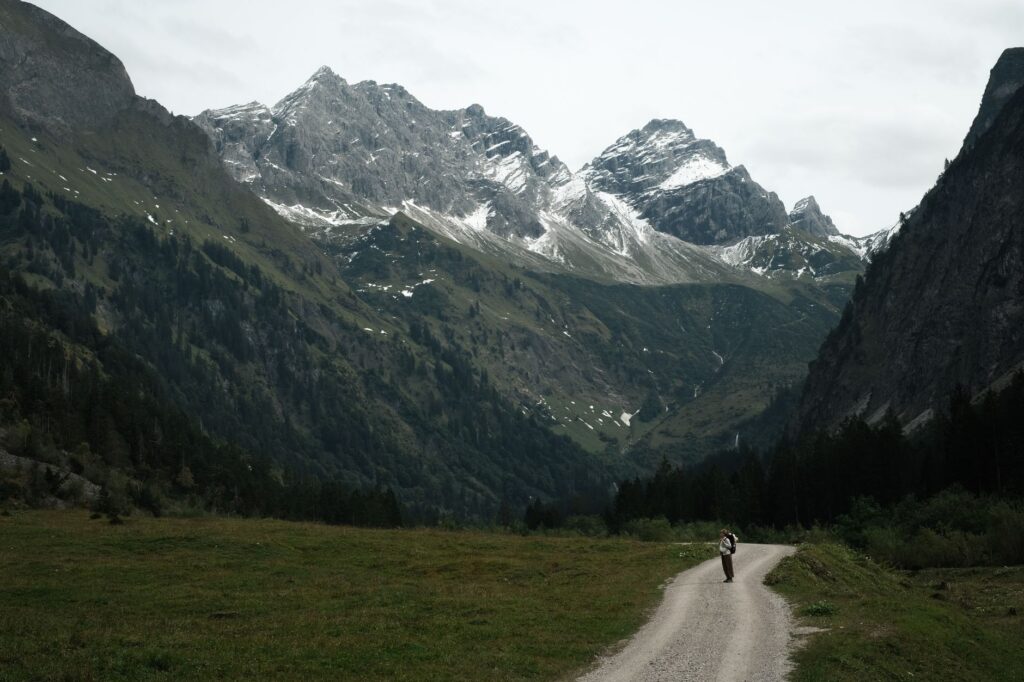
Walking beneath the ancient fir trees of the Black Forest, accompanied solely by the wind in the canopy and the distant murmur of a stream, acquires renewed significance when one understands the technical and social effort underpinning it. This is not a landscape frozen in time, but a dynamic ecosystem where cutting-edge technology has been placed at the service of moderation and environmental respect. The transformation of its mobility demonstrates that reconciling the right to travel with rigorous protection of natural heritage is entirely achievable.
Ultimately, greenways and silent hydrogen buses are much more than technical engineering solutions: they represent a declaration of principles on how rural communities can lead their own future. In an urbanized world urgently seeking coherent habitability models, this corner of southwestern Germany offers a tangible lesson that sustainable progress is measured not by the acceleration of journeys, but by the quality of life preserved along the way.