
Asian high mountains are not always measured in snow-capped peaks; they are frequently deciphered in the titanic effort of laying steel across impossible abysses. At the dawn of the twentieth century, the French engineering enterprise tasked with linking the Gulf of Tonkin to the Yunnan plateau orchestrated one of the boldest feats of industrial colonialism in Asia. The result was the Yunnan Railway, an artery of narrow gauges and impossible curves carving through dizzying gorges, filigreed metal bridges, and tunnels hewn with pickaxe and dynamite into the most unforgiving limestone rock of southern China.
Understanding this infrastructure requires abandoning simplistic nostalgia to delve into a complex logistical, geopolitical, and human web. It is not merely an archaeological vestige of a bygone railway era, but a corridor that redefined trade, heavy freight movement, and territorial integration between colonial Indochina and the remote interior provinces of the People’s Republic of China. Today, amid accelerated modernization and high-speed rail networks, the historical trace survives as a silent testimony to human daring before Asia’s relentless topography.
The Geography of the Void: Yunnan’s Topographic Challenge
The terrain separating the Vietnamese border from the Kunming plateau is a labyrinth of geological folds where the earth seems to double back on itself. With elevation drops exceeding a thousand meters over just a few kilometers, French engineers deployed to the region faced an elementary obstacle: the absolute absence of flatlands permitting a conventional layout. The solution demanded adopting the meter gauge, a standard that reduced the turning radius of locomotives while exponentially multiplying the risk of derailment along sections suspended over river canyons.
Every kilometer won from the terrain meant piercing the mountain or tracing viaducts that seemed to defy the laws of gravity. The Red River and its secondary tributaries acted as natural guides, yet also as constant threats during the monsoon season, when flash floods routinely washed away entire embankments. Karstic rock, porous and unstable, forced the continuous lining of tunnels with stone masonry and kiln-fired bricks transported on muleback from base camps located in the lower valleys.
French Engineering in the Tropics: The Architecture of Iron
The realization of the Yunnan railway line would not have been possible without the technological transfer from the French metropole adapted to the extreme tropical and subtropical conditions of Southeast Asia. The design of bridges and viaducts fell to engineering bureaus deeply influenced by the construction currents of the era, where puddle iron and laminated steel combined with local masonry to support exceptionally high dynamic loads in extremely narrow spaces.
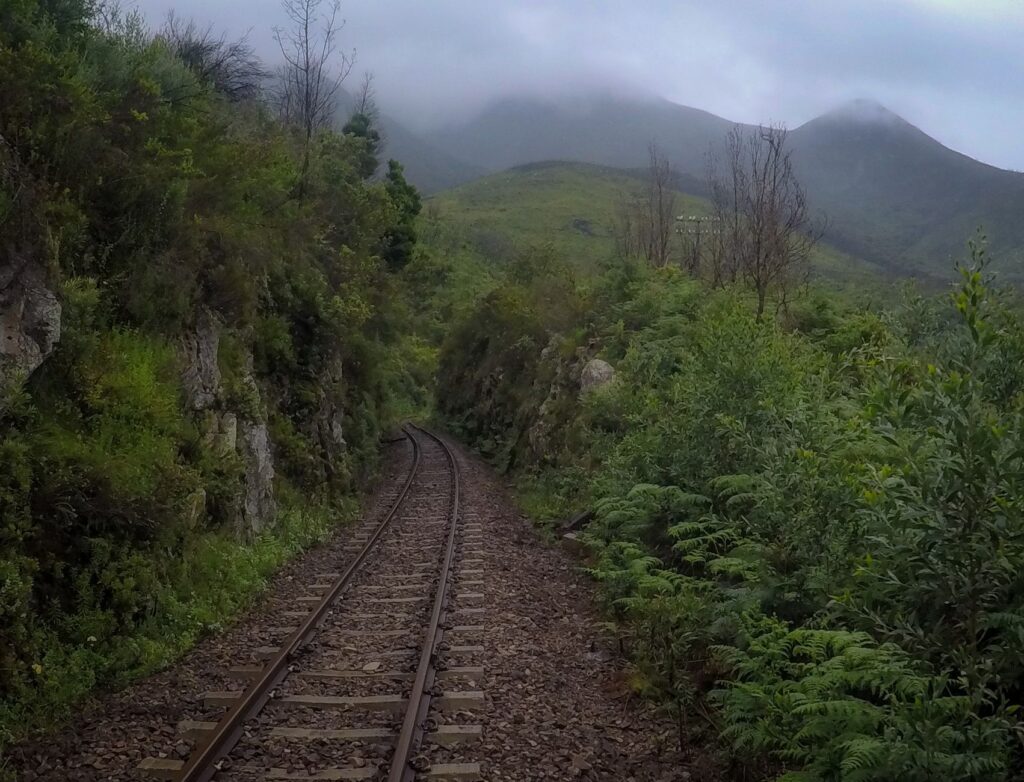
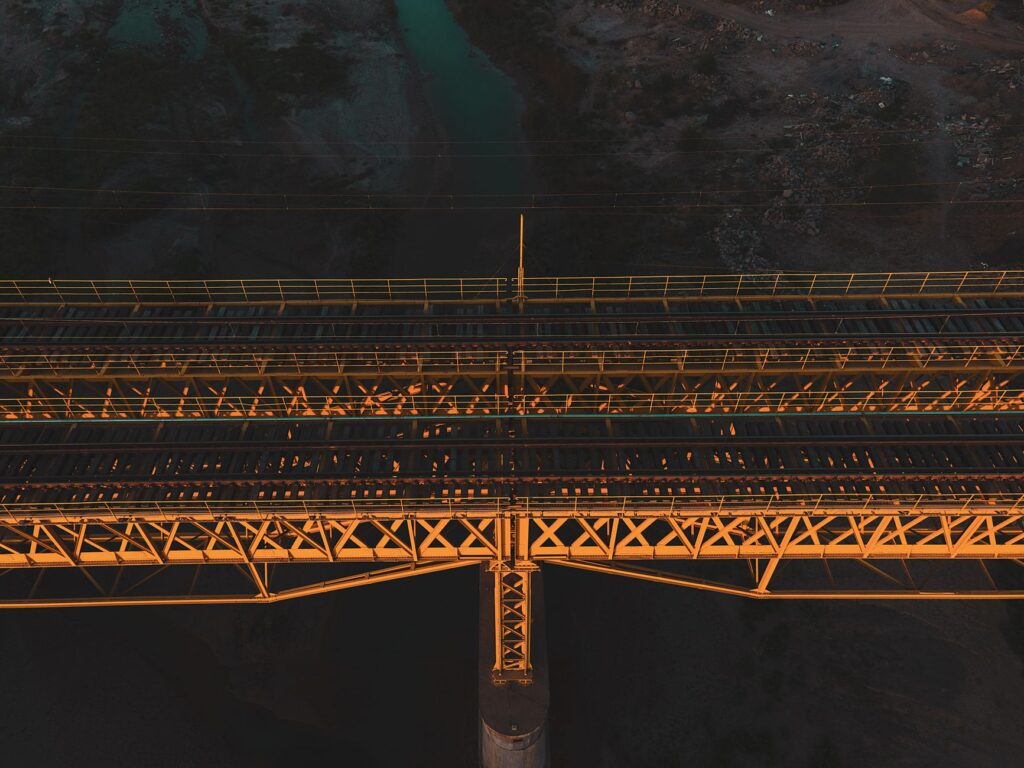
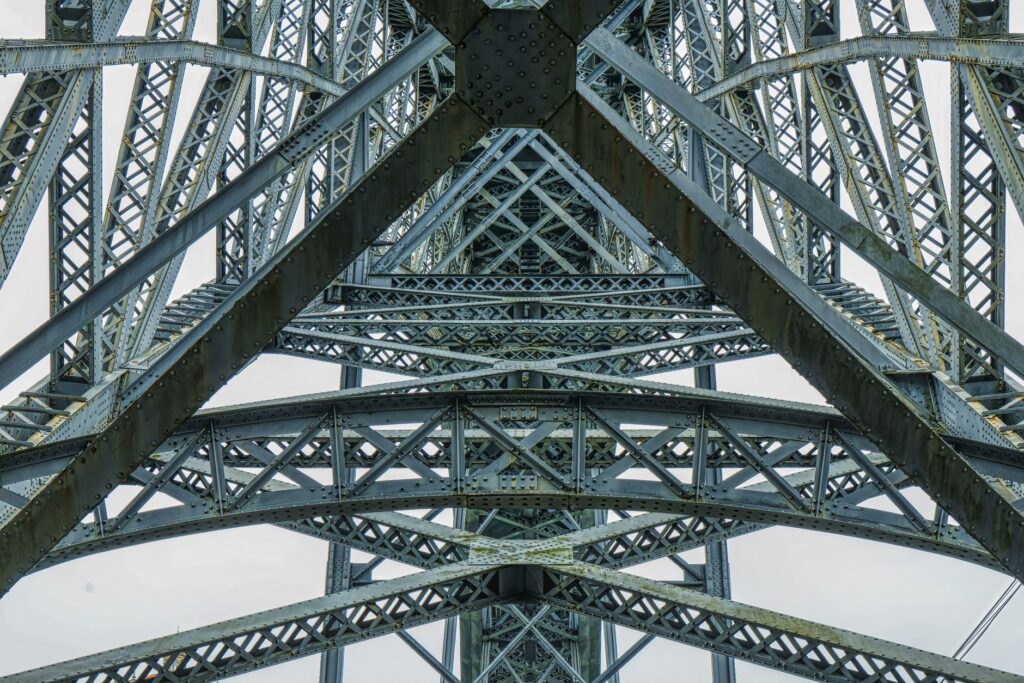
The most celebrated example of this industrial architecture is the legendary bridge over the abyss, a lattice metal structure crossing the Nanpan River canyon with a visual lightness that contrasts sharply with the solidity of its anchorage piers. These elements fulfilled more than a utilitarian function; they represented Western technical supremacy in the heart of Asia, projecting an image of imposing modernity that irreversibly altered the visual landscape of local rural communities.
Labor and the Human Cost of the Track
Behind every riveted beam and every meter of ballast laid upon the slope lies a demographic and labor tragedy of colossal proportions. The works, formally initiated in 1904 following years of preliminary studies, mobilized tens of thousands of laborers recruited from Canton, Annam, and Yunnan’s own ethnic minorities. Working conditions bordered on slavery: endless shifts under a blistering sun, recurring epidemics of malaria, cholera, and dysentery, and meager rations that systematically decimated the work camps.
Historical archives reflect a chilling death toll from industrial accidents and tropical diseases, a human toll rarely mentioned in triumphant reports sent to Paris or Beijing. Social tensions, pay strikes, and uprisings against abusive foremen were constant throughout the decade of construction. For indigenous peoples of the region, such as the Yi, Hani, or Dai, the arrival of the train also meant the drastic disruption of their traditional horse-caravan trade routes, replaced by a centralized and extractive transportation system.

Imperial Logistics and Cross-Border Trade
Once completed in 1910, the Yunnan Railway rapidly became the economic backbone of southwestern China. Precious minerals, tin extracted from the mines of Gejiu, opium, and agricultural produce began flowing steadily toward the port of Haiphong, connecting interior markets with global maritime trade routes of the French Empire. In reverse, European manufactured goods, textiles, heavy machinery, and luxury items penetrated the Chinese market via this same penetration route.
This colonial logistics radically transformed interior cities such as Mengzi, which acquired a legation quarter featuring Western architecture, consulates, and commercial warehouses. The train did not merely transport goods; it operated as a vector of economic modernization and simultaneous political destabilization. During the turbulent years of the Qing dynasty’s fall, the establishment of the republic, and subsequent civil wars, the railway infrastructure was repeatedly contested, sabotaged, and militarized by various factions seeking to control the flow of strategic supplies.

Operational Decline and Contemporary Fragmentation
With the advent of the People’s Republic of China and profound geopolitical shifts stemming from the Indochina war and subsequent division of Vietnam, direct international traffic across the border experienced a progressive decline. Damages accumulated from armed conflicts, lack of continuous investment, and the technical obsolescence of the meter gauge against standard-gauge and high-speed benchmarks condemned much of the trace to operational ostracism.
In the late twentieth and early twenty-first centuries, cross-border segments suffered prolonged suspensions due to landslides and state prioritization of alternative high-capacity rail corridors. Nevertheless, specific sections within Chinese and Vietnamese territory continued operating for short-haul local freight traffic and social passenger trains, keeping alive a historical bond that many deemed extinguished amid the push of new highways and bullet trains.
Railway Heritage and the Challenge of Cultural Tourism
Today, the Yunnan Railway is undergoing reevaluation from the perspective of industrial heritage and specialized cultural tourism. Local governments and conservation experts have driven initiatives to rescue abandoned historical stations, retired steam locomotives, and emblematic bridges from neglect, transforming them into focal points for travelers interested in the history of technology and landscape anthropology. Targeted luxury tourist train projects seek to replicate the experience of traveling at the leisurely pace of yesteryear.
However, this process is not without tensions between archaeological preservation and urban development. Real estate speculation surrounding old urban railway facilities in Kunming and the material deterioration of certain stretches in hard-to-reach areas raise complex questions regarding the long-term viability of preserving this monumental engineering feat intact without compromising public safety or the local environment.
Practical guide
- Main Access: Kunming, the capital of Yunnan province, serves as the primary logistical and airport hub for initiating any approach to the historical route.
- Local Transport: To traverse preserved sections and visit century-old stations, hiring all-terrain vehicles with local drivers is the safest option due to the winding terrain.
- Best Time to Visit: The autumn months (October to November) and spring (March to April) offer the most stable weather conditions, avoiding intense summer monsoon rains.
- Documentation and Permits: Certain sections near mountainous areas and historical border crossings require special transit authorizations that must be arranged in advance through authorized agencies.
- Accommodation: The lodging landscape combines contemporary design establishments in major cities with restored rural guesthouses located within the route’s ancient commercial enclaves.
- Health and Equipment: Proper mountain footwear, technical clothing for sudden altitude temperature shifts, and a basic medical kit for journeys in remote areas are essential.
- Heritage Respect: Metal structures and historical bridges are protected by local legislation; accessing active track areas without official supervision is strictly prohibited.
The metallic echo of old convoys continues to resound deep within the Yunnan canyons, reminding us that travel is not always a matter of speed, but of endurance before the vastness of the territory. As we contemplate the iron filigree suspended over the void, we realize that the railway did not merely connect two distant points on the Asian map; it inscribed into living rock the unwavering ambition of an era.
The true value of a great historical infrastructure lies not in its current economic profitability, but in its capacity to explain how past societies negotiated their limits with geography.