
The slow elegance of experiencing the American landscape through the train window
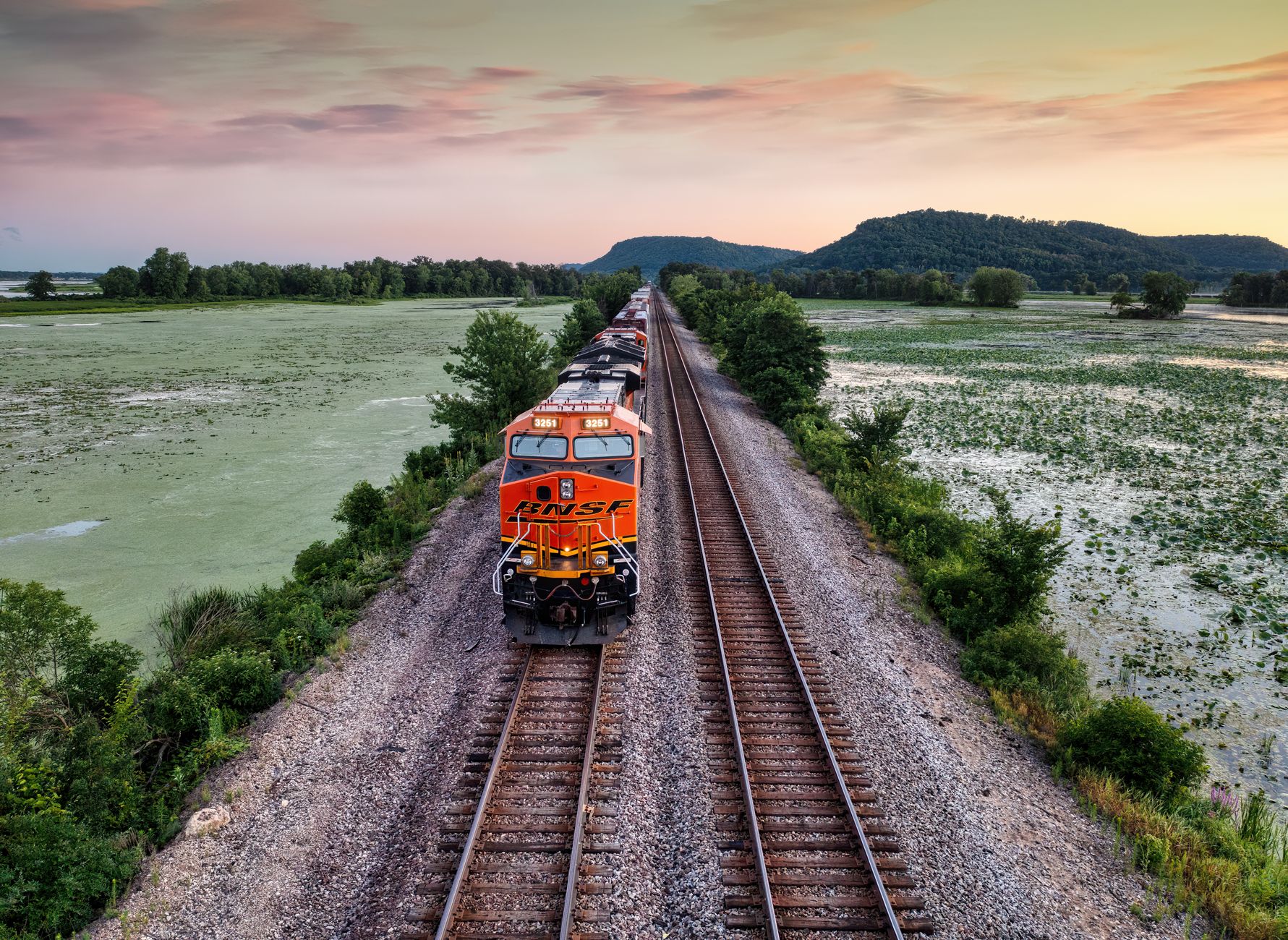
The continental expanse of the United States possesses a geographical scale that defies terrestrial comprehension. While interstate highways demand functional speed and air travel isolates the traveler inside a bubble devoid of context, the railway maintains a singular narrative cadence. It cuts through salt deserts, canyons carved over millennia by rushing rivers, boreal forests where the breeze chills the pine canopy, and cliffs where the Pacific strikes with relentless force. This is not merely an efficient mode of transportation, but an exercise in leisurely observation that restores the traveler’s sense of distance and proportion.
Across the vast network connecting coasts, mountains, and plains, specific corridors exist where the rail line traces routes impossible for automobiles. These eleven journeys selected by Condé Nast Traveler stand out not only for technical efficiency, but because the landscape itself becomes the true protagonist of the voyage. Each route offers a distinct reading of the North American continent, revealing remote geographies that can only be experienced with the perspective granted by glass-domed observation cars and slow turns over century-old trestles.
Pacific Coastal Route: The constant encounter between cliffs and tides
The journey connecting Los Angeles to Seattle aboard Amtrak’s Coast Starlight is widely celebrated for its ecological diversity. For over twenty-four hours, the train climbs and descends the West Coast, offering panoramic vistas where Pacific waves crash within yards of the railway ties. The section hugging Monterey Bay and the beaches of Santa Barbara stands out for the clarity of its light and the proximity of saltwater, creating a cinematic atmosphere reminiscent of the golden age of North American travel.
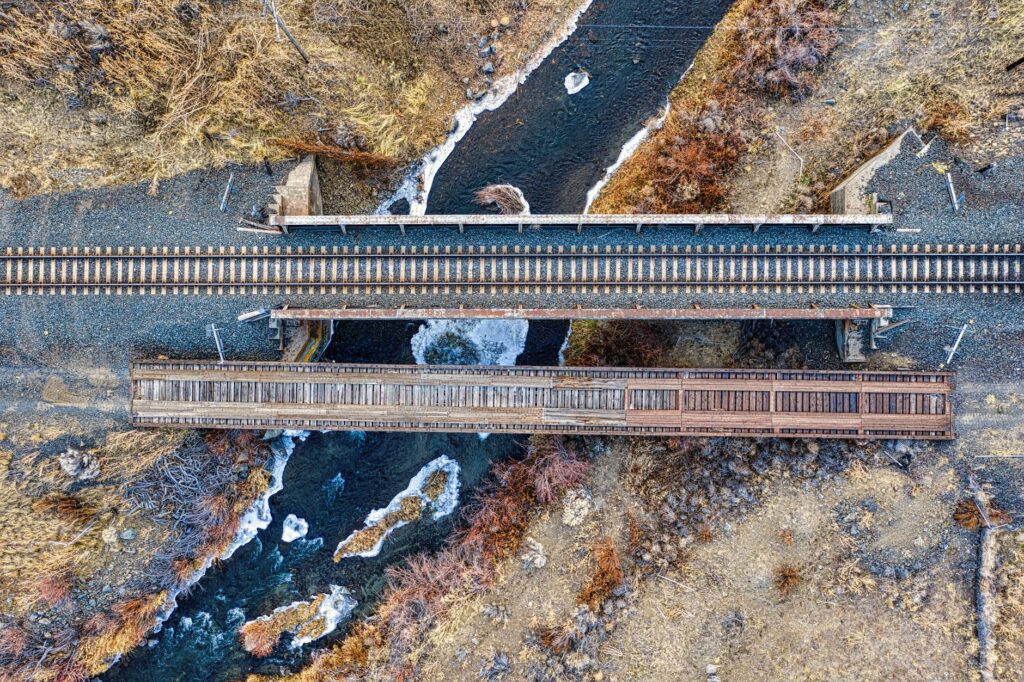
As the train presses northward, the marine scenery yields to California’s agricultural valleys, Oregon’s dense timberlands, and finally the snowcapped peaks of the Cascade Range. Passengers have access to a lounge car equipped with floor-to-ceiling panoramic windows designed specifically not to miss the ecological transition. Stops at historic depots like San Luis Obispo allow visitors to appreciate early 20th-century railway architecture preserved with strict heritage standards.
The frozen frontier: Venturing into the wild heart of Alaska
At the northernmost edge of the continent, the Alaska Railroad operates routes that test the boundaries of comfort and wilderness. The run between Anchorage and Fairbanks, known as the Denali Star, traverses regions where human intervention is virtually nonexistent. During the summer months, sunlight stretches almost infinitely, illuminating the imposing mass of Denali, North America’s highest peak, which frequently emerges majestically from low banks of clouds.
The experience onboard marries technical sophistication with the raw edge of the subarctic environment. Local onboard guides recount the history of the gold rush, the titanic engineering feat of laying the tracks, and the native wildlife frequently spotted from the seat: solitary moose crossing silty rivers, grizzly bears feeding along riverbanks, and herds of caribou shifting across the tundra. It is a journey where the exterior silence contrasts with the gentle metallic clatter, generating a profound sense of isolation and reverence for the landscape.
Engineering and vertigo in the heights of Colorado
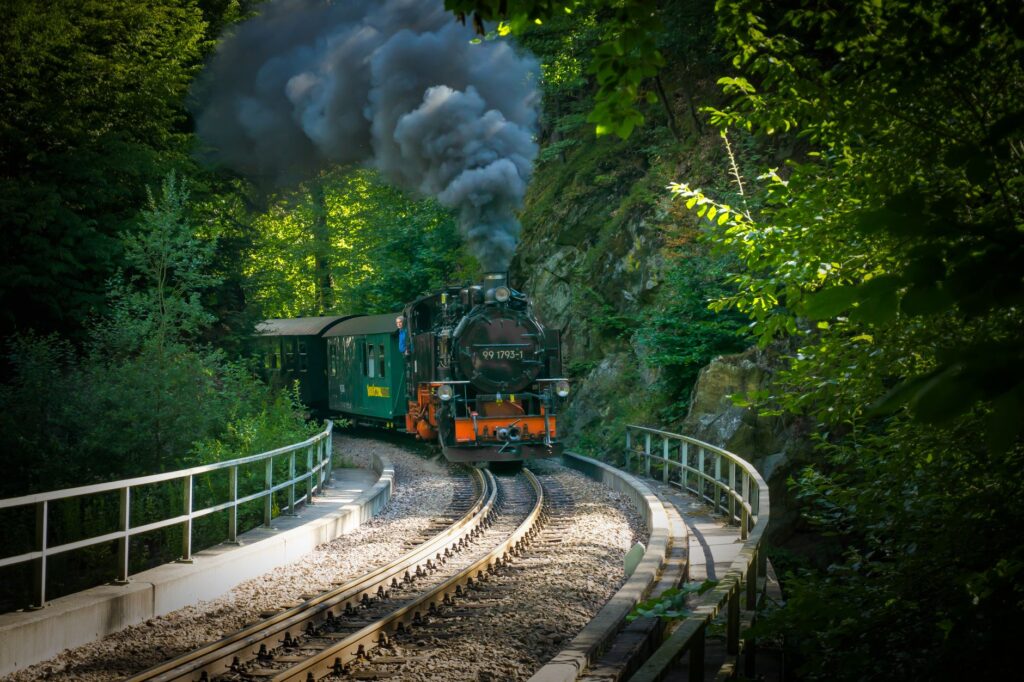
For those drawn to the history of mining and the conquest of the West, the Durango & Silverton Narrow Gauge Railroad offers a singular rolling testimony. This historic steam train, operating continuously since 1882, winds through the rugged gorges of the Animas River in southwestern Colorado. The narrow-gauge track clings literally to decomposed rock walls at the ledge known as the Highline, where passengers peer down into an abyss of hundreds of feet of vertical drop toward the riverbed.
The rhythmic puff of steam and the echo of the whistle against rock walls transport the traveler to an era when every mile of track was blasted out of the mountain with dynamite and sheer human grit.
The classic locomotive emits plumes of black smoke that mingle with the mist of aspen and conifer forests, an effect especially striking in autumn when the foliage blazes with intense golden hues. The authenticity of the rolling stock, restored down to the smallest detail, ensures total historical immersion far removed from any superficial modernity.
Through the red canyons of the Southwest: The Grand Canyon by rail
The Grand Canyon Railway, departing daily from the historic town of Williams in Arizona, resolves one of the great logistical and environmental dilemmas of contemporary tourism: how to access a natural world wonder while minimizing vehicular impact. Over roughly sixty miles, the train crosses arid plateaus populated by junipers and grasslands where pronghorn graze, before coming to a halt just steps from the southern rim of the abyss.
The route honors the original alignment of the Santa Fe Railway, which popularized mass tourism in the American West at the dawn of the twentieth century. Onboard, roaming musicians perform folk tunes from the cowboy era and actors lightly recreate the atmosphere of nineteenth-century travel, without detracting from the geological contemplation waiting at the end of the line.

The ultimate transcontinental crossing: From Chicago to San Francisco Bay
The California Zephyr is universally regarded by travel experts as one of the most scenic train journeys in the Western world. For three full days, the train covers more than 2,400 miles from the metropolis of Chicago to Emeryville, opposite San Francisco. The itinerary crosses the endless plains of Nebraska, climbs laboriously into the Rocky Mountains via the Moffat Tunnel, and descends through the red rock canyons of the Colorado River and the Nevada desert.
One of the journey’s absolute climaxes occurs while traversing Glenwood Canyon, where red rock walls rise vertically on both sides of the carriages, leaving barely a sliver of overhead light. The communal atmosphere in the observation cars encourages the exchange of stories among local residents, naturalists, and international travelers, turning the trip into a moving social microcosm.
Alpine nature and boreal forests in the Northeast
At the opposite corner of the country, the Atlantic seaboard and the New England states offer shorter-distance routes boasting rich scenic and cultural density. The Adirondack train, operated by Amtrak between New York City and Montreal, climbs the Hudson River Valley before plunging into Adirondack State Park. Views of the river, dotted with historic mansions and river lighthouses, gradually give way to crystal-clear glacial lakes surrounded by birch forests.
This route shines brightest during the autumn phenomenon known as foliage, when the vegetation transforms into an intense mosaic of ochres, reds, and oranges. The unhurried pace with which the train slips past small rural communities allows travelers to appreciate the region’s colonial architecture and the peaceful tranquility of upstate New York’s lakes.
The stately charm of regional heritage railways
Alongside major national routes, the American rail map preserves regional gems dedicated to technical heritage preservation. The Grand Canyon Railway and the Cumbres & Toltec Scenic Railroad, the latter shared between New Mexico and Colorado, operate coal-fired steam locomotives crossing high mountain passes over ten thousand feet in altitude. These lines do not compete on speed, but rather on the sensory memory of steam, the smell of burning coal, and the human scale of their timber stations.
Railway history enthusiasts find in these journeys a unique opportunity to study the evolution of bogies, vacuum braking systems, and the interior woodwork of original Pullman cars, preserved through the tireless efforts of non-profit foundations and state preservation agencies.
Practical guide
Planning a long-distance rail journey in the United States requires a precise understanding of timetables, operational flexibility, and the accommodation tiers available aboard Amtrak trains as well as private and heritage lines.
- Advance bookings: Seats in glass-domed observation cars and private sleeping compartments with bathrooms (Roomettes or Bedrooms) sell out months in advance, especially during the peak summer and New England autumn seasons.
- Schedule flexibility: Passenger trains in the United States frequently share tracks with heavy freight traffic, which can trigger significant delays on long-distance routes such as the California Zephyr or Empire Builder. Travelers are advised not to schedule tight flight connections on the day of arrival.
- Onboard accommodation: For journeys exceeding twenty-four hours, booking a private room includes meals in the official dining car, where tables are shared with fellow passengers, fostering a genuinely social travel experience.
- Luggage allowances: Unlike airlines, Amtrak permits passengers to check up to two bags for free and carry on two personal items per traveler, making it easier to transport photographic gear or clothing for varying weather conditions.
The American railway infrastructure, though historically subordinated to highway and air transport, maintains corridors of irreplaceable scenic beauty. Boarding one of these trains is not merely a method of displacement, but a statement of principle regarding the importance of reclaiming time for contemplation and human scale.
The final breath on the rails: The journey as the ultimate destination
As evening begins to settle over the tracks of the Coast Starlight and the last rays of sunlight bounce off the surface of the Pacific Ocean, the interior of the observation car falls silent. Passengers who hours earlier shared anecdotes from their hometowns turn their gazes toward the sweeping curved window, entirely absorbed in contemplating a horizon that seems to have no end. At that exact moment, the final destination ceases to matter; the true purpose of the journey reveals itself in steady motion, in the rhythmic beat of steel against wood, and in the certainty that certain territories across this vast continent only reveal themselves when one dares to observe them from the sovereign calm of the train.
Source in EN: Condé Nast Traveler (11 Scenic Train Rides in the US Worth Booking for the Views Alone – https://www.cntraveler.com/gallery/11-scenic-train-rides-in-the-us-worth-booking-for-the-views-alone)