
Introduction to Atlantic Isolation
In the vast expanse of the North Atlantic, halfway between Europe and North America, the Azores archipelago rises as a volcanic bastion whose very existence defies the logic of distances. Comprising nine islands divided into three geographical groups—eastern, central, and western—this autonomous territory of Portugal relies on a transport network as delicate as it is vital. Extreme insularity dictates the daily rhythm of its inhabitants, where the distance between the easternmost island of São Miguel and the westernmost Corvo exceeds 600 kilometers of open sea. For centuries, marine currents and western winds dictated the pace of isolation, turning any journey into a high-risk venture. Today, modernization has brought sophisticated intermodal infrastructure, though nature continues to impose its relentless rules on sailors and aviators alike.
Understanding mobility in the Azores requires looking beyond the tourist postcard to delve into the complex engineering of insular survival. Every dock, every airstrip, and every ferry route responds to meticulous planning designed to mitigate the constant pounding of oceanic storms. Transport is not a mere commercial service, but rather the umbilical cord guaranteeing the supply of fresh produce, emergency medical assistance, and social cohesion among communities separated by submarine abysses. Throughout this report, we will examine how regional aviation, passenger ferries, and port infrastructure converge in a balance perpetually threatened by geography.
The Backbone of Regional Aviation
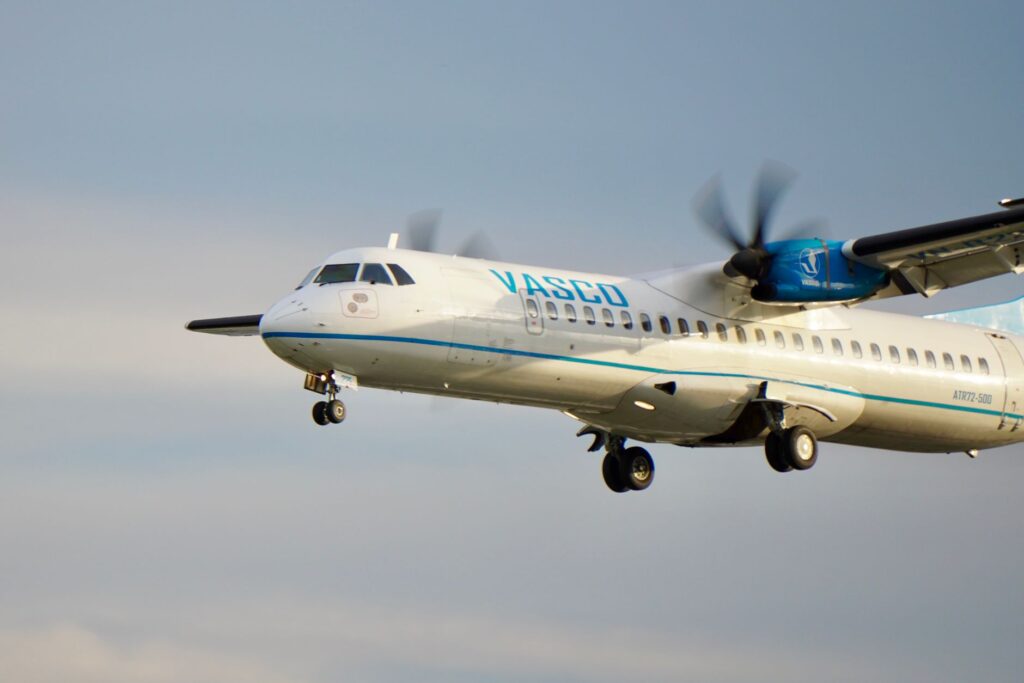
The sky over the Azores is an aerial corridor under constant tension. With airports scattered across all nine islands, the regional airline plays an irreplaceable role by connecting in minutes what would take days by sea. However, flying in this archipelago bears no resemblance to any other commercial aeronautical experience. Crosswinds and sudden fog force commanders to master extreme precision maneuvers, especially on short runways like those on Flores or the legendary approach to Corvo airfield, one of the most challenging in the European continent. Airport infrastructure has evolved from primitive World War II military airfields into modernized terminals capable of handling state-of-the-art turboprop fleets.
Air traffic management between islands is subject to proverbial weather variability locally known as four seasons in a single day. Instrument approach technology has drastically reduced historical cancellation rates, but the volcanic topography of steep cones and sea cliffs continues to generate severe windshear turbulence. For residents, the subsidized flight is the daily bus; for operators, a logistical challenge where preventative maintenance of engines and airframes must be maximized due to constant exposure to ambient marine salinity.
The Maritime Pulse: Ferries and Oceanic Transporters
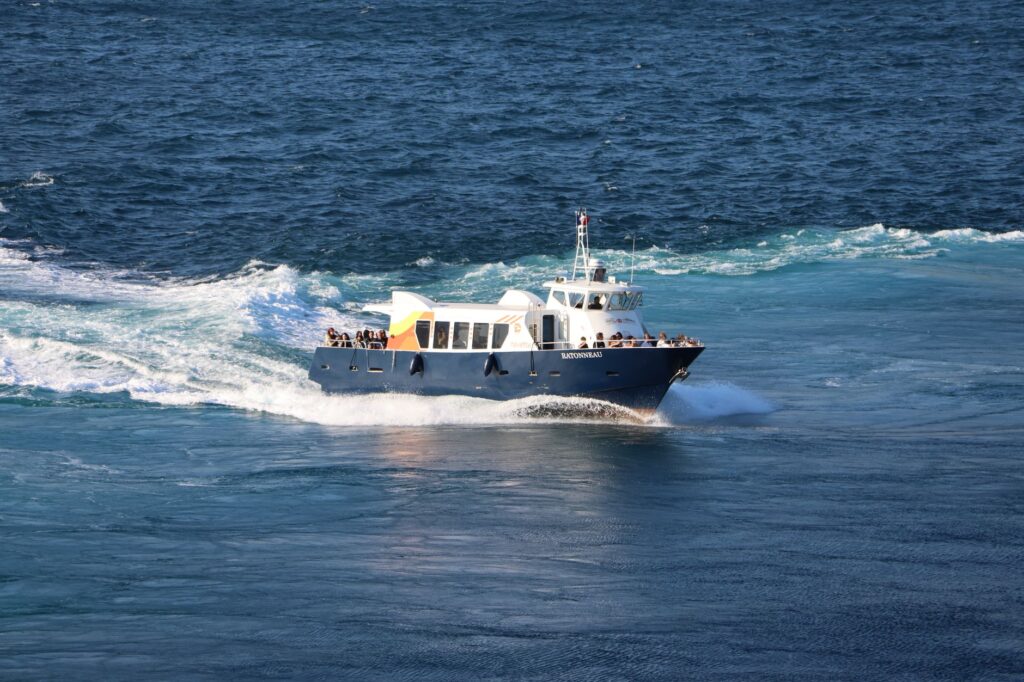
While aviation resolves passenger urgency, maritime transport sustains the physical economy of the archipelago. During the summer months, high-speed ferry lines and conventional vessels connect the islands of the central group—Faial, Pico, and São Jorge—in a nautical ballet of precision. High-speed passenger catamarans shorten distances with swift crossings, but when the Atlantic roars fiercely in winter, these vessels remain moored, yielding the spotlight to multi-purpose cargo ships and traditional ferries capable of enduring high waves. The arrival of a ship at exposed ports such as Lajes das Flores or Velas is an event that mobilizes and paralyzes the entire community.
Azorean port infrastructure is a testament to Herculean civil engineering. Breakwater dikes must resist the relentless energy of cyclonic storms descending from the north. Roll-on/roll-off docks allow the rapid transfer of containers, supply vehicles, and livestock, indispensable elements for the self-sufficiency of the smaller islands. Nonetheless, constant dredging and structural repair of storm-induced damage entail a colossal and permanent budgetary investment for regional authorities, who remain acutely aware that an inoperative port equals a strangled island.
The Fragmentation of the Western Group: Corvo and Flores
If mobility in the central and eastern groups presents notable challenges, the western extremity of the archipelago illustrates the limit of logistical vulnerability. Flores and Corvo, separated by barely 18 kilometers of a deeply turbulent oceanic channel, operate under singular isolation dynamics. Corvo, the smallest inhabited island with just over four hundred residents, depends entirely on a tiny air connection and a seasonal maritime service that suspends operations at the slightest sign of groundswell. The lack of a deep-draft port on the island forces cargo offloading operations via complex transshipment procedures in open roadsteads.
This relative disconnection forges a highly particular culture of community resilience. The inhabitants of Corvo and the more isolated settlements of Flores have developed traditional resource management and fuel storage systems that anticipate any potential stock-out caused by adverse weather. Intermittent isolation acts as a natural filter conditioning the arrival of visitors, demanding rigorous planning from any traveler intending to venture into this Atlantic outpost during seasons of lesser meteorological favor.
Road Engineering and Interior Connectivity
Once on solid ground, the interior mobility of the islands has undergone a radical metamorphosis over the last three decades. Ancient bridle paths flanked by hydrangeas and basalt cobblestones have given way to paved road networks winding between volcanic calderas and extremely steep slopes. High-mountain tunnels opened on islands like São Miguel or São Jorge have eliminated hazardous summit passes, where fog historically blocked land transit for days on end. However, keeping these arterial roads free of landslides and rainwater erosion requires permanent conservation patrols.
Terrestrial public transport, consisting of intercity bus networks, connects major towns, though frequency is typically optimized for local school and work schedules rather than flexible tourist exploration. Private vehicle rental and the rise of small electric cars have firmly established themselves as the preferred options for navigating winding insular roads. This transition toward sustainable fleets responds both to strict environmental regulations and the urgent need to reduce dependence on imported fossil fuels in territories with heavily scrutinized carbon footprints.
Port Logistics and Strategic Supply
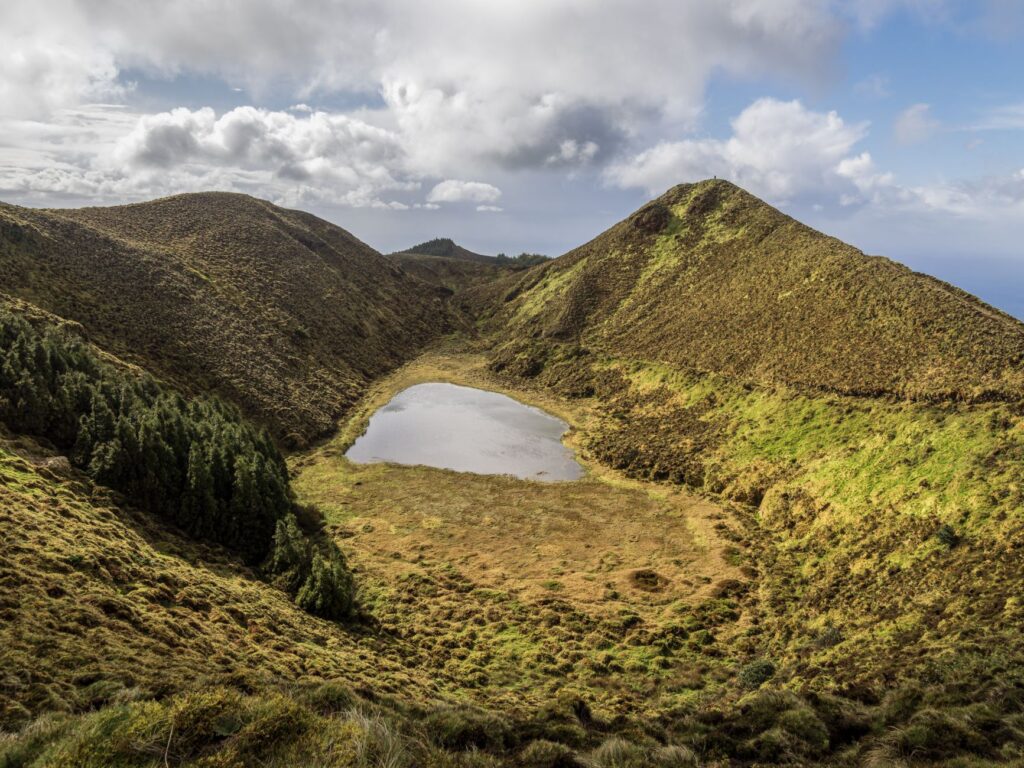
Behind the idyllic imagery of green meadows and bluish craters lies a complex supply chain fed by oceanic cargo ships departing regularly from the European mainland. Azores provisioning is a meticulous exercise in logistical synchronization where the margin for error is minimal. Multi-purpose container ships transport everything from heavy machinery to pharmaceuticals and perishable foods, facing multi-day crossings across frequently stormy waters. Any delay on the high seas immediately impacts the shelves of local shops.
Waste management and energy supply complete this delicate insular logistical framework. Lacking land connections, each island must manage its own electrical self-sufficiency through a combination of geothermal, wind, hydro, and diesel backup power plants. External energy dependency remains one of the archipelago’s Achilles’ heels, making the optimization of maritime fuel routes a matter of national security and economic sustainability for the autonomous government.
The sea of the Azores is not a space to be crossed; it is a sovereign territory that imposes its own transit laws on those who dare challenge its vastness.
Practical guide
Planning a journey through the intermodal system of the Azores requires anticipation, flexibility, and a profound respect for the unpredictable weather of the North Atlantic.
- Inter-island flights: Operated primarily by SATA Air Açores. Booking months in advance during high season (June to September) is essential, along with keeping at least a 24-hour buffer for potential delays due to fog or wind.
- Ferries and boats: Atlânticoline manages inter-island routes, especially within the central group. Tickets go on sale in early spring; always check daily sea state advisories before heading to the port.
- Car rental: Essential for independent exploration. Compact vehicles are strongly recommended due to narrow historic streets and limited space at scenic viewpoints.
- Documentation and connectivity: Although part of Portugal, geographical remoteness makes carrying official ID advisable, alongside downloading local weather apps specific to aviation and navigation.
Emotional Epilogue at Fajã dos Cubres
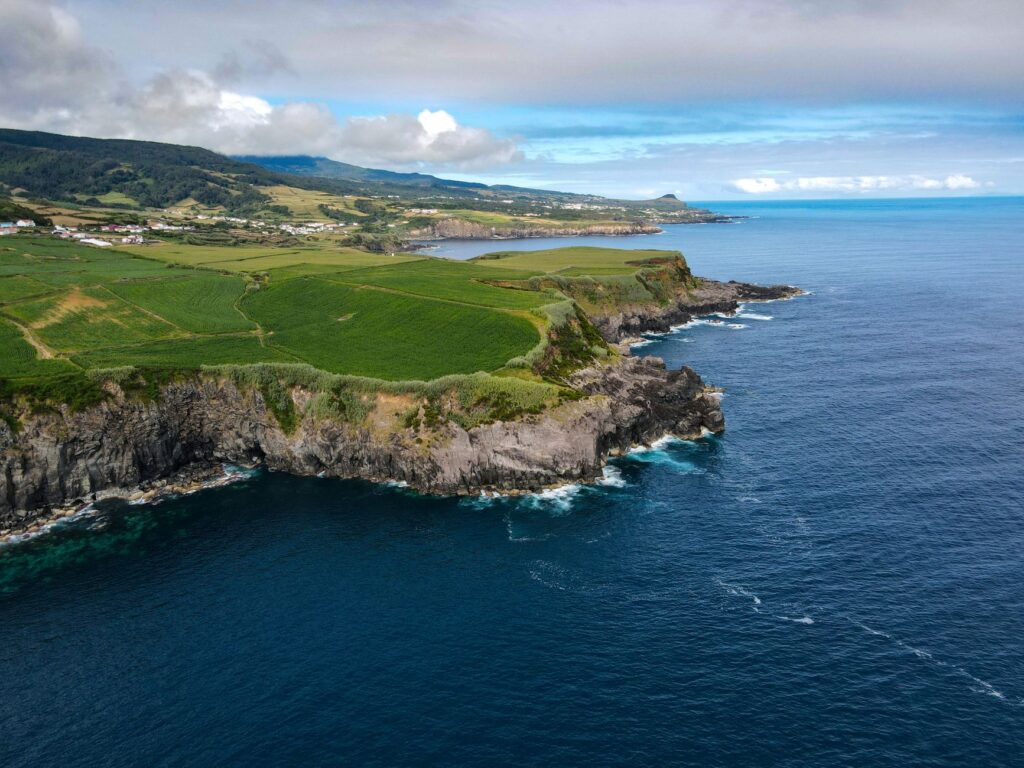
At dusk, when golden light slides down the basalt cliffs of São Jorge Island and caresses the black roofs of Fajã dos Cubres, engine noise fades and the archipelago recovers its ancestral silence. In this remote corner where solid ground seems to yield before the fury of the surf, human life beats to the slow rhythm of tides and the whistling trade winds. The communities inhabiting these valleys suspended between sea cliff and oceanic abyss hold in their collective memory the certainty that every arrival and departure is a fragile miracle of engineering and courage. Gazing at the Atlantic horizon from this nook is to understand the profound vulnerability of the modern traveler before the immensity of the marine element, a constant reminder that true contemporary adventure lies in knowing how to wait for time and weather to decide to open the doors of the road.