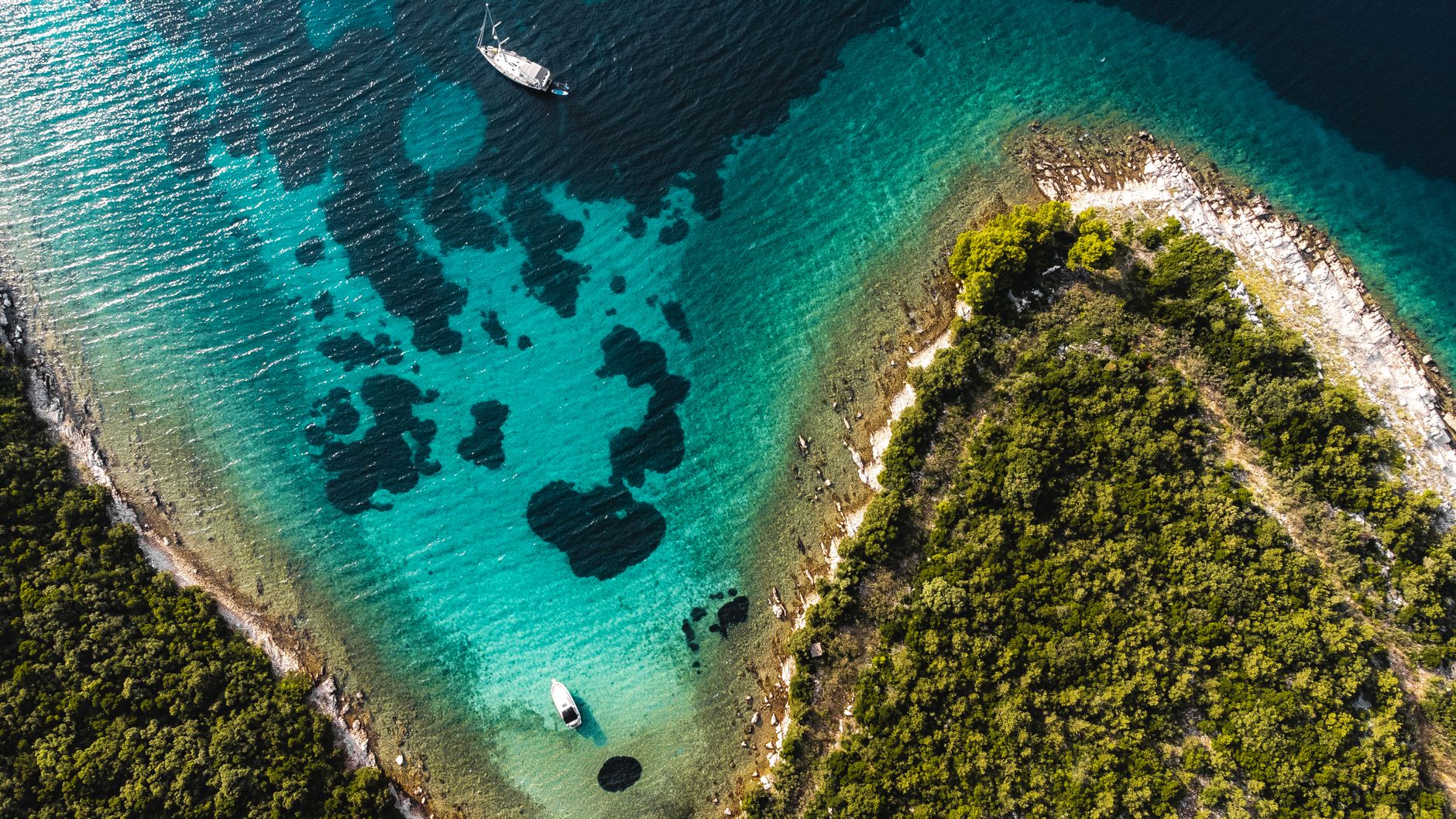

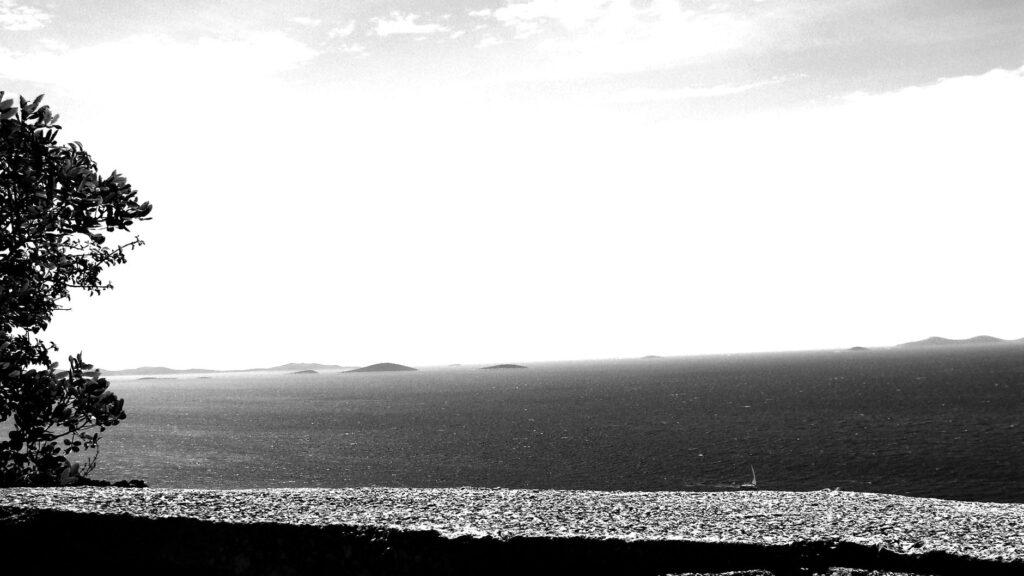
The Kornati archipelago in Croatia is a string of limestone islands rising from the Adriatic like bones bleached by the sun. There are no palm trees or golden sand beaches; there are cliffs, sparse pastures, and a silence that amplifies the sound of wind among the rocks. Sailing these waters is an invitation to slowness, observation, and responsibility. Because Kornati is not a marine theme park, but a protected area where every visitor’s decision leaves a mark.
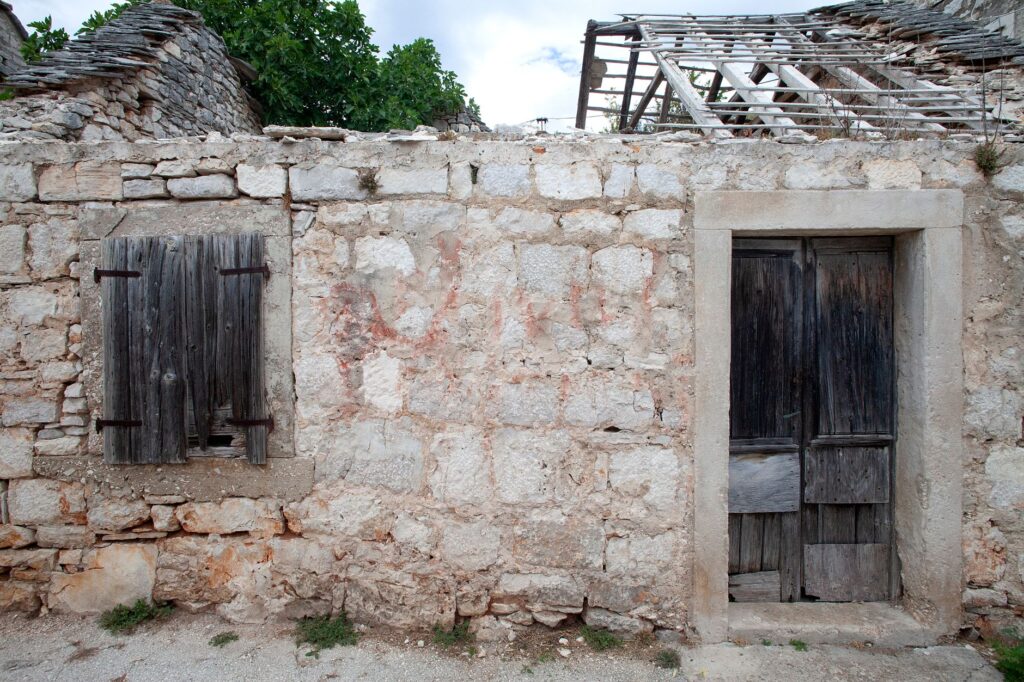
Most of the islands are uninhabited. Only a few stone houses, former shepherd shelters, still stand as witnesses to a vanished way of life. In summer, the archipelago receives thousands of sailors seeking hidden coves and seabeds. The question hanging over every anchorage is simple: how can we enjoy this place without contributing to its deterioration?
A national park in the Adriatic
Kornati National Park was declared in 1980 and covers most of the archipelago, with more than eighty islands, islets, and reefs. The institution managing it works to conserve its geological, biological, and cultural values. It is not an untouchable space, but a territory where rules seek to balance visitation with preservation.
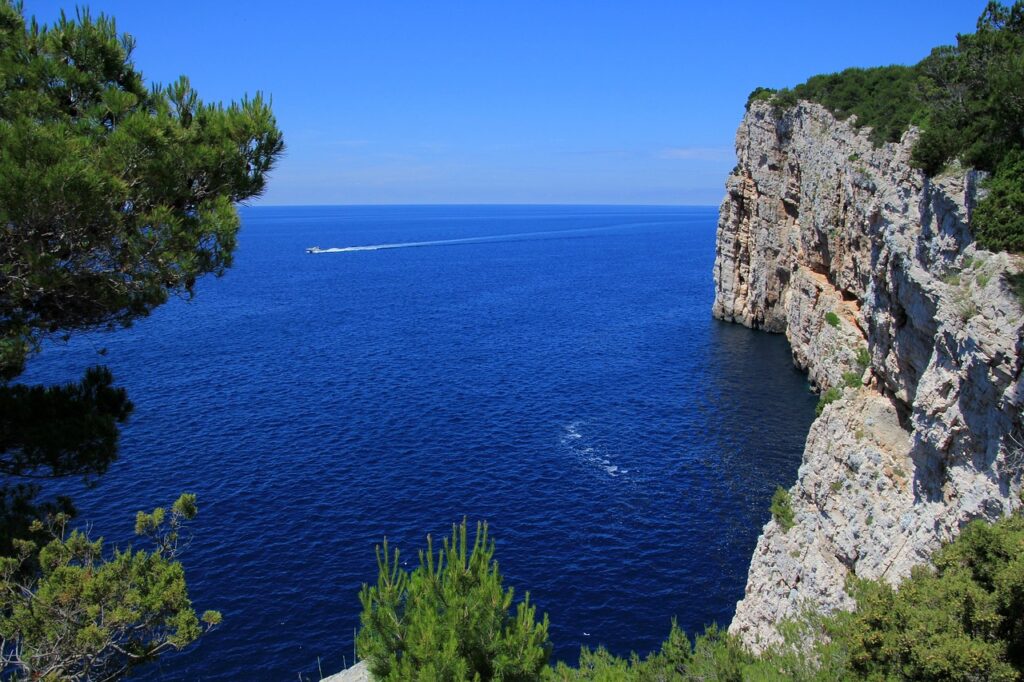
The park’s geology is unique: limestone, fractured by faults, has created a landscape of vertical cliffs plunging into the sea. That same fracture explains the absence of streams and the scarcity of fresh water, which historically limited human settlement. Today, that aridity is part of its beauty.
Stone is not a backdrop: it is the skeleton of an ecosystem that takes centuries to form and only minutes to damage.
Sailing without haste: the route as experience
There is no single way to explore Kornati. Some arrive by sailboat from Zadar or Šibenik; others charter a boat in Murter, the nearest island. The crossing between islands is, in itself, the journey. The channels between islands offer shelter from the wind and calm waters for anchoring. But anchoring is not a neutral act: an anchor can tear up seagrass meadows, a vital marine plant.
Posidonia oceanica forms underwater meadows that oxygenate the water, sequester carbon, and serve as nurseries for fish and invertebrates. A poorly set anchor can destroy in seconds what took decades to grow. That is why the park has installed eco-friendly moorings in some coves, and authorities recommend using them or anchoring over sand, never over posidonia.
The unwritten rules of the good sailor
The park’s regulations establish regulated anchoring zones, speed limits, and fishing bans in sensitive areas. But beyond the rules, there is an unwritten code that experienced sailors follow by conviction. It includes not getting too close to cliffs to avoid disturbing nesting birds, not throwing waste into the sea, not collecting shells or coral fragments, and not making unnecessary noise in coves where echoes amplify every sound.
Visiting Kornati also means respecting the lives of the few permanent inhabitants: shepherds and fishermen who hold historical rights. Buying local products, such as olive oil or cheese, is a way to support the island economy and recognize their role as guardians of the landscape.
The best souvenir from Kornati is not a photo, but the certainty of having passed through leaving no more trace than a boat’s wake.
Biodiversity beneath the surface
The park hosts rich marine life. In its waters, one can observe posidonia meadows, schools of fish such as gilt-head bream or white seabream, and occasionally sea turtles. The rocky bottoms, with crevices and caves, are home to moray eels, octopuses, and lobsters. Diving and snorkeling are allowed in designated areas, but always with the precaution of not touching or disturbing.
Overfishing and indiscriminate anchoring are the main threats. The park promotes sustainable recreational fishing practices, with selective gear and limited quotas. For the visitor, the rule is simple: if you are not sure an action is harmless, it is better to refrain.
Cultural heritage: dry stone and memory
The islands preserve traces of human occupation dating back to prehistory. Dry stone walls, called suhozid, divided pastures and protected crops from the wind. Today, many are in ruins, but their layout can still be discerned in the landscape. There are also remains of ancient salt pans and a 6th-century fortress, the Fortress of St. Nicholas, which guarded the passage of ships.
Local culture is tied to the sea and stone. The kornatski brod, traditional wooden boats, sailed these waters before the arrival of mass tourism. Their design, adapted to winds and currents, is an example of accumulated knowledge. Today, some craftsmen keep the tradition alive, and their work deserves to be known and supported.
Beyond summer: seasons of silence
Summer concentrates the largest influx of visitors, but spring and autumn offer a different experience. Temperatures are milder, the sea remains navigable, and coves are emptier. In winter, the park is a place of absolute solitude, with strong winds and low temperatures. Each season has its character, and choosing the right moment is part of responsible planning.
Spring brings the flowering of Mediterranean vegetation, and autumn, bird migration. Sailors seeking tranquility will find a reward in these seasons: the chance to enjoy the archipelago without the pressure of crowds.
Practical guide
To visit Kornati, the first step is to learn about the park’s rules. Entry requires a fee, which varies by season and type of boat. It can be obtained online or at park offices in Murter and other nearby towns. It is advisable to carry a printed or digital copy of the permit.
Access is primarily by sea. Organized excursions depart from Zadar or Šibenik, and sailboats and motorboats can be chartered in Murter. If sailing on your own, updated nautical charts and knowledge of weather conditions are essential, as winds can change rapidly. The area has some eco-friendly moorings, but availability is limited in high season.
As for accommodation, there are no hotels in the park. Some operators offer overnight stays on board, and on the island of Kornat there is a small shelter. Most visitors stay in Murter or on the mainland and visit the archipelago on day trips. For a more immersive experience, one can sleep on board anchored in an authorized cove.
Local gastronomy is based on fresh fish, seafood, and olive oil. In the few konobas (taverns) open in summer, one can try grilled octopus or salt-crusted fish. Prices are higher than on the mainland due to logistics, but quality is excellent. Do not forget that fresh water is a scarce resource: carry enough and do not waste it.
For diving, an additional permit is required and diving must be done with an authorized center. Snorkeling is allowed in many areas, but always without touching the bottom or rock formations. Kayak excursions are another way to explore, but currents and wind must be taken into account.
Finally, respect for the environment is the main rule. Do not leave trash, do not collect natural souvenirs, do not disturb wildlife, and follow the instructions of park rangers. With these precautions, a visit to Kornati becomes an enriching and sustainable experience.
A closing for memory
At sunset, when the sun tints the cliffs orange and the sea becomes a sheet of silver, Kornati reveals its true nature. It is not a destination to conquer, but to contemplate. The boat’s wake soon fades, but the impression of having been in a place that protects itself remains. Perhaps that is the best lesson: traveling without leaving a trace is possible, and in Kornati, it is necessary.