
Origins and the Great Conquest of the Cantabrian Divide
The creation of a railway layout capable of overcoming the imposing natural barrier separating the Castilian plateau from the river basins of Galicia constituted one of the greatest civil engineering challenges in Europe during the latter half of the nineteenth century. The Northwest Railway project responded not merely to commercial or territorial ambition, but to the urgent imperative of vertebrating the westernmost extreme of the continent through a high-capacity route capable of sustaining both heavy freight traffic and passenger transport under conditions of extreme topographic adversity. The topography of the Cantabrian Mountains, characterized by steep slopes, hard rock, and severe weather conditions, forced the engineers of the era to devise unprecedented technical solutions that continue to astonish observers today for their structural audacity.
From the railway station of León, the nerve center of departure, the line progressively penetrates northwestward, seeking the natural mountain passes that would allow the grand ascent toward the Brañuelas summit and the subsequent dizzying descent toward the Sil River valley. This initial section served as a definitive proving ground for the consolidation of steam traction on prolonged gradients, where every kilometer won from the mountain represented a titanic effort of manual excavation, cyclopean masonry, and layout design featuring exceptionally tight curve radii. Period chronicles meticulously record the logistical difficulties involved in transporting construction materials to such inaccessible zones, where laborers, popularly known as the iron sappers, had to carve their way through gorges and cliffs under severe meteorological conditions.
The design of maximum gradients, which in many sections exceeded the thresholds tolerated by locomotives of the period, required the implementation of compensated slopes and strategically positioned crossing stations to allow for water and coal replenishment. The architecture of these primitive stations reflected functional pragmatism endowed with sober construction dignity, utilizing local stone capable of resisting the rigors of snowy winters. The completion of this first mountainous sector enabled the connection of the cereal-producing plateau with the mining basins of El Bierzo, radically transforming the regional economy by facilitating the rapid outflow of coal and iron ore toward Atlantic ports and the industrial centers of the peninsular interior.
The Monumental Architecture of Iron and Stone
As the track advances westward, the railway infrastructure claims the landscape through an uninterrupted succession of engineering works that constitute authentic cathedrals of industrial architecture. Wrought-iron viaducts and semicircular stone arch bridges multiply to span the deep ravines carved by the tributaries of the Sil River. The ingenuity applied in the construction of large metal bridges stands out remarkably; their lattice truss structures were engineered to bear dynamic loads far superior to initial projections, anticipating the rigorous demands of heavy twentieth-century traffic. These structures stand out not only for their mechanical resilience but also for an aesthetic integration respectful of the grand scale of the natural surroundings.
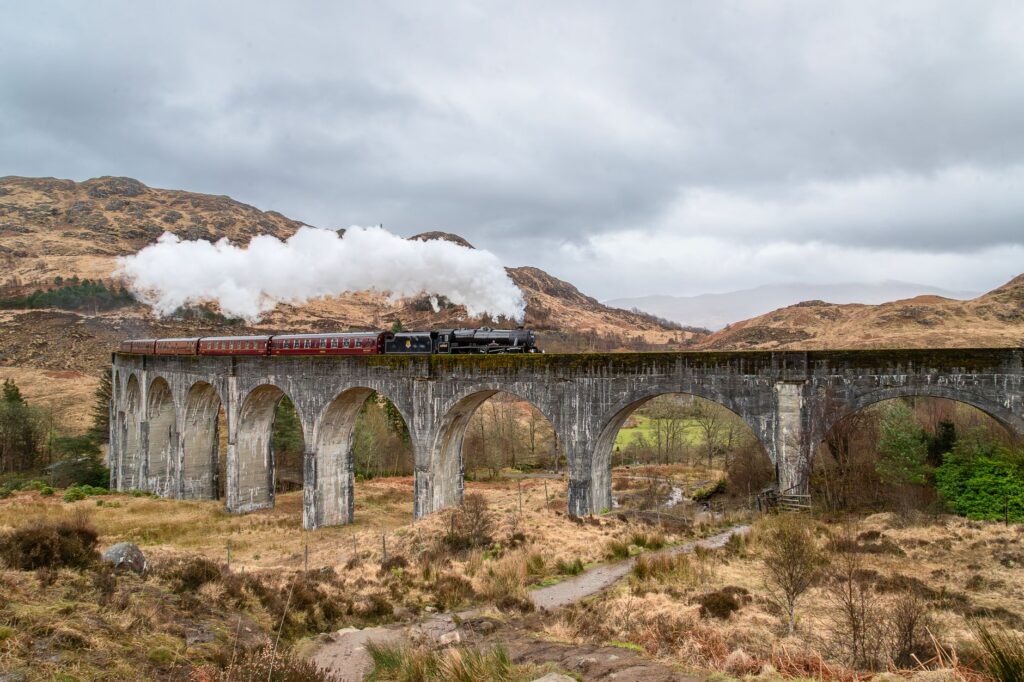
Tunnels represent another of the most complex chapters in this major civil engineering endeavor. Piercing the entrails of the mountain required the opening of dozens of subterranean galleries where solid rock presented constant water seepage and high risks of collapse. The use of dynamite, introduced pioneeringly in these large-scale works, accelerated excavation paces, although it exacted a heavy toll in human lives among the squads of excavators. Each tunnel bored along the León-Monforte line constituted a microcosm of subterranean engineering, where artificial ventilation and granite-ashlar interior lining guaranteed long-term stability against geological thrusts and persistent moisture.
blockquote>The railway track is not merely a transportation line drawn upon a map; it is a scar carved with surgical precision that redefined the relationship between humanity, rock, and abyss.
The mastery of the builders is also evident in the retaining walls and drainage systems designed to protect the railway platform from slope landslides and snow avalanches. Carved stone channels, reinforced ditches, and stepped embankments demonstrate a profound understanding of mountain hydrology. This attention to structural detail explains why a large proportion of the original nineteenth-century elements remain operational and continue to support modern railway formations, consolidating a heritage legacy that is actively studied by industrial heritage historians and specialized architects.

The Descent Toward the Sil and the Logic of River Valleys
Once the mountain summit is cleared, the layout undergoes a radical transformation as it channels into the river valleys descending toward the Galician depression. The passage through El Bierzo and the arrival in Ponferrada mark the transition from high mountains to a geography of broad valleys, traditional agriculture, and coal basins. In this sector, the railway acts as a backbone uniting industrial operations with processing nodes, configuring a landscape where the smoke of historical locomotives once coexisted with the intense agrarian activity of the region. Ponferrada station rapidly evolved into a top-tier logistical hub, coordinating transfers between the broad-gauge railway and secondary mining branches penetrating the most secluded valleys.
Continuing the journey westward, the route enters the spectacular canyons of the Sil River, a colossal gorge where the railway serpentines, adapting with millimeter precision to the terrain contour lines. Here, railway engineering had to contend with a severe lack of horizontal space, necessitating the construction of numerous shelf sections cut directly into river cliffs, supported by cyclopean masonry walls sinking straight into the riverbed. This section stands out for its singular landscape beauty, where the verticality of slate rock faces contrasts with the geometric layout of the steel rail, creating a unique visual synergy between untamed nature and human technological footprint.
The arrival in the province of Lugo marks the approach to the major railway junction of Monforte de Lemos, a strategic enclave that functioned for decades as the logistical heart of rail traffic in the peninsular northwest. Lines originating from León, A Coruña, and Vigo converged upon Monforte, transforming it into a hive of activity where repair workshops, locomotive rotundas, and railway worker camps breathed life into an authentic steam city. The operational complexity of managing freight train formations and passenger service combinations at this junction demanded advanced signaling systems for the era and strict operational discipline among movement personnel.
Technical Transformation and the Electrification of the Corridor
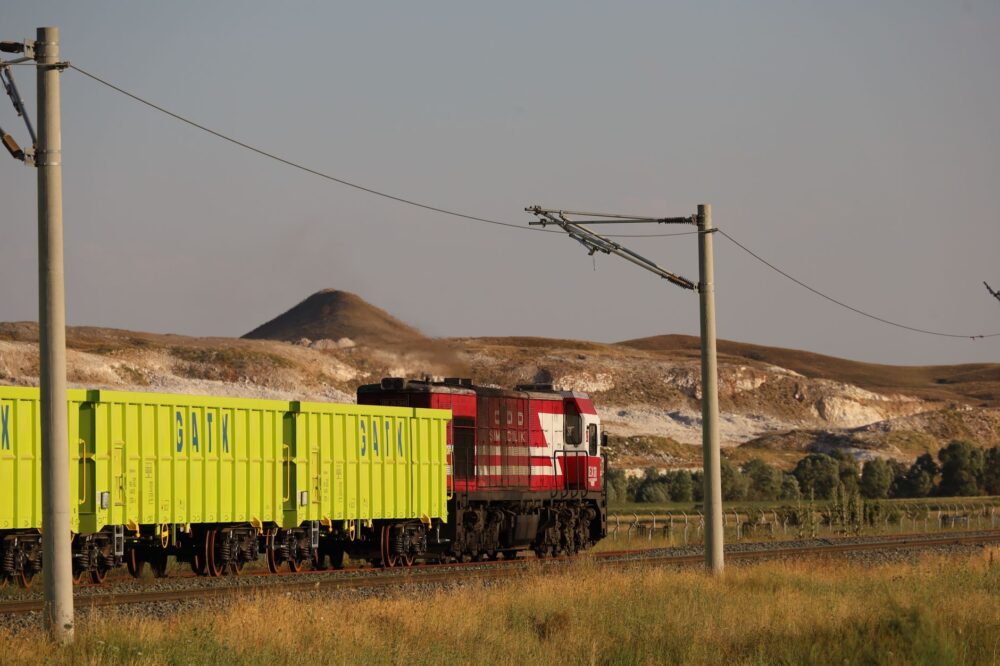
The twentieth century brought with it the pressing necessity to modernize an infrastructure that, despite its solid construction, was beginning to show signs of obsolescence in the face of growing demands for speed and payload capacity. The gradual replacement of steam traction by diesel locomotives brought notable operational relief, but the electrification of the line was the technical milestone that completely redefined corridor performance. Installing catenaries and electrical substations in such an austere mountain environment represented a monumental logistical challenge, requiring the design of specialized workshop trains and the adaptation of clearances in numerous historical tunnels to permit the safe passage of high voltage.

The modernization of the track superstructure, featuring the introduction of multipurpose concrete sleepers, heavier rails per linear meter, and aluminothermic welding, enabled commercial speeds to rise and travel times between the plateau and Galicia to be drastically reduced. Nevertheless, this technological updating process was not exempt from tensions, as it forced a rethinking of the role played by many intermediate stations that lost their original function as local freight handling centers, gradually transforming into automated halts or being closed down amid the demographic decline of surrounding rural districts.
Despite successive overhauls, the original layout has successfully preserved its fundamental path, demonstrating that the topographic solutions adopted by nineteenth-century engineers were, in essence, irreplaceable. Modern variants constructed in recent decades to bypass black spots or drastically reduce tight curves coexist with the historical route, creating a rich palimpsest of the evolution of railway engineering in Spain. This dialogue between nineteenth-century infrastructure and twenty-first-century technologies constitutes a technical heritage of incalculable value worthy of cultural preservation and appreciation.
Socioeconomic Impact and the Territorial Demographic Pulse
Evaluating the historical impact of the Northwest Railway requires analyzing its profound repercussion on the demography and economy of the counties it traverses. During the initial decades of its operation, the line acted as a genuine social and economic elevator, facilitating the mobility of thousands of emigrants traveling to northern ports to embark for the Americas, as well as the trade of traditional agricultural and livestock goods. Villages located alongside stations experienced notable demographic growth, evolving into small county service centers where the arrival of daily mail and printed press drastically shortened the secular isolation of mountain communities.
However, the latter half of the twentieth century and the dawn of the twenty-first have drawn a radically different scenario, marked by rural exodus, population aging, and the decline of coal mining—a sector that served as the primary client and sustenance of the line for over a century. The loss of competitiveness of conventional freight transport vis-à-vis road transport accelerated the suppression of numerous regional services, generating a deep connectivity gap in the most depopulated districts of León and Lugo. Today, the line survives sustained by its strategic value as a public service connection and by the growing tourist interest inspired by its extraordinary industrial heritage.

blockquote>The demographic decline of the northwestern mountains has transformed stations into silent witnesses of a human transit that now seeks new horizons within collective memory.
Faced with demographic desertification, local and supranational initiatives advocate for the touristic revaluation of the corridor through the promotion of historical trains and cultural routes centered on railway architecture. The persistence of this railway not only guarantees the basic territorial cohesion of rural municipalities but also represents a tangible reminder of how public infrastructure can completely transform the human geography of a territory, leaving an indelible imprint upon the identity of its people.
Practical guide
How to get there: León and Monforte de Lemos act as the two major terminal stations and primary connection nodes for traversing the corridor. León features frequent high-speed (AVE and Alvia) connections from Madrid and northern Spain. Monforte de Lemos is connected via regional and medium-distance services with major Galician capitals such as Ourense, Lugo, and A Coruña.

When to travel: The spring months (May to June) and early autumn (September to October) offer the most stable weather conditions and an exceptional chromatic palette across riparian forests and the Sil canyons. Winter, although scenic due to mountain snowfall, may occasionally entail operational disruptions across the conventional network.
Logistics and transportation: To thoroughly explore the architectural and historical milestones of the line, it is recommended to combine journeys aboard medium-distance regional trains—which allow for leisurely landscape contemplation—with car rentals at strategic points such as Ponferrada or Astorga, facilitating access to the most inaccessible viaducts and gorges.
Must-see highlights: The historical mountain pass of Brañuelas, the spectacular metal viaducts crossing Sil tributaries, the Ponferrada Railway Museum, and the historic locomotive roundhouse in Monforte de Lemos, which preserves iconic rolling stock from the golden age of steam.
Visual Epilogue: The Last Whistle in the Sil Mist
As evening begins to fade over the steep precipices of the Sil River, the silhouette of a regional train slowly emerges from fragments of mist rising from the riverbed. The locomotive’s headlamps sweep with millimeter precision across the contours of century-old masonry walls, those exact granite ashlar blocks that hundreds of men, awed by exertion, raised through chisel and dynamite over a century ago. In that fleeting instant, time seems to collapse, uniting the sweat of old iron sappers with the mechanical, steady pulse of railway modernity. It is the definitive snapshot of an engineering masterpiece that, tirelessly defying the relentless verticality of the mountain, continues to write its legend upon steel rails.