
The Invisible Resonance of a Stilled Lombardy
There are geographies where time is not measured by the ticking of clocks, but by the slow vibrations emanating from wooden boards dried for decades beneath the shelter of the Padanian fog. In Cremona, a city on the banks of the Po River that has made acoustics its true homeland, the air seems impregnated with an ancient resin, a sweet scent of turpentine, walnut oil, and fresh shavings that defines the identity of its cobbled streets. Here, craftsmanship is not a folkloric vestige meant to please the weekend visitor, but a living, almost monastic discipline passed down from generation to generation in workshops where silence is the norm and aesthetic demands border on the uncompromising. Stepping into one of these spaces is crossing an invisible border into a territory where the laws of physics and human intuition merge to tame sound.
The question running through this district is not merely technical, but philosophical: how is it possible that an uncarved block of wood, subjected to the tensions of the human hand and the precise calculations of harmonic geometry, acquires the capacity to make entire audiences weep, thrill, or move centuries after its creator has disappeared? To answer this enigma, one must venture into the inner courtyards of the historic center, moving away from the bustle of the Piazza del Comune, where the imposing silhouette of the Torrazzo rises. In these enclosures of ochre walls and terracotta roofs, master luthiers continue to operate outside the 21st-century’s urgencies, using the exact same hand tools—gouges, compasses, steel blades, and millimeter rules—employed by the great patriarchs of the Cremonese school during the golden ages of lutherie.
The Forest of Echoes: The Millimetric Selection of Raw Material
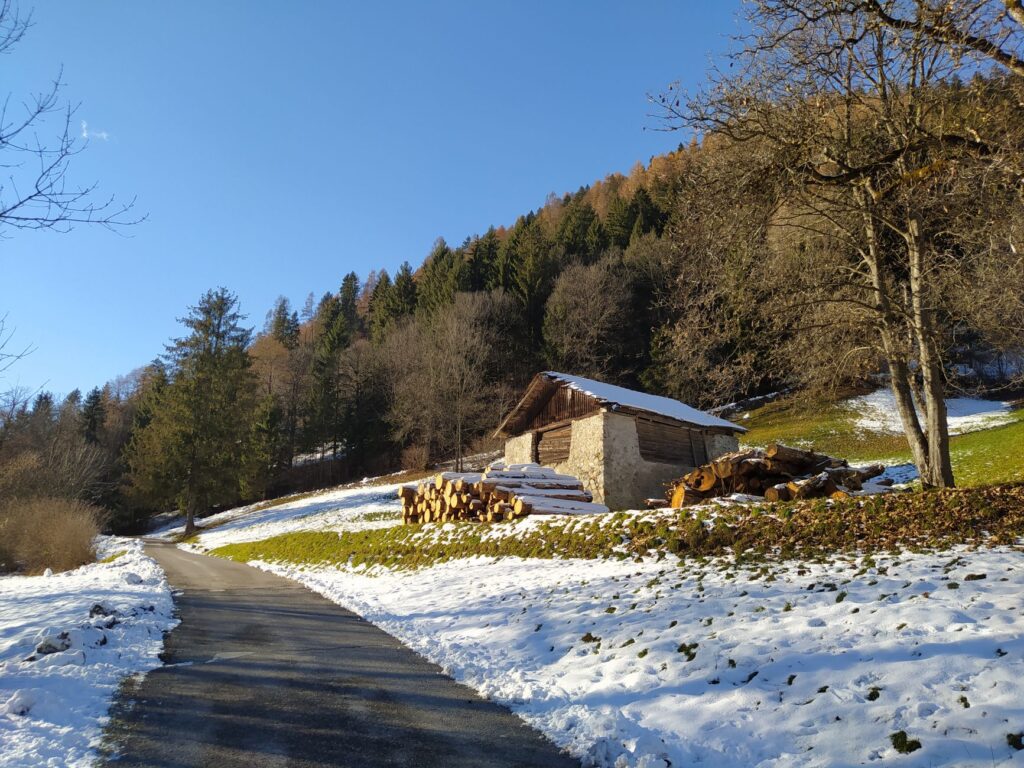
The life cycle of a violin, viola, or cello does not begin on the artisan’s workbench, but more than a thousand meters high, on the shaded, windswept slopes of the Val di Fiemme Alps in northern Italy. It is there that the coveted resonance red spruce grows, a tree enduring severe winters and constant winds that force its fibers to grow slowly, uniformly, and symmetrically. The ideal wood must possess optimal specific density and acoustic transmission speed; a single knot, a slight deviation in the grain, or uneven sunlight during growth will immediately rule out the log. Cremona’s luthiers maintain an almost symbiotic relationship with mountain forestry suppliers, personally selecting specimens harvested preferably in the winter months, when the tree contains the least amount of sap possible.
Once transported to the workshops of the Lombard plain, the wood undergoes a long and patient process of natural seasoning in the open air and under ventilated roofs, a period that can last for fifteen or twenty years. This storage allows the internal tensions of the fiber to completely disappear and the residual moisture to evaporate homogeneously, preparing the material for the crucial carving stage. The choice of maple for the back, ribs, and neck completes the anatomical structure of the instrument, providing not only the mechanical resistance needed to withstand the tremendous pressure of strings under tension, but also unrivaled aesthetic beauty, characterized by those waves or flames that the subsequent varnish subtly enhances.
The perfect violin is not made to please the ear of the present, but to converse with centuries to come from the absolute fragility of sculpted wood.
The Geometry of the Soul: The Internal Mold and Sacred Symmetry
The physical heart of building a bowed string instrument in Cremona lies in the traditional use of the internal mold, a technique consolidated during the Renaissance that radically differentiates this school from other European traditions. Over a block of plywood or walnut that precisely reproduces the internal dimensions of the future instrument, the artisan assembles willow blocks for the corners and the upper and lower blocks. From this skeletal structure, the ribs—the thin maple sheets that will form the curved perimeter of the body—are bent over the heat of a candle or electric iron. This process demands absolute mastery of temperature and humidity, as excessive heat will char the wood, while a lack of flexibility will cause irreparable fractures in the fibers.
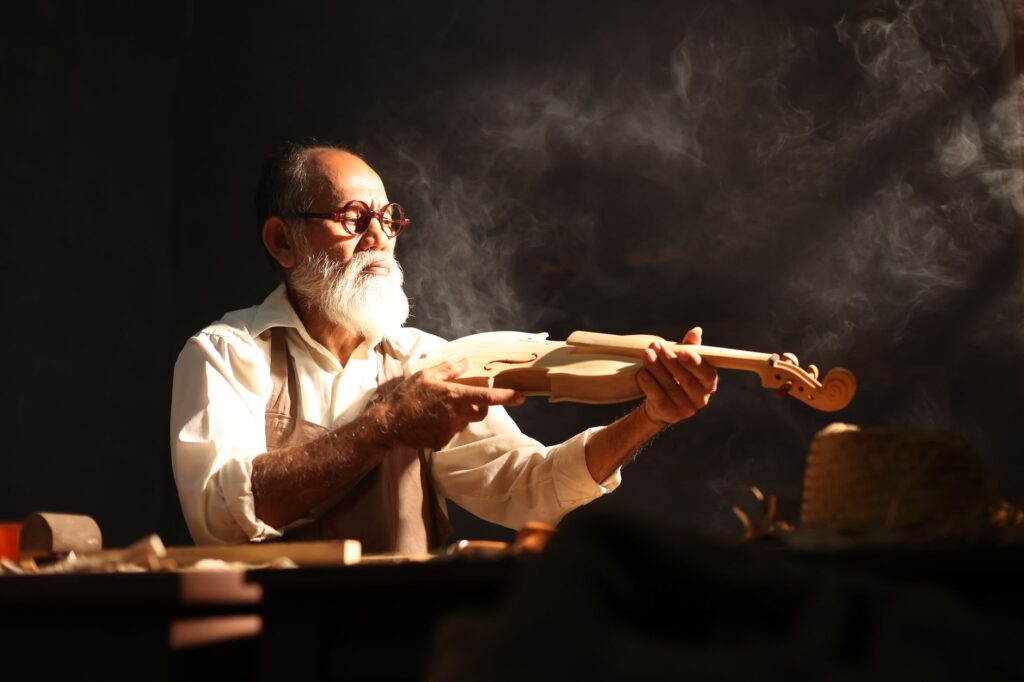
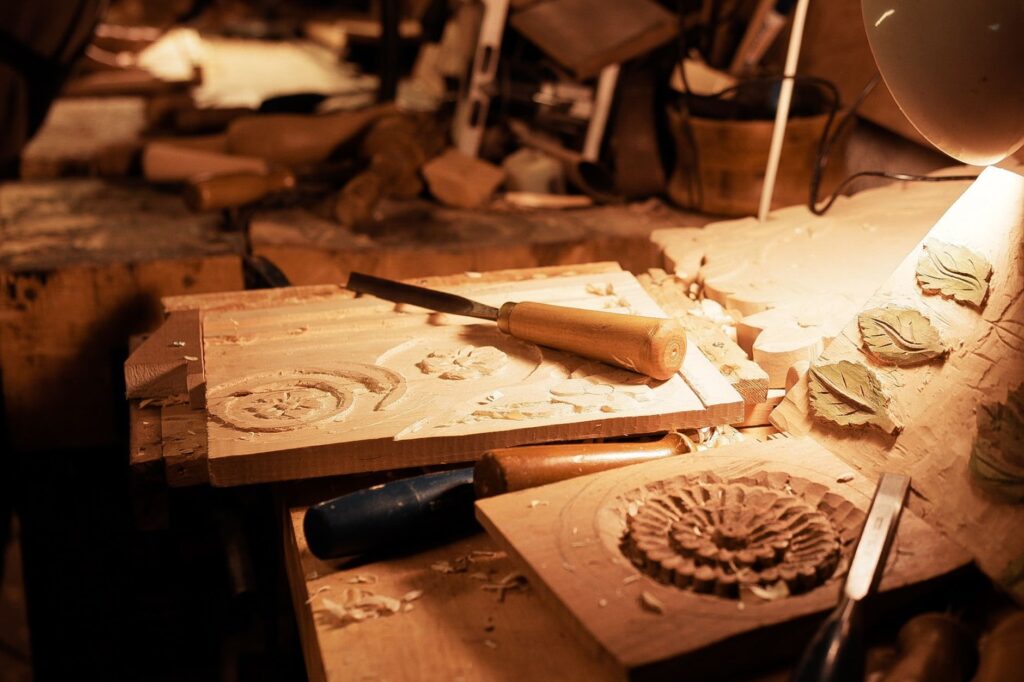
Once the ribs are fixed to the mold, the linings—the small internal reinforcement pieces—are carved, and both the soundboard and the back are hollowed out from solid planks using precision gouges. The thickness of these woods is not measured through rigid mechanical formulas, but through touch and constant percussion. The luthier gently taps the wood with their knuckles, listening to its fundamental note, resonance frequency, and the flexibility of each quadrant. Every millimeter of shaved wood drastically alters the instrument’s capacity to project highs and round out lows, turning this step into an exercise in high sensitivity where acoustic science and artistic intuition intertwine inseparably.

The Secret of Varnishes: Alchemy and Color in Glass Jars
Few subjects have generated as much ink, speculation, and legend as the chemical and organic composition of the varnishes used by Antonio Stradivari, Giuseppe Guarneri del Gesù, and the other patriarchs of the Cremonese golden age. Over the centuries, scientists, chemists, and musicologists have analyzed microscopic fragments of historical instruments using advanced spectroscopy and X-ray diffraction techniques, discovering that there was neither an arcane formula nor magical powders, but a deep understanding of the plant and mineral alchemy of the era. Current workshops continue experimenting with natural resins such as amber, lac, benzoin, shellac, and copal, dissolved in essential oils and pigmented with natural earths from Siena or crushed minerals.
The application of varnish is neither merely decorative nor aesthetic; its primary function is to protect the wood against moisture and the wear of continuous use without strangling or smothering its vibrational capacity. A varnish that is too rigid or thick will suffocate the sound, turning it into a dry echo lacking harmonics, while one that is excessively soft will not offer the necessary resistance. The varnishing process demands weeks of meticulous work: successive layers applied with a brush or fingertips, followed by natural drying under controlled sunlight or in special chambers, and a final polish with pumice stone and oil that gives the surface that velvety, translucent texture allowing the deep grain pattern of spruce and maple to show through the light.
The Workshop as a Temple: The Oral Transmission of the Craft
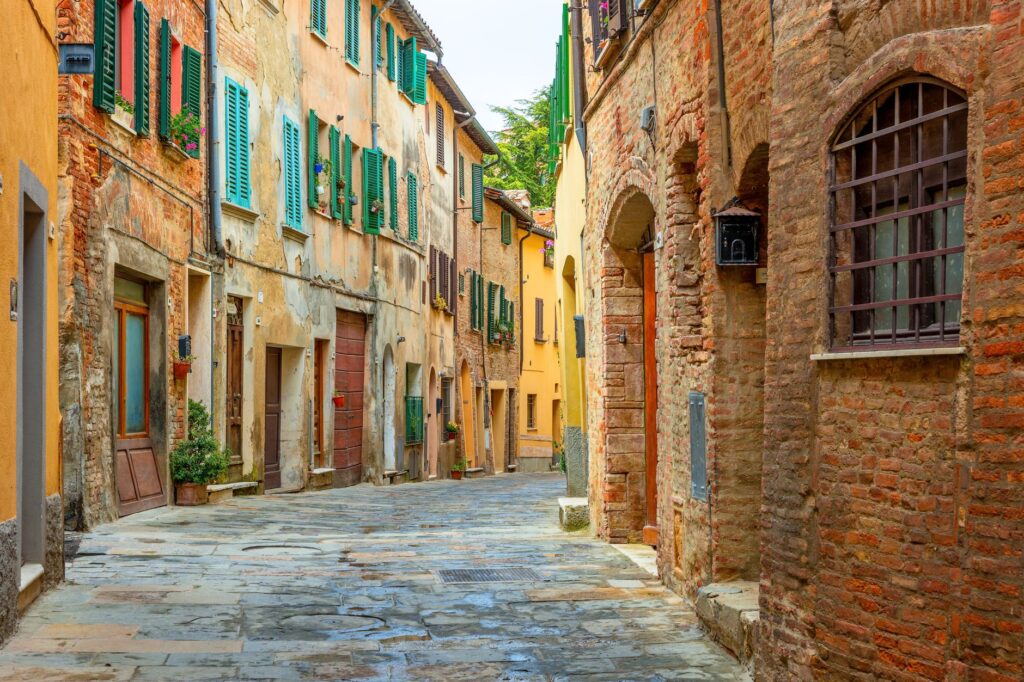
Walking through the streets of Cremona’s historic center means constantly encountering bronze plaques and noble wood signs signaling the presence of artisanal bottegas. Inside these spaces, the atmosphere is dominated by a reverent stillness, interrupted only by the rhythmic scraping of a file against metal, the whisper of sandpaper, or the tuned notes of a violin being tested after a minor repair. Unlike large industrial assembly lines, here every instrument bears the name and personal seal of its creator, a signature carved on the inside guaranteeing its authenticity and lineage. The International School of Violin Making, founded in 1938, acts today as the great institutional custodian of this tradition, attracting young people from Japan, South Korea, the United States, and various European countries who decide to settle in Cremona to learn the craft from its most rigorous foundations.
A luthier’s training is not acquired solely in theoretical classrooms, but through direct apprenticeship alongside a consecrated master, a bond recalling ancient medieval guilds. Apprentices spend years planing scrap wood, sharpening chisels with waterstones, and studying the geometry of bridges and bass bars before being allowed to assemble their first complete instrument. This oral and gestural transmission ensures that small details—the exact slope of the scroll, the radius of the f-hole curve, or the ideal string tension—are not lost in academic manuals, but remain alive in the hands and bodily memory of those who have decided to dedicate their lives to the service of music.
The true measure of a great workshop is not found in the number of instruments produced per year, but in the unwavering patience with which one waits for each piece to decide to sing for itself.
Practical guide
Planning a visit to Cremona requires understanding that the city’s rhythm is dictated by the schedules of artisan workshops and cultural institutions dedicated to musical heritage.
- How to get there: The city boasts excellent rail connections from Milan (approximately a one-hour regional train journey from the central station) and Bologna, making it entirely possible to forgo private vehicles during the stay.
- When to go: Spring months (April to June) and autumn (September to November) offer mild weather ideal for exploring the historic center on foot and enjoying outdoor musical events.
- Violin Museum (MdV): Located in Piazza Marconi, it houses an exceptional collection of historical instruments by Stradivari, Amati, and Guarneri, alongside an auditorium with advanced acoustics and rooms dedicated to the technological evolution of lutherie.
- Workshop visits: Most independent luthiers open their doors to the public, but booking an appointment in advance via email or phone is essential to avoid interfering with delicate artisanal work phases.
- Key events: The Mondomusica festival, held annually in autumn, brings together leading acoustic instrument makers, publishers, and musicians from around the world in an internationally benchmarked fair.
The Eternal Pentagram: The Final Chord in the Studio’s Gloom
When evening falls over the rooftops of Cremona and fog begins to slide smoothly from the Po River bed, the historic center’s workshops turn off their table lamps and sweep up the wood shavings scattered across the floor. In that moment of absolute quiet, when the bustle of the main square’s cafes fades away, the certainty remains that these walls guard something more than objects of wood and varnish. Every violin hanging from the bottega’s walls is a promise of future sound, a time capsule built of alpine spruce and figured maple awaiting the moment a bow touches its hairs to release pent-up emotion. In a world dominated by digital immediacy and mass production, the silent perseverance of Cremonese luthiers stands as a beacon of aesthetic resistance; a tangible reminder that the truly essential things in human life still demand time, silence, respect for the material, and a pulse that does not tremble before the immensity of beauty.