

The bureaucracy of European skies has long been marked by a clear asymmetry between consumer protection and the commercial aggressiveness of low-cost airlines. Among the most recurrent and emotionally draining disputes for families was a practice as elementary as it was unfair: the systematic separation of minors and their guardians during flights unless an extra fee was paid for seat selection. This situation, described by consumer associations as a hidden toll, has come to an end thanks to the regulatory push from European institutions, redefining the rules of the game to ensure that traveling as a family does not entail a financial penalty.
The scope of this transformation goes far beyond simple financial savings. It alters the very architecture of the travel experience, restoring peace of mind to millions of parents who previously faced the booking process with uncertainty over whether their children would end up rows apart. The new legal provisions compel airlines to establish automatic and free mechanisms that guarantee the allocation of contiguous seats, turning a service that was once monetized into a non-negotiable fundamental right within the community airspace.
The end of the family co-location surcharge
For years, the business model of airlines has relied on the fragmentation of the base fare. Concepts that were once an inseparable part of the ticket became paid add-ons: cabin baggage, priority boarding, and, most controversially, seat selection. For families with young children, this translated into a commercial trap. If parents did not pay the surcharge, the seating algorithms separated minors, forcing adults to pay under the emotional pressure of leaving a toddler alone.
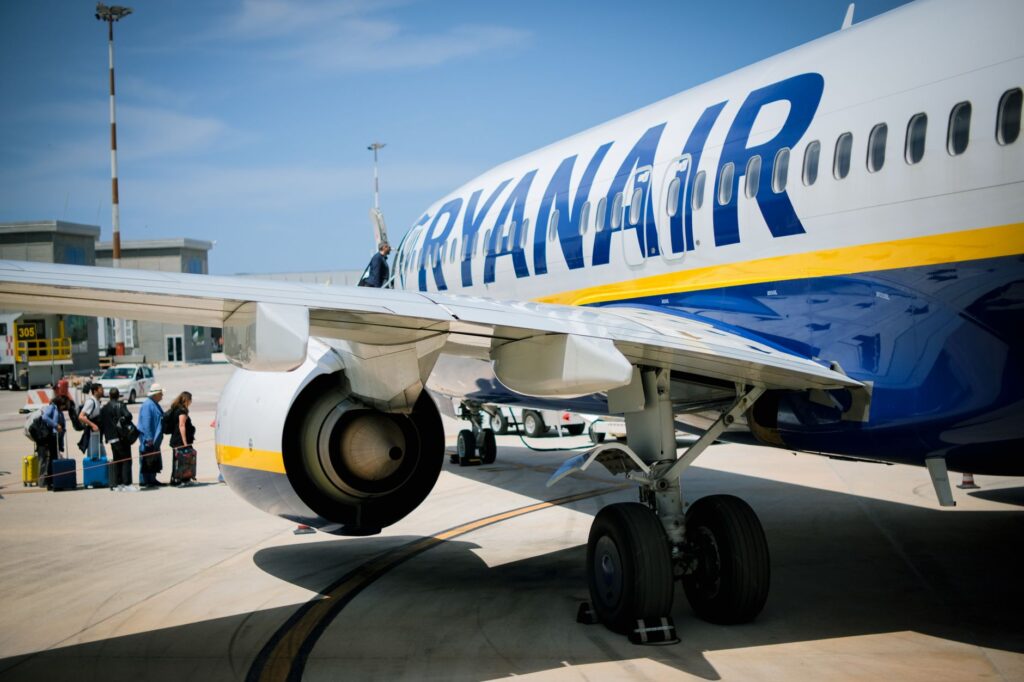
The new community regulations dismantle this practice on flights operated within the European Union and those originating or terminating at its airports. Free allocation of joint seating becomes a legal obligation for companies, which can no longer cite operational reasons to justify charging these fees to legal guardians of minors. This measure balances a scale that for too long prioritized airline profit margins over the basic welfare of the most vulnerable passengers.
How the new seat allocation system works
The technical implementation of this directive has required a profound redesign of airline algorithms. Until now, computer systems prioritized selling individual seats to single passengers willing to pay for a window or aisle, leaving remaining spaces for the end. With the new rules, the process is inverted when bookings include child passengers.
By entering dates of birth during the purchase process, the airline’s system automatically detects the presence of minors and blocks adjacent seats for the responsible adult and child free of charge. This block is executed without manual intervention from the passenger, eliminating the need to negotiate with ground staff or fellow travelers once on board. Airlines have a strict timeframe to adapt their digital platforms, ensuring transparency is the norm from the very first click.

The fine print: technical and operational exceptions
As with any major regulatory framework, the rule includes exceptions derived from operational safety and airport logistics. Not all cabin configurations allow large numbers of minors to be grouped with a single adult, especially in smaller single-aisle aircraft where rows of three seats limit possible combinations.
In cases of last-minute modifications, such as aircraft changes for technical reasons or flight cancellations requiring unforeseen reaccommodation, airlines retain the obligation to rebook the family together on the next available flight. Responsibility rests entirely with the carrier, which must prove it exhausted all technical options before separating a minor from their guardian—a scenario that now carries severe financial penalties from civil aviation authorities in member states.
The protection of minors on board is not a commercial courtesy by airlines, but an essential requirement to guarantee safety and order in international air transport.
The impact on low-cost carriers
The low-cost air transport sector, a fundamental pillar in the democratization of travel in Europe, now faces a period of financial adaptation. In previous fiscal years, ancillary revenues—those obtained from services additional to the ticket—accounted for up to a third of some carriers’ total turnover. Charging for seat selection was one of the most lucrative items in this segment.

The elimination of this surcharge for families will force airlines to review their pricing strategies. Aeronautical analysts point out that a slight restructuring of base fares is likely to compensate for the loss of this revenue, though fierce competition between operators will curb widespread hikes. Transparency in the final price emerges as the new standard, forcing brands to compete for traveler loyalty based on service quality rather than accumulating hidden costs at the final step of purchase.
The perspective of consumer associations
Passenger rights organizations have welcomed the regulations with satisfaction, maintaining a watchful eye against potential corporate loopholes. Historically, major airlines have shown a remarkable capacity to find legal grey areas that delay the effective implementation of European directives.
Spokespersons for these associations remind the public that the success of the measure will depend on the stringency of inspections and the speed with which national consumer bodies process claims. Lack of awareness regarding one’s own rights remains the greatest obstacle for travelers, prompting intensified informational campaigns so no family waives their right to claim refunds for improperly charged amounts on tickets issued under the new legislation’s thresholds.
The role of online travel agencies versus official websites
One of the technical debates that arose during the rollout of the regulations concerns intermediary platforms. Online travel agencies, which sell combined tickets from multiple airlines, must synchronize their payment gateways with airline systems so that minor recognition and free seat allocation apply seamlessly.
In many cases, purchasing through third parties hindered seat management because data flow between platforms suffered delays. The new guidelines stipulate that both the operating airline and the intermediary agency are jointly and severally liable for ensuring the family travels together. This legal joint liability settles standard disputes where both parties passed the buck upon receiving a claim for separated seats, drastically simplifying the mediation process for the consumer.
Traveling with children stops being an exercise in improvised financial calculation and becomes an experience where predictability and respect for the passenger reclaim the spotlight.
Practical guide
To make the most of the new regulatory guarantees when planning a family air trip, following a series of operational guidelines throughout the booking and flight management process is essential.
- Verify birth dates: Enter the age of minors with absolute precision during booking, as the automated free allocation system relies exclusively on this registry data.
- Demand immediate allocation: If the airline’s digital platform requests payment to sit next to a minor, do not proceed and verify that it is a flight within the EU jurisdiction where charging is prohibited.
- Keep purchase receipts: Save invoices and booking details showing assigned seats in case operational modifications occur at the boarding gate.
- Act on airport incidents: If, despite the rule, separate seats are assigned at check-in, immediately approach the airline’s ground staff to correct the error relying on new European rights.
- Use official claim channels: In case of refusal by the carrier, file a formal complaint with the State Aviation Safety Agency or equivalent body in the flight’s origin country.
The horizon opening up for family tourism in Europe outlines a scenario of greater contractual fairness. Eliminating the surcharge for contiguous seats is not an administrative favor, but an acknowledgment that family cohesion and on-board safety are inseparable principles that no commercial strategy should violate. With these tools, flying with children recovers the simplicity it should never have lost.
Source in EN: Condé Nast Traveler Spain