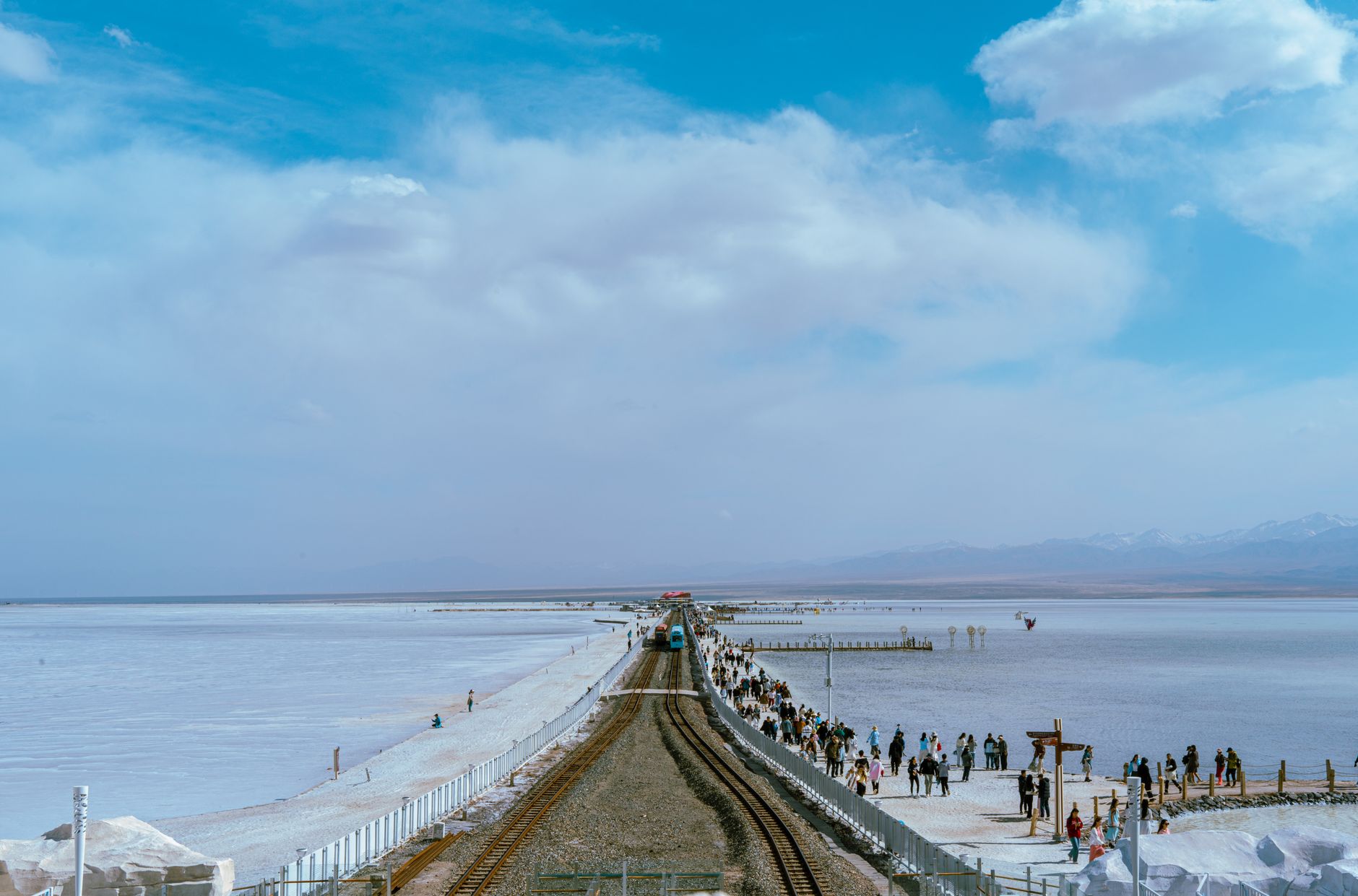

The ascent begins in Xining, at 2,275 meters above sea level, but it is merely the prelude to one of the most ambitious engineering odysseys in modern history. The Qinghai-Tibet Railway, popularly known as the «Sky Road,» is not just a transport link; it is a rolling laboratory that defies the laws of physics and human physiology. As the convoys cross the vast Tibetan Plateau, they venture into a territory where the air is 40% thinner than at sea level and the ground, seemingly solid, is actually an unstable amalgam of ice and earth known as permafrost.
This 1,956-kilometer infrastructure, 1,142 kilometers of which were built during the most critical phase between Golmud and Lhasa, represents the culmination of a dream that for decades was considered geologically impossible. The central thesis of this work lies not only in political or economic connectivity but in the capacity of human technology to create an artificial ecosystem capable of traversing the void. Throughout this report, we break down the cryogenic logistics, the life support systems, and the architecture of a route that has forever transformed the dynamics of Central Asia.
The Cryogenic Challenge: Stabilizing the Perpetual Soil
The primary obstacle for engineers was not the altitude but thermal instability. Approximately 550 kilometers of the track rest on permafrost, a layer of soil that remains frozen but is extremely sensitive to temperature variations. If the heat generated by the train’s passage or seasonal climate change were to melt this ice, the track bed would sink, leading to catastrophic derails. To solve this, an unprecedented strategy of active and passive cooling was implemented.
Thousands of thermosyphons—ammonia-filled metal tubes—were installed along the embankments, protruding from the ground. These devices extract heat from the subsoil during winter and release it into the atmosphere, keeping the ground cold enough to withstand summer thaws. It is a silent thermal dance that ensures the steel rails remain level on a ground that, by nature, would want to be liquid.

The stability of the track depends on a thermal balance monitored in real-time by fiber-optic sensors buried several meters deep. This data network allows control centers to predict millimeter-level ground movements before they become a structural risk.
«The railway was not built on earth, but on a delicate balance of temperatures where ice is the only possible foundation.»
In addition to thermosyphons, layers of fragmented rocks were used in the embankments to allow for natural ventilation and thermal insulation. This technique, combined with long bridges spanning the most unstable permafrost zones, minimizes direct thermal impact on the terrain. Engineering here does not fight against nature but uses its own laws of convection to preserve the solid state of the landscape.
Respiratory Logistics: The On-Board Oxygen System
Traveling at over 4,000 meters above sea level subjects the human body to severe oxidative stress. To prevent Acute Mountain Sickness (AMS), the trains operating on this line are airtight units, similar to commercial aircraft cabins but with a much more complex air supply logistics. The on-board oxygen system operates on two levels: environmental enrichment and individual supply.
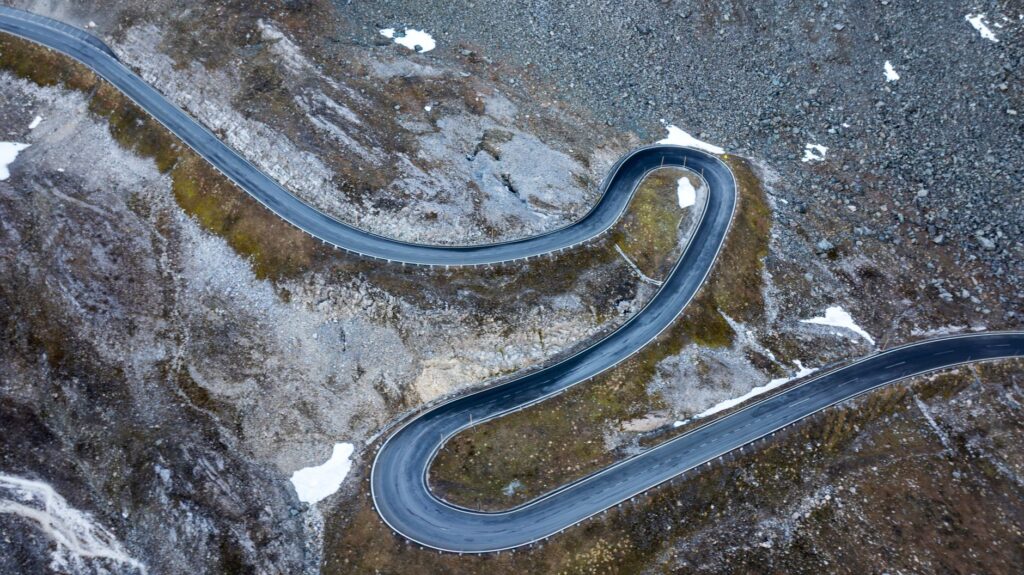
As the train ascends beyond Golmud, the central system begins pumping oxygen into the carriages to maintain concentrations at levels equivalent to an altitude of 2,500 meters. This allows passengers to breathe relatively normally while watching from their windows as the exterior turns into a desert of thin air. However, for those suffering from persistent symptoms, every seat and berth is equipped with individual oxygen outlets with nasal cannulas.
- Oxygen concentration automatically monitored by barometric pressure sensors.
- Windows reinforced with UV protection filters to combat extreme solar radiation.
- Medical personnel present on every long-distance journey for respiratory emergencies.
This logistical deployment turns the train into a survival bubble. The pressurization is not total, as in an airplane, but partial, designed to balance passenger comfort with the need to avoid sudden pressure changes when opening doors at high-altitude stations. It is a technical compromise that requires constant management of pressure relief valves in every car.
The Tanggula Pass: The Five-Thousand-Meter Frontier
The crowning point of the route is the Tanggula Station, located at 5,068 meters above sea level. It is the highest railway station in the world, a place where the atmosphere is so thin that conventional diesel engine combustion would fail without modifications. The locomotive engines, specifically manufactured by GE for this line, use electronic turbochargers to compensate for the lack of oxygen, allowing the machines to maintain their tractive power on the steepest slopes.
At Tanggula, the landscape is one of magnetic desolation. There are no trees, only an infinite steppe and snow-capped peaks that seem within arm’s reach. The station is technical; trains rarely open their doors here for passenger disembarkation due to the extreme risk of hypoxia. However, its existence is a milestone in supply logistics, serving as a critical checkpoint and maintenance hub on the roof of the world.

Construction at this point was a battle against time and biology. Workers labored in reduced shifts, with decompression chambers available on-site and a permanent field hospital. No worker died from altitude sickness during the construction of phase two, a record that Chinese engineering highlights as a triumph of occupational medicine over geography.
Bridges for Biodiversity: Respecting the Fragile Ecosystem
The Qinghai-Tibet Plateau is home to vulnerable species such as the Tibetan antelope (chiru). The railway’s construction raised legitimate international concern regarding habitat fragmentation and the disruption of millenary migration routes. The technical response was the integration of 33 wildlife passages along the line.
These passages are not simple tunnels; they are elevated bridges spanning several kilometers, such as the Qingshuihe Bridge (11.7 km), designed so that animals can pass underneath without perceiving the train’s presence. During migration seasons, construction has been halted or rail traffic restricted to ensure herds cross without stress.
«The true measure of this infrastructure’s success is not just how many people it carries, but how many antelopes continue to cross its tracks every spring.»
Environmental monitoring is constant. Night-vision cameras and motion sensors have been installed to study wildlife behavior toward the infrastructure. Data indicates that, after an initial adaptation period, local species have integrated the viaducts as part of their natural environment, demonstrating that large-scale transport logistics can, if rigorously designed, coexist with extreme biodiversity.
The Fleet Designed for the Abyss: Rolling Stock
The Qinghai-Tibet Railway carriages are specialized pieces of engineering. Manufactured through a collaboration between Bombardier and local firms, each car is equipped with lightning protection systems, as thunderstorms on the plateau are frequent and violent. Furthermore, the waste management system is closed-cycle: nothing is discharged outside to avoid contaminating Tibet’s pure water sources.
The NJ2 locomotives, designed to operate in temperatures as low as -35 degrees Celsius, feature fuel preheating systems and special lubricants that do not lose viscosity in extreme cold. Redundancy is key: each train carries duplicated braking and satellite communication systems, as mobile coverage is non-existent in vast stretches of the journey.
The interior design prioritizes visibility, with panoramic windows that cannot be opened, sealed with high-resistance rubber gaskets to maintain the integrity of the oxygen-enriched atmosphere. Comfort is a logistical necessity, not a luxury, as the journey from Beijing to Lhasa lasts approximately 40 hours, subjecting crew and travelers to prolonged confinement in hostile environmental conditions.
Practical Guide
To undertake this journey, planning must be as rigorous as the engineering of the track itself. This is not a conventional route and requires specific preparations.
- Required Permits: In addition to a Chinese visa, foreign travelers must obtain the Tibet Travel Permit (TTB), which must be managed through an authorized agency at least 20 days in advance.
- Recommended Routes: While there are trains from Beijing, Shanghai, and Chengdu, the route from Xining is the shortest (21 hours) and allows for better gradual acclimatization if a couple of days are spent in the city before departing.
- Health and Preparation: It is essential to consult a doctor regarding altitude medication (such as acetazolamide). It is recommended not to shower on the first day in Lhasa and to avoid intense physical exertion to allow the body to adapt to the pressure.
- Luggage: Space in the sleeper compartments (Soft Sleeper) is limited. Bring technical clothing in layers, as the temperature inside the train is constant, but the cold is biting when disembarking at intermediate stations.
- Best Time to Visit: From May to September, the weather is milder and glacier visibility is optimal, although this is the season with the highest demand for tickets.
The Plateau Horizon: A Visual Closing
At the end of the journey, as the train gently descends into the Lhasa valley and the Potala Palace appears like a jewel of ochre and white atop Marpo Ri hill, the sensation is one of relief and wonder. The journey has been a transition between two worlds: the hyper-connected modernity of urban China and the silent spirituality of the highlands. The railway has succeeded in shortening a distance that once took weeks of perilous caravans, turning it into an experience of protected contemplation.
The final image that lingers in the mind is that of the rails disappearing into the golden steppe, a steel line that seems to float above the permafrost. It is at that moment one realizes this train does not just transport people or goods; it transports the human will to inhabit the uninhabitable. Engineering, in its purest form, becomes here an act of technical faith, a fulfilled promise that no place, no matter how high or remote, is unreachable for ingenuity and perseverance.