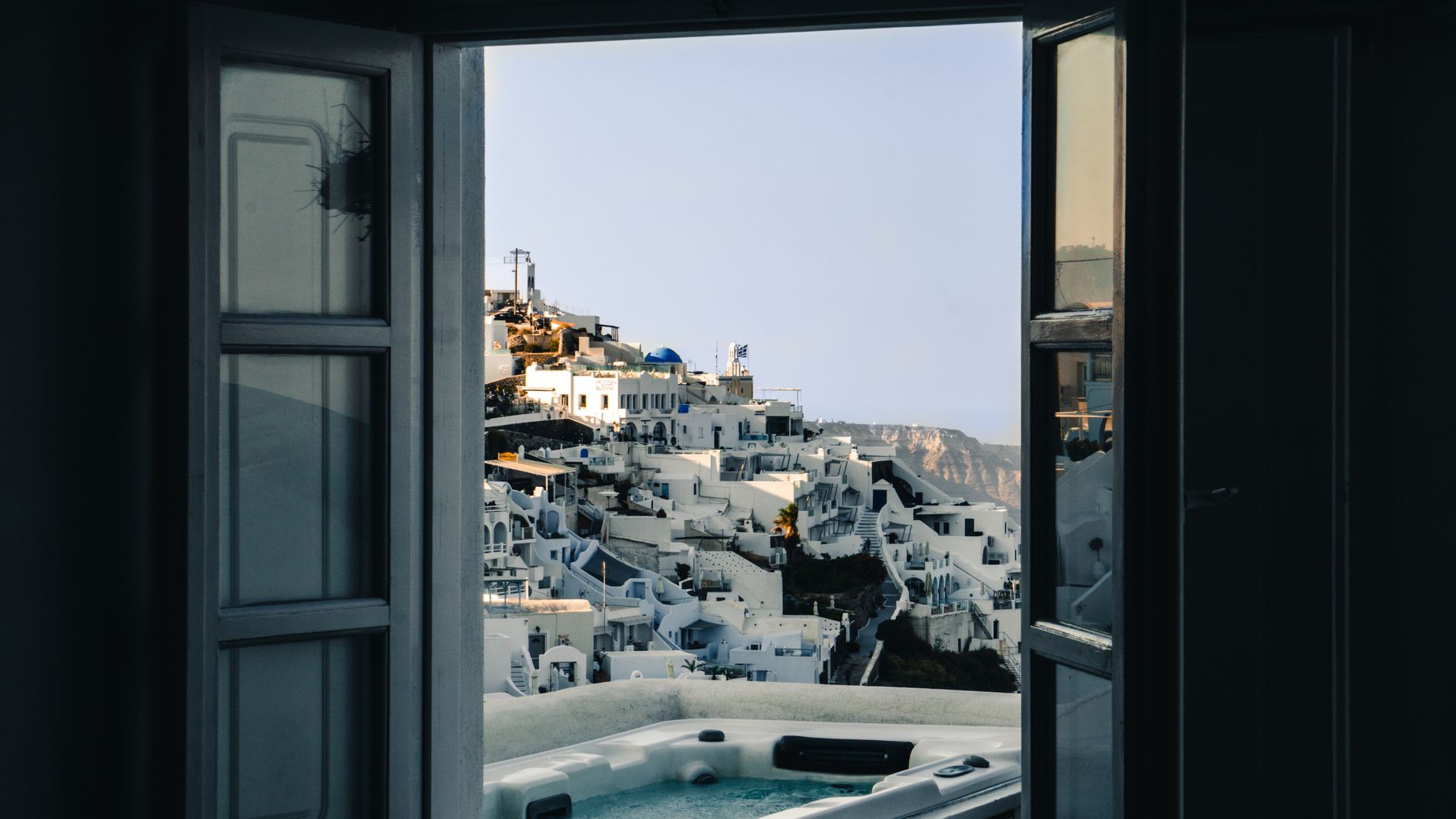

There is a subtle difference between looking at the world and looking through the world. The first is a passive stance, almost a shop window; the second demands a decision. Travel, in its most honest form, places us before a window we did not always choose and asks something more than wonder: it asks for attention. At Atlas Lume we believe that attention is the raw material of any journey worth taking, and that it has less to do with accumulating landscapes than with learning to inhabit thresholds.
The threshold as a place of learning
A threshold is not a door: it is the in-between space where something is transformed. When we arrive in a territory that is not our own, we occupy that place for a brief time, and what we do there says a great deal about us. We can cross it with the haste of those who collect stamps or with the slowness of those who admit they do not know. True hospitality does not begin with the other: it begins with an awareness of our own condition as guests.
That awareness has practical consequences. It makes us more cautious with words, more curious about other people’s customs, more respectful of silences that are not ours to fill. The traveller who knows they are invited does not demand; they ask. They do not presume; they listen. And in doing so, they discover that the world rarely answers the questions we had prepared, but rather those that arise when we pause.
The gaze that does not possess
We live surrounded by images that promise the world on a screen. That abundance carries a risk: turning places into wallpapers and people into figures in a landscape. Against this, we defend a gaze that does not possess, one that allows itself to be questioned and accepts that it will not understand everything. Looking without possessing is perhaps the hardest form of curiosity, because it renounces control and accepts the discomfort of the unknown.
A journey does not begin when we leave home, but when we accept that home is not the centre of the world.
That renunciation does not impoverish the experience: it deepens it. Those who look without possessing notice details the hurried eye misses: the rhythm of a street mid-morning, the way a community cares for its memory, the way a landscape changes with the light. These are small things, hard to photograph and almost impossible to summarise, yet they are what remains when the journey ends.
Hospitality: a conversation among equals
Hospitality is not an industry, though it sometimes dresses as one. It is a relationship. When someone opens their home, their table or their time to us, they are not providing a service: they are offering a form of temporary belonging. And that offer deserves a response we do not always know how to give: gratitude, yes, but also reciprocity, care and discretion.
In a world that tends to measure everything in transactions, remembering the relational dimension of hospitality is an almost political act. It forces us to ask what we bring to the places we visit and what we leave behind. This is not a matter of accounting debt, but of a diffuse and constant responsibility: not to treat anyone as part of the scenery.
The territory inhabited slowly
Every territory has its own time, and travelling well consists, to a great extent, in synchronising with it. Some places can be read in an afternoon; others demand weeks to reveal their logic. Speed is not a merit; it is often an obstacle. Moving slowly allows us to notice the layers of a landscape: the geology, the history, the work of those who inhabit it, the traces of what is no longer there.
That slowness is not a nostalgic pose. It is a methodology. It helps us distinguish the essential from the incidental, to separate the experience from the story we later build around it. And, above all, it restores a capacity that haste atrophies: the ability to be surprised by what we did not expect to find.
The responsibility of looking
Looking at the world with attention is not a neutral gesture. It means recognising that our presence leaves a trace, whether we like it or not, and that this trace can be more or less respectful. The traveller’s responsibility is not to avoid travelling, but to travel with judgement: to choose carefully, consume consciously, listen before opining and accept that some places are not made for our enjoyment.
It is a simple and demanding ethic at once, one that is never learned once and for all. It is cultivated journey by journey, mistake by mistake, conversation by conversation. And it carries a reward that does not appear in guidebooks: the feeling that, in the end, the world has treated us as guests rather than as customers.
Closing: the window left open
We return from journeys with objects, with photos, with anecdotes. But what truly transforms us is something harder to name: a window left open. It is the awareness that the world is larger than our gaze and that there will always be a threshold to cross with respect. Travelling, in the end, is learning to inhabit that window without ever pretending to close it completely.