
An Intimate Gaze Aligned with Falling Leaves
Autumn is not merely a transitional season on the calendar; it is a state of mind, a necessary pause between the summer bustle and the harshness of winter. Building on this premise, renowned Argentine photographer Anastasia Ferreiro has developed a visual corpus that redefines how we observe the most melancholic months of the year. Her lens, usually restless and traveled, now pauses to capture the essence of a time when the light turns amber and nature seems to hold its breath. This feature explores the creative process behind her latest roll of film, a work where romanticism and nostalgia converse in perfect harmony with the landscapes she traverses.
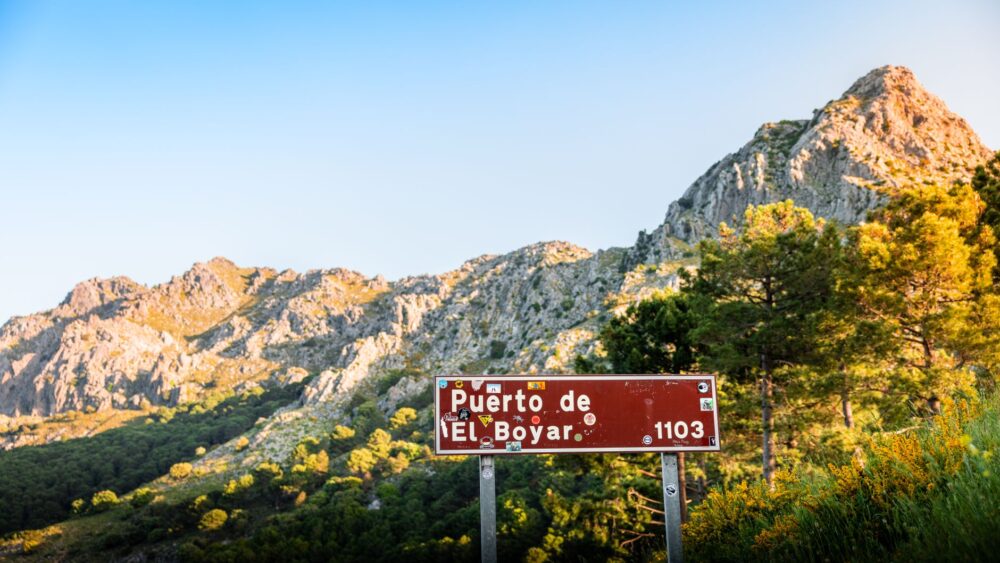
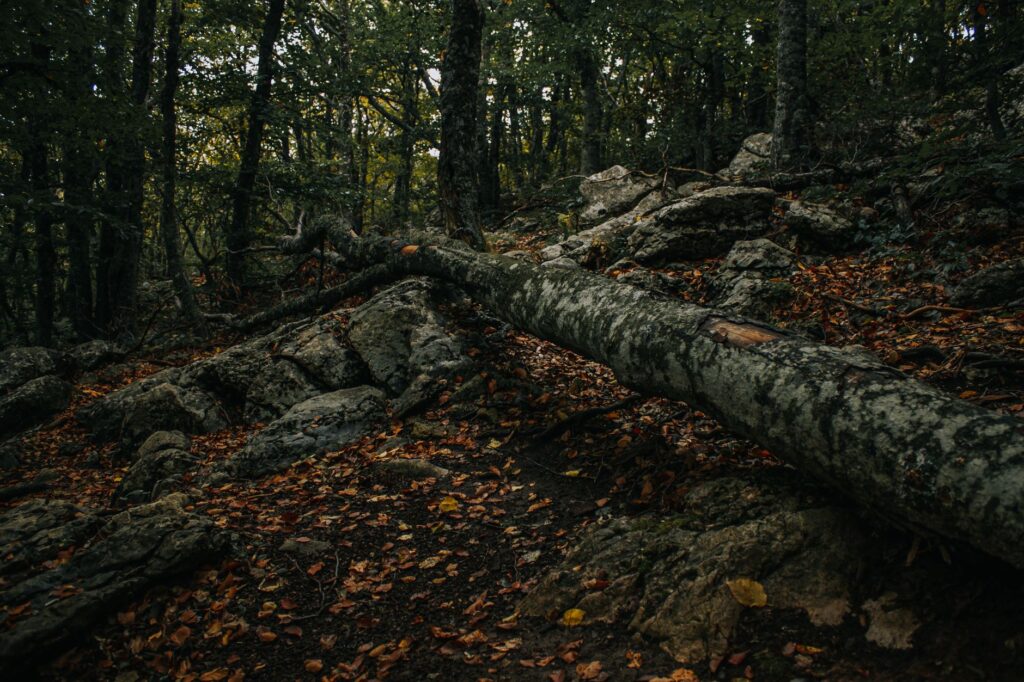
Through a journey that prioritizes contemplation over the rapid consumption of images, Ferreiro invites us to rediscover the value of slowing down. Each frame functions as a refuge against contemporary speed, demonstrating that the deepest photographic journey is often the one taken inward. Far from seeking the perfect postcard or chromatic sensationalism, the artist prefers subtle nuances, overcast days that blur the horizons, and the rough texture of century-old tree trunks flanking the rural paths of her current route.
The Geography of Letting Go and Amber Light
The territory chosen by Ferreiro for this project does not respond to rigid geographic coordinates, but rather to an emotional cartography. The temperate forests of the global South and specific regions where autumn exerts its dominance with force become primary stages. Here, the sunset light barely lasts a few minutes; it seems to stretch, bathing the fields with a golden patina that transforms the ordinary into the extraordinary. The photographer explains that the secret lies in learning to wait for the exact moment when the morning mist dissipates, revealing the silent architecture of bare trees.
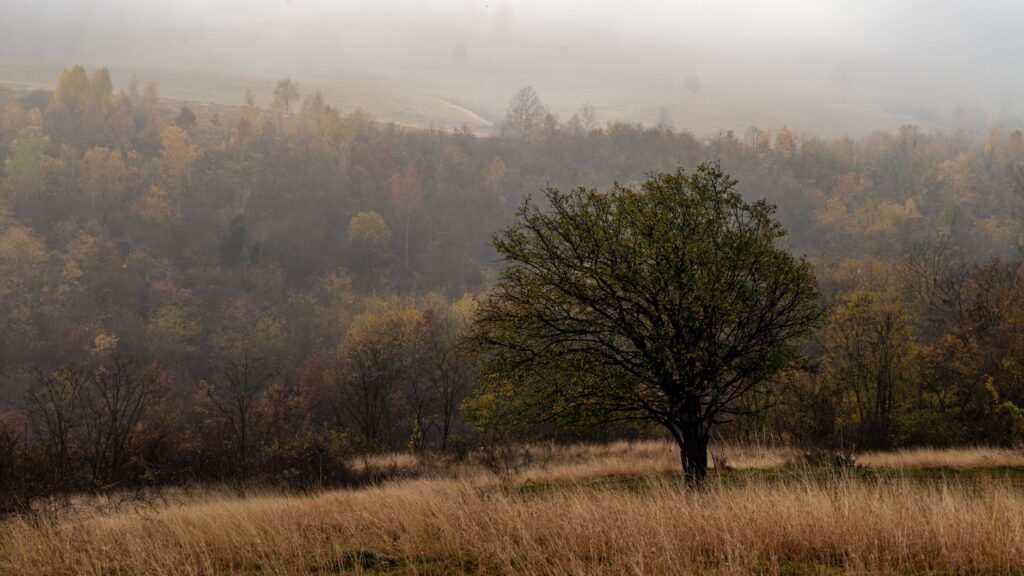
In these landscapes, the ground becomes a dynamic tapestry where fallen leaves of ochre, reddish, and deep brown tones coexist. Ferreiro walks for hours without a fixed destination, camera on her shoulder, attentive to the small visual miracles offered by natural shedding. This relationship with the environment requires patience and a profound respect for ecological rhythms. Nature photography is not about mastering the landscape, but about listening to what it has to tell us when we stop to watch, the artist points out during one of her roadside stops.
Autumn is the art of gracefully letting go of what has already fulfilled its cycle, reminding us that beauty also inhabits disappearance.
An analysis of her negatives reveals a constant obsession with preserving the original atmosphere without resorting to artificial filters. The color palette is dominated by earthy tones, muted greens, and the pearl grays of the sky, creating an atmosphere that evokes reading next to a frosted window. This approach not only documents a landscape but constructs a visual narrative where the viewer can project their own seasonal experiences and longings.
Human Scenes: Warmth in Unfamiliar Shelters
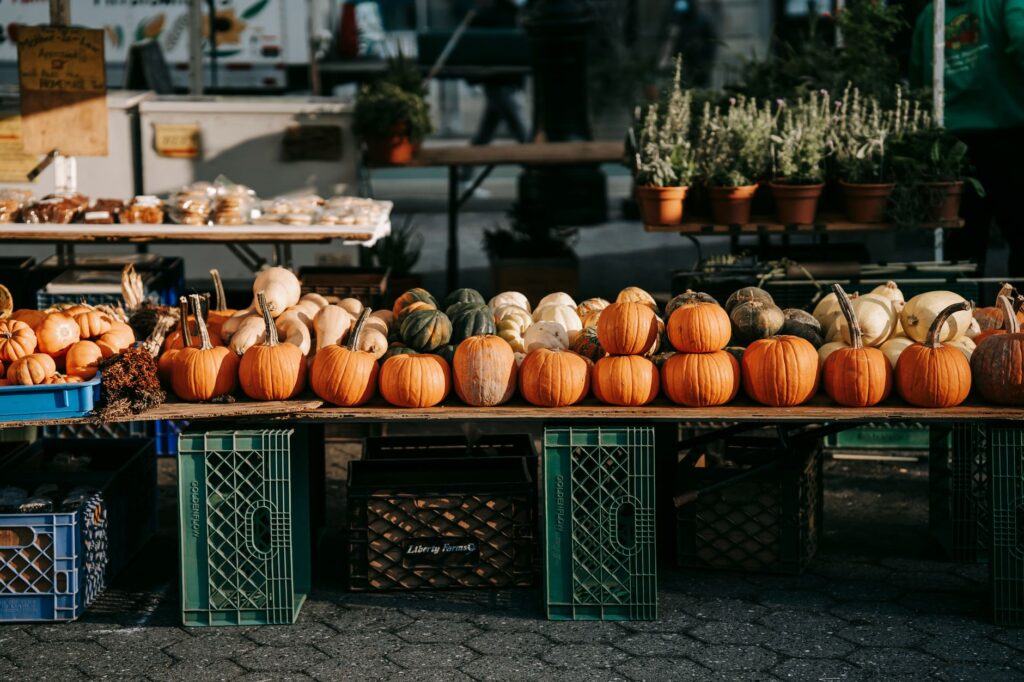
Although the natural landscape occupies a central place, Ferreiro’s work would lack a pulse without human presence. The people who inhabit these autumnal territories do not appear as mere decorative elements, but as custodians of a way of life linked to the land and tradition. In the small villages she visits, life retracts toward the warmth of homes, cafes with dense vapors, and local markets where chestnuts, pumpkins, and freshly harvested apples are traded.
The photographer manages to capture the intimacy of these moments with absolute respect for the everyday lives of her subjects. We see a craftsman repairing farm tools under the overhead light of a shed, or a couple sharing a steaming thermos of tea on a stone bench dampened by drizzle. These scenes add a layer of human warmth that beautifully contrasts with the incipient chill of the season, reminding us that the most effective shelter against the cold is companionship and the warmth of shared small routines.
- Spontaneous portraits in local farmers’ and artisans’ markets.
- Interiors illuminated by natural light in old rural houses.
- Unhurried conversations on porches and village cafes.
These interactions are not the result of prior staging, but of long hours of silent coexistence. Ferreiro prefers to go unnoticed, becoming one more element of the human landscape before clicking the shutter. It is this hard-earned trust that allows the expressions of her subjects to feel genuine, devoid of the self-consciousness that usually ruins contemporary documentary photography.
Architecture and Movement: The Pulse of Gray Cities
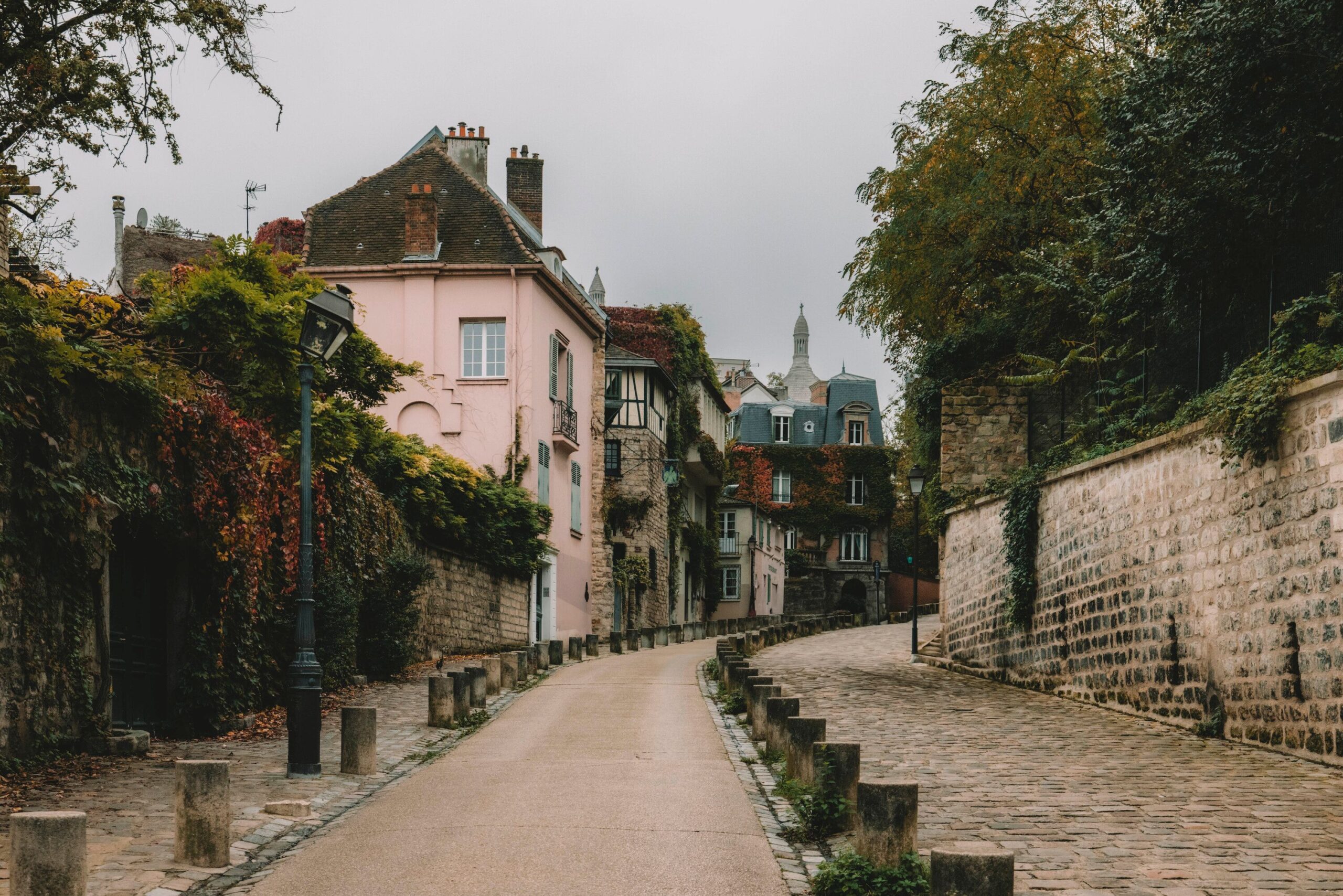
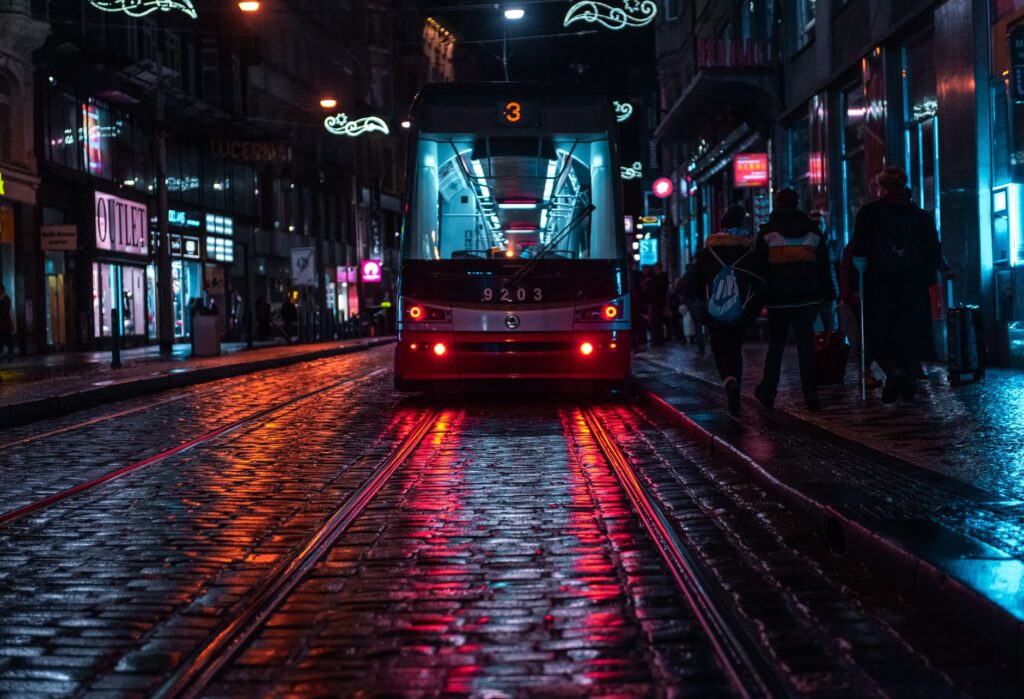
When the journey leaves the rural environment and enters cities, Anastasia Ferreiro’s perspective shifts without losing its distinctive stamp. Autumnal metropolises acquire a severe dignity under leaden skies. The cobblestones of historic streets, mirroring recent rain, reflect noble stone facades and illuminated shop windows promising shelter. Here, public transport—trams cutting through the mist, commuter trains winding through foggy valleys—acts as a constant metaphor for transit and inner travel.
Urban architecture becomes a geometric framework that contrasts with the organic, chaotic disorder of fallen leaves. Ferreiro uses pronounced vanishing points to guide the viewer’s gaze toward solitary figures walking in long coats and dark umbrellas. This section of the roll conveys a powerful sense of urban freedom: the idea of consciously getting lost in an unfamiliar city during an autumn Sunday afternoon, when commercial rhythm ceases and streets return their echo to walkers.
The Geometry of Wet Asphalt and Artificial Light
As evening falls, sodium vapor streetlights cast warm halos over damp sidewalks, generating a chiaroscuro that directly references classic cinematic aesthetics. The city in autumn transforms into a film set where every passerby is the involuntary protagonist of an intimate drama, the photographer reflects while reviewing her night shots in her field notebook. The integration between architectural elements and twilight light is one of the greatest technical achievements of this series.
Cultural Details and the Ritual of Matter
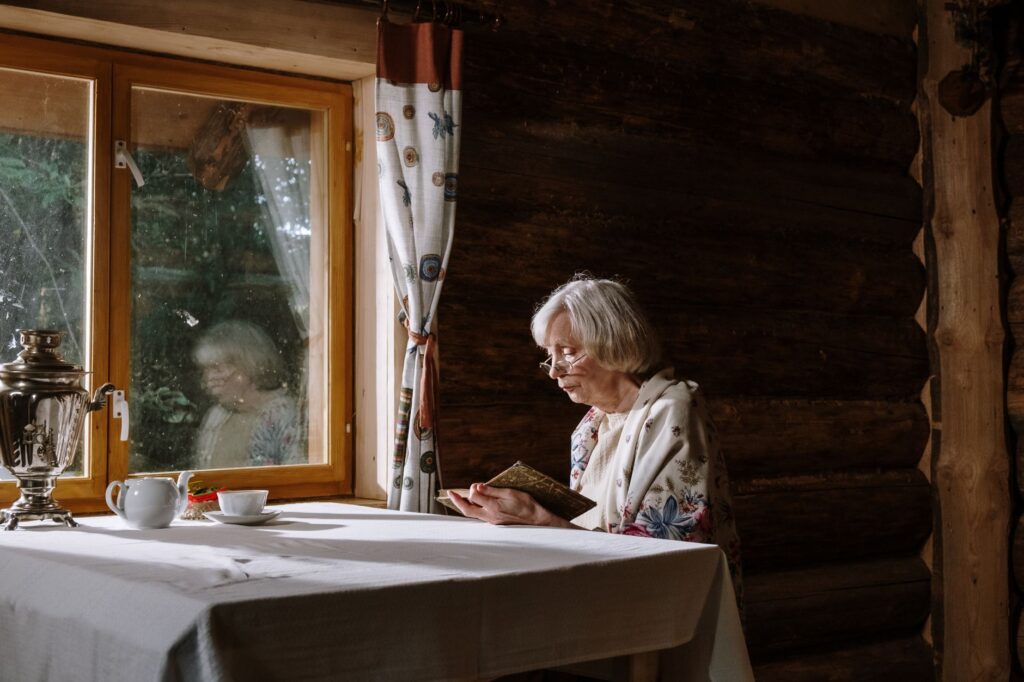
The feature also dedicates essential space to the material culture of autumn, understood as the set of objects, traditions, and flavors that define this time of year in the visited communities. From handcrafted pottery used to serve hot broths to leather-bound books resting in second-hand bookstores, Ferreiro documents the resistance of manual trades against mass production. Each improvised still life on a rustic wooden table tells a story of permanence and care.
Among the most prominent cultural elements are used book fairs and antique markets that proliferate in main squares during the weekends of October and November. The photographer focuses on hands leafing through foreign volumes, on suspended dust passing through sunbeams filtered by arcades, and on the texture of thick wool fabrics beginning to dominate the collective wardrobe. These details act as sensory anchors allowing the reader to experience the report almost on a tactile and olfactory level.
Preserving the past in an image is not an exercise in sterile nostalgia, but an indispensable tool for understanding who we are in the present.
Practical Guide
For those travelers and photographers who wish to emulate the spirit of this autumnal journey without falling into commercial clichés, the essential keys based on Anastasia Ferreiro’s working methodology are detailed below.
When to Go and How to Plan the Trip
The optimal period extends from mid-October to late November, coinciding with the peak of leaf fall in temperate zones. It is recommended to avoid weekends in the most crowded tourist enclaves and prioritize weekdays to enjoy the solitude required by contemplative photography.
Recommended Photographic Equipment
- Medium format analog or digital camera with bright fixed lenses (35mm and 50mm).
- Medium sensitivity film rolls (ISO 100 to 400) optimized for faithful earth tone reproduction.
- Waterproof clothing and comfortable mountain footwear for long walks under changing weather conditions.
Ethical and Visual Approach Tips
The priority must always be respect for local inhabitants and their environment. Do not invade private spaces in search of a shot and always ask permission before portraying faces in small communities. Patience is your best tool: dedicate at least a minute to staying in the same place before deciding there is no photo.
Visual Climax: The Last Light of the Journey
The journey concludes in a secluded corner where the earth seems to merge with the sky in a definitive embrace. It is an image taken at the edge of an alpine lake, where the water’s surface acts as a perfect mirror duplicating the silhouette of reddish fir trees under a sky of lead and gold. There is no human presence in this final frame, nor is it needed; nature expresses itself in its maximum purity, condensing all the melancholy, beauty, and stillness that have guided Anastasia Ferreiro’s steps along this path.
This final print functions as a farewell without dramatism, a reminder that the most significant journeys are those that leave a lasting imprint on visual and emotional memory. By closing this roll, the Argentine photographer returns our capacity for wonder at natural cycles, proving that autumn, far from being the end of something, is always a promise of intimate and collective renewal.
Source: Condé Nast Traveler Spain (https://www.traveler.es/articulos/el-otono-de-anastasia-ferreiro)