
A Geography of Impossible Slopes and Ancient Currents
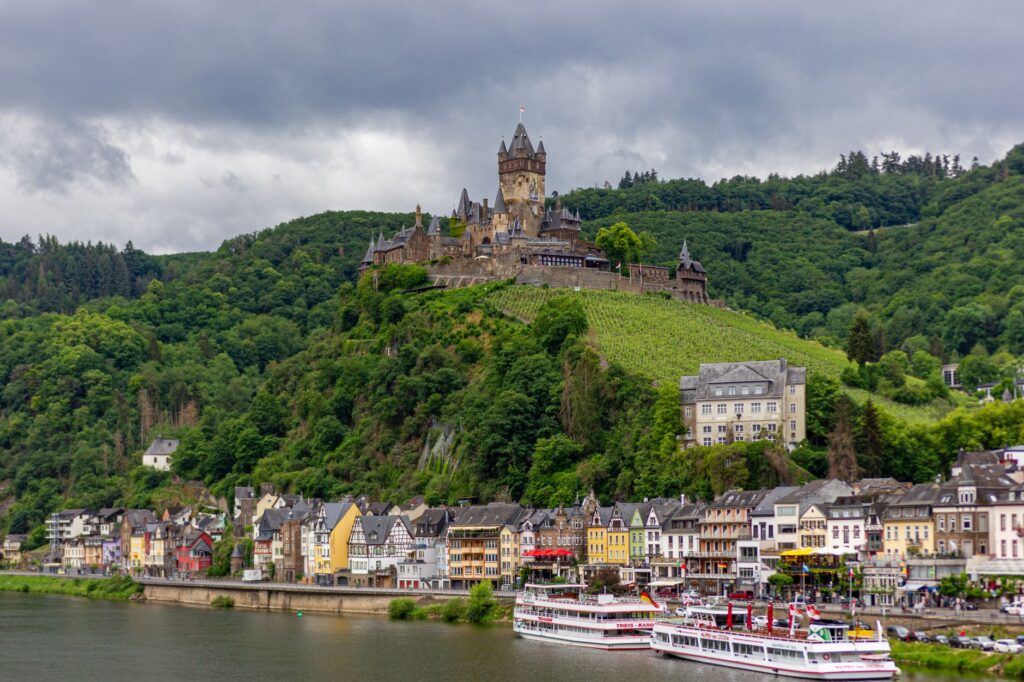
The Moselle Valley, where the river loops whimsically between the German federal states of Rhineland-Palatinate and Saarland, has defied the traditional laws of terrestrial transport for centuries. Here, the schist hillsides rise with gradients of up to sixty degrees, rendering the construction of conventional highways both an unviable ecological disaster and a prohibitively expensive engineering challenge. For generations, regional mobility relied on a narrow road network running parallel to the riverbed, congested every autumn by wine-harvest tourism and heavy agricultural freight traffic. This congestion not only threatened the tranquility of medieval villages such as Cochem, Beilstein, and Bernkastel-Kues, but also eroded the biodiversity of hillsides declared to be of high ecological value.
Faced with this geographical dilemma, local authorities, in collaboration with fluvial transport consortia and nature conservation associations, have spearheaded a radical transformation of regional mobility. The core of this strategy lies in shifting asphalt pressure directly onto the river channel itself via a fleet of passenger vessels powered entirely by hydrogen fuel cells and high-efficiency electric motors. This intervention does not merely seek to modernize traditional ferries; rather, it weaves a multimodal network where water and recovered historic railways act as the primary arteries of a net-zero emissions transport system.
The Transition Toward Zero-Emission Propulsion on Moselle Waters
Integrating sustainable fluvial mobility into the Moselle required overcoming formidable technical and regulatory barriers. Unlike alpine lakes or urban canals, this river presents seasonal flow variations and active commercial traffic from cargo barges, necessitating vessels with exceptional maneuverability. The naval engineers responsible for the project opted for a hybrid propulsion system combining high-capacity lithium-ion batteries with green hydrogen generators, produced locally using excess wind energy from the surrounding plateaus.
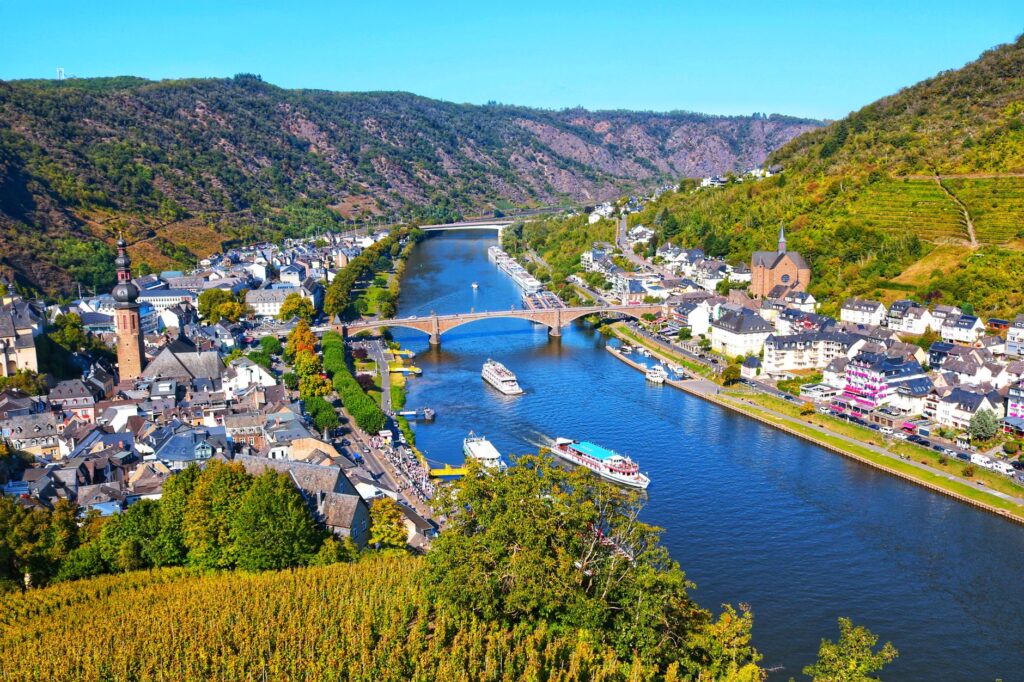
True sustainability in European river valleys does not consist of paving new green routes, but of returning to water its historic role as the primary avenue of social cohesion and silent displacement.
These new vessels, christened after local botanists and romantic poets, operate with an almost imperceptible level of noise. This technical feature has had a direct and positive impact on the protected bird fauna nesting on the cliffs and river islands of the middle course, drastically reducing the acoustic stress historically generated by internal combustion diesel engines. Furthermore, each vessel is equipped with solar panels integrated into the upper decks to cover auxiliary onboard services, guaranteeing an operating range of up to fourteen continuous hours without requiring recharging at the main docks.
Weaving the Network: The Symbiosis Between Ferries and Riparian Greenways
The success of the transport strategy in the Moselle Valley rests not solely on naval innovation, but on its absolute integration with non-motorized terrestrial corridors. Parallel to the electrification of the ferries, county administrations have completed the paving and ecological conditioning of the Mosel-Radweg, a cycling path stretching over two hundred kilometers that runs practically at water level, connecting Koblenz with Trier. This infrastructure has ceased to be a simple weekend leisure route and has consolidated into a daily commuting lane for residents and local workers.
The multimodal system allows users to board ferries with bicycles at any of the thirty-two docks equipped with adapted ramps and contactless digital reading systems. Thus, a resident of Traben-Trarbach can complete their morning commute by combining ten kilometers of cycling along the rehabilitated riverbank with a twenty-minute fluvial leg to their workplace in a neighboring village, without ever starting a private car. Mobility studies conducted by the Trier University of Applied Sciences indicate that this synergy has successfully reduced the use of private automobiles for inter-municipal trips by thirty-five percent during working months.
Reviving Historic Railway Stations as Multimodal Nodes
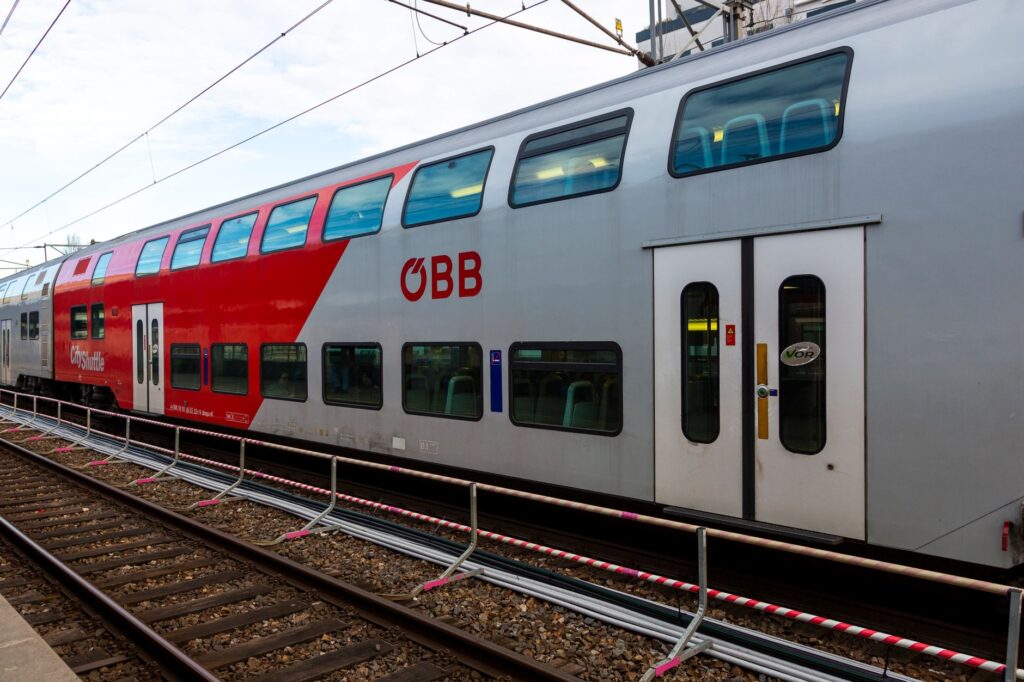
To close the circle of county connectivity, the fluvial and cycling network connects directly with regional rail services, notably the Moselle line (Moselstrecke), linking Koblenz and Luxembourg. Over the past decade, numerous secondary stations that had fallen into disuse or operated with minimal frequencies underwent meticulous architectural rehabilitation to transform into multimodal exchange hubs.
These nodes now integrate charging points for electric bicycles, secure parking for residents, and synchronized stops for electric shuttle buses ascending from the valley floor to villages perched on the wine-growing plateaus. Timetable coordination between the arrival of regional trains, the docking of ferries, and the departure of buses is managed through a unified digital platform developed by the region’s transport association (VRT). This digitalization of rural mobility has demonstrated that public transport efficiency in complex topography areas does not depend on massive infrastructure investments, but on precision in integrating existing services.
The Role of Local Communities and Steep Vineyard Economies
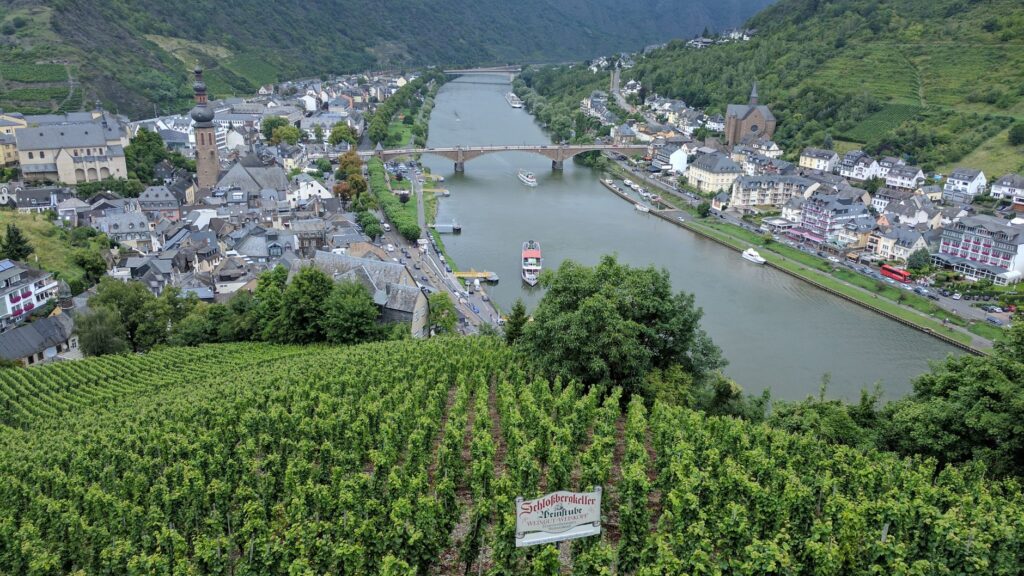
The transformation of transport in the Moselle is not a technocratic exercise imposed from regional capitals, but the result of a long process of consultation with local communities, especially winegrowers cultivating legendary Riesling vines on impossible slopes. For this sector, sustainable mobility represents a matter of economic survival and brand image. The traditional transport of grapes during the harvest, which once congested local roads with tractors and light trucks, has begun to be partially integrated into zero-emission fluvial routes.

Agricultural cooperatives in localities such as Ürzig and Zell now use adapted electric barges to transport part of their harvest to central wineries located on the riverbanks. This practice not only relieves pressure on road infrastructure and lowers the carbon footprint of Moselle wine, but reinforces the commercial argument of sustainable designation of origin in international markets. Likewise, winemakers actively participate in fluvial trail management committees, ensuring visitor traffic respects the dry-stone walls supporting the terraces since Roman times.
Operational Challenges, Seasonality, and Climate Resilience
Despite documented progress, the Moselle mobility model faces complex structural challenges, stemming primarily from climate change and heavy tourist seasonality. In recent summers, prolonged episodes of extreme drought have drastically reduced water levels in the middle and lower course of the river, forcing the temporary suspension of deeper-draft ferry routes in certain critical sections.
The resilience of a territory is not measured by its capacity to keep customs intact in times of plenty, but by the flexibility of its transport systems when nature imposes its own rules.
To mitigate this vulnerability, naval engineers and managing authorities have begun incorporating catamaran-hulled vessels with lower operational drafts and tiltable propulsion systems. Simultaneously, early warning protocols have been reinforced to automatically redirect users to parallel rail services when hydrological conditions prevent safe navigation. This operational redundancy approach ensures that the regional transport system does not collapse during extreme weather events, maintaining essential connectivity for permanent valley residents year-round.
Practical guide
Getting there: The Moselle Valley boasts excellent international railway connections. From Frankfurt or Cologne, regional DB trains connect directly with Koblenz and Trier in journeys ranging from one to two hours. Coblenza’s central station acts as the northern gateway to the region.
When to travel: Although spring and autumn (especially September and October, during the harvest and vineyard color change) offer the highest scenic appeal, multimodal transport services operate year-round, adapting frequencies to local resident needs during winter.
How to move sustainably: It is recommended to purchase the region’s integrated transport card (VRM-KombiTicket), combining regional trains, county buses, and electric river ferries. For bicycle rentals suited to riparian routes, authorized agencies operate at major railway stations and river ports along the Mosel-Radweg.
Accommodation and local consumption: Prioritize small family-run hotels and guesthouses adhering to the region’s sustainable tourism guidelines (Nachhaltiges Reiseziel). Consuming local wine and agricultural products in traditional taverns (Straußwirtschaften) directly contributes to maintaining cultural landscapes and community infrastructure.
Recovered Silence on the Banks of the Old River
As evening falls, when the last rays of sunlight fade over the schist ridges and the ruins of feudal castles watching over the Moselle, the valley recovers a primordial calm that seemed definitively lost in the final decades of the last century. The constant roar of heavy combustion engines laboriously climbing the curves of the riparian road is no longer heard; instead, there is the soft, steady murmur of water brushing against the silent hulls of electric ferries. This new pulse of mobility has not only transformed how residents commute and visitors discover the territory, but has restored dignity to a landscape where nature and human intervention have finally learned to converse without shouting.