Along the eastern shore of Lake Michigan, where white sand dunes shift under the drive of northern winds, there exists a geographic and intellectual refuge that has defied the industrial rhythm of the American Midwest for over a century. Saugatuck is not simply a summer destination; it is a territory where the aquatic and forested landscape acts as a permanent catalyst for artistic creation. Ever since the pioneer landscape painters of the Chicago School discovered the purity of its light in the late nineteenth century, this riverside municipality has functioned as an informal laboratory of forms, colors, and free thought. Far from the congestion of major metropolises, the confluence of the Kalamazoo River with the infinite waters of Lake Michigan shaped a unique cultural ecosystem, where the survival of the creative community depends as much on the protection of its natural surroundings as on its deeply rooted commercial independence.
This chronicle explores the roots, contemporary evolution, and living infrastructure of this essential enclave for understanding the history of regional art in the United States. Through a rigorous analysis of its architectural heritage, historical institutions, and local creators’ studios that continue to operate outside commercial trends, we examine how a modest lumber port metamorphosed into a bastion of aesthetic resistance. This report addresses not only the visual splendor of its galleries and public spaces, but also the contemporary challenges faced by a coastal community dedicated to preserving its identity against real estate pressure and mass tourism.
The Foundational Light: When Chicago Discovered the Kalamazoo River
To understand Saugatuck’s cultural pulse, one must look back to the 1890s, a period when Midwestern painters sought to escape urban congestion in search of a more authentic and direct palette. At that time, the port had left behind its frenetic phase as a logging hub to enter a reflective pause. Steamboats began bringing not only timber and coal, but professors and students from the School of the Art Institute of Chicago. Drawn by the luminescent intensity reflected on the dunes of Mount Baldhead, these pioneers found in the gentle waters of the Kalamazoo River an ideal mirror for the practice of plein air painting.
This steady flow of creators culminated in the founding of pioneering outdoor art instruction institutions. The interaction between the rugged wilderness and academic discipline generated a singular atmosphere where the traditional hierarchies of American art relaxed. Painters shared spaces with local fishermen and boatbuilders, establishing an interclass dialogue that enriched the thematic scope of their work. The forested hills surrounding the bay were not merely picturesque backdrops; they functioned as improvisational classrooms where new ways of capturing the transience of the lacustrine sunset were tested.

Vernacular Architecture and Wooden Refuges by the Water
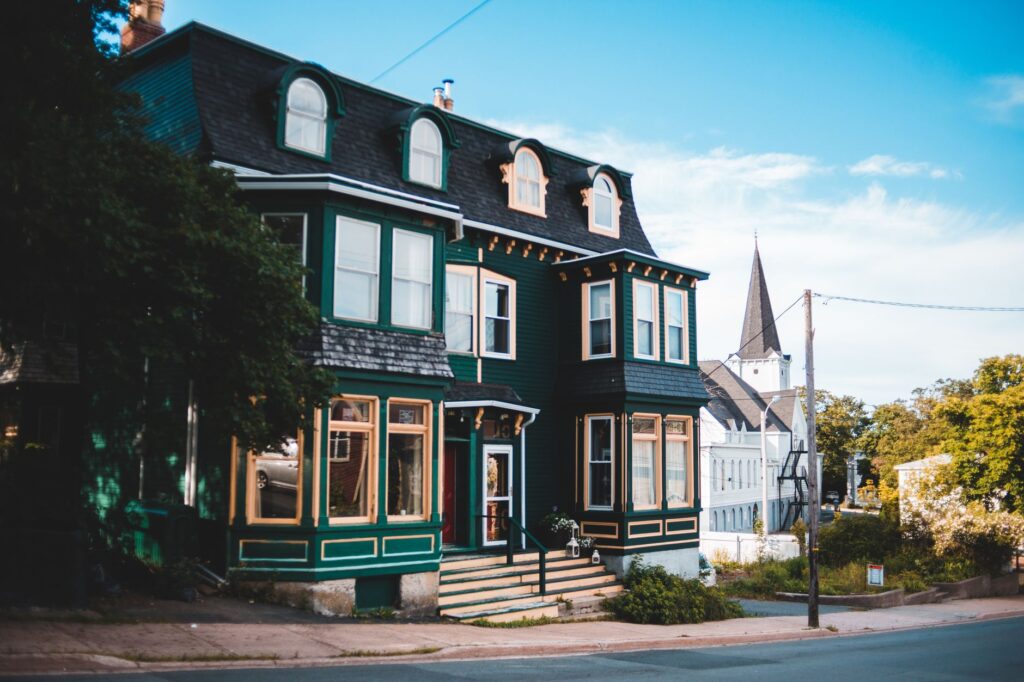
Saugatuck’s urban landscape constitutes a three-dimensional document of the architectural evolution of the Great Lakes. Unlike resort centers designed under corporate master planning, this urban fabric grew organically, integrating nineteenth-century industrial structures with Victorian residential architecture and craftsman bungalows. Former net warehouses, icehouses, and riverboat shipyards have been converted over the decades into ceramicist studios, independent bookstores, and contemporary art galleries, maintaining their original hardwood structure intact.
The preservation of these historical buildings does not respond to an aesthetic whim, but to the conviction that physical space conditions the creative process. The high ceilings of the old port sheds provide the luminous breadth that contemporary painters continue to demand for working with large formats. Likewise, residential architecture reflects the influence of the Arts and Crafts movement, prioritizing local materials, river stone, and native pine and oak timber. Walking through the tree-lined streets of the historic district reveals a collective effort to maintain a human scale, where building heights rarely exceed the crowns of the surrounding trees.
Saugatuck’s true heritage does not reside in its cataloged monuments, but in the uninterrupted continuity of everyday gestures tied to manual labor and the observation of the environment.
This respect for scale and natural surroundings has allowed the urban core to retain its intimate character, even during the peak summer months. The integration of public docks with commercial zones encourages fluid transit between the riverfront and the village interior, allowing visitors to experience the gradual transition between the vastness of the lake and the warmth of urban studios.

The Contemporary Pulse: Studios, Foundries, and Independent Galleries
Today, Saugatuck’s artistic infrastructure rests on a decentralized network of independent studios, print shops, bronze foundries, and self-managed galleries. Unlike the heavily regulated commercial circuits of New York or Los Angeles, the art market in this coastal town maintains a direct link between author and buyer. Visitors can access workspaces where ceramicists throw local stoneware or where sculptors polish pieces of wood rescued from the Kalamazoo river currents.
This contemporary vitality is nourished by the regular arrival of fellows and resident artists participating in internationally prestigious residency programs based in the region. The presence of these temporary creators constantly injects new aesthetic perspectives into the community, preventing the cultural isolation that often affects peripheral geographic locations. Collective exhibitions organized in local cultural centers frequently address urgent issues related to Great Lakes ecology, dune erosion, and the social memory of industrial and fishing labor.
The Sacred Ecology of the Mount Baldhead Dunes
No approach to Saugatuck’s cultural identity is complete without examining its geography of sand and boreal forests. The dune system separating the river from Lake Michigan, culminating in the prominence of Mount Baldhead, represents a natural monument of incalculable value. Climbing the nearly three hundred wooden steps leading to the summit is a rite of passage for visitors and local artists alike seeking a zenith perspective over the vastness of freshwater.
This fragile ecosystem has historically been an endless source of poetic and plastic inspiration. The constant mobility of sand, which in the past buried entire neighborhoods of the neighboring port settlement of Singapore, recalls the relentless force of natural elements at this latitude. Local creators have found in the texture of the sand, the resilience of shore pines, and the shifting palette of lake waters an unmistakable visual vocabulary. The legal protection of these dunes, achieved after decades of civic activism, guarantees that the fundamental landscape that captivated nineteenth-century painters remains intact in the face of real estate speculation.

Musical Tradition and the Poets’ Refuge
In addition to the visual arts, Saugatuck has played a discrete yet decisive role in the development of Midwestern independent music and literature. During the second half of the twentieth century, riverside cafes and summer theaters served as meeting points for experimental jazz composers, folk singer-songwriters, and poets linked to avant-garde currents. The natural acoustics of the riparian forests and the seasonal winter silence have traditionally attracted writers seeking extended periods of productive isolation.
Local libraries and historical archives preserve correspondence, handwritten scores, and first editions of poetry books conceived during winter retreats in coastal cabins. This literary tradition permeates the atmosphere of downtown secondhand bookstores, where out-of-print volumes on Michigan’s natural history can be found alongside hand-crafted contemporary poetry anthologies. Literature about this territory rarely adopts an idealized tone; on the contrary, it usually reflects the climatic harshness of lacustrine winters and the inherent melancholy of communities dependent on seasonal cycles.
Farm-to-Table Gastronomy and Lacustrine Culture
The cultural experience in Saugatuck extends naturally into its culinary offerings, deeply tied to the agriculture of surrounding counties and fishing in Lake Michigan. Restaurants in the historic center and along the riverbanks operate under a strict philosophy of local sourcing, collaborating directly with fruit farms in the Kalamazoo valley and winemakers on the Leelanau Peninsula. Cherries, apples, and regional wines form an indispensable part of the local pantry, reinterpreted by a new generation of chefs who value the simplicity and authenticity of native products.
Farmers markets held weekly during the warm months function as authentic social meeting points, where the stories of veteran farmers intersect with the culinary demands of temporary residents. This proximity economy reinforces community fabric and drastically reduces the ecological footprint of local hospitality, consolidating a sustainable tourism model that prioritizes quality over visitor volume.
The act of eating and drinking in this coastal strip constitutes a direct extension of the landscape: every ingredient tells the geological and climatic history of a soil molded by glaciers.
Practical guide
How to get there: The nearest international airport is Gerald R. Ford International Airport (GRR) in Grand Rapids, located approximately a 45-minute drive east via the I-196 highway. From Chicago, the drive takes about two and a half hours north via Interstate 94 and US-31.
When to go: Autumn months (September and October) offer mild temperatures, lower tourist influx, and an exceptional chromatic spectacle in the deciduous forests. Summer concentrates peak activity in galleries and outdoor festivals, albeit with higher hotel occupancy.
Recommended accommodations: The historic Hotel Saugatuck offers a traditional lodging experience downtown, while several restored cabins near the river allow for direct immersion in the surrounding nature.

Essential cultural spaces: The Saugatuck Center for the Arts (SCA) schedules contemporary art exhibitions, theatrical performances, and film screenings year-round. Likewise, the Butler Street gallery district concentrates the majority of local creators’ studios open to the public.
Requirements and recommendations: Comfortable, sturdy footwear is recommended for hiking the Mount Baldhead dunes and forest trails of Saugatuck Dunes State Park. No special visas are required beyond standard federal US entry requirements.
The Final Echo of Sand and Water
When the summer season fades and tourists leave the docks, Saugatuck recovers its essential silence. Galleries close their doors to the general public and artists light wood stoves in their studios, ready to face the months of snow and wind with the same patience with which waves shape the breakwater. In that intimate dialogue between raw matter and aesthetic intuition lies the persistence of this unique enclave. Sand continues its slow drift across slopes, pines resist northern storms, and beneath the frozen surface of the lake, the reflection of the sky continues to await the attentive gaze of those who still believe in the transformative power of beauty.
Source in EN: Condé Nast Traveler (https://www.cntraveler.com/story/an-art-lovers-guide-to-the-coastal-michigan-city-of-saugatuck)